Alphabetical Parenting
About the book
‘If my parent had done things differently, I would have been such a different person.’ Do you pause in your tracks with this emotion? ‘Wouldn’t it be lovely if someone could hand-hold me through parenting my child just as someone held my hand while I learned to write?’ Has this thought ever crossed your mind as you journey from day to day with your growing child? Well, here is Karen Claire, with the A-B-Cs of parenting. She believes very strongly in the quote by Frederick Douglass: ‘It is easier to build strong children than repair broken men.’ She knows this first-hand, as her experience as a practitioner and coach has brought her to work with persons at both ends of the age spectrum. Master these alphabets of the parenting language and write your own personal script for yourself and your child.
Read more₹
120
102 15% off
Unavailable
Format
About the Book
‘If my parent had done things differently, I would have been such a different person.’ Do you pause in your tracks with this emotion?
‘Wouldn’t it be lovely if someone could hand-hold me through parenting my child just as someone held my hand while I learned to write?’ Has this thought ever crossed your mind as you journey from day to day with your growing child?
Well, here is Karen Claire, with the A-B-Cs of parenting.
She believes very strongly in the quote by Frederick Douglass: ‘It is easier to build strong children than repair broken men.’
She knows this first-hand, as her experience as a practitioner and coach has brought her to work with persons at both ends of the age spectrum. Master these alphabets of the parenting language and write your own personal script for yourself and your child.
Book details
- Format
- Digital book
- Publisher
- Inkfeathers Publishing
- ISBN-13
- 978-93-90882-45-8
- Pages
- 126
- Reading time
- ~4 hrs
- Age
- 18+
- Language
- English
WHO
- Author Name:
Trina Chako
- Book Type:

- Description:
Who by Trina Chako is a gripping young adult thriller that pulls you straight into a world of secrets, memory gaps, and danger that feels too close to home. Tiana Singhal seems to have everything going for her—a great internship, a stable life, and a clear path ahead. But in an instant, everything unravels. Forced to run from an unknown threat, she is left with more questions than answers. Who is the girl haunting her nightmares? Why does the face in the mirror feel unfamiliar? And most importantly—who is trying to kill her? As Tiana digs deeper into her past, the lines between truth and illusion begin to blur. Every clue raises new doubts, and every step forward brings her closer to a truth she may not be ready to face. Written in a sharp, accessible style, Who is perfect for teen readers stepping into the thriller genre. It combines suspense, identity, and psychological tension in a fast-paced narrative that keeps you hooked till the last page.

Light on the Yoga Sutras of Patanjali
- Author Name:
B.K.S. Iyengar
- Book Type:
- Description:
Light On The Yoga Sutras Of Patanjali is one of the few authentic and legitimate self-help books dedicated exclusively to the ancient Indian art of Yoga. This widely followed book has been written with the completely unexposed Western mind in mind and opens the door to spiritual understanding. The book primarily consists of Yoga sutras, or hymns, as expressed by Patanjali, along with a comprehensive set of yogic postures. The author has made great efforts to be as authentic as possible, and each posture is explained and demonstrated clearly. Additionally, he suggests daily routines for various physical goals. His commentary targets beginner aspirants with little or no exposure to Yoga, and the tone and descriptions are convincing in knowledge dissemination and engaging the reader. Often called the ‘Bible of Yoga’ and acclaimed across many spiritual forums and websites, the book is a bestseller. Key Features: It includes a new translation of the Yoga Sutras (hymns and aphorisms) of the ancient sage Patanjali. It has been carefully authored by BKS Iyengar, an esteemed exponent of the art.

Parag Children's Choice Award 2026
- Author Name:
Gulzar +2
- Book Type:
- Description:
Parag Children’s Choice Award 2026 – Combo Celebrate some of the finest books in contemporary Hindi children's literature with this special Parag Children’s Choice Award (PCCA) 2026 Combo. Featuring six titles across poetry and nonfiction categories, this collection invites young readers to explore imagination, language, observation, and discovery through engaging and award-recognized works. Included Titles: Jab Dhoop Bhi Ho Aur Barish Bhi (Early Reader – Poetry) Poonchh (Early Reader – Poetry) Hakeem Antagafil (Early Reader – Poetry) Hari Patang Pe Hara Patanga (Early Reader – Poetry) Paheliyan (Young Reader 7+ – Poetry) Saat Patton Wala Ped (Young Reader 10+ – Nonfiction) This specially curated combo brings together all six books in one collection and is offered at a 20% discount, making it a wonderful choice for families, libraries, schools, and young readers who wish to experience some of the most celebrated children's books of the year.

Fact of Fate
- Author Name:
Muni Shri Pranamya Sagar
- Book Type:
- Description:
Fact of fate, which is revealing the mantra of living life in a right manner, especially for youngsters.

Sacred
- Author Name:
Vasudha Rai
- Book Type:
- Description:
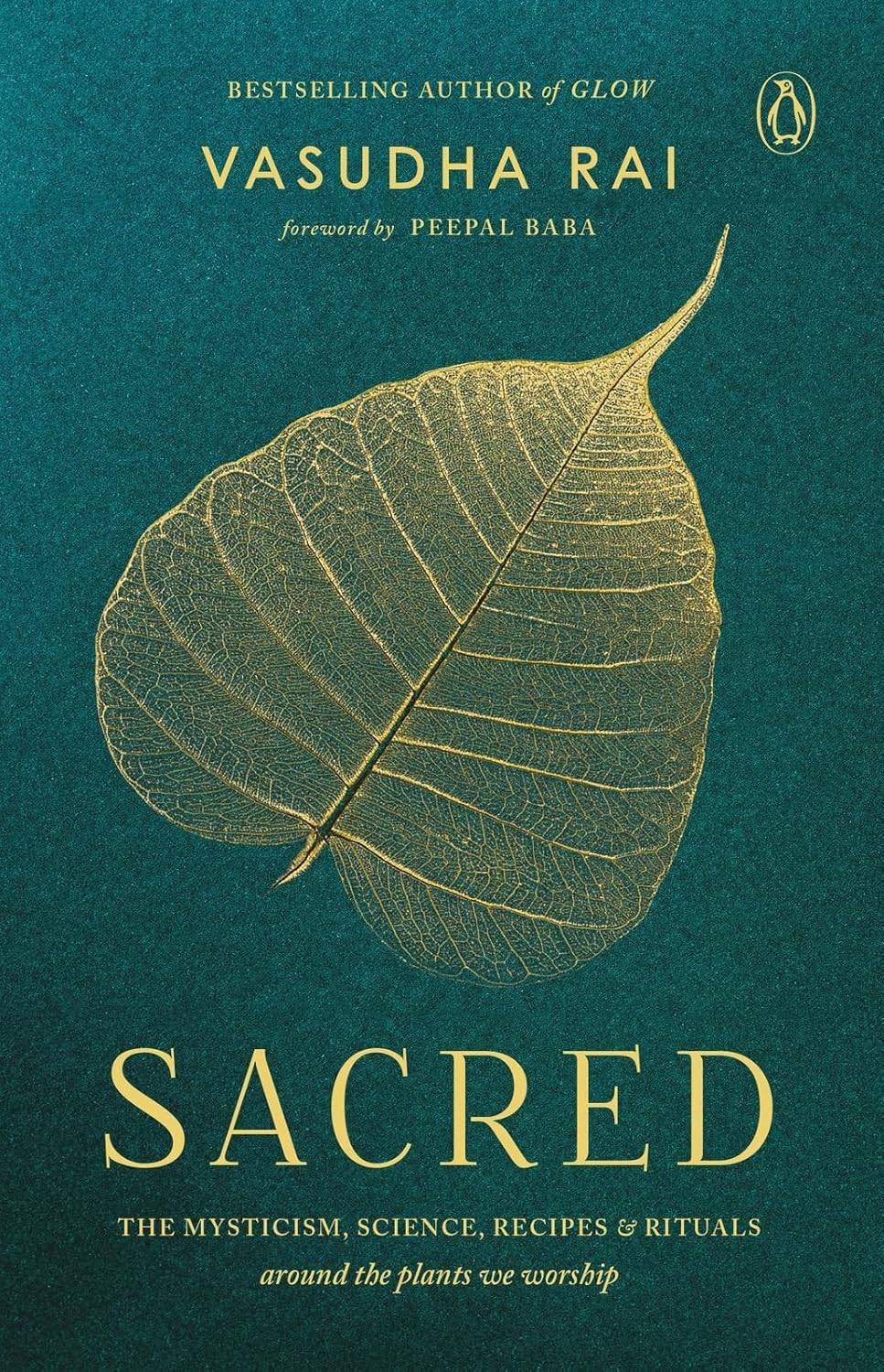
Sacred reminds us of the symbiotic relationship we have with plants, the need for forests and greenery, their medicinal benefits, and environmental advantages that improve soil and air quality. Deepen your knowledge of fifty-two different plant species, which includes majestic trees such as peepal, banyan, rudraksha and deodar. Elevate everyday rituals with aromatic woods such as frankincense, myrrh and miswak. Appreciate the benefits of native grasses and creepers including durva, paan and Aparajita. Learn the true value of various flowers, fruit and spices, including lotus, jasmine, pomegranate , saffron, cloves and jujube. Reconnect with nature, understand its worth and view plants as a manifestation of the divine. This book outlines ancient mysticism and provides recipes and rituals to help calm your mind, beautify yourself from the inside out and uplift the quality of your life.
Lessons in Practising Yoga
- Author Name:
Vidya Sagar Verma
- Book Type:
- Description:
Lessons in Practising Yoga’ is a comprehensive book on the philosophy of Yoga and how to practise it. Yoga is the workshop of Indian Philosophy and the soul of Indian Culture. For the proper understanding of what Yoga is and what its purpose is, the book covers, in detail, the whole gamut of Indian philosophy comprising the Trinity of God, Soul and Nature and the Triad of Bondage of Karma, Reincarnation of Soul and Liberation. Ashtanga Yoga of Maharishi Patanjali is essentially a spiritual discipline. Accordingly, the book lays due emphasis on Moral Discipline and Meditation. The book contains tips as to how to elevate oneself spiritually and how to meditate apart from how to do the Yoga-asanas and Pranayama exercises. The book is replete with relevant quotations of renowned philosophers and scientists as also references from the scriptures of major Religions of the world. The book stresses the universality of Yoga, stating that Yoga is both spiritual and secular. Those who meditate on material subjects attain knowledge of worldly matters as did Newton discover the Law of Gravity. And those who meditate on spiritual matters, advance spiritually as did Swami Dayananda Sarasvati, Swami Vivekananda and Yogi Aurobindo Ghosh. Rev. Albert Mohler Jr. said ‘You may be twisting yourself into pretzels or grass hoppers, but if there is no meditation or direction of consciousness, you are not practising Yoga.

Chandausi Junction
- Author Name:
Shankar Sahay
- Book Type:

- Description:
A collection of short-stories set in the 20th Century India for the 21st Century kids & a nostalgic walk, for their parents & grandparents. Although this book has been named after the city of Chandausi, it contains stories from various places like Rishikesh, Agra, Champaran, Tilhar, Sambhal, Kanpur, Banaras, Lucknow and many others. These are the short stories of a bygone era-a period when India had either not gained independence or had been independent for not more than 35 years. These are the tales of journeys-taken up from the early 20th century to the end of a millennium, from Shahjahanpur to Delhi, from Bijnor to Hyderabad, from Hathras to Sweden & Norway, from Lakshmi Talkies, Allahabad to Night Watchman, Bangalore, from Panki to USA, from Dehradun to Canada, from Chandausi to Australia and many others. We are sure in all these stories, you will be able to find at least one character, which reminds you of your own self-of what you are, were or always wanted to be. Let us know the character with whom you have been able to relate to the most. Happy reading. “Genius is one percent inspiration and 99 percent perspiration,”-Thomas A. Edison. -Here’s a collection of short stories to inspire the readers.

Case Files of The Dead
- Author Name:
Various Authors
- Book Type:
- Description:
Welcome to a mysterious land where ghosts. Ghouls and spirits rule. Welcome to a place where haunted houses and evil souls will make a shiver run down your spine. A spooky tale in the scenic hills of Mussoorie awaits you while uncanny happenings in a literary competition are sure to intrigue you. The case of a mysterious white Maruti baffles everyone, even as the unsuspecting jogger experiences something he had never bargained for. A group of friends will encounter the worst terror of their lives while nightmares of his death rack the young man! Author's In and The Book Bakers present an eclectic mix of true stories, legends, and fables that have often been a part of India's folklore—armed with some of the best authors in India's paranormal literature history. CASE FILES OF THE DEAD; India's first pure horror public anthology will turn every host into (G)Host!!!

Child Health And Nutrition In India
- Author Name:
Sanjay Prasad +2
- Book Type:
- Description:
This book is an attempt to present, in a consolidated form of research articles that can provide a common platform for communication and discussion about healthcare and service providers, functionaries, scholars and social workers involved with child health and nutrition. The scope of this book is to present an overview of child health, maternal health and community issues in India and also attempt to highlight some of the important issues in this field.

Where Love Was Sinful
- Author Name:
Chirasree Bose
- Book Type:

- Description:
A tangled love on the battlefield of sinners… Maya: I’ve arrived in Delhi to meet my husband’s family after six months of our wedding. But what should have been a celebration turns catastrophic and people begin to die. Has it got anything to do with my secret? Shaaman: I love my wife, Maya, and God knows I have tried to be what she likes. But as I step into this house, my maternal grandfather’s house, I can feel the demon in me waking. I need help. But…what if it’s too late? Aahil: Maya. She always called me a mystery. And so I am. The mystery that started it all. The mystery that will end it all. Sparing none, not even her. Witness the most gruesome game of love, greed, revenge, power, betrayal, and hate in a tale full of sinners, a tale where love was sinful.

Musings of A Psychologist
- Author Name:
Dr. Gauri Nadkarni Choudhary
- Book Type:
- Description:
The scope of psychology is beyond the clinic. It is in everything that we do and we don't do. The articles are just a different perspective of looking at everyday happenings and how they relate to how we deal with life.? Life doesn't come with an instruction manual. Often we shy away from talking about mental health or we confuse mental health with mental illness. These articles talk about simple day matters which have an impact on us. These are topics which we all face but don't realise that they have had an impact on us. It is a simpler way to look at things that bother us.

Unjudging Women
- Author Name:
Rachna Chaudhary
- Book Type:
- Description:
This book is based on a critical feminist reading of selected Delhi High Court judgements pronounced in the 1990s. It focuses on the phenomenon of female criminality and the pervasiveness of the disciplinary powers of law in our lives. Through an overview of existing studies on female crime in India and the interaction with the working) of the law and the legal system, This engagement pushes our understanding of law from an instrument of control and mode of social transformation to mere rhetoric. Not to argue for the futility of engaging with the law but emphasising the need to look at it closely and critically.

Kailas: Shiva's Abode
- Author Name:
Hemant Sharma +2
- Book Type:
- Description:
Wanderlust and the desire to know the land and society more had been fueling my wish to visit Kailas. There were many curiosities. All our major rivers have their source in the region. The largest reservoir of fresh water on earth is situated there. The celestial swans are found there. I recall that how in my childhood, my Grandmother used to describe Kailas as being akin to a dreamland. According to her, Shri Krishna has said in the Gita – Meruru shikhirinamaham – ‘Among mountains I am Kailas!’ It was Sage Mandhata who first set foot on this sacred soil. Adi Shankaracharya shed his mortal body here. Guru Nanak meditated here and Swaminarayana, the founder of the sect that bears his name, saw the vision of god here. The Ramayana and the Mahabharata mention Kailas. This is where Ravana had worshipped Lord Shiva. He wanted to take Kailas with him. Shiva guilefully dissuaded him from doing so. Arjuna performed penance here and received the Pashupata Astra from Shiva. Yudhishthir proceeded heavenwards via this route. One by one, all the family members fell by the roadside; only the faithful dog kept company. Bhasmasur, the Rakshas, a devotee of Shiva was reduced to cinders here. Today the dark shadow of civilisation has begun to fall even on Mansarovar. This lake is shrinking. The sacred water body, that once stretched across 410 square kilometres, is now shrunk to only 10 square kilometres. Consider this the rage of Nature. Had Kalidasa been alive, he would have been deeply saddened to see his beloved Himalaya in this state. Is it the same Himalaya that is described in Raghuvamsham and Kumar Sambhavam? Civilisation has reached a point where the divine dimensions of Himalaya are disturbed.

An Alternative Perspective On Education
- Author Name:
Atul Kothari
- Book Type:
- Description:
Education is the foundation of the development of any country. But in our country, the First Education Policy was framed in 1968, 21 years after independence; the second policy was formulated in 1986; 34 years later, India got the National Educational Policy-2020 on 25th July, 2020. Besides these, certain commissions were also constituted for reforms in education, which made some good recommendations, but these could not be implemented for sheer want of political will. For an instance, the Kothari Commission in 1968, recommended 6 per cent of Gross Domestic Product (GDP) for expenditure on education, which was also adopted by the Education Policy-1986, but this is yet to be translated into practice. If we ignore pre-colonial period, the Bharat of post-independence has not yet been able to determine the aim of education. Character building and moulding a human i.e. holistic development of personality should be the aim of education. Essays on related subjects are included in this book. To identify the issues and problems that plague the education, and their solution, we carried out basic but innovative experiments in schools, colleges and universities. The original experiences of these exercises have been penned down as articles and research papers. This book is an anthology of the related writings.

A TALE OF TWO CITIES
- Author Name:
Charles Dickens
- Book Type:
- Description:
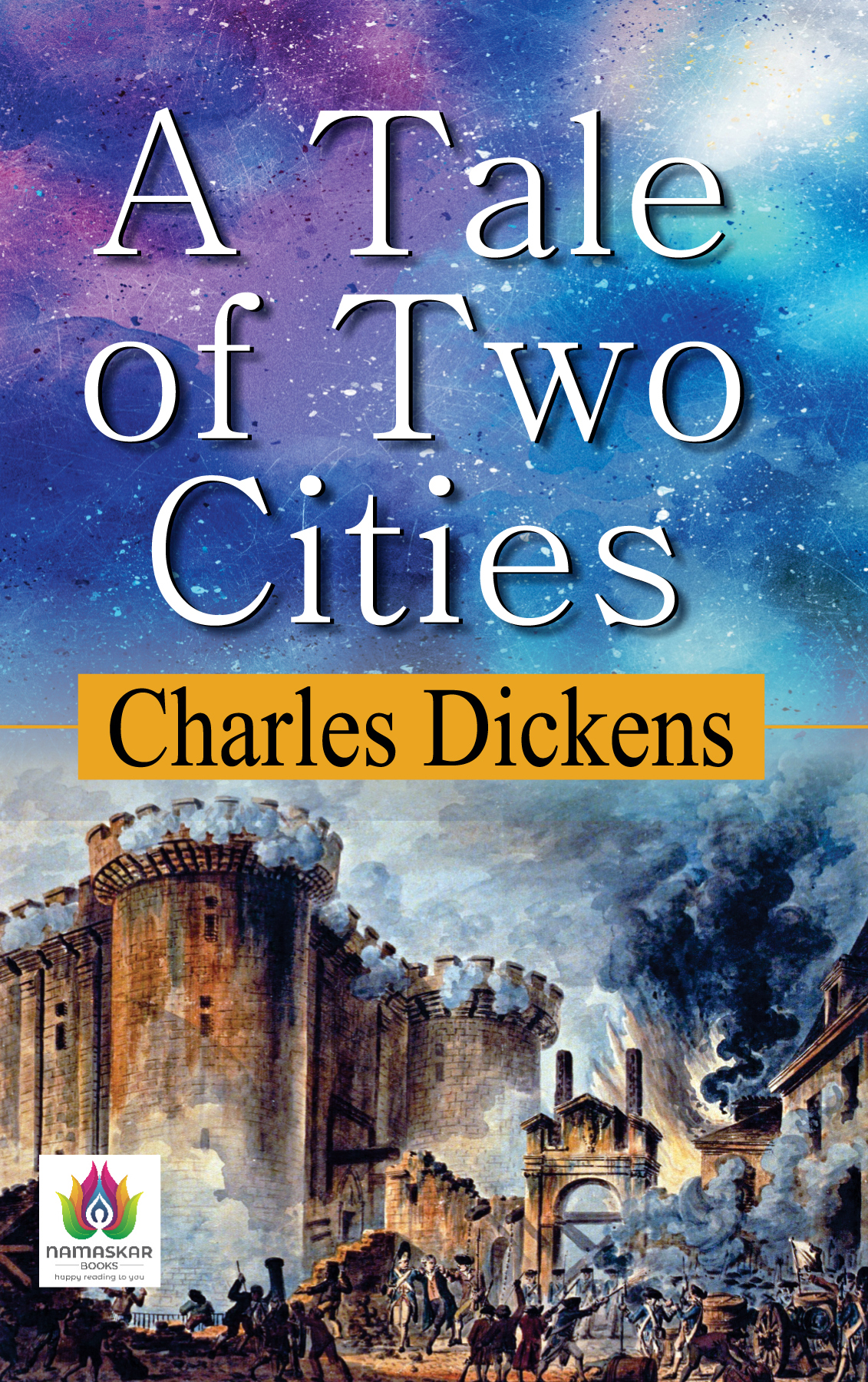
This Book Doesnt have any Description.
KARMA YOGA
- Author Name:
Swami Vivekanand
- Book Type:
- Description:
This Book Doesn't have Description

Mathematics Wizard Srinivasa Ramanujan
- Author Name:
Narendra Govil +1
- Book Type:
- Description:
Mathematics Wizard Srinivasa Ramanujan The book depicts the interesting story of a mysterious Indian mathematician, Srinivasa Ramanujan, with no college education, whose mathematics in a series of letters to a Cambridge Mathematician, G.H. Hardy, shook the entire mathematics community. It is an exciting journey of a poor, self-taught and god-gifted mathematician who by the age of 31 became the youngest Fellow of Royal Society of London. Even after almost 100 years of his death at the age of 32, his results mysteriously find applications in modern world such as in the study of black holes, quantum gravity, cryptography and many others. Ramanujan’s life story and work has inspired numerous people and generations of mathematicians around the globe and continue to excite even today. We hope that the book will reach the current generation and generate interest in mathematics.

Worlds First Book On Haiku Poetry
- Author Name:
Carlos Luis
- Book Type:
- Description:
Haiku is a very short form of Japanese poetry consisting of 17 syllables arranged in three lines of 5, 7, and 5 syllables respectively. But against all odds, this is a collection of feelings written in three lines. An economical masterpiece that Trades you through realities of life; speaking of love, relationships, paradoxes in life, you name it you have it in here.

The Road to Infinity
- Author Name:
Tanbir Dhingra
- Book Type:
- Description:
"A Self-Exploratory Odyssey to ‘Infinity’ and ‘Beyond’ with Infinite Thoughts encapsulating Infinite Emotions in Infinite Moments giving Infinite Chances to explore ‘Who You Are in the quest for ‘What Is life’. A magically crafted peregrination of quotations reveals a deep longing for a greater sense of meaning, happiness and contentment. It helps to create enchanting thoughts that incorporate the classic tools of transformation into a simple philosophy of living. This is not just another book that should find its way to the self-help shelf; rather it’s a coach to motivate you and a best friend to inspire you forever. The book teaches us wisdom to: Build a Life of Passion, Purpose and Peace Value Time as our most important commodity Stay Fit by creating healthy habits not restrictions Nourish our Relationships and value things we Love Cultivate innovation of Colors and creativity from Nature

The Art of Public Speaking
- Author Name:
Dale Carnegie
- Book Type:
- Description:
"Public speaking is a vital skill which is important in all spheres of life. Generally, people who are good at public speaking go a long way in their professional careers. Hence, acquiring sound public speaking skills at an early age is critical. The book, 'The Art of Public Speaking’ helps the readers in learning the various techniques of 'speaking with confidence'. Written using several examples and powerful narration, this book is a wholesome learning material for public speaking. It is authored by Dale Carnegie and it was published by Prabhat Prakashan in 2013. The book begins with the most essential component of public speaking - confidence. The author explains the various ways in which readers can improve their confidence so that once they go on stage, they have no fear. Then, it deals with important factors of speaking like when to pause and the various pausing techniques. Then, it moves on to the topic of delivering the content. More than what you speak, what is crucial is how you speak and hence delivery is the most important factor in public speaking. It discusses the various techniques of delivery and force. Additionally, there are notes on preparation and body language."

Customer reviews
Review this book
Share your thoughts with other readers.
Customer reviews
This book impressed me by being both simple and insightful. From A to Z, it covers parenting tools and each alphabet takes up 2-3 pages, which was easy to read within few minutes. It's a wonderful touch to have a personal note from the author at the end of each alphabetical chapter. Also, a few questions to consider and analyse our parenting abilities is quite interesting. Whether you have a toddler or a teenager, this book will help you improve your parenting skills. Overall, this is a must-read for every parent.
Alphabetical Parenting by Karen Claire organizes the art of raising children into twenty-six accessible principles, each anchored to a letter of the alphabet. Claire writes for parents who carry the quiet wish that someone had walked beside them through the uncertainties of parenting, just as a teacher once guided their hand as they learned to form letters. The book is not a prescription but a framework—rooted in the belief that parenting, like literacy, can be learned with patience and the right scaffolding. Published by Inkfeathers Publishing, this handbook speaks to Indian mothers and fathers navigating the gap between the parenting they received and the parenting they aspire to give. Claire's structure is deliberate: each letter offers a concept that can be revisited, reread, and applied as a child grows and circumstances shift.
What kind of reading experience will Alphabetical Parenting give me?
This book offers a calm, structured reading experience rather than a narrative one. Each chapter is built around a single letter and its corresponding parenting principle, so you can read it from front to back or open it at random when a specific challenge arises. The tone is reflective and encouraging, not prescriptive or overwhelming. It rewards parents who want clarity without judgment and who appreciate a framework they can return to as their child moves through different stages of growth.
Who is this book best suited for, and what does it expect of its reader?
- Parents of young children who feel they are learning on the job without a manual.
- Readers who carry regret or curiosity about their own upbringing and want to parent with greater intention.
- Those who prefer structured, principle-based guidance over anecdotal memoir-style parenting advice.
- Indian parents are looking for a secular, non-Western framework that does not assume a single cultural template.
What is the cultural significance of this book's subject to Indian readers today?
In India, parenting is undergoing a generational shift. Many parents today grew up in households where discipline was unquestioned and emotional vocabulary was sparse. Now they are raising children in a world that expects communication, consent, and emotional fluency. Alphabetical Parenting addresses this gap directly—it is written for parents who know what they don't want to repeat but are not always sure what to do instead. The book's structured approach offers reassurance in a culture where parenting advice is abundant but often contradictory.
What makes Karen Claire's treatment of parenting distinctive?
Claire organizes her insights alphabetically, creating a parenting lexicon rather than a linear argument. This structure allows parents to treat the book as a reference tool—consulting it when a specific issue arises—or as a complete philosophy. She grounds her work in the belief that parenting, like any skill, can be taught incrementally and revisited. The alphabetical scaffold is both a mnemonic device and a gesture of accessibility, inviting readers to internalize principles gradually rather than overhauling their approach overnight.
What does this book leave the reader with long after they finish it?
Readers come away with a vocabulary for their own parenting instincts. The alphabetical structure stays in the mind, so that when a conflict or question arises, parents can recall the letter and principle that applies. The book leaves behind not a set of rules but a set of touchstones—concepts that become part of how you think about your child's needs and your own responses. It offers permission to parent with intention rather than reflex, and the quiet reassurance that learning to parent well is itself an act of literacy.
