Musings of A Psychologist
About the book
The scope of psychology is beyond the clinic. It is in everything that we do and we don't do. The articles are just a different perspective of looking at everyday happenings and how they relate to how we deal with life.? Life doesn't come with an instruction manual. Often we shy away from talking about mental health or we confuse mental health with mental illness. These articles talk about simple day matters which have an impact on us. These are topics which we all face but don't realise that they have had an impact on us. It is a simpler way to look at things that bother us.
Read more₹
250
₹ 212.5 15% off
Available
Format
About the Book
The scope of psychology is beyond the clinic. It is in everything that we do and we don't do. The articles are just a different perspective of looking at everyday happenings and how they relate to how we deal with life.? Life doesn't come with an instruction manual. Often we shy away from talking about mental health or we confuse mental health with mental illness. These articles talk about simple day matters which have an impact on us. These are topics which we all face but don't realise that they have had an impact on us. It is a simpler way to look at things that bother us.
Book details
- Format
- Paperback
- Publisher
- Author'S Ink Publications
- Weight
- 200 grams
- ISBN-13
- 9789392665110
- Pages
- 188
- Reading time
- ~6 hrs
- Age
- 18+
- Country of origin
- India
- Dimensions
- 5 × 8 cm
- Language
- English
The Leader In You
- Author Name:
Dale Carnegie
- Book Type:

- Description:
To be a successful leader, one needs to not only carry out good work but also, present his or her thoughts effectively like a great speaker. Great leaders always hold faith in their deeds and decisions. They understand the value and power of their words. Deep understanding of human psychology enables Dale Carnegie to guide his readers choose right and fruitful alternatives in life. The present book, The Leader In You, equips the readers with the skills of delivering effective and enthusiastic speeches, and plays an important role in the process of making them great leaders.

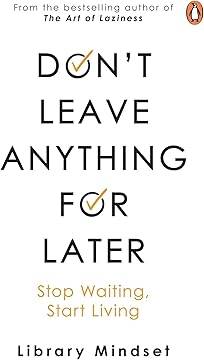
Don't leave anything for later: Stop Waiting, Start Living
- Author Name:
Various Authors
- Book Type:
- Description:
All the knowledge in the world won’t help you if you don’t decide to help yourself first. If you change nothing, nothing will change. Your life will not change unless you decide to change it. The goal of this book is to make you aware of the time you have left and how to spend that time to live a better life. The book is divided into three parts: Death Mindset How to Live a Good Life Each section is filled with stories, anecdotes, quotes and direct action that you can take to improve your life and ensure you don’t leave anything for later.
The Art of Public Speaking
- Author Name:
Dale Carnegie
- Book Type:
- Description:
"Public speaking is a vital skill which is important in all spheres of life. Generally, people who are good at public speaking go a long way in their professional careers. Hence, acquiring sound public speaking skills at an early age is critical. The book, 'The Art of Public Speaking’ helps the readers in learning the various techniques of 'speaking with confidence'. Written using several examples and powerful narration, this book is a wholesome learning material for public speaking. It is authored by Dale Carnegie and it was published by Prabhat Prakashan in 2013. The book begins with the most essential component of public speaking - confidence. The author explains the various ways in which readers can improve their confidence so that once they go on stage, they have no fear. Then, it deals with important factors of speaking like when to pause and the various pausing techniques. Then, it moves on to the topic of delivering the content. More than what you speak, what is crucial is how you speak and hence delivery is the most important factor in public speaking. It discusses the various techniques of delivery and force. Additionally, there are notes on preparation and body language."

Success Principles of Chanakya
- Author Name:
Mahesh Dutt Sharma
- Book Type:
- Description:
"Acharya Chanakya has been accepted as the undisputed benchmark and strategy formulator of ancient Indian political set-up and social values. He is a symbol of India’s ingenious wisdom. He is considered as the pioneer who successfully experimented with strategic manipulations and the gambits of chess, in Indian politics. Chanakya was a practical strategist, as well as an economist. His ‘Chanakya Neeti’ is the ideal guide for a citizens rights and duties; what is right and beneficial for him; what is harmful and immoral for him; he has comprehensively explained through his principles. His ‘principle’s’ (Sutras) or teachings are timeless. With the passage of time, they have become even more socially and politically relevant. Chanakya was the first management guru of the world. He showed comprehensively the way of managing every aspect of one’s life. On the basis of what he taught, it can be said that success can be attained even today by managing your life properly."

Eco-Living Starts At Home
- Author Name:
Sheetal Kumar Niranjan
- Book Type:
- Description:
This book is packed with practical tips, budget-friendly options and solutions that provide a clear roasmap to help you make changes in your life and contribute to building a more sustainable future.

Happiness A New Model Of Human Behaviour
- Author Name:
Tarun Pithode
- Book Type:
- Description:
This is A Book of Positive Thinking and Self Grooming by Young IAS Officer Tarun Pithode, his Previous book I Am Possible is Best Seller Book.

From the Pen of Surgeons
- Author Name:
Dr. B.K.S. Sanjay +1
- Book Type:
- Description:
"Health, education and nutrition are the fundamental needs of every individual. There is an increased need of awareness of the importance of health, education and nutrition in our lives. This book captures the enormous knowledge and depth of understanding of the authors in their professional field besides their abilities as public health practitioners and communicators to create the right public health awareness in the country. The goal and the basis of writing and compiling all these columns in the form of a book titled ‘From the Pen of Surgeons’ is to further spread this awareness towards public health and social issues to the concerned citizens and professionals in the medical health sectors and in other flelds with a hope that people will learn and share this experience which are depicted in these columns."

Invisible To Influential
- Author Name:
Jitender Girdhar
- Book Type:
- Description:
"Invisible to Influential" is your essential guide to mastering personal branding in today's dynamic world. As connections span the globe and opportunities arise unexpectedly, personal branding has become essential for shaping lives and careers. No longer limited to celebrities, it's about communicating your essence – values, strengths, passions, and stories – to stand out in a crowded digital arena. Across three volumes, this book is your companion, offering fundamental principles, specialized applications, and nuanced insights tailored for professionals, students, and introverts alike. Each chapter invites reflection, with thought-provoking questions to solidify understanding and drive personal growth. Whether establishing yourself, preparing for the future, or amplifying your influence, this journey from invisibility to influence empowers you to leave a lasting legacy. Your personal brand isn't just a projection; it's an invitation to connect, share, and inspire

100 Success Lessons from Warren Buffett
- Author Name:
N. Chokkan
- Book Type:
- Description:
Warren Edward Buffett is a renowned American business magnate, investor and philanthropist. He is the chairman and CEO of Berkshire Hathaway. Also, known as the ‘Oracle of Omaha’, Buffett is one of the most successful investors in the world. He was born on 31st August 1930, in Omaha, Nebraska. Born to congressman Howard Buffett, Warren had a keen interest in business and investing from a young age. In this book, we are going to learn and understand lessons that helped Buffett become successful both in his professional and personal life. You will learn about how to do business, how to deal with customers, how to have a work-life balance, how confidence in oneself could change everything, how to deal with bad decisions, standards of living, the value of hard work, the power of habits and so much more. Hopefully, this book will serve as a guide to its readers so that they could bring about positive changes in their lives.

Courage To Dream (My UPSC Success Story Can Be Yours Too)
- Author Name:
Surendra Mohan
- Book Type:
- Description:
Courage to Dream' is not just a proud saga of passing the Civil Services Examination, it is a salute to the perseverance that makes man the best creature in the universe. 'Courage to Dream' is that perseverance which gives man the inspiration and courage to take up an insurmountable challenge. 'Courage to Dream' is a reality that has been experienced even before it became a piece of literature; and if someone finds a literary value in penning down such reality, then I shall consider myself blessed. In this book, there is love as well as yearning; there is struggle as well as success; there is shrewdness as well as innocence; there are roses as well as thorns. I could not save myself from getting brushed by the rarest colours of the life. The purpose of writing this book is not to glorify any person. Its purpose is to motivate the youth towards their path of duty with full dedication. If, after reading this book, even a single youth gets inspired to walk towards their dreams amid unfavourable circumstances, then I shall believe that I have succeeded in my purpose.

Sunrays for Friday
- Author Name:
Priya S. Tandon +1
- Book Type:
- Description:
From the time that Bhagwan Baba used to say, “My life is My message”, to the time He started saying, “Your life is My message”, the authors Priya and Sanjay Tandon have come a long way in the journey of self-improvement with devotion and love. On the way they have lit up the journey for others too by the Sunrays series of books, this one being the sixth one in the series. These books, each of which contains 52 Inspirational short stories are all about … Looking around and thanking Him, Looking forward and trusting Him, Looking beyond and serving Him, Looking within and loving Him, Looking through and being Him! Jai Sai Ram!

The Triangulation of Success: Secrets to Multi-Organization Successes
- Author Name:
Dr. Timothy Low
- Book Type:
- Description:
The Triangulation of Success Why certain leaders are able to consistently pull off success after success? How did they get their teams to work together in unison? It's all about how the service of the leader impacts the organization, flowing from the top-level management to the staff member on the ground level. Dr. Timothy Low distills decades of leadership experience as the CEO of large organizations into key lessons that have been proven time and again to create and perpetuate success in organizations across the globe. THE TRIANGULATION OF SUCCESS DR. TIMOTHY LOW: SECRETS TO MULTI-ORGANIZATION SUCCESSES Value Creation for employees, customers & shareholders 1. Inspire with urgency 2. Assemble the ensemble 3. Share your vision 4. Attract talents 5. Empowering the team 6. Recognize & reward 7. Branding & award-winning 8. Excel & surpass 9. Achieving ever greater heights

Success Principles of Jack Ma
- Author Name:
Shikha Sharma
- Book Type:
- Description:
One of the widely recognized names amongst Entrepreneurs in China, Jack Ma is a leader with perseverance and foresight. He is the co-founder and former executive Chairman of Alibaba Group. In this book, the reader will learn the success principles used by Jack Ma throughout his life to become a successful business magnate from an English teacher earning ten dollars a month. These principles have been explained in a simple and understandable language. The author has used Jack Ma's personal life experiences in the context to explain how he has applied the success principles in his life. Successfully implementing these principles in your life will help you to achieve success in all your endeavours.

Master Your Destiny: Lessons From Lohani | Tarun Pithode
- Author Name:
Tarun Pithode
- Book Type:
- Description:
This book is about learning to become a leader in the field of management. It draws inspiration and examples from the life of Ashwani Lohani who has had a remarkable career in public administration and management. It uniquely covers the multifarious aspects of the management. It highlights the challenges faced by Ashwani Lohani at various levels, along with experiences and feedback of his seniors, friends, colleagues, and juniors. It also describes the strategies he adopted to run various organisations and elevate them to unimaginable levels of success. This book encapsulates experiences that offer managerial lessons for future bureaucrats and millions of managers across the corporate world.

Success Lessons From Steve Jobs
- Author Name:
Pradeep Thakur
- Book Type:
- Description:
This is an inspiring book that reveals the secrets of the legendary entrepreneur who co-founded Apple Inc. and revolutionised the technology industry. The book offers valuable lessons on entrepreneurship, innovation, and personal development. Drawing on Jobs’ own experiences and interviews with people who knew him well, the book explores the principles and practices that made him one of the most successful and influential business leaders of all time. From following your passion to embracing failure, the book provides practical advice on how to achieve greatness in both business and life. The book also delves into Jobs’ unique leadership style, which was characterised by his attention to detail, his focus on design and user experience, and his ability to inspire and motivate others. It offers valuable insights on how to build a successful team, create a culture of innovation, and foster a sense of purpose and meaning in your work. Whether you're an entrepreneur, a manager, or simply someone who wants to achieve more in life, “Success Lessons from Steve Jobs” is must-read book that will inspire and empower you to reach your full potential.

13 Habits of Self-Made Millionaires: Learn, Improve And Achieve All Your Financial Goals
- Author Name:
Shashish Kumar Tiwari
- Book Type:
- Description:
13 Habits of Self-Made Millionaires is your gateway into the minds of the world's most successful individuals. Ever wondered what sets millionaires apart? In this insightful guide, Shashish Kumar Tiwari delves deep into the daily habits, decisions, and mindsets that distinguish millionaires from the rest of us, uncovering the principles that have helped them achieve extraordinary wealth and impact. This book reveals 13 powerful habits that these self-made visionaries practice every day-habits that can transform anyone's journey to success. From mindset shifts and unconventional strategies to disciplined routines and resilience, '13 Habits of Self-Made Millionaires' is filled with actionable advice and inspiring stories that bridge ambition and achievement. Packed with wisdom and practical insights, this book is for those who aim to create not just financial success, but a lasting legacy. Whether you're an aspiring entrepreneur, a professional seeking growth, or simply someone with a big dream, this guide provides the roadmap to unlocking the millionaire within. Start reading today to cultivate the habits that can change your future-one inspired action at a time."
 13 Habits of Self-Made Millionaires: Learn, Improve And Achieve All Your Financial Goals
A Cut Above The Normal
- Author Name:
Dr. A.P. Maheshwari
- Book Type:
- Description:
One may not be missing out much by not reading this book. However, for those who are looking for various vectors to align their lives when its wheels go astray, this book offers some real life solutions emanating the experiences emerging from the life of a common man. Given the volatility of the human mind and its senses, the book throws light on how to chart the course of life ahead by making spirituality the prop of our lives. Based on various discussions and dialogues between father and son, the book leads us to understand and reaffirm the art of �living� and the art of �leaving�. It offers the way to understand Kabir & beyond from the perspective of an experiential self.

Arise, Awake & Don't Stop! Complete Book of Yoga
- Author Name:
Swami Vivekanand
- Book Type:
- Description:
"There are various ways to attain realization and these methods have “the generic name of Yoga. These yogas though divided into various _ groups, can principally be classified into four (Bhakti Yoga; Jnana Yoga, Karma Yoga, Raja Yoga) and as each is only a method leading _ _ indirectly to the realization of the absolute, they are suited to . different temperaments. RAJA YOGA: The chief parts are the Pranayama, concentration, and meditation. For those who believe in God, a symbolical name, such as Om or other sacred words received from a Guru, will be very helpful. BHAKTI YOGA: Bhakti or worship or love in some form or other is the easiest, pleasantest, and most natural way of man. JNANA YOGA: This is divided into three parts, First: hearing the truth — that the Atman is the only reality and that everything else is Maya (relativity). Second: reasoning upon this philosophy from all points of view. Third: giving up all further argumentation and ‘realising the truth. KARMA YOGA: Karma Yoga is purifying the mind by means of work, Now if any work is done, good or bad, it must produce as a result a good or bad effect."

101 Lessons To Be A Damn Good Speaker! (for Anyone Who Wants to Stand in Front of an Audience to Inspire and Achieve)
- Author Name:
Anukriti Bansal +1
- Book Type:
- Description:
101 Lessons to be a Damn Good Speaker! focuses on new as well as veteran speakers and provides a handy book of never to be forgotten nuances of speech. This book brings to you real-time lessons, learnings, insights and takeaways from India's largest network of speakers and experts - Speakin. It is Speakin's official guide on being a five-star speaker in front of audiences of any shape and size. The book is segmented into three sections —1. Content, 2.—Delivery, and 3.—YOUR Brand as a Speaker. I am sure this book will open you up to a fascinating world of speech and delivery. Happy Speakın!

Greatest Speeches of India
- Author Name:
Ram Kumar
- Book Type:
- Description:
We present here, a collection of 25 great speeches made by some of the tallest Indian personalities. Many of these personalities are men and women who have made invaluable contributions to our coming together as a nation of people and are the pride and honour of the country. These are people who have made a great impact on the lives around them and thus their words are the gems which had the power to evoke the courage and emotion in people and inspire them to make history. The power of a great speech, especially when everyone listens is something that sets the wheels of history in motion to many great events that changed the face of our known world. Some of these are from the era of the struggle for Indian independence from the colonial rule such as, Subhas Chandra Bose, Dr. B.R. Ambedkar, Mahatma Gandhi and Jawaharlal Nehru to mention a few. Polar contemporaries such as Nathuram Godse, Vinayak Damodar Savarkar also make an appearance in this collection to present a different perspective. In today’s times, Ratan Tata, N.R. Narayana Murthy, Kiran Bedi, Sachin Tendulkar are defining trailblazers in their own fields. The quality of a great speech is not only the wisdom that comes from the experience of their unique lives but the timelessness of these words which work their magic anytime you hear or read it.

Customer reviews
Review this book
Share your thoughts with other readers.
Customer reviews
No written reviews yet. Be the first to share what you thought.
Musings of A Psychologist reads like overheard thoughts from a clinician who has spent years watching how people navigate the gap between intention and action. These essays do not pathologize. They observe: why we avoid certain conversations, why small decisions exhaust us, how the act of not doing something reveals as much as doing it. The scope here is domestic and relational—moments at breakfast tables, in waiting rooms, during silences—rendered with the clarity that comes from training in why people behave as they do. The tone is neither prescriptive nor clinical. It is reflective, inviting readers to see their own patterns without shame. For Indian readers accustomed to conflating mental health with crisis, this book offers a rarer service: it situates psychological awareness in the ordinary, making the case that self-knowledge is not remedial but foundational to living with intention.
What kind of reading experience will this book, Musings of a Psychologist, give me?
This book, Musings of A Psychologist, reads like a series of thoughtful conversations with a psychologist who notices what you overlook. Each essay takes an everyday situation—hesitating before a phone call, feeling drained after a family gathering, choosing silence over honesty—and quietly unpacks the psychological architecture beneath it. The pace is reflective, not urgent. You will find yourself pausing to recognize your own patterns. It does not demand change; it invites awareness. The lasting feeling is one of being seen without being judged and gaining a vocabulary for experiences you thought were too small to name.
Who is this book, Musings of A Psychologist, best suited for, and what does it expect of its reader?
This book suits readers who are curious about their own behavior but wary of clinical jargon or self-help prescriptions. It expects honesty: a willingness to sit with the discomfort of recognizing why you do what you do. Ideal for:
- Adults navigating work, relationships, or family roles who feel the weight of unspoken expectations
- Readers who have dismissed mental health conversations as irrelevant to their daily lives
- Anyone seeking a psychological lens that feels Indian, domestic, and unpatronizing
What is the cultural significance of reframing mental health as part of everyday life for Indian readers?
In India, mental health is still largely treated as a crisis category—something you address only when dysfunction becomes visible. This book challenges that by situating psychological awareness in the mundane: how we talk at dinner, why we feel obligated to certain relatives, how we manage disappointment. It normalizes introspection without medicalizing it. For a generation caught between inherited silence around emotions and imported wellness language that feels culturally distant, this approach offers a middle ground: psychological literacy rooted in lived, relational Indian experience rather than abstracted theory.
What makes this author's treatment of everyday psychology distinctive?
The author writes from the position of a trained psychologist but avoids the detachment of case studies or the prescriptiveness of typical self-help. The essays are observational, not diagnostic. They do not pathologize ordinary struggle; they illuminate it. The writing is grounded in specific, recognizable moments—not hypothetical scenarios—and the tone is conversational, as though the author is thinking aloud rather than instructing. This makes psychological insight feel accessible, not gatekept. The distinctiveness lies in refusing to separate mental health from the texture of daily life.
What does this book leave the reader with long after they finish it?
This book leaves readers with a new attentiveness to their own inner life. Long after closing it, you will find yourself noticing why you hesitated, why a comment lingered, why a small decision felt heavy. It does not prescribe solutions; it cultivates a habit of psychological noticing. Emotionally, it offers relief: the sense that your inner conflicts are not failures but legible patterns worth understanding. Culturally, it leaves a quiet permission—to prioritize mental clarity not as a luxury or remedy, but as part of living deliberately and with less self-abandonment.

