
My Take
₹
600
480 (20% off)
Available
L.K. Advani's blogs cut across generations: they have a recall value for his contemporaries. Advani's blogs provide a rare insight into history for the young Indian, restless to do his bit in shaping the future of his country. They take him through the turmoil and toil of leaders like Sardar Patel and their distinctive contribution to shaping today's India. Advani's blogs have a dual purpose: they mirror an era gone by and yet link its relevance to an India, raring to take on the world. The blogs, therefore, successfully merge two periods: one to which Advani himself belongs with another which sees him as a mentor. That Advani has been a consequential politician is a given. As a protagonist in the political playfield spanning decades, he, along with Atal Behari Vajpayee, not only formed the Bharatiya Janata Party but transformed it dramatically. If the BJP is nationally in the reckoning today, it is because of the Atal-Advani vision of bringing it centre-stage from the margins. It is through this journey that he redefined secularism. During his historic yatras, including the Ramjanambhoomi and Somnath to Ayodhya, the country was compelled to redefine secularism and distinguish it from the pseudo-secularism handed down by adversaries. But that is only one part. The other and more significant is Advani's contribution to setting and elevating standards in public life and hammering that they are followed. That he has led from the front is well known. The strength of Advani's blogs, like his persona, is that they are direct, candid and forthright. There are no soft-pedalling issues or minimising the blow, as it were. He has stated facts as they are and did not attempt to underplay or exaggerate any sequence. His writings are as clear as his mind. The blogs offer a wide range: history, politics, books and all else. To those who have a stake in India's political future, Advani's blogs are a practical guide; for others an exciting read.
Read moreAbout the Book
L.K. Advani's blogs cut across generations: they have a recall value for his contemporaries. Advani's blogs provide a rare insight into history for the young Indian, restless to do his bit in shaping the future of his country. They take him through the turmoil and toil of leaders like Sardar Patel and their distinctive contribution to shaping today's India. Advani's blogs have a dual purpose: they mirror an era gone by and yet link its relevance to an India, raring to take on the world. The blogs, therefore, successfully merge two periods: one to which Advani himself belongs with another which sees him as a mentor.
That Advani has been a consequential politician is a given. As a protagonist in the political playfield spanning decades, he, along with Atal Behari Vajpayee, not only formed the Bharatiya Janata Party but transformed it dramatically. If the BJP is nationally in the reckoning today, it is because of the Atal-Advani vision of bringing it centre-stage from the margins. It is through this journey that he redefined secularism. During his historic yatras, including the Ramjanambhoomi and Somnath to Ayodhya, the country was compelled to redefine secularism and distinguish it from the pseudo-secularism handed down by adversaries.
But that is only one part. The other and more significant is Advani's contribution to setting and elevating standards in public life and hammering that they are followed. That he has led from the front is well known.
The strength of Advani's blogs, like his persona, is that they are direct, candid and forthright. There are no soft-pedalling issues or minimising the blow, as it were. He has stated facts as they are and did not attempt to underplay or exaggerate any sequence. His writings are as clear as his mind.
The blogs offer a wide range: history, politics, books and all else. To those who have a stake in India's political future, Advani's blogs are a practical guide; for others an exciting read.
Book Details
A Prisoner's Scrap-Book
- Author Name:
L.K. Advani
- Book Type:

- Description:
Awating description for this book

Constitution of India
- Author Name:
Dr. P.K. Agrawal +1
- Book Type:
- Description:
Awating description for this book

An Odyssey Through The Dark
- Author Name:
Rehan Raza
- Book Type:
- Description:
A flourishing career, a passionate love affair and a lasting friendship come in the way of an unforgiving disaster. What ensues is a desperate attempt to hold onto the pieces that are falling apart. The pandemic not just ravaged the lives of millions of people but also bolstered the feelings of love, friendship and brotherhood in its wake. When the world was collapsing under COVID-19, a group of youngsters was busy salvaging humanity. While the Delhiites were adrift on the second wave, the heroic efforts of Rahul, a small-town boy, and Aditi, a gorgeous, affluent and qualified doctor with a benevolent heart, together with the support of the district administration’s office proved that not all heroes wear capes. But are these heroes ready to pay the price for providing succour to others? Will they be magnanimous enough to let go of their own dreams, aspirations and even their life as they devote their time and resources to provide relief to strangers? Will their love tide over the unforgiving disaster that has gripped the world?

The Power of Your Subconscious Mind
- Author Name:
Dr. Joseph Murphy
- Book Type:
- Description:
The Power of Your Subconscious Mind, one of the most popular bestselling inspirational guides of all time, shows how changing your thought patterns can produce dramatic improvements in your life. Using practical, easy-to-understand techniques and real-world case studies, Dr Joseph Murphy reveals the vast influences of the subconscious mind on all aspects of existence-money, relationships, jobs, and happiness and how you can apply and direct its power to achieve your goals and dreams. Through this book, DDrMurphy provides the readers with the tools that one would need to unlock the extraordinary powers of their subconscious mind. One can improve relationships, finances, and physical well-being by following it. Once a person has learned how to use this unbelievably powerful force, there is nothing they will not be able to accomplish.

The Sun Also Rises (Pb)
- Author Name:
Ernest Hemingway
- Book Type:
- Description:
This book has no description

MAHARANAS: A Thousand Year War for Dharma
- Author Name:
Dr. Omendra Ratnu
- Book Type:
- Description:
The book that is going to become as sacred as scriptures in each Hindu home. The book that will destroy the lies woven around the glorious Hindu resistance for one thousand uninterrupted years to Islamic invaders of various hues. The book that will reveal the truth of the greatest Dynasty, not just the greatest Hindu Dynasty, not just the greatest Dynasty of Bharat, but the greatest Dynasty in the world: The Sisodiyas of Mewad. The Avataras who fought invaders non-stop for 1000 years, who endured all hardships, who refused to surrender even when their kingdom was encircled by enemies on all sides, who lived like nomads, but refused to give up. The Dynasty because of which Kesaria still flies on the sacred land of Bharat. The book questions the whitewash of the deeds and lives of the great Maharanas, especially the greatest of them; Maharana Pratap Singh. Written by a passionate practicing surgeon who brings the same incisiveness, exactness, and accuracy to the study of the history of this great Dynasty, as his profession. The book that will arouse in you the sleeping kshatriya, and will remind you that honour and pride do not define the man, they are the man.

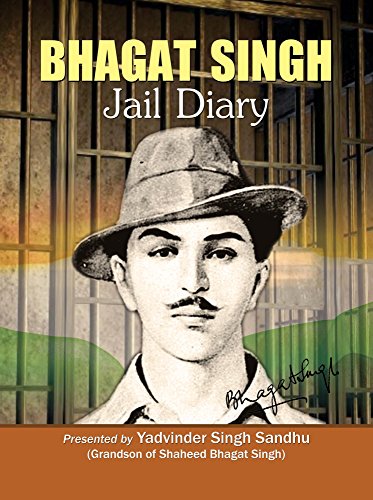
Bhagat Singh Jail Diary
- Author Name:
Yadvinder Singh Sandhu
- Book Type:
- Description:
Awating description for this book
Born to win
- Author Name:
Zig Ziglar +1
- Book Type:
- Description:
“If I could recommend only two books to help you become more, do more, and have more the first would be the Bible; the second is Born to Win. This masterpiece makes it clear why Zig Ziglar has been the world’s great motivator for five decades.” Dave Anderson, President, Learn To Lead, author How to Lead by THE BOOK. In eighty-five years of living and over fifty years of giving, Zig Ziglar, the icon of motivational and inspirational speaking, a man many call the Father of Motivation and Balanced Life Living, presents his last extensive and most comprehensive book ever! Born to Win – Find Your Success Code. Zig Ziglar’s ultimate book compresses over four and one-half decades of life changing tools and practices into an inspiring, concise, easy to use format for bottom line people who want to grow and improve the whole spectrum of their life “right now!” Readers will learn that when you have the hope that things can change, and a plan to make that change possible, then you can and will take action. Zig Ziglar’s whole person, balanced living approach to life has inspired millions to enjoy good health, a new depth of love and gratitude for family and friends, financial security and independence, and spiritual peace of mind. His instruction on how to live a life that leaves no room for regret or worry is the starting point for a joy filled, exciting, vibrant, life. It is true that when you have prepared yourself to be the right kind of person, you can do what you need to do to expect success. When you truly understand that you were Born to Win, you can change the world!

28 SHARE MARKET MONEY MAKING SECRETS (PB)
- Author Name:
Sudha Shrimali
- Book Type:
- Description:
There are numerous books available in the market on the subject of share market, however, in this book, the author has attempted to elucidate the complicated aspects of financial domain in a clear and simple language. The modus operandi of share market, commodity market, mutual funds and idiomatic language used in the market have all been explained with illustrations. She presents her suggestions for selection of a good broker. Explanations on the factors impacting the market, references to historical crashes of the market, asset allocation and discussions on popular methods of investment for the benefit of readers are the special features of the book. This book would work as a great guide not only for beginner investors but also for students of degree courses, academic certifications and professional examinations.

A TALE OF TWO CITIES
- Author Name:
Charles Dickens
- Book Type:
- Description:
This Book Doesnt have any Description.
The Road to Infinity
- Author Name:
Tanbir Dhingra
- Book Type:
- Description:
"A Self-Exploratory Odyssey to ‘Infinity’ and ‘Beyond’ with Infinite Thoughts encapsulating Infinite Emotions in Infinite Moments giving Infinite Chances to explore ‘Who You Are in the quest for ‘What Is life’. A magically crafted peregrination of quotations reveals a deep longing for a greater sense of meaning, happiness and contentment. It helps to create enchanting thoughts that incorporate the classic tools of transformation into a simple philosophy of living. This is not just another book that should find its way to the self-help shelf; rather it’s a coach to motivate you and a best friend to inspire you forever. The book teaches us wisdom to: Build a Life of Passion, Purpose and Peace Value Time as our most important commodity Stay Fit by creating healthy habits not restrictions Nourish our Relationships and value things we Love Cultivate innovation of Colors and creativity from Nature

The Hungry Stones And Other Stories (Pb)
- Author Name:
Rabindra nath Tagore
- Book Type:
- Description:
This book has no description

An Alternative Perspective On Education
- Author Name:
Atul Kothari
- Book Type:
- Description:
Education is the foundation of the development of any country. But in our country, the First Education Policy was framed in 1968, 21 years after independence; the second policy was formulated in 1986; 34 years later, India got the National Educational Policy-2020 on 25th July, 2020. Besides these, certain commissions were also constituted for reforms in education, which made some good recommendations, but these could not be implemented for sheer want of political will. For an instance, the Kothari Commission in 1968, recommended 6 per cent of Gross Domestic Product (GDP) for expenditure on education, which was also adopted by the Education Policy-1986, but this is yet to be translated into practice. If we ignore pre-colonial period, the Bharat of post-independence has not yet been able to determine the aim of education. Character building and moulding a human i.e. holistic development of personality should be the aim of education. Essays on related subjects are included in this book. To identify the issues and problems that plague the education, and their solution, we carried out basic but innovative experiments in schools, colleges and universities. The original experiences of these exercises have been penned down as articles and research papers. This book is an anthology of the related writings.

Cross Creek (Pb)
- Author Name:
Marjorie Kinnan Rawlings
- Book Type:
- Description:
This book doesn’t have description

KARMA YOGA
- Author Name:
Swami Vivekanand
- Book Type:
- Description:
This Book Doesn't have Description

The Great Gatsby (Pb)
- Author Name:
F. Scott Fitzgerald
- Book Type:
- Description:
This book has no description

POIROT INVESTIGATES
- Author Name:
Agatha Christie
- Book Type:
- Description:
This book has no description

Advanced Dictionary of Mathematics Formulas
- Author Name:
Rajesh Kumar Thakur
- Book Type:
- Description:
Mathematics is called the queen of all subjects but it is also thought to be one of the dreadful subject. Here is a Dictionary that goes beyond a mere listing of words and definations. This unique work has more than 2000 mathematical terms, designed as a time-saving reference work for students of all classes. Hundreds of examples and how to solve the problem of a particular type in almost every branch of mathematics has been its additional beauty. This vast fund of information will also enable the general reader to understand a particular mathematical concept, or to extend his own knowledge of mathematics. The coverage of terms is broad, from elementary terms in algebra, arithmetic through calculus, basic terms in 2-D and 3-Dimension geometry, advanced calculus, differential equations to the vector algebra and matrices, statics, dynamics and LPP. To make the understanding of concept clear more than 200 mathematical diagrams have been used. Apart from that, ample examples have been given to give in depth knowledge to students.

Investment Principles of Warren Buffett
- Author Name:
Pradeep Thakur
- Book Type:
- Description:
This book doesn’t have any desciption.

THE HOUND OF THE BASKERVILLES
- Author Name:
Sir Arthur Conan Doyle
- Book Type:
- Description:
This Book Doesn’t have Description

Customer Reviews
Be the first to write a review...
My Take is a collection of political blogs by L.K. Advani that functions as both a personal memoir and a historical bridge. Advani draws on his decades in Indian politics to trace how figures like Sardar Patel navigated the chaos of Partition and integration, and he explicitly connects those nation-building struggles to the challenges facing contemporary India. The blog format gives the writing an immediacy and directness that traditional memoirs often lack — each entry addresses a moment, a memory, or a political principle with the brevity of someone speaking directly to a reader scrolling on their phone.
What distinguishes this collection is its intergenerational ambition: Advani writes for his contemporaries who lived through the same political battles, as well as for young Indians impatient to shape their country's future. The book argues that understanding India's founding struggles is not nostalgia but strategy — that the choices Patel and others made in integrating princely states, managing communal tensions, and building institutions remain instructive for a generation confronting globalization, regional identities, and democratic fragility.
What kind of reading experience does My Take by L.K. Advani offer?
My Take offers a conversational, episodic reading experience shaped by the blog format. Each entry is brief and direct, addressing a specific memory, political principle, or historical figure without the density of a traditional memoir. The tone is reflective but purposeful — Advani writes as someone who lived through India's political transformations and wants to pass on lessons, not just anecdotes. Readers encounter history as lived experience rather than academic distance, with a focus on decision-making under pressure and the personal costs of political life.
Who is My Take best suited for, and what does it expect of its reader?
My Take is best suited for readers interested in Indian political history from a practitioner's perspective, particularly those curious about the ideological and strategic thinking behind nation-building decisions. It expects familiarity with post-Independence Indian politics — names like Sardar Patel, the integration of princely states, and the evolution of political parties — but does not require deep expertise. Young readers eager to understand the historical roots of contemporary political debates will find value here, as will Advani's contemporaries seeking a peer's interpretation of shared history.
What is the cultural significance of revisiting Sardar Patel's legacy for Indian readers today?
Sardar Patel's legacy remains culturally and politically significant in contemporary India because his approach to integration — pragmatic, firm, focused on national unity over ideology — is invoked in debates about federalism, regional identities, and state power. Advani's focus on Patel reconnects readers to a moment when India's territorial and political coherence was uncertain, offering historical grounding for current anxieties about regionalism, linguistic nationalism, and the balance between central authority and state autonomy. Patel's methods and choices are treated as instructive for a generation navigating India's global ambitions and internal complexities.
What makes L.K. Advani's treatment of Indian political history distinctive in this book?
Advani's treatment is distinctive because he writes as an insider who helped shape the very political currents he describes. His perspective is not that of a neutral historian but of a political actor reflecting on the decisions, compromises, and principles that defined his generation. The blog format amplifies this intimacy — each entry reads like a direct address to readers, with the urgency of someone who believes historical memory is politically consequential. This combination of personal authority, brevity, and explicit relevance to contemporary India sets the book apart from more detached political histories.
What does My Take leave the reader with after finishing it?
- A sense of continuity between India's founding struggles and its contemporary challenges makes history feel urgently relevant rather than distant.
- An appreciation for the complexity and contingency of nation-building — how fragile India's unity once was and how deliberate the choices that secured it were.
- A practitioner's perspective on political life, including its moral ambiguities, personal costs, and the weight of decisions made under pressure.
- Questions about how the principles that guided earlier generations — pragmatism, integration, institutional strength — apply or fail to apply to India's current trajectory.