
Dictionary of Social Sciences
₹
500
₹ 400 (20% off)
Available
Dictionary of Social Sciences is a comprehensive reference work with over 1700 entries ranging from fifty to five hundred words covering topics such as anthropology, sociology, economics, political science, cultural studies, and human and cultural geography. The Dictionary is aimed at students and scholars who need ready access to defined terms in a social science outside their immediate area of expertise; for example, an economist needing information regarding a political science term. A must-have book for readers with a keen interest in social sciences.
Read moreAbout the Book
Dictionary of Social Sciences is a comprehensive reference work with over 1700 entries ranging from fifty to five hundred words covering topics such as anthropology, sociology, economics, political science, cultural studies, and human and cultural geography.
The Dictionary is aimed at students and scholars who need ready access to defined terms in a social science outside their immediate area of expertise; for example, an economist needing information regarding a political science term.
A must-have book for readers with a keen interest in social sciences.
Book Details
Paryavaran Shabdakosh
- Author Name:
Dr. Sudhir Kumar Mishra +1
- Book Type:

- Description:
Awating description for this book

Constitution of India
- Author Name:
Dr. P.K. Agrawal +1
- Book Type:
- Description:
Awating description for this book

An Odyssey Through The Dark
- Author Name:
Rehan Raza
- Book Type:
- Description:
A flourishing career, a passionate love affair and a lasting friendship come in the way of an unforgiving disaster. What ensues is a desperate attempt to hold onto the pieces that are falling apart. The pandemic not just ravaged the lives of millions of people but also bolstered the feelings of love, friendship and brotherhood in its wake. When the world was collapsing under COVID-19, a group of youngsters was busy salvaging humanity. While the Delhiites were adrift on the second wave, the heroic efforts of Rahul, a small-town boy, and Aditi, a gorgeous, affluent and qualified doctor with a benevolent heart, together with the support of the district administration’s office proved that not all heroes wear capes. But are these heroes ready to pay the price for providing succour to others? Will they be magnanimous enough to let go of their own dreams, aspirations and even their life as they devote their time and resources to provide relief to strangers? Will their love tide over the unforgiving disaster that has gripped the world?

The Power of Your Subconscious Mind
- Author Name:
Dr. Joseph Murphy
- Book Type:
- Description:
The Power of Your Subconscious Mind, one of the most popular bestselling inspirational guides of all time, shows how changing your thought patterns can produce dramatic improvements in your life. Using practical, easy-to-understand techniques and real-world case studies, Dr Joseph Murphy reveals the vast influences of the subconscious mind on all aspects of existence-money, relationships, jobs, and happiness and how you can apply and direct its power to achieve your goals and dreams. Through this book, DDrMurphy provides the readers with the tools that one would need to unlock the extraordinary powers of their subconscious mind. One can improve relationships, finances, and physical well-being by following it. Once a person has learned how to use this unbelievably powerful force, there is nothing they will not be able to accomplish.

The Sun Also Rises (Pb)
- Author Name:
Ernest Hemingway
- Book Type:
- Description:
This book has no description

MAHARANAS: A Thousand Year War for Dharma
- Author Name:
Dr. Omendra Ratnu
- Book Type:
- Description:
The book that is going to become as sacred as scriptures in each Hindu home. The book that will destroy the lies woven around the glorious Hindu resistance for one thousand uninterrupted years to Islamic invaders of various hues. The book that will reveal the truth of the greatest Dynasty, not just the greatest Hindu Dynasty, not just the greatest Dynasty of Bharat, but the greatest Dynasty in the world: The Sisodiyas of Mewad. The Avataras who fought invaders non-stop for 1000 years, who endured all hardships, who refused to surrender even when their kingdom was encircled by enemies on all sides, who lived like nomads, but refused to give up. The Dynasty because of which Kesaria still flies on the sacred land of Bharat. The book questions the whitewash of the deeds and lives of the great Maharanas, especially the greatest of them; Maharana Pratap Singh. Written by a passionate practicing surgeon who brings the same incisiveness, exactness, and accuracy to the study of the history of this great Dynasty, as his profession. The book that will arouse in you the sleeping kshatriya, and will remind you that honour and pride do not define the man, they are the man.

Born to win
- Author Name:
Zig Ziglar +1
- Book Type:
- Description:
“If I could recommend only two books to help you become more, do more, and have more the first would be the Bible; the second is Born to Win. This masterpiece makes it clear why Zig Ziglar has been the world’s great motivator for five decades.” Dave Anderson, President, Learn To Lead, author How to Lead by THE BOOK. In eighty-five years of living and over fifty years of giving, Zig Ziglar, the icon of motivational and inspirational speaking, a man many call the Father of Motivation and Balanced Life Living, presents his last extensive and most comprehensive book ever! Born to Win – Find Your Success Code. Zig Ziglar’s ultimate book compresses over four and one-half decades of life changing tools and practices into an inspiring, concise, easy to use format for bottom line people who want to grow and improve the whole spectrum of their life “right now!” Readers will learn that when you have the hope that things can change, and a plan to make that change possible, then you can and will take action. Zig Ziglar’s whole person, balanced living approach to life has inspired millions to enjoy good health, a new depth of love and gratitude for family and friends, financial security and independence, and spiritual peace of mind. His instruction on how to live a life that leaves no room for regret or worry is the starting point for a joy filled, exciting, vibrant, life. It is true that when you have prepared yourself to be the right kind of person, you can do what you need to do to expect success. When you truly understand that you were Born to Win, you can change the world!

The Road to Infinity
- Author Name:
Tanbir Dhingra
- Book Type:
- Description:
"A Self-Exploratory Odyssey to ‘Infinity’ and ‘Beyond’ with Infinite Thoughts encapsulating Infinite Emotions in Infinite Moments giving Infinite Chances to explore ‘Who You Are in the quest for ‘What Is life’. A magically crafted peregrination of quotations reveals a deep longing for a greater sense of meaning, happiness and contentment. It helps to create enchanting thoughts that incorporate the classic tools of transformation into a simple philosophy of living. This is not just another book that should find its way to the self-help shelf; rather it’s a coach to motivate you and a best friend to inspire you forever. The book teaches us wisdom to: Build a Life of Passion, Purpose and Peace Value Time as our most important commodity Stay Fit by creating healthy habits not restrictions Nourish our Relationships and value things we Love Cultivate innovation of Colors and creativity from Nature

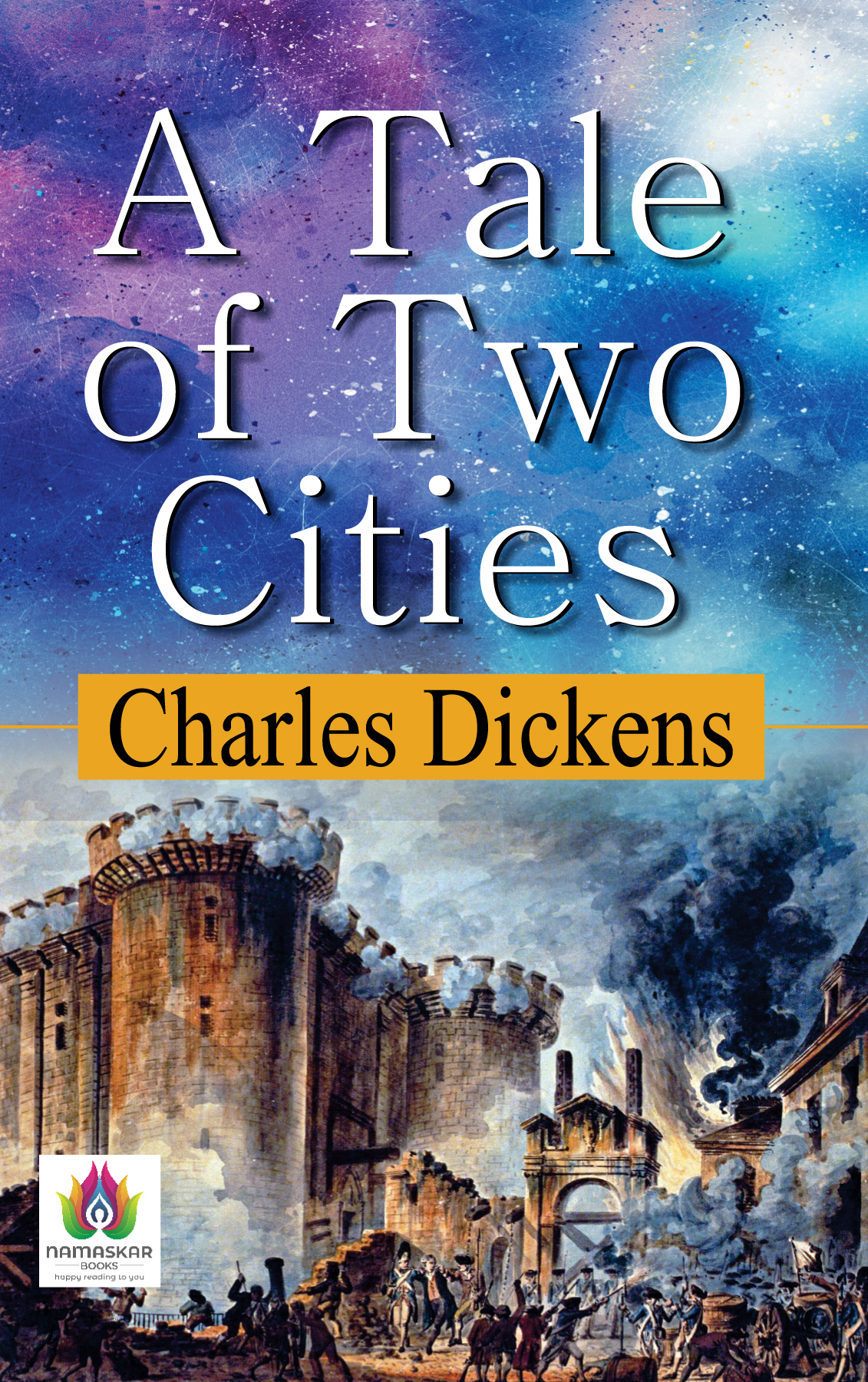
A TALE OF TWO CITIES
- Author Name:
Charles Dickens
- Book Type:
- Description:
This Book Doesnt have any Description.
28 SHARE MARKET MONEY MAKING SECRETS (PB)
- Author Name:
Sudha Shrimali
- Book Type:
- Description:
There are numerous books available in the market on the subject of share market, however, in this book, the author has attempted to elucidate the complicated aspects of financial domain in a clear and simple language. The modus operandi of share market, commodity market, mutual funds and idiomatic language used in the market have all been explained with illustrations. She presents her suggestions for selection of a good broker. Explanations on the factors impacting the market, references to historical crashes of the market, asset allocation and discussions on popular methods of investment for the benefit of readers are the special features of the book. This book would work as a great guide not only for beginner investors but also for students of degree courses, academic certifications and professional examinations.

The Hungry Stones And Other Stories (Pb)
- Author Name:
Rabindra nath Tagore
- Book Type:
- Description:
This book has no description

An Alternative Perspective On Education
- Author Name:
Atul Kothari
- Book Type:
- Description:
Education is the foundation of the development of any country. But in our country, the First Education Policy was framed in 1968, 21 years after independence; the second policy was formulated in 1986; 34 years later, India got the National Educational Policy-2020 on 25th July, 2020. Besides these, certain commissions were also constituted for reforms in education, which made some good recommendations, but these could not be implemented for sheer want of political will. For an instance, the Kothari Commission in 1968, recommended 6 per cent of Gross Domestic Product (GDP) for expenditure on education, which was also adopted by the Education Policy-1986, but this is yet to be translated into practice. If we ignore pre-colonial period, the Bharat of post-independence has not yet been able to determine the aim of education. Character building and moulding a human i.e. holistic development of personality should be the aim of education. Essays on related subjects are included in this book. To identify the issues and problems that plague the education, and their solution, we carried out basic but innovative experiments in schools, colleges and universities. The original experiences of these exercises have been penned down as articles and research papers. This book is an anthology of the related writings.

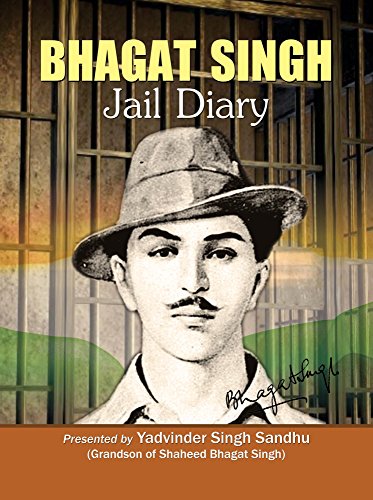
Bhagat Singh Jail Diary
- Author Name:
Yadvinder Singh Sandhu
- Book Type:
- Description:
Awating description for this book
Cross Creek (Pb)
- Author Name:
Marjorie Kinnan Rawlings
- Book Type:
- Description:
This book doesn’t have description

KARMA YOGA
- Author Name:
Swami Vivekanand
- Book Type:
- Description:
This Book Doesn't have Description

The Great Gatsby (Pb)
- Author Name:
F. Scott Fitzgerald
- Book Type:
- Description:
This book has no description

POIROT INVESTIGATES
- Author Name:
Agatha Christie
- Book Type:
- Description:
This book has no description

Advanced Dictionary of Mathematics Formulas
- Author Name:
Rajesh Kumar Thakur
- Book Type:
- Description:
Mathematics is called the queen of all subjects but it is also thought to be one of the dreadful subject. Here is a Dictionary that goes beyond a mere listing of words and definations. This unique work has more than 2000 mathematical terms, designed as a time-saving reference work for students of all classes. Hundreds of examples and how to solve the problem of a particular type in almost every branch of mathematics has been its additional beauty. This vast fund of information will also enable the general reader to understand a particular mathematical concept, or to extend his own knowledge of mathematics. The coverage of terms is broad, from elementary terms in algebra, arithmetic through calculus, basic terms in 2-D and 3-Dimension geometry, advanced calculus, differential equations to the vector algebra and matrices, statics, dynamics and LPP. To make the understanding of concept clear more than 200 mathematical diagrams have been used. Apart from that, ample examples have been given to give in depth knowledge to students.

Investment Principles of Warren Buffett
- Author Name:
Pradeep Thakur
- Book Type:
- Description:
This book doesn’t have any desciption.

THE HOUND OF THE BASKERVILLES
- Author Name:
Sir Arthur Conan Doyle
- Book Type:
- Description:
This Book Doesn’t have Description

Customer Reviews
Be the first to write a review...
Dictionary of Social Sciences assembles over 1,700 entries — each fifty to five hundred words — to bridge the terminological gaps among anthropology, sociology, economics, political science, cultural studies, and human and cultural geography. Unlike single-discipline glossaries, this reference work anticipates the moment a researcher trained in one field encounters an unfamiliar concept from another: an economist needing to decode habitus, a sociologist parsing Pareto efficiency, a geographer clarifying hegemony. Each entry is crafted for speed and precision, offering definition, context, and sufficient conceptual scaffolding to continue reading with confidence. The breadth is deliberate — 1700+ terms cover foundational theories, methodological vocabulary, and contemporary discourse markers across six interconnected disciplines. For students navigating coursework that draws on multiple social sciences, and for scholars writing literature reviews that cross subfield boundaries, this dictionary serves as both a checkpoint and a companion, turning opaque jargon into usable knowledge.
What kind of reading experience will this dictionary give me?
This dictionary delivers rapid, focused clarity rather than narrative immersion. Each entry is a contained explanation — long enough to establish context and usage, short enough to keep you moving. The experience is one of repeated small resolutions: you encounter an unfamiliar term in your reading, locate its entry, absorb the essentials, and return to your source text with comprehension intact. The tone is academic but not labyrinthine; definitions prioritize utility over exhaustive theory. It rewards readers who value efficiency and conceptual precision over leisurely exploration.
Who is this book best suited for, and what does it expect of its reader?
- Graduate students and researchers working across disciplinary boundaries who need quick, reliable definitions outside their training.
- Undergraduates enrolled in interdisciplinary programmes — development studies, cultural studies, policy analysis — where vocabulary migrates between fields.
- Scholars writing literature reviews or grant proposals that synthesize anthropology, economics, political theory, and sociology.
- Readers comfortable with academic English and familiar with at least one social science discipline; the dictionary assumes baseline literacy in scholarly discourse but not omnidisciplinary expertise.
Why is a cross-disciplinary social science dictionary valuable for Indian scholars today?
Indian academic and policy contexts increasingly demand fluency across social science traditions. Urban planners debate substantive rationality with economists; sociologists analyze structural adjustment policies; anthropologists engage public choice theory. University curricula blend disciplines; research funding favours integrated approaches to inequality, migration, and development. A dictionary that decodes terminology across anthropology, economics, political science, sociology, cultural studies, and geography equips Indian scholars to participate confidently in conversations that refuse to stay within departmental silos, making interdisciplinary collaboration less cognitively costly.
What makes this dictionary's approach to social science terminology distinctive?
Rather than privileging one discipline's definitions, this dictionary acknowledges that the same term — capital, culture, rationality — carries different meanings in economics, sociology, and anthropology. Entries clarify these distinctions, helping readers recognize when a concept has migrated from its field of origin and adapted. The fifty-to-five-hundred-word range allows flexibility: foundational terms receive fuller treatment; niche concepts get concise notes. This scale and scope combination — 1700+ entries spanning six fields — makes it more than a glossary; it is a lexical infrastructure for interdisciplinary thought.
What does this dictionary leave the reader with after sustained use?
Over time, this reference builds a mental map of how social science vocabularies overlap, diverge, and borrow from one another. Readers develop the ability to recognize when a term is being used in its technical sense versus colloquially, and when a concept from political science has been repurposed by cultural theorists. The lasting effect is conceptual confidence — the capacity to read interdisciplinary scholarship without constant derailment, to write with terminological precision across subfields, and to participate in collaborative research where clarity of language determines whether insights integrate or collide.