The Rooster That Would Not Crow
About the book
Our rooster came when he was small With bristly crest and comb and all… We watched him strut, we watched him grow, And waited – waited – for him to crow. But this young rooster simply refuses to. Until one momentous day in his life – when he lays an egg, and the kuk-roo-kooos burst out of him! Lilting verse rides us jauntily along, bringing us to a sudden head on with this most unusual situation. Or is it so strange, after all? And does it matter? A cleverly spun allegorical tale with joyous pictures that is about facing, and embracing, possible gender realities.
Read more₹
195
₹ 152.1 22% off
Available
Format
About the Book
Our rooster came when he was small
With bristly crest and comb and all…
We watched him strut, we watched him grow,
And waited – waited – for him to crow.
But this young rooster simply refuses to. Until one momentous day in his life – when he lays an egg, and the kuk-roo-kooos burst out of him! Lilting verse rides us jauntily along, bringing us to a sudden head on with this most unusual situation. Or is it so strange, after all? And does it matter?
A cleverly spun allegorical tale with joyous pictures that is about facing, and embracing, possible gender realities.
More about this book
The Rooster That Would Not Crow is an allegorical picture book that turns expectation inside out. Cheryl Rao crafts a lilting verse narrative that carries young readers along a jaunty path—watching a rooster grow, waiting for him to crow—until one momentous day when he lays an egg and the kuk-roo-kooos finally burst free. What seems strange at first becomes a question worth asking: does it matter? The story invites children to consider identity, difference, and the freedom to be exactly who they are, wrapped in playful language and a rhythm that makes the message feel like discovery rather than a lesson. Published by Tulika Publishers, this picture book treats a quietly radical subject with joy and lightness, making space for conversations about gender, expectations, and self-acceptance in a voice accessible to the youngest readers.
Book details
- Format
- Paperback
- Publisher
- Tulika Publishers
- Weight
- 100 grams
- ISBN-13
- 9788197234705
- Pages
- 24
- Reading time
- ~1 hrs
- Age
- 0-11
- Country of origin
- India
- Dimensions
- 20 × 20 cm
- Language
- English
The Rooster That Would Not Crow
- Author Name:
Cheryl Rao
- Book Type:

- Description:
Our rooster came when he was small With bristly crest and comb and all… We watched him strut, we watched him grow, And waited – waited – for him to crow. But this young rooster simply refuses to. Until one momentous day in his life – when he lays an egg, and the kuk-roo-kooos burst out of him! Lilting verse rides us jauntily along, bringing us to a sudden head on with this most unusual situation. Or is it so strange, after all? And does it matter? A cleverly spun allegorical tale with joyous pictures that is about facing, and embracing, possible gender realities.

Gajapati Kulapati
- Author Name:
Ashok Rajagopalan
- Book Type:
- Description:
Small noses catch small colds. Big noses catch big colds. Gajapati Kulapati the elephant has a big nose and catches a great, big, mighty cold! And what happens when he sneezes – Aaaaachoooo….? With repetitive sounds and words that roll rhythmically through the pages, this bestselling series about the adorable elephant puts the zing back into storytelling and reading aloud. Bright, zestful pictures and dynamic visual text echo the lilt, making these big, happy books of fun.

Go Go Flamingo
- Author Name:
Priya Kuriyan +1
- Book Type:
- Description:
A flock of flamingos flies south in search of food and drink. What they find in the water causes a hullabaloo… They get draped and decked in unspooled tape, rubber tyres, shoes, plastic bags, syringe-needles, even rear-view mirrors! Unaware of their doom, they break into a dance in a confused trance. Priya Kuriyan brings the irony alive through stunning visuals. Real objects imaginatively placed together with her drawings create a lifelike three-dimensional effect. Along with Devashish Makhija’s brilliant verse soaked in satire, they paint a telling picture – of the violence unthinking humans inflict on the natural world through hazardous waste.

The Why-Why Girl
- Author Name:
Mahashweta Devi
- Book Type:
- Description:
Moyna lives in a little tribal village. She cannot go to school because she has to tend goats, collect firewood, fetch water… But she is so full of questions that the postmaster calls her the ‘why-why girl'! In this inspiring and delightful story, her first picture book, acclaimed Jnanpith award-winning writer Mahasweta Devi tells us how she meets Moyna (and her mongoose) and helps her find answers to all the why-whys – in books, that Moyna herself learns to read. Some of the translations have been done by well-known writers: Malayalam by Paul Zacharia, Tamil by Ambai, and Kannada by Girish Karnad. CBSE recommended

The Night Sky
- Author Name:
Samina Mishra
- Book Type:
- Description:
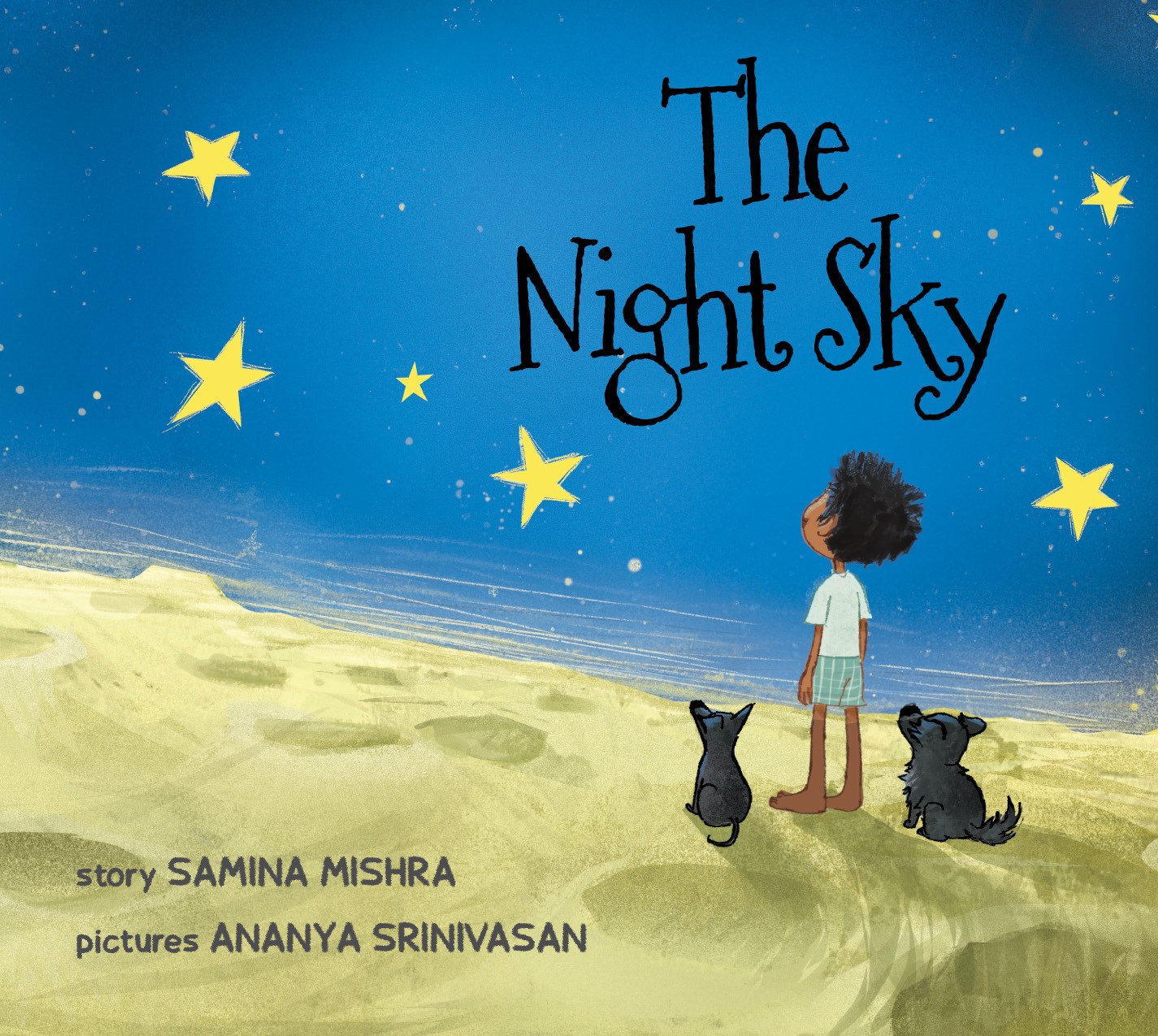
It’s late at night. Tipu is fast asleep when his two black puppies, Layla and Jugnoo, bound into his room. Down comes his star-filled quilt – and it becomes a cosmic playground for the three of them. Anything is possible, even flying to the moon! With illustrations that reflect the blending of reality and fantasy, this is a story about the sheer joy of imagination, and the wonder of play.
The Grand Story Of Ikli Chokli
- Author Name:
B Vinayan
- Book Type:
- Description:
A little chokli, a stray puppy, wanders into a muddy rain puddle one day and loves the icky, sticky, scratchy feeling. From then on, he can’t stop himself from getting messy and enjoying a sumptuous scratch! What he enjoys even more is telling tall tales about himself! With happy, whimsical illustrations, this small book about a big-talking dog celebrates smart and spunky choklis everywhere.

Shorewalk
- Author Name:
Yuvan Aves
- Book Type:
- Description:
Did you know that hermit crabs play a kind of musical chairs on the beach, swapping the shells on their backs? Or that an oyster cleans up about 200 litres of water a day? With his naturalist’s mind, photographer’s eye and stunning photos, Yuvan Aves zooms onto the sands or pans out to the ocean to give us little details as well as the larger picture of India’s coastline. Walking with Kadalamma and her fisherman grandfather, the seashore becomes a dynamic space, teeming with life. Fascinating snippets underline how beaches maintain a crucial land-sea balance. Quick alerts point to dangers of climate change and why we need to care for our coast.

The Monster at the Window
- Author Name:
Meghaa Gupta
- Book Type:
- Description:
There is a BIG monster that only Montu can see, that shows up whenever he’s angry or sad, and makes him even more angry, even more sad. One day, when he hurts his leg and is stuck at home, he starts to draw. He draws the window, the tree outside and… the monster! But as he keeps drawing, the monster gets smaller and smaller. What’s happening? Pictures and text gently tell this story of a boy who learns to deal with his inner demons, illustrating how art can heal.

Paati's Beat
- Author Name:
Jeeva Raghunath
- Book Type:
- Description:
Paati goes on and on and on… crushing, grinding and chewing betel leaves and betel nuts. Thaatha can’t bear it any more! He asks Thambu Teacher for help, and he tells Thaatha what to do – but the noise only gets noisier! With cacophony, rhythm and repetition, this cumulative tale is inspired by the author’s mother’s fondness for chewing betel leaves. Perfect for storytelling, it is sure to have adults and children eagerly echo its infectious beats. Hilarious illustrations capture action and expression in this din-filled delight of a picture book that calls out to be read aloud!

AMMACHI'S GLASSES
- Author Name:
Priya Kuriyan
- Book Type:
- Description:
Ammachi can’t find her glasses one morning and everything goes topsy-turvy! Page after page spills with drama, humour, detail and local flavour as Priya Kuriyan spins a hilarious tale about a crazy day with unforgettable Ammachi — “the archetypal grandmother from memories of my own childhood in Kerala,” as Priya says. The celebrated illustrator is at her best in her first wordless picture book.

Ismat's Eid
- Author Name:
Fawzia Gilani Williams
- Book Type:
- Description:
Ismat the shoemaker decides to buy his family special gifts for Eid. He is persuaded by the shopkeeper to buy a pair of trousers for himself. However, there is only one last pair and it's too long. But long trousers can always be shortened, can't they? Eid arrives, and with it comes a shock and a surprise. This crisp adaptation of a delightful Turkish tale has been affectionately told and illustrated, replete with cultural resonances.

Fakruddin's Fridge
- Author Name:
Meenu Thomas
- Book Type:
- Description:
When Fakruddin worries, he gets frantic. And Frantic Fakru is now worried because his fridge is spoilt, the day is hot, and he is desperate for cold water. What does he do? A light-hearted story with a smart idea and cheerful watercolour illustrations which bring alive the ambience of Fakru's neighbourhood in Bhopal.

Barefoot Husain
- Author Name:
Anjali Raghbeer
- Book Type:
- Description:
When M.F. Husain loses his shoes, Jai offers to help find them. The two zoom in and out of his paintings, passing milestones in the artist's life

MAYIL WILL NOT BE QUIET
- Author Name:
Niveditha Subramaniam +1
- Book Type:
- Description:
Introducing Mayil Ganeshan, a lively 12-year-old who finally has the opportunity to express herself fully in her diary. This is a significant step towards achieving her goal of becoming a writer, as she hopes to make up for all the unfinished stories and the aimless novel she had written before. In her diary, Mayil shares a spontaneous, sensitive, honest, intimate, and often humorous account of her life and thoughts as a perceptive young girl going through the ups and downs of adolescence. This coming-of-age book is a must-read, with enough humor, heart, and wisdom to entertain and inspire readers of all ages. Age 10+

Bishnu The Dhobi Singer
- Author Name:
Subhadra Sen Gupta
- Book Type:
- Description:
Details awaited

Will Goondi Come Home?
- Author Name:
Adithi Rao
- Book Type:
- Description:
Muthu’s constant companion is a rooster called Goondi. But her grandfather tells her not to get too attached to Goondi, since he belongs to Selvi Paati. And the village head wants to buy him for his son’s wedding feast… Muthu can’t bear the thought! So, she makes her move and Thatha makes his, in this tender story about what a dear friend is worth. Pictures add richness and depth to this layered narrative set in an Irula fishing village in Tamil Nadu. Their varying tones and textures capture the setting, the people and the moments.

Bombay Ducks, Bombay Docks
- Author Name:
Fleur D’Souza +1
- Book Type:
- Description:
It is raining and there is not much one can do outdoors. Come and listen to Aajis story about the Kolis, the original inhabitants of Bombay, their favourite fish Bombay Duck and the citys magnificent docks.Written by Fleur D’Souza and Illustrated by Kripa.

Who Clicked That Pic
- Author Name:
Nandita da Cunha +1
- Book Type:
- Description:
नंदिता की कहानी भारत के सबसे प्रसिद्ध फोटोग्राफर, होमाई व्यारवाला के जीवन का जश्न मनाती है। होमाई का साहस और शिल्प कौशल पुस्तक में खूबसूरती से सामने आता है। प्रिया कुरियन के चित्रण होमाई की कार्यशैली को इतनी सटीकता से बनाए रखते हैं कि कभी-कभी ऐसा लगता है मानो होमाई ने ही पुस्तक का चित्रण किया हो। शिल्प और जीवन के बीच निरंतर बदलाव पाठकों को रंगमंच की जीवंतता की याद दिलाता है। किताब हिंदी और अंग्रेजी दोनों भाषाओं में उपलब्ध है।

India Through People: 25 Gamechangers
- Author Name:
Devika Cariapa
- Book Type:
- Description:
What does it take for a person to alter the course of a nation? Spotlighting 25 such change-making individuals, the book looks at the times in which they lived, the challenges they dealt with, and the paths they forged. Quick introductions position personalities as game changers, chatty stories sketch their profiles, crisp timelines fill in the gaps, insightful quotations balance perspectives, and creative collages present visual montages. What emerges is the powerful journey of a country at the threshold of change, committed to charting its own course, helmed by its richest resource – its people. Age 10+

Chintu Loses a Continent
- Author Name:
Vrinda Baliga
- Book Type:
- Description:
It’s Monday morning. Time for school. And his model of the earth…? Chintu Chitnis suddenly remembers he hasn’t made it! There’s a last-minute scramble to finish the project, with his little sister Pihu pitching in not very helpfully. And then, in school, Chintu finds an entire continent missing! Where did it go? Set in a Konkani household, this light and humorous story with playful pictures is a quick first introduction to the continents of the world.

Frequently asked questions
The Rooster That Would Not Crow offers a jaunty, playful reading experience built on lilting verse that carries you forward with rhythm and anticipation. The tone is light and joyful rather than preachy, turning a question about identity and difference into a moment of celebration when the rooster finally finds his voice. It rewards readers who enjoy picture books that trust children to think, question, and arrive at their own understanding of what makes someone themselves. The feeling it leaves behind is one of acceptance and curiosity rather than instruction.
This picture book is best suited for young readers aged 3 to 7, caregivers looking for stories that open conversations about identity and self-acceptance, and educators seeking allegorical tales that handle difference with gentleness and humor. It expects readers to bring curiosity rather than fixed ideas about how things should be, and rewards those who appreciate verse, rhythm, and illustrations working together. Parents interested in books that normalize gender fluidity or challenge rigid expectations will find this story a joyful entry point for such discussions.
In contemporary India, where conversations about gender identity and non-conformity are becoming more visible yet still face resistance, this allegorical tale offers young readers a way to encounter difference without fear or judgment. The rooster who defies expectation—by laying an egg instead of simply crowing—creates space for children to understand that bodies, roles, and identities need not follow prescribed scripts. Published by Tulika, a press known for progressive children's literature, the book contributes to a growing body of Indian picture books that trust children to think critically about who gets to be what.
Cheryl Rao's distinctive choice is to embed a question about gender and identity within verse that feels playful rather than pedagogical. The lilting rhythm and the repeated refrain of waiting for the rooster to crow create anticipation that resolves not in failure but in a different kind of triumph—the kuk-roo-kooos bursting out after he lays an egg. Rao trusts the allegory to do its work without explanation, allowing young readers to meet the unusual situation with delight first and questions second. The verse form itself makes the story feel like a celebration rather than a problem to be solved.
The book leaves readers with a quiet permission to question the scripts they are handed. Emotionally, it offers relief—the rooster is not broken or wrong, just different, and his difference becomes the source of his joy. Intellectually, it plants a seed: what if the categories we inherit do not fit everyone, and what if that is not a crisis but simply a fact? Culturally, for young Indian readers growing up amid rigid gender expectations, the story becomes a small act of resistance, a reminder that being yourself—even when that self defies easy categories—is worth celebrating.
Delivery is free on orders of ₹1,100 or more, and books ship within 48 hours. Any delivery charge on a smaller order is shown at checkout before you pay.
If a book arrives damaged, is missing, or differs from what you ordered, contact Rachnaye support with your order number. Returns and refunds are handled under our Return & Exchange Policy.
Customer reviews
Review this book
Share your thoughts with other readers.
Customer reviews
No written reviews yet. Be the first to share what you thought.