Crow vs Vada (English)
About the book
The tea stall opens. Hot masala vadas pile up on the table… and the game begins. Crow just wants one! But the tea-seller is watching her, and there are more competitors in the mix. Crisp text follows the action move by move, and Crow’s cheeky retorts pep up the fun of the animated pictures. Who wins?
Read more₹
175
₹ 140 20% off
Available
Format
About the Book
The tea stall opens. Hot masala vadas pile up on the table… and the game begins. Crow just wants one! But the tea-seller is watching her, and there are more competitors in the mix.
Crisp text follows the action move by move, and Crow’s cheeky retorts pep up the fun of the animated pictures. Who wins?
More about this book
Crow vs Vada captures the everyday theatre of Indian street life—a crow's relentless pursuit of a single hot masala vada piled high at a roadside tea stall. Written by Aruna Shekar, a multi-award-winning educator and poet, this humour picture book transforms a familiar urban scene into a comic contest of wits. The tea-seller watches competitors circle, and Crow fires back with cheeky retorts that punctuate the animated illustrations. Text follows action move by move, inviting early readers to predict, laugh, and cheer for their chosen champion.
The story never moralises—it revels in the chase itself, the rhythm of street commerce, and the universal appeal of food just out of reach. Published by Tulika Publishers, known for multilingual children's literature rooted in Indian contexts, Crow vs Vada honours the observational humour children encounter daily but rarely see reflected in books.
Book details
- Format
- Paperback
- Publisher
- Tulika Publishers
- Weight
- 130 grams
- ISBN-13
- 9789349993204
- Pages
- 24
- Reading time
- ~1 hrs
- Age
- 2-5
- Dimensions
- 24 × 21 cm
- Language
- English
Asha the Auto-Driver
- Author Name:
Aruna Shekar
- Book Type:

- Description:
Asha’s first trip in her colourful auto every morning is to the flower market, where she buys a big bag of jasmine buds. Follow her through the week and through the city, as she picks up and drops off passengers at the railway station, the beach, the cricket stadium… stringing and selling jasmine all the way. Vibrant pictures liven up the route and offer snapshots of a city – Chennai!

It’s Raining!/Vaana Kurustondi! (English-Telugu)
- Author Name:
Aruna Shekar
- Book Type:
- Description:
Here comes the rain! Children splash in puddles, play with paper boats… and then the sky darkens. DHADAM! It begins to pour. Illustrations paint the little joys and the grey gloom of a stormy day, in this sequel to It’s So Hot!

Crow vs Vada/Kaageyoo Vadeyoo (Kannada)
- Author Name:
Aruna Shekar
- Book Type:
- Description:
The tea stall opens. Hot masala vadas pile up on the table… and the game begins. Crow just wants one! But the tea-seller is watching her, and there are more competitors in the mix. Crisp text follows the action move by move, and Crow’s cheeky retorts pep up the fun of the animated pictures. Who wins?

It’s Raining!/Mazha Peyyunnu! (English-Malayalam)
- Author Name:
Aruna Shekar
- Book Type:
- Description:
Here comes the rain! Children splash in puddles, play with paper boats… and then the sky darkens. DHADAM! It begins to pour. Illustrations paint the little joys and the grey gloom of a stormy day, in this sequel to It’s So Hot!

It’s Raining!/Baarish Ho Rahi Hai! ((English-Hindi))
- Author Name:
Aruna Shekar
- Book Type:
- Description:
Here comes the rain! Children splash in puddles, play with paper boats… and then the sky darkens. DHADAM! It begins to pour. Illustrations paint the little joys and the grey gloom of a stormy day, in this sequel to It’s So Hot!

It’s Raining!/Varsaad Aavey Chhe! (English-Gujarati)
- Author Name:
Aruna Shekar
- Book Type:
- Description:
Here comes the rain! Children splash in puddles, play with paper boats… and then the sky darkens. DHADAM! It begins to pour. Illustrations paint the little joys and the grey gloom of a stormy day, in this sequel to It’s So Hot!

Crow vs Vada/Kauvi Aur Vada (Hindi)
- Author Name:
Aruna Shekar
- Book Type:
- Description:
The tea stall opens. Hot masala vadas pile up on the table… and the game begins. Crow just wants one! But the tea-seller is watching her, and there are more competitors in the mix. Crisp text follows the action move by move, and Crow’s cheeky retorts pep up the fun of the animated pictures. Who wins?

It’s Raining!/Male Bantu! (English-Kannada)
- Author Name:
Aruna Shekar
- Book Type:
- Description:
Here comes the rain! Children splash in puddles, play with paper boats… and then the sky darkens. DHADAM! It begins to pour. Illustrations paint the little joys and the grey gloom of a stormy day, in this sequel to It’s So Hot!

It’s Raining!/Mazhai Peykiradhu! (English-Tamil)
- Author Name:
Aruna Shekar
- Book Type:
- Description:
Here comes the rain! Children splash in puddles, play with paper boats… and then the sky darkens. DHADAM! It begins to pour. Illustrations paint the little joys and the grey gloom of a stormy day, in this sequel to It’s So Hot!

It’s Raining!/Brishti Podchhe! (English-Bengali)
- Author Name:
Aruna Shekar
- Book Type:
- Description:
Here comes the rain! Children splash in puddles, play with paper boats… and then the sky darkens. DHADAM! It begins to pour. Illustrations paint the little joys and the grey gloom of a stormy day, in this sequel to It’s So Hot!

It’s Raining!/Paus Padatoy! (English-Marathi)
- Author Name:
Aruna Shekar
- Book Type:
- Description:
Here comes the rain! Children splash in puddles, play with paper boats… and then the sky darkens. DHADAM! It begins to pour. Illustrations paint the little joys and the grey gloom of a stormy day, in this sequel to It’s So Hot!

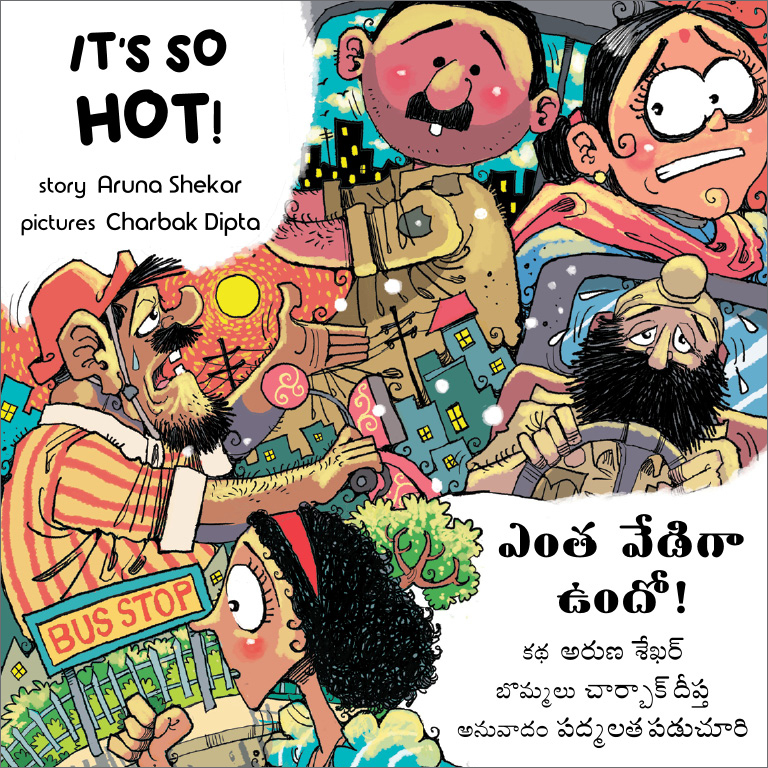
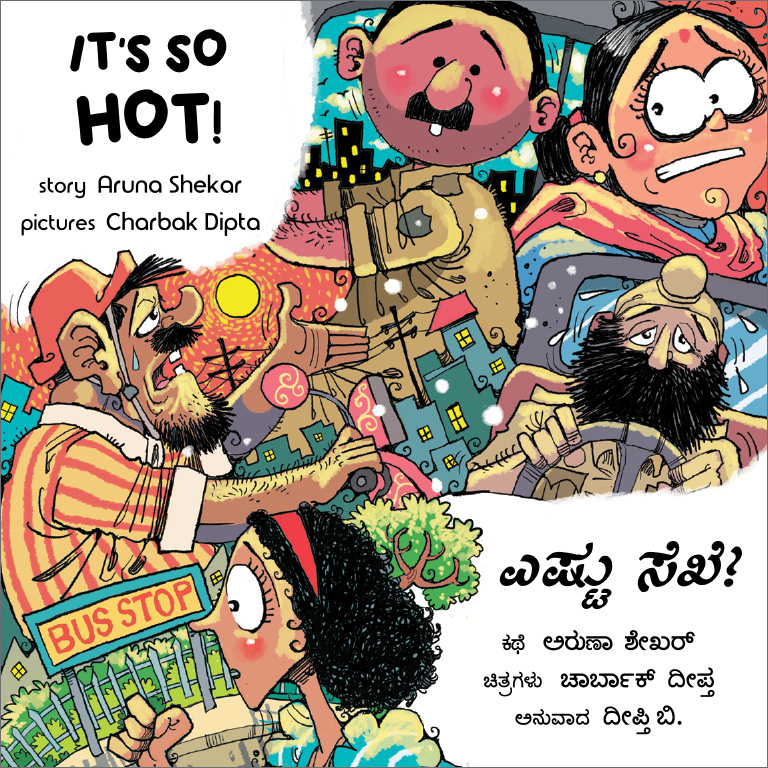
Entha Vedigaa Undo!
- Author Name:
Aruna Shekar +1
- Book Type:
- Description:
It’s a hot, hot day. Shouting people, thirsty puppies, honking cars – everyone is rushing to get away from the heat, except for one big cow… How will they all cool off? Crisp text, and furiously frantic illustrations, capture the chaos and cacophony of a scorching summer day.
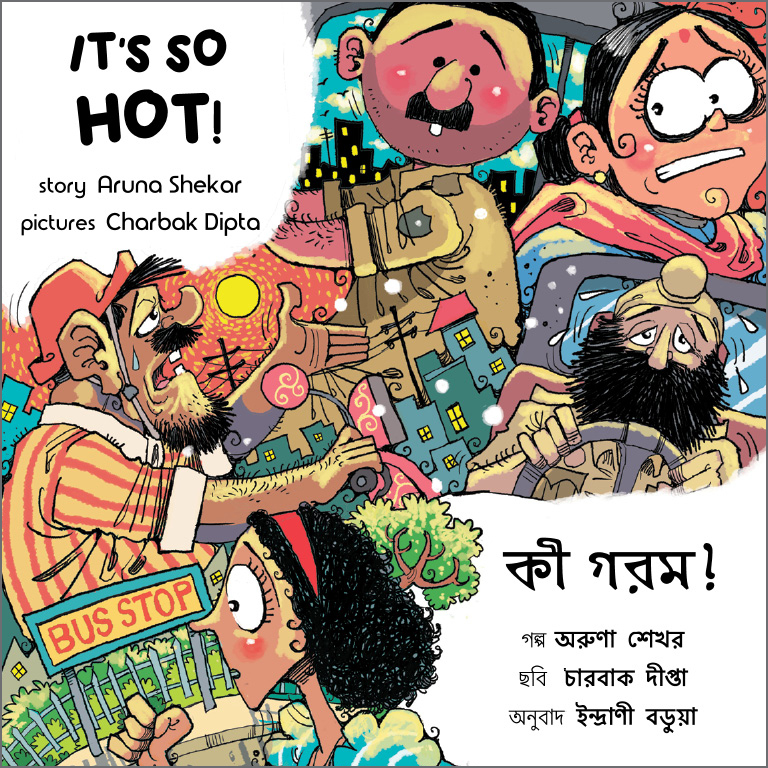
Ki Gorom!
- Author Name:
Aruna Shekar +1
- Book Type:
- Description:
It’s a hot, hot day. Shouting people, thirsty puppies, honking cars – everyone is rushing to get away from the heat, except for one big cow… How will they all cool off? Crisp text, and furiously frantic illustrations, capture the chaos and cacophony of a scorching summer day.
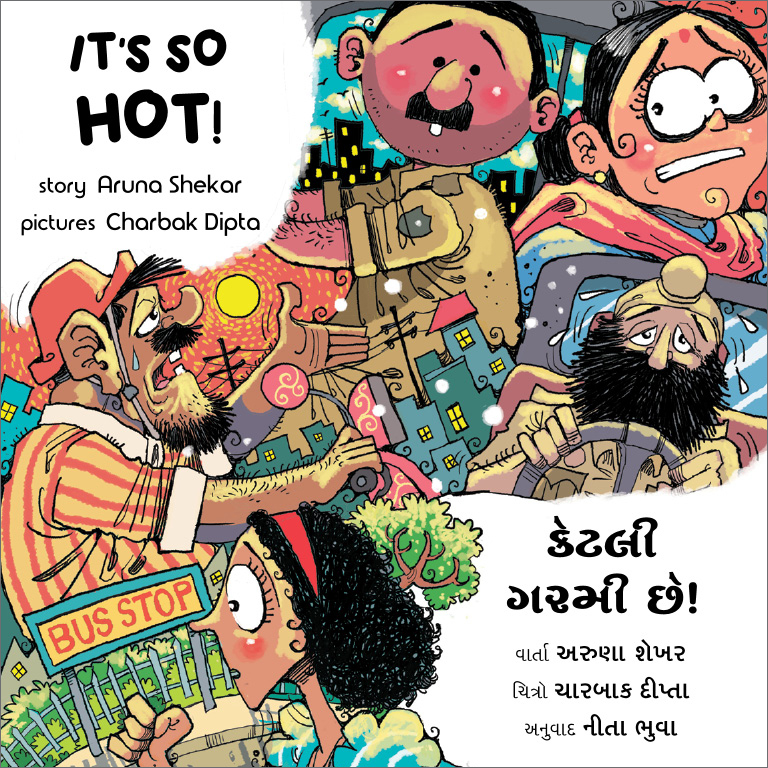
Ketli Garami Chhe!
- Author Name:
Aruna Shekar +1
- Book Type:
- Description:
It’s a hot, hot day. Shouting people, thirsty puppies, honking cars – everyone is rushing to get away from the heat, except for one big cow… How will they all cool off? Crisp text, and furiously frantic illustrations, capture the chaos and cacophony of a scorching summer day.
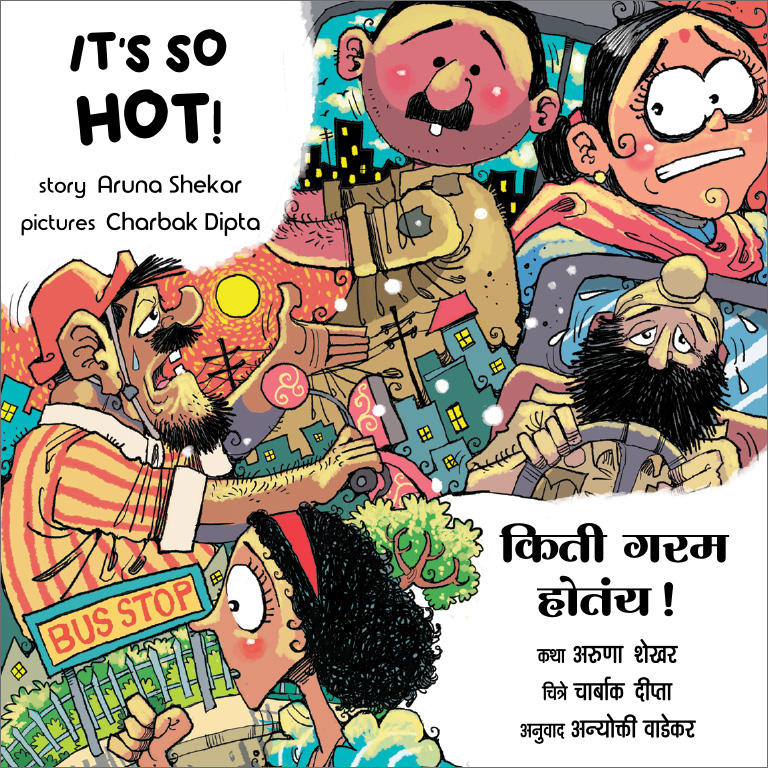
Kiti Garam Hotay!
- Author Name:
Aruna Shekar +1
- Book Type:
- Description:
It’s a hot, hot day. Shouting people, thirsty puppies, honking cars – everyone is rushing to get away from the heat, except for one big cow… How will they all cool off? Crisp text, and furiously frantic illustrations, capture the chaos and cacophony of a scorching summer day.
Kitni Garmi Hai!
- Author Name:
Aruna Shekar +1
- Book Type:
- Description:
It’s a hot, hot day. Shouting people, thirsty puppies, honking cars – everyone is rushing to get away from the heat, except for one big cow… How will they all cool off? Crisp text and furiously frantic illustrations capture the chaos and cacophony of a scorching summer day.
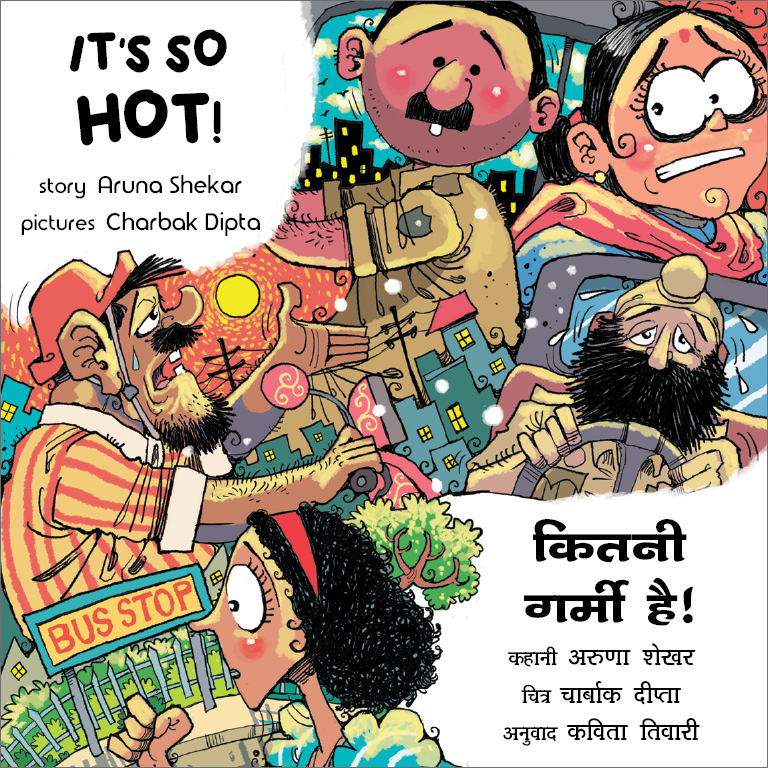
Endhoru Choodu!
- Author Name:
Aruna Shekar +1
- Book Type:
- Description:
It’s a hot, hot day. Shouting people, thirsty puppies, honking cars – everyone is rushing to get away from the heat, except for one big cow… How will they all cool off? Crisp text, and furiously frantic illustrations, capture the chaos and cacophony of a scorching summer day.
Auto Driver Asha
- Author Name:
Aruna Shekar
- Book Type:
- Description:
Asha’s first trip in her colourful auto every morning is to the flower market, where she buys a big bag of jasmine buds. Follow her through the week and through the city, as she picks up and drops off passengers at the railway station, the beach, the cricket stadium… stringing and selling jasmine all the way. Vibrant pictures liven up the route and offer snapshots of a city – Chennai!

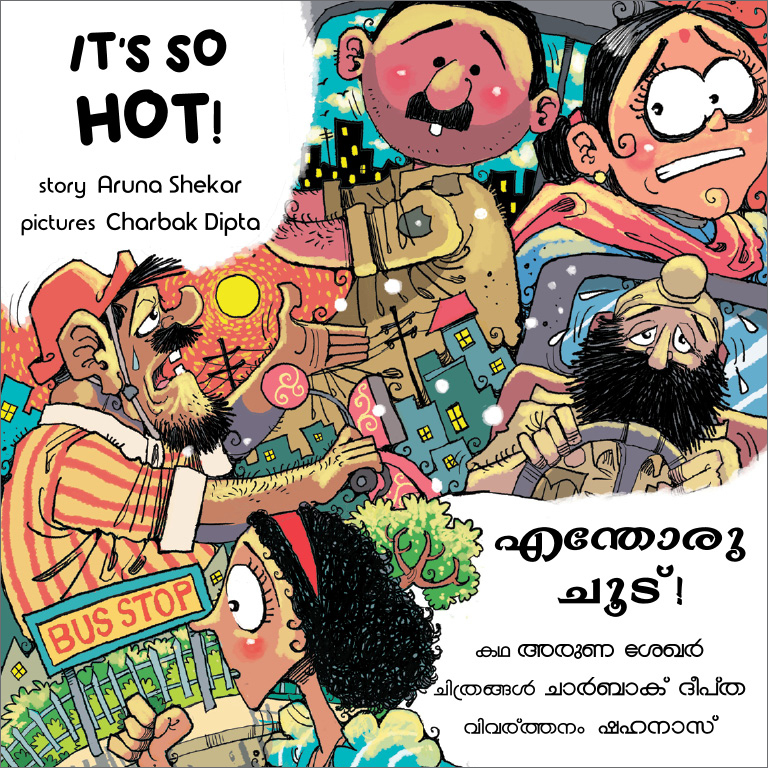
Eshtu Sekhe!
- Author Name:
Aruna Shekar +1
- Book Type:
- Description:
It’s a hot, hot day. Shouting people, thirsty puppies, honking cars – everyone is rushing to get away from the heat, except for one big cow… How will they all cool off? Crisp text, and furiously frantic illustrations, capture the chaos and cacophony of a scorching summer day.
Asha the Auto-Driver
- Author Name:
Aruna Shekar
- Book Type:
- Description:
Asha’s first trip in her colourful auto every morning is to the flower market, where she buys a big bag of jasmine buds. Follow her through the week and through the city, as she picks up and drops off passengers at the railway station, the beach, the cricket stadium… stringing and selling jasmine all the way. Vibrant pictures liven up the route and offer snapshots of a city – Chennai!

Frequently asked questions
Crow vs Vada offers a fast-paced, laugh-out-loud reading experience built on observational humour and visual storytelling. The text is crisp and action-driven, mirroring the quick reflexes of a crow eyeing food, while cheeky dialogue adds personality to what could have been a silent picture sequence. Animated illustrations capture the comic tension—Crow's determination, the tea-seller's vigilance, and the chaos of competing claims on a pile of fresh vadas. Readers finish energised, not reflective, with the satisfaction of witnessing a clever contest play out on familiar ground: the Indian street.
Crow vs Vada is ideal for early independent readers aged 4 to 7 who enjoy physical comedy and animal protagonists with attitude. It rewards children familiar with Indian tea-stall culture—the sizzle of vadas, the watchful vendor, the daring scavengers—but the visual storytelling is clear enough that any child can follow the game. The book expects curiosity about everyday scenes, an appetite for humour without a moral lesson, and the ability to read action through pictures as much as words. Parents seeking books that reflect street-level India, rather than fantasy or folklore, will find this a rare, engaging choice.
Crow vs Vada validates the small dramas of Indian street life—moments children witness daily but rarely see honoured in literature. The tea stall is a democratic space where food, commerce, animals, and people intersect, and the crow is a familiar urban survivor, both pest and personality. By centering this ordinary contest, Aruna Shekar affirms that Indian children's lived environments—noisy, resourceful, unsentimental—are worthy subjects for storytelling. In an age of imported picture-book aesthetics, the book insists that a masala vada chase carries as much narrative weight as any farmyard fable, grounding young readers in their own cultural geography.
Aruna Shekar, a multi-award-winning educator and poet, brings a teacher's eye for pacing and a poet's respect for economy of language to Crow vs Vada. Rather than anthropomorphising the crow into a moral agent, she lets it remain animal—opportunistic, persistent, unapologetic—while granting it voice through cheeky retorts that children immediately recognise as their own inner commentary. The text follows action move by move, mimicking the rhythm of a game or match, which keeps even reluctant readers turning pages. Shekar trusts the comedy of the situation itself, refusing to inflate it with lessons about sharing, patience, or kindness—a refreshing restraint in children's literature.
Crow vs Vada leaves readers with a heightened awareness of the small competitions happening around them every day—the unspoken rules, the clever tactics, the unpredictable outcomes. Emotionally, it validates the child's instinct to root for the underdog (or the trickster, depending on perspective) without demanding empathy or consequence. Culturally, it plants a quiet pride: the everyday theatre of an Indian street, often dismissed as background noise, becomes worthy of a book. Children close the final page more observant, more amused by their surroundings, and reassured that their own world—vadas, crows, tea-sellers and all—holds stories worth telling and retelling.
Delivery is free on orders of ₹1,100 or more, and books ship within 48 hours. Any delivery charge on a smaller order is shown at checkout before you pay.
If a book arrives damaged, is missing, or differs from what you ordered, contact Rachnaye support with your order number. Returns and refunds are handled under our Return & Exchange Policy.
Customer reviews
Be the first to write a review
Read this one? Tell other readers what you thought about the story, the translation and the print.