Kishore Ashore
About the book
Kishore is scared. This is his first time out at sea with his father and his friends have warned him that the sea turns men into monsters. The looming waves, the darkness creeping into the boat, and the beasts he’s sure are lurking underneath make Kishore wish he had stayed home… But then his father tells him that all good fishermen are afraid of the sea! Set in a coastal town in Tamil Nadu, this coming-of-age graphic novel explores a father-son bond with empathy. Immersive illustrations illuminate an eerie, enchanting night out on the vast waters.
Read more₹
345
₹ 276 20% off
Available
Format
About the Book
Kishore is scared. This is his first time out at sea with his father and his friends have warned him that the sea turns men into monsters. The looming waves, the darkness creeping into the boat, and the beasts he’s sure are lurking underneath make Kishore wish he had stayed home… But then his father tells him that all good fishermen are afraid of the sea!
Set in a coastal town in Tamil Nadu, this coming-of-age graphic novel explores a father-son bond with empathy. Immersive illustrations illuminate an eerie, enchanting night out on the vast waters.
More about this book
Kishore Ashore is not an adventure story but a portrait of what happens inside a child's mind when every wave feels like a threat. C.G. Salamander, a comic journalist whose work spans horror, humour, and socially conscious narratives, turns his lens here to a single night on a fishing boat off the Tamil Nadu coast. Kishore has been warned by his friends that the sea transforms men into monsters, and as darkness seeps into the boat, every creak and shadow confirms his terror. Yet his father's quiet revelation—that all good fishermen are afraid of the sea—reframes fear not as weakness but as respect, survival, even intimacy with the elements.
The graphic novel format allows Salamander to let silence and image carry the emotional weight: the looming waves rendered in stark contrasts, the boy's wide eyes against the encroaching dark, the unspoken bond between father and son expressed through gesture rather than dialogue. This is a story that recognises how profoundly place—coastal fishing communities, the rhythms of the sea, the knowledge passed between generations—shapes identity and courage.
More books by C.G. Salamander More in Graphic Novels And Comic Books
Book details
- Format
- Paperback
- Publisher
- Tulika Publishers
- Weight
- 199 grams
- ISBN-13
- 9789349993778
- Pages
- 52
- Reading time
- ~2 hrs
- Age
- 7-11
- Country of origin
- IN
- Dimensions
- 18 × 18 cm
- Language
- English
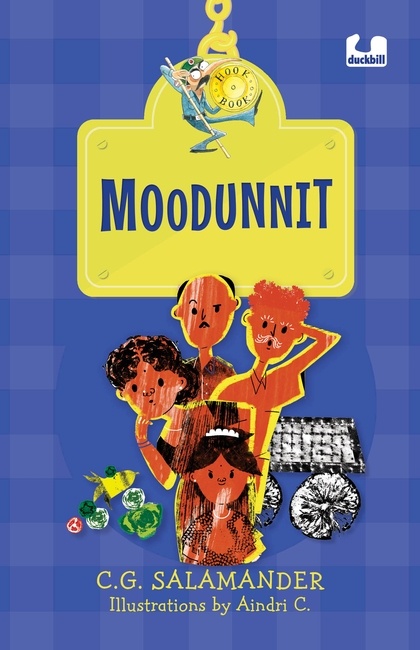
Moodunnit
- Author Name:
C.G. Salamander
- Book Type:

- Description:
The vegetables from Ammu’s parents’ cart have disappeared! Who could have stolen them? Amma and Appa are sure the thief must have come in a helicopter. But Ammu, following a trail left by the thief, finds some very strange clues … About the Hook Book Series In a world where children’s books often feel cut from the same cloth, Hook Books stand out as a vibrant blend of imagination, humour, and heart. Crafted as a bridge between picture books and early chapter books, this series delivers stories that spark joy and wonder, while remaining rooted in age-appropriate learning. Hook Books keep the fun going with: Short, digestible bits of text (perfect for budding readers) Bright colour illustrations that pull kids into the story Themes that speak to the everyday lives of children—plus a sprinkle of whimsy! From fantasy tales to those that touch on more advanced ideas, Hook Books ensure that young readers are always in for a treat, no matter their reading level. Even better, these books take children on journeys through different parts of India, giving them a taste of the rich diversity of our world through local flavours, landscapes, and cultures. Whether the story takes place in bustling cities or quiet villages, Hook Books make every setting feel like home.
Shera
- Author Name:
Allen Shaw
- Book Type:
- Description:
Shera! That’s all that obsesses Monu as he roams the forests with his best friend Raju. But the leopard is elusive. And there’s very little time now to catch a glimpse of him, for Monu’s family is moving to the city. Then Raju has an idea – dangerous, but will it work? Lush artwork recreates the panoramic shots of Uttarakhand in the short film from which this graphic novel emerges. Zooming out from this story of a childhood in the author’s own remote mountain village are larger themes of home, migration, and the ability of a community to accept a wild animal in their midst.

Pinki Digest 1 -ENGLISH
- Author Name:
Pran Kumar Sharma
- Book Type:
- Description:
Pinki Comic - Pinki is back with her naughty antics and endless fun in this Nostalgia Edition! Perfect for fans of her mischievous escapades, these comics will take you back to the playful days of your childhood. Light, fun, and full of humor, Pinki's stories are timeless classics.

The History of Mathematics in Comics
- Author Name:
Maria Stepanok
- Book Type:
- Description:
History of Mathematics in Comics turns numbers into narratives and equations into adventures. From ancient thinkers to modern geniuses, this visually rich book traces the big ideas that shaped mathematics through witty comics, clear explanations, and clever storytelling. Complex concepts unfold panel by panel, making learning feel effortless, intuitive, and fun. Whether you’re a curious student, a hesitant math lover, or a lifelong fan of graphic storytelling, this book proves that math isn’t just something you solve—it’s a story you can follow, enjoy, and remember.

Chacha Chaudhary Digest 4 -ENGLISH
- Author Name:
Pran Kumar Sharma
- Book Type:
- Description:
Chacha Chaudhary Comic – Relive the golden days of 90s comics with this premium Chacha Chaudhary Nostalgia Edition Series. Filled with witty stories, clever humour, and memorable adventures, these comics offer a nostalgic throwback to your childhood. Designed for fans who treasure India’s most iconic character, it’s time to revisit the genius whose speed surpasses a computer! Chacha Chaudhary Digest 4 offers a charming mix of hilarious and action-packed stories featuring India’s beloved wisecracking hero. With his sharp wit, composed wisdom, and Sabu’s immense strength, Chacha solves everyday problems, outsmarts villains, and uncovers quirky mysteries. Each story combines humour, Indian values, and clever problem-solving, making it suitable for readers of all ages. The digest offers light entertainment, memorable characters, and timeless appeal, capturing the classic spirit of Pran’s storytelling in an engaging, easy-to-read format.

Chacha Chaudhary Digest 6 -ENGLISH
- Author Name:
Pran Kumar Sharma
- Book Type:
- Description:
Chacha Chaudhary Comic – Relive the golden days of 90s comics with this premium Chacha Chaudhary Nostalgia Edition Series. Packed with witty tales, clever humor, and unforgettable adventures, these comics are a perfect throwback to your childhood. Crafted for fans who cherish India’s most iconic character, it’s time to revisit the genius that’s faster than a computer!

Chacha Chaudhary Digest 5 -ENGLISH
- Author Name:
Pran Kumar Sharma
- Book Type:
- Description:
Chacha Chaudhary Comic – Relive the golden days of 90s comics with this premium Chacha Chaudhary Nostalgia Edition Series. Packed with witty tales, clever humour, and unforgettable adventures, these comics are a perfect throwback to your childhood. Crafted for fans who cherish India’s most iconic character, it’s time to revisit the genius that’s faster than a computer.

Billoo And Stuntman
- Author Name:
Pran Kumar Sharma
- Book Type:
- Description:
Billoo Comic Collection - Jump into the hilarious world of Billoo, the carefree boy with a knack for getting into trouble and making us laugh. These stories bring back the charm of childhood mischief and light-hearted fun. Perfect for fans of nostalgic Indian comics.

Pinki And Boat
- Author Name:
Pran Kumar Sharma
- Book Type:
- Description:
Pinki is back with her naughty antics and endless fun in this Nostalgia Edition! Perfect for fans of her mischievous escapades, these comics will take you back to the playful days of your childhood. Light, fun, and full of humor, Pinki’s stories are timeless classics. Why You'll Love It: Type of Content: Mischievous tales filled with playful pranks and humor. Premium Quality: High-grade prints for a delightful reading experience. Nostalgia Edition: Revisit the magic of 90s childhood comics. 90s Favorite: Cherish the timeless joy of Pinki’s adventures. Fun for Everyone: Perfect for kids and adults who love lighthearted fun. Join Pinki’s world of pranks and mischief and relive the joy of the 90s!

Chacha Chaudhary And Fairy Land
- Author Name:
Pran Kumar Sharma
- Book Type:
- Description:
Chacha Chaudhary Comic – Relive the golden days of 90s comics with this premium Chacha Chaudhary Nostalgia Edition Series. Packed with witty tales, clever humour, and unforgettable adventures, these comics are a perfect throwback to your childhood. Crafted for fans who cherish India’s most iconic character, it’s time to revisit the genius that’s faster than a computer!

P.N.K Panicker's Ghost Stories
- Author Name:
Suresh Eriyat
- Book Type:
- Description:
Based on the National Award-winning animated film in Malayalam, Kandittund! Strange creatures lurk in the dark night of a Kerala village, and this 93-year-old claims to have seen them all. Inspired by his father – incorrigible fabricator, dazzling raconteur, P. N. K. Panicker himself! – Suresh Eriyat set out to make an animation film like “An Instruction Manual for ghosts”. Adithi Krishnadas drew up an illustrative style like a graphic novel, and the hilarious film turned into exactly that. This English adaptation carries the oral flavour of the original spook stories... and out prance Kuttichathans and Eenampechis to send some spicy shivers down the spine!

Chacha Chaudhary And Magical Perfume
- Author Name:
Pran Kumar Sharma
- Book Type:
- Description:
Chacha Chaudhary Comic – Relive the golden days of 90s comics with this premium Chacha Chaudhary Nostalgia Edition Series. Packed with witty tales, clever humor, and unforgettable adventures, these comics are a perfect throwback to your childhood. Crafted for fans who cherish India’s most iconic character, it’s time to revisit the genius that’s faster than a computer!

Billoo Digest 1 -ENGLISH
- Author Name:
Pran Kumar Sharma
- Book Type:
- Description:
Billoo Comic Collection invites you to explore the humorous world of Billoo, a carefree boy prone to getting into trouble and making us laugh. These stories evoke childhood mischief and cheerful fun, making them ideal for fans of nostalgic Indian comics. Billoo Digest 1 features lively and entertaining classic stories about Billoo, a street-smart, fun-loving teenager created by Pran. Packed with humor, mischief, and everyday adventures, this digest showcases Billoo’s carefree life—where cricket matches, friendly teasing, and hilarious misunderstandings are central to daily life. Whether he’s outwitting Colonel Three-Nought-Three, avoiding the sharp-tongued Billi, or dealing with friendships with Gabdu, Jozi, and Mono, Billoo’s wit keeps readers amused at every point. His simple yet clever ways of solving problems highlight youthful charm and relatable fun. The stories combine comedy, light tension, and neighborhood adventures, all in Pran’s unique storytelling style. Billoo Digest 1 provides a charming introduction to this beloved character—offering clean humor, engaging episodes, and a nostalgic glimpse into Indian teenage life filled with warmth, laughter, and timeless appeal.

Billoo And School
- Author Name:
Pran Kumar Sharma
- Book Type:
- Description:
Billoo Comic Collection - Jump into the hilarious world of Billoo, the carefree boy with a knack for getting into trouble and making us laugh. These stories bring back the charm of childhood mischief and light-hearted fun. Perfect for fans of nostalgic Indian comics.

Chacha Chaudhary And Aflatoon
- Author Name:
Pran Kumar Sharma
- Book Type:
- Description:
Chacha Chaudhary Comic – Relive the golden days of 90s comics with this premium Chacha Chaudhary Nostalgia Edition Series. Packed with witty tales, clever humour, and unforgettable adventures, these comics are a perfect throwback to your childhood. Crafted for fans who cherish India’s most iconic character, it’s time to revisit the genius that’s faster than a computer!

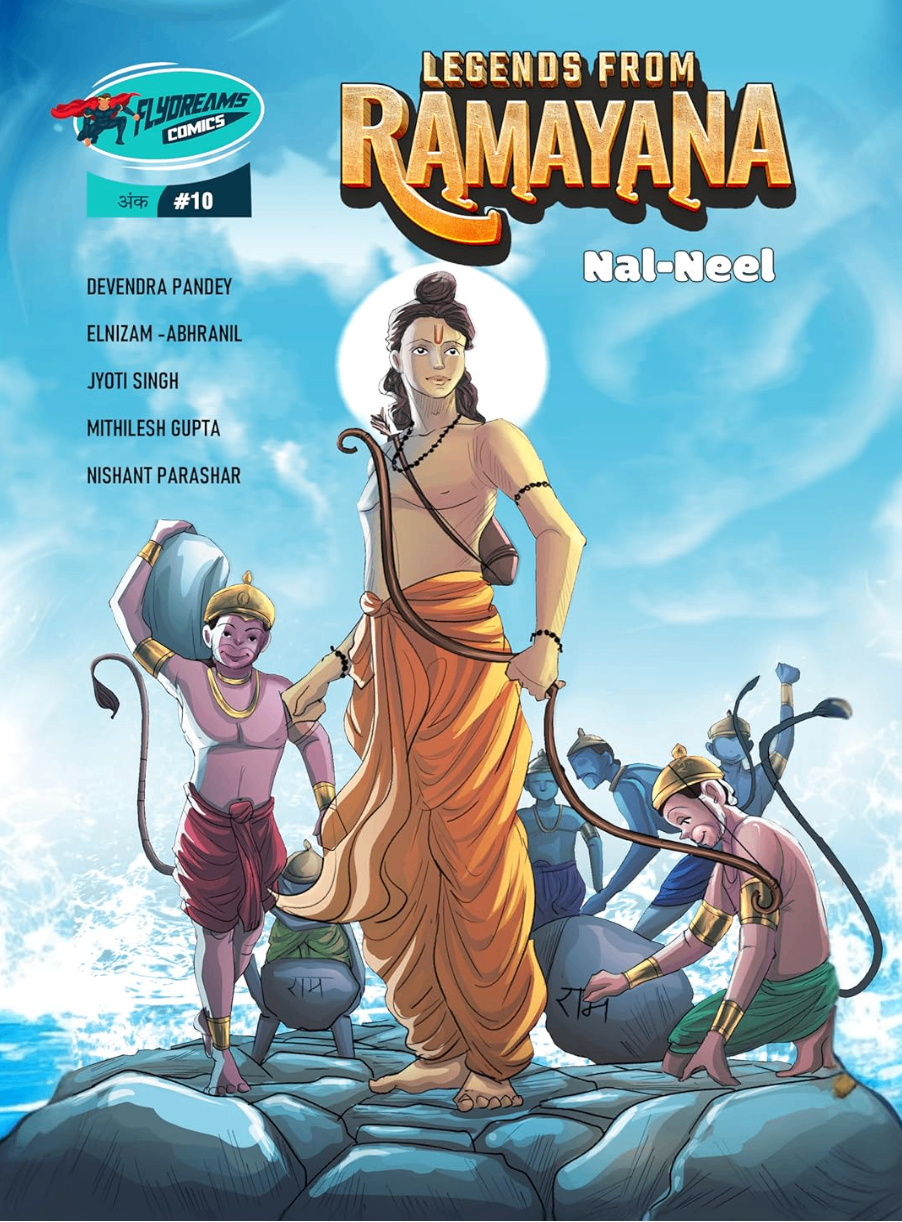
Legends from Ramayana — Nal-Neel
- Author Name:
Devendra Pandey
- Book Type:
- Description:
The bridge built by Nal-Neel is not a miracle but a grand construction built with the use of science and knowledge. Ram Setu is not only a symbol of our faith today, but it is also a living proof of the rich history of India. ‘Ram Setu’ has been recorded in history as an indelible symbol of love for ages. Story of 'Nal-Neel' included in Shri Ram Sena. Was Shri Ram's army ready before his birth?
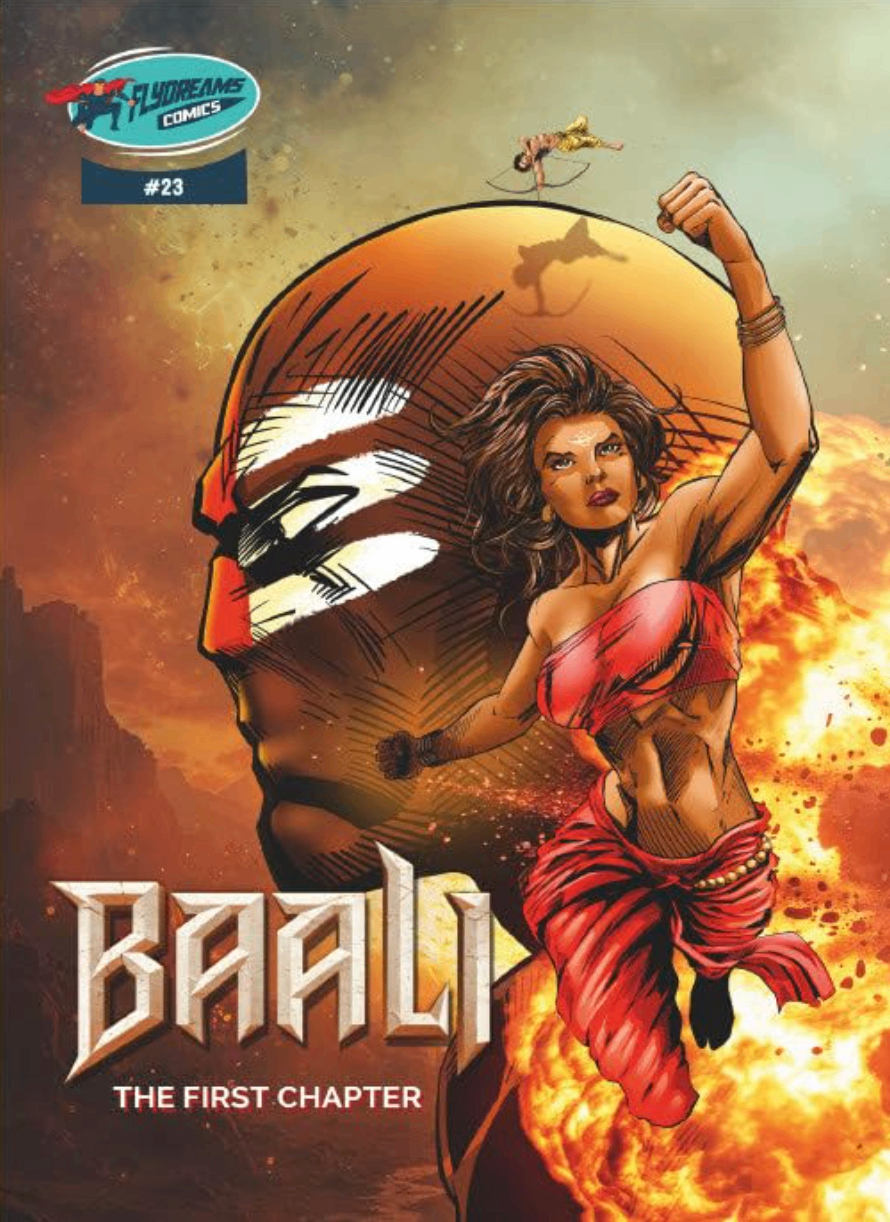
Baali - The First Chapter
- Author Name:
Devendra Pandey
- Book Type:
- Description:
An event in the Treta Yuga laid the foundation of a story that could change an entire era. A quest that not only threatened the world but could destroy an entire age. A war that has been waged for centuries is now surfacing before the world. A mysterious warrior whose purpose is unknown. And some secret organisations that are now in his crosshairs.
Pinki And Icecream
- Author Name:
Pran Kumar Sharma
- Book Type:
- Description:
Pinki is back with her naughty antics and endless fun in this Nostalgia Edition! Perfect for fans of her mischievous escapades, these comics will take you back to the playful days of your childhood. Light, fun, and full of humor, Pinki’s stories are timeless classics. Why You'll Love It: Type of Content: Mischievous tales filled with playful pranks and humor. Premium Quality: High-grade prints for a delightful reading experience. Nostalgia Edition: Revisit the magic of 90s childhood comics. 90s Favorite: Cherish the timeless joy of Pinki’s adventures. Fun for Everyone: Perfect for kids and adults who love lighthearted fun. Join Pinki’s world of pranks and mischief and relive the joy of the 90s!

Chacha Chaudhary And Emperor Ashoka''s Treasure
- Author Name:
Pran Kumar Sharma
- Book Type:
- Description:
Chacha Chaudhary Comic – Relive the golden days of 90s comics with this premium Chacha Chaudhary Nostalgia Edition Series. Packed with witty tales, clever humour, and unforgettable adventures, these comics are a perfect throwback to your childhood. Crafted for fans who cherish India’s most iconic character, it’s time to revisit the genius that’s faster than a computer!

Chacha Chaudhary And Banarasi Thug
- Author Name:
Pran Kumar Sharma
- Book Type:
- Description:
Chacha Chaudhary Comic – Relive the golden days of 90s comics with this premium Chacha Chaudhary Nostalgia Edition Series. Packed with witty tales, clever humor, and unforgettable adventures, these comics are a perfect throwback to your childhood. Crafted for fans who cherish India’s most iconic character, it’s time to revisit the genius that’s faster than a computer!

Frequently asked questions
Kishore Ashore offers a quiet, contemplative experience that unfolds in image and silence rather than dialogue-heavy drama. The pacing mirrors the slow creep of night on the ocean—moments of stillness punctuated by surges of fear as Kishore confronts what he imagines lurks beneath the boat. Salamander uses the graphic novel form to let shadow, wave, and gesture convey emotion, creating an atmosphere that is more meditative than action-driven. What lingers is not plot but feeling: the tenderness of a father who teaches courage by admitting his own fear, and the recognition that growing up sometimes means sitting with terror until it becomes something else.
Kishore Ashore is ideal for young readers navigating their own fears, and for adults interested in how graphic storytelling can render internal landscapes—anxiety, doubt, the need for reassurance—without relying on words. It suits readers who appreciate empathy-driven narratives and stories grounded in specific cultural contexts, here the fishing communities of Tamil Nadu. The book expects patience with quiet pacing and a willingness to let illustrations do the emotional work. It will resonate with anyone drawn to coming-of-age stories that prioritise emotional truth over external adventure, and readers curious about how traditional livelihoods and family bonds shape a child's sense of self.
Fishing communities along India's coasts remain economically and socially marginalised, their knowledge systems and ways of life often invisible in mainstream narratives. Kishore Ashore centres a child from this world, treating his father's vocation not as backdrop but as the substance of identity and courage. At a time when climate change, coastal development, and mechanisation threaten traditional fishing practices, the book offers a rare portrait of intergenerational knowledge transfer—a father teaching his son not just to fish but to respect the sea's power. For Indian readers, it affirms that stories of courage and connection exist in every community, not only in urban or elite settings.
Rather than resolving fear through triumph or rescue, Kishore Ashore validates it as a necessary part of wisdom. The father's admission that all good fishermen are afraid reframes fear from a weakness to be overcome into a form of respect and attunement to danger. Salamander, known for blending horror and empathy in his work, uses the visual language of the graphic novel to externalise the boy's anxiety—looming waves, encroaching darkness, imagined beasts—then gently undercuts it not by dispelling the threat but by recontextualising it. This is a rare narrative choice: courage presented not as the absence of fear but as the willingness to carry it alongside one's father.
Readers carry away a quiet recognition that fear, when shared and named, becomes a bridge rather than a barrier. The book leaves an emotional impression of tenderness—a father who does not dismiss his son's terror but meets it with honesty about his own. Visually, the immersive illustrations of the night sea linger, reminding readers of how profoundly environment shapes who we become. For young readers, the story offers permission to be afraid and still show up; for adults, it serves as a reminder of how much courage it takes to admit vulnerability, especially to those we are meant to protect. The book's cultural specificity—its rootedness in Tamil Nadu's fishing communities—expands into something universal: the rituals through which we learn to trust ourselves and each other.
Delivery is free on orders of ₹1,100 or more, and books ship within 48 hours. Any delivery charge on a smaller order is shown at checkout before you pay.
If a book arrives damaged, is missing, or differs from what you ordered, contact Rachnaye support with your order number. Returns and refunds are handled under our Return & Exchange Policy.
Customer reviews
Be the first to write a review
Read this one? Tell other readers what you thought about the story, the translation and the print.