
Herstory
₹
100
₹ 83 (17% off)
Available
Herstory is a new collection of poems by Neha Bansal, a civil servant, providing a fresh perspective on the lives of others.
Read moreAbout the Book
Herstory is a new collection of poems by Neha Bansal, a civil servant, providing a fresh perspective on the lives of others.
Book Details
History of Marathi Literature
- Author Name:
Kusumawati Deshpande +1
- Book Type:

- Description:
Marathi has an unbroken literary tradition of over eight centuries, divided conveniently into two distinct periods, classical and modern. The Classical period spans six centuries, remarkable for poetry, devotional and heroic. Jnandev, Namdev, Eknath, Tukaram and Ramdas have become household names throughout India. While Virasaiva, Jain, and Muslim poets have enriched the secular and spiritual content, wandering minstrels have sung heroic ballads. New forms of literature have flowered from the nineteenth century under the impact of English education and western thought. The Chiplunkar, Apte, Anil Despande, Phadke, Khandekar, Mardhekar, Rege and Gadgil. Tracing the earliest reference to Maharashtra in a rock inscription of the fourth century, the history concludes with the formation of the state in 1960.

THE TALE OF THE TWIN WARRIORS
- Author Name:
Bannanje Babu Amin +1
- Book Type:
- Description:
Oral epics in any Indian language are generally associated with certain specific communities, defined by their traditional occupations; and the present oral epic Koti Channaya belongs to the Billava community. This poetic narrative, which records the life and adventures of the two cultural heroes of the Billava community, their yearning for cultivable land, their brave opposition to the established powerful classes, and their tragic end, is sung by the members of the particular communities called Pambada and Parava of coastal Karnataka, during the annual worship of the twin heroes. The oral epic, Koti Chennaya unravels the world of Billava community (traditionally toddy-tappers) of coastal Karnataka recording in the process the life and adventures as also the travails and tribulations of the two cultural heroes of Billava community. Most of the oral epics begin with a 'Creation Myth', which begins with the creation of the entire universe step by step, thus focuses on the legendary first parents/ancestors of the community concerned. Such a myth, besides glorifying the cultural heroes of the epic, gives a privileged position to the community by linking it with the rest of the world and gives it a socio-cultural identity. Koti Channaya also begins with a 'Creation Myth'. A recent study undertaken by UNESCO says that half of the 6,700 languages spoken in the world at present face the danger of extinction before the end of this century.

Lady Tarzan
- Author Name:
Lavanya Karthik +1
- Book Type:
- Description:
लेडी टार्ज़न उर्फ जमुना टुडू ने जंगलों को बचाने के लिए अपनी जान दांव पर लगा दी. उनकी कहानी संघर्ष और प्रेम की कहानी है। लावण्या कार्तिक ने लेडी टार्ज़न की कहानी दोबारा सुनाई। कहानी पूछती है, "क्या हम किसी चीज़ से प्यार करते हैं?" यह प्रश्न हमें आशा देता है क्योंकि हम किसी ऐसे व्यक्ति के लिए खड़े हो सकते हैं जिससे हम प्यार करते हैं। समर्थन के लिए। राजीव ईपे के चित्र कहानी को ध्वनि प्रदान करते हैं। एक स्वस्थ जंगल की आवाज़. Age group 9-12 years

Pustaka Kollalu Hodevu Naavu
- Author Name:
Rukmini Banerji +1
- Book Type:
- Description:
Awaited

Petege Hoguvudu
- Author Name:
Meera Tendolkar +1
- Book Type:
- Description:
Details awaited

Prem Gali Ati Saankri
- Author Name:
Ramratan Awasthi
- Book Type:
- Description:
Book

Super Genius Computer Learner-3
- Author Name:
Manuj Bajaj +1
- Book Type:
- Description:
आधुनिक युग के विकास में कंप्यूटर का अतुलनीय योगदान है। आज किसी भी क्षेत्र में कंप्यूटर की उपस्थिति अनिवार्य रूप में देखी जा सकती है। हमारे राजमर्रा के लगभग सभी कार्य कंप्यूटर पर निर्भर हैं। बैंकका लेन-देन, टिकट, ए.टी.एम. सेवा, मोटरकार व हवाई जहाज नियंत्रण, पुस्तक-प्रकाशन, दस्तावेज तैयार करना, फोटो, फिल्म व संगीत से जुड़े कार्य, कक्षा में पढ़ाई करना इत्यादि सभी कार्य कंप्यूटर की मदद से सरलता से, तेजी से और त्रुटिहीनता के साथ पूरे हो जाते हैं। यही कारण है कि आज के युग को ‘कंप्यूटर का युग’ कहा जाता है। विज्ञान, तकनीकी, शोध, चिकित्सा, प्रौद्योगिकी, उड्डयन, संचार एवं शिक्षा के साथ-साथ कंप्यूटर ने कृषि के क्षेत्र में भी अहम भूमिका निभाई है। कंप्यूटर क्रांति ने विश्व को एकसूत्र में बाँध दिया है। इंटरनेट ने तो कंप्यूटर के प्रचार-प्रसार में और भी बड़ी भूमिका निभाई है। इंटरनेट के माध्यम से आज एक ‘क्लिक’ करके हम दुनिया के किसी भी कोने में पहुँच सकते हैं। इंटरनेट टेलीफोनी और इ-मेल ने संचार क्रांति को पंख लगा दिए हैं। इंटरनेट टेलीफोन से हम लगभग निशुल्क दुनिया के किसी भी कोने में टेलीफोन की तरह बात कर सकते हैं। ‘चैट’ के जरिए ‘लाइव’ बातचीत की जा सकती है।

Gypsy Mind, Caged Soul
- Author Name:
Rajan Verma
- Book Type:
- Description:
Gypsy Mind, Caged Soul is a collection of selected poems by the author. As the title suggests the human mind loves to travel, explore and dream. It’s the soul that gets caged owing to worldly wrap of duties responsibilities & boundries created by us being in that space. But the soul transcends barriers of any kinds. The only escape, therefore, is to venture into the unknown through the world of poetry. A bouquet of emotions is presented in this book.

Diaries That Speak
- Author Name:
Aryan
- Book Type:
- Description:
Meet a young poet who has been writing since he was eight, a twenty-year-old wordsmith whose soulful verses emanate from the depths of raw emotions. With a tender heart and a habit of writing from it, Aryan effortlessly captures the essence of love, longing and the human experience. Each carefully crafted poem reveals a heartfelt journey, inviting readers to embark on an intimate exploration of humanity. Embrace the beauty of their poignant compositions and allow this poet to touch your soul with their profound insights.

Worlds First Book On Haiku Poetry
- Author Name:
Carlos Luis
- Book Type:
- Description:
Haiku is a very short form of Japanese poetry consisting of 17 syllables arranged in three lines of 5, 7, and 5 syllables respectively. But against all odds, this is a collection of feelings written in three lines. An economical masterpiece that Trades you through realities of life; speaking of love, relationships, paradoxes in life, you name it you have it in here.

Love In Jamshedpur
- Author Name:
Ajitabha Bose
- Book Type:
- Description:
Do you remember who was your first crush? Did you too dream of marrying her? Everyone does somehow, isn't it? So did Arnab! When he saw simpi for the very first time, he fell in for a forever-love. Yet, the dream took a different turn when she rejected him time and again. What lies ahead? Will Arnab be able to impress his first love? Or will he fail, again? Bestselling author, ajitabha Bose brings to you a true tale of love based in the small town of Jamshedpur.

My Senior Girlfriend
- Author Name:
Yash Sharma
- Book Type:
- Description:
Yash Sharma is author of the book fl.A.M.E.S. His book talks about romance and issues is that are relatable to the youth of this generation. It told the story of a girl who attempts to move on from her lover who had left her. His book get a decent response from young readers and the one of the biggest newspaper groups of Rajasthan with millions of readers reviewed favourably, giving it 5 out of 5 stars. Ash is a 21-year year-old from a small town in Rajasthan, rajgarh.He is pursuing his B.Tech. In Civil Engineering from Alwar district. He started writing at the early age of 13. His hobbies include reviewing books and movies, and writing scripts, screenplay and music. He has written more than a thousand quotes and poems. He is a bookworm and has quite an interest in politics and Hollywood. He is also a storyteller and an actor too. His passion for to be an actor lead him to theatre at a very young age. He has also wrote numerous plays for his school and college festivals.

Our Love That Fell Apart
- Author Name:
Nupur Luthra
- Book Type:
- Description:
Brian serves grey with divorce papers, announces he’s gay and is in love with someone else. Her whole world falls apart, filled with rage, she has no one to turn too. Brian feels bad and is miserable for causing her a lot of pain, but the heart wants what it wants. Brian and his lover get married, which causes grey further pain. What happens next? How does grey deal with the pain and agony? Does it all end well or does someone die in the end? Find out in our love falls apart.

Dear Moon
- Author Name:
Soumi Dutta
- Book Type:
- Description:
The story, written in an epistolary style, talks about attempts the narrator makes in order to erase the memories of her one true love, from her heart. But can such love be unremembered? Read on to find out.

The Gift
- Author Name:
Ruchi Prabhu
- Book Type:
- Description:
Don’t read this book. Do NOT read this book Go watch YouTube videos Go watch series on Netflix Go listen to some songs on Ganna.com But, Just put the book down quietly and walk away… WARNING! In this book I have had my share of experiencing romance, hatred, longing and drops the most. An individual observes a bunch to pick up nuisance of personalities and relationship dynamics of those around him/her. This book contains my way of expressing through haiku or Epigrams which evoke my personal feelings dealing with a good ending and sometimes with the ray of no hope in a scalding weather.

Eyes I Have Been Searching For
- Author Name:
Haseena T
- Book Type:
- Description:
For avyukta falling in love was everything. She is vibrant that way, but she never knew where to find love until she met those eyes.

The Bestseller
- Author Name:
Ajitabha Bose
- Book Type:
- Description:
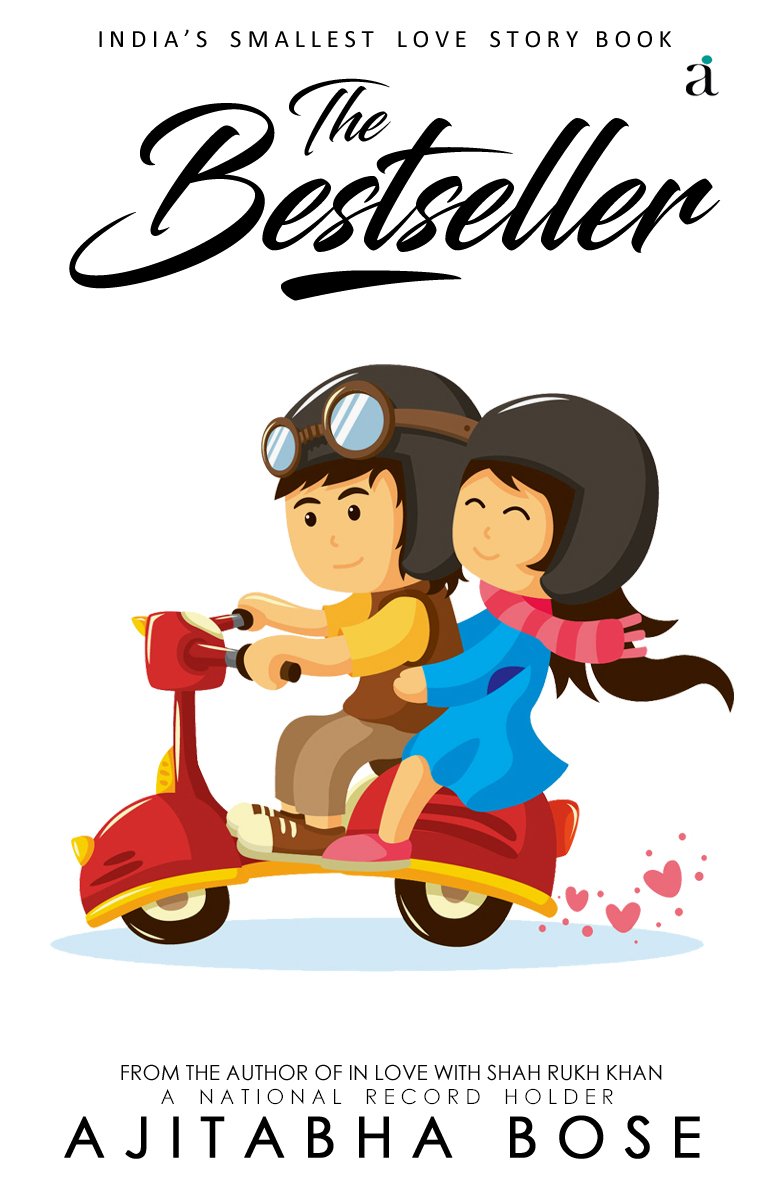
Every author wants to become a bestseller one day. Do you know over 1 lac books are published in India every year! Only a few become a bestseller. Have you ever wondered how it is to live a life of a Bestselling author? Come, join me and read a Story of life, love and dreams. It's a story of priyanshi and her dream to become a bestseller. || Book Teaser by Rajeev Khandelwal || "size doesn't matter when it's love." - Shah Rukh Khan || "ajitabha wants to bring a new trend in Books for the busy generation." - The Telegraph || "big love stories in small packages." - Hindustan times || "love stories runs in his veins." - India today || "it's not easy to sum Up a story in a few pages and keep the emotions intact! Ajitabha's attempt to that is worth appreciating." - Sudeep Nagarkar.
Symphonies of a Curious Mind
- Author Name:
Hash Kumar
- Book Type:
- Description:
We all speak in one language or the other. The many cultures have varieties languages that help them interact with one another. However, our mind sometimes lack the words to express the emotions that it experiences in bouts ecstasy and enlightenment. This book holds a such verses that have not escaped the mind in a way original to the author. Kumar Harsh has put his mind and heart in perfect synchrony and has written these with utmost care and affection. The readers might find it delightful to read. It's a treat for the heart and mind. Symphonies a Curious Mind will take you back to all those unfelt emotions and will remind you things intangible, even those close to touch sometimes. A harmony modern times. Organic, Dexterous, Easy.
Songs of Life (Collection of Poems)
- Author Name:
Dr. A.P.J. Abdul Kalam
- Book Type:
- Description:
The Songs of Life is presented with selected poems from my books of poem Life Tree, Luminous Sparks and My Journey and also some of my new poems. The purpose of this Songs of Life is to celebrate the human life. In spite of many sufferings all around, God has blessed us with his grace in multiple dimensions of nature smiling at us. Hence, Songs of Life is the Song of every heart and soul in happiness and, in sorrow. The result of the poems should be to cheer our hearts.

The Bestseller - Hindi
- Author Name:
Ajitabha Bose
- Book Type:
- Description:
Every author wants to become a bestseller one day. Do you know over 1 lac books are published in India every year! Only a few become a bestseller. Have you ever wondered how it is to live a life of a Bestselling author? Come, join me and read a Story of life, love and dreams. It's a story of priyanshi and her dream to become a bestseller. || Book Teaser by Rajeev Khandelwal || "size doesn't matter when it's love." - Shah Rukh Khan || "ajitabha wants to bring a new trend in Books for the busy generation." - The Telegraph || "big love stories in small packages." - Hindustan times || "love stories runs in his veins." - India today || "it's not easy to sum Up a story in a few pages and keep the emotions intact! Ajitabha's attempt to that is worth appreciating." - Sudeep Nagarkar.

Customer Reviews
Be the first to write a review...
Herstory by Neha Bansal is a rare document: poetry written from inside the Indian bureaucracy, where witness and empathy meet the constraints of administrative language. Published by Sahitya Akademi, this collection refuses the distance of reportage, instead inhabiting the silences of women encountered in field postings — rural women petitioning offices, colleagues navigating glass ceilings, survivors whose stories rarely surface in official records. Bansal's civil service career furnishes not just subject matter but a prosody of restraint: her poems hold tragedy without melodrama, dignity without romanticisation. The title itself — Herstory — signals an archival ambition, reclaiming narratives erased by patriarchal documentation. Each poem functions as counter-testimony, offering what desk files cannot: the emotional register of dispossession, resilience, and quiet rebellion. For readers drawn to poetry that bridges institutional observation and intimate human truth, Herstory offers a singular achievement in contemporary Indian verse.
What kind of reading experience does Herstory by Neha Bansal offer?
Herstory offers a reading experience of controlled emotional intensity, where each poem unfolds like a case file reconsidered with compassion. The pace is deliberate, the tone neither sentimental nor detached — Bansal writes with the precision of someone trained to document facts but haunted by what facts leave out. Readers will feel the tension between bureaucratic observation and lyric empathy, as the poems inhabit voices of women whose stories official language flattens. It rewards close attention to quiet craft, the way restraint amplifies grief or defiance in a single image.
Who should read Herstory, and what background does it expect?
- Readers interested in feminist poetry that centres Indian women's lived realities beyond urban liberal discourse.
- Those curious about how civil service experience shapes literary voice — bureaucracy as both subject and aesthetic constraint.
- Anyone drawn to socially engaged poetry that refuses easy outrage, preferring witness over polemic.
- Readers familiar with contemporary Indian English poetry will recognise Bansal's debt to plain-spoken intimacy, but no prior knowledge is required.
Why is Herstory culturally significant to Indian readers today?
Herstory arrives as India reckons with persistent gender violence and the bureaucratic machinery that often fails women petitioners. Bansal's dual identity — poet and administrator — makes visible the gap between policy and lived experience. The collection speaks to a generation demanding that women's histories be recorded with nuance, not statistics. At a time when women's testimonies in courtrooms, gram sabhas, and social media challenge official narratives, Bansal's poems perform a parallel act: documenting what survives beyond files, what the state sees but cannot speak.
What makes Neha Bansal's approach to women's stories distinctive?
Bansal writes from within the institutions she critiques, giving her work an insider's access and an insider's moral burden. Unlike activist poetry that addresses power from outside, Herstory inhabits the discomfort of being both witness and functionary. Her poems do not offer solutions or slogans; they linger in the silence after a petitioner leaves the office, the detail that haunts a case note. This double vision — administrative and empathic — produces a rare ethical texture, where restraint becomes a form of respect for subjects who rarely control how their stories are told.
What does Herstory leave with the reader after finishing it?
Herstory leaves readers with a heightened awareness of the stories hidden in plain sight — the women who populate government offices, village surveys, news items, then vanish from collective memory. Emotionally, it instills a patient, dignified sorrow, free of melodrama. Intellectually, it challenges the reader to consider how language itself can be an act of archival justice. Culturally, it affirms that poetry can perform the work of testimony when official records fail, offering a counter-archive built from lyric attention rather than administrative efficiency.