732 Miles
About the book
In the dead of the night on August 14, 1947, at the cusp of a new era, as a throng of people on the street were celebrating, Bhavna let out a scream, so loud, and pushed her baby out. It was special—both Indya and India were born. A few days later, the boundary line to divide Pakistan and India was laid. The two nations that waited decades for the hard-earned freedom were not prepared for that. Families separated, friends estranged, women raped, and the killings increased with every passing day. Amidst those turmoil, a family with a just born baby, Indya, risked everything, only to reach home. Were they able to survive history’s greatest migration ever?
Read more₹
140
119 15% off
Unavailable
Format
About the Book
In the dead of the night on August 14, 1947, at the cusp of a new era, as a throng of people on the street were celebrating, Bhavna let out a scream, so loud, and pushed her baby out. It was special—both Indya and India were born.
A few days later, the boundary line to divide Pakistan and India was laid. The two nations that waited decades for the hard-earned freedom were not prepared for that. Families separated, friends estranged, women raped, and the killings increased with every passing day.
Amidst those turmoil, a family with a just born baby, Indya, risked everything, only to reach home. Were they able to survive history’s greatest migration ever?
Book details
- Format
- Digital book
- Publisher
- Inkfeathers Publishing
- ISBN-13
- 978-93-90882-44-1
- Pages
- 199
- Reading time
- ~7 hrs
- Age
- 18+
- Language
- English
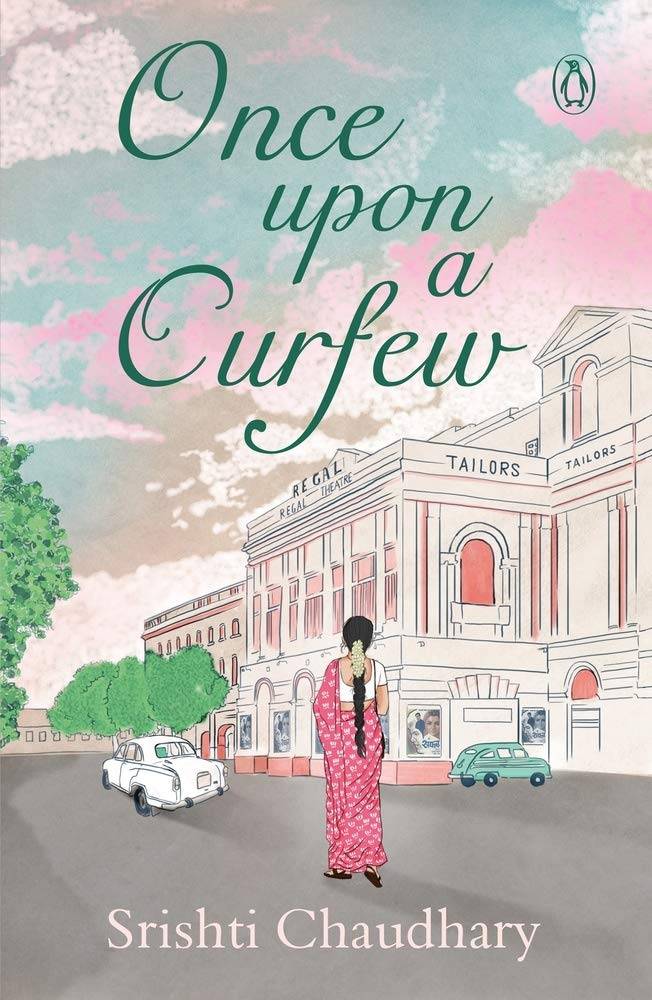
Once Upon a Curfew
- Author Name:
Srishti Chaudhary
- Book Type:

- Description:
It is 1974. Indu has inherited a flat from her grandmother and wants to turn it into a library for women. Her parents think this will keep her suitably occupied until she marries her fiancé, Rajat, who's away studying in London. But then she meets Rana, a young lawyer with sparkling wit and a heart of gold. He helps set up the library, and their days light up with playful banter and the many Rajesh Khanna movies they watch together. When the Emergency is declared, Indu's life turns upside down. Rana finds himself in trouble, while Rajat decides it's time to visit India and settle down. As the Emergency pervades their lives, Indu must decide not only who but what kind of life she will choose.
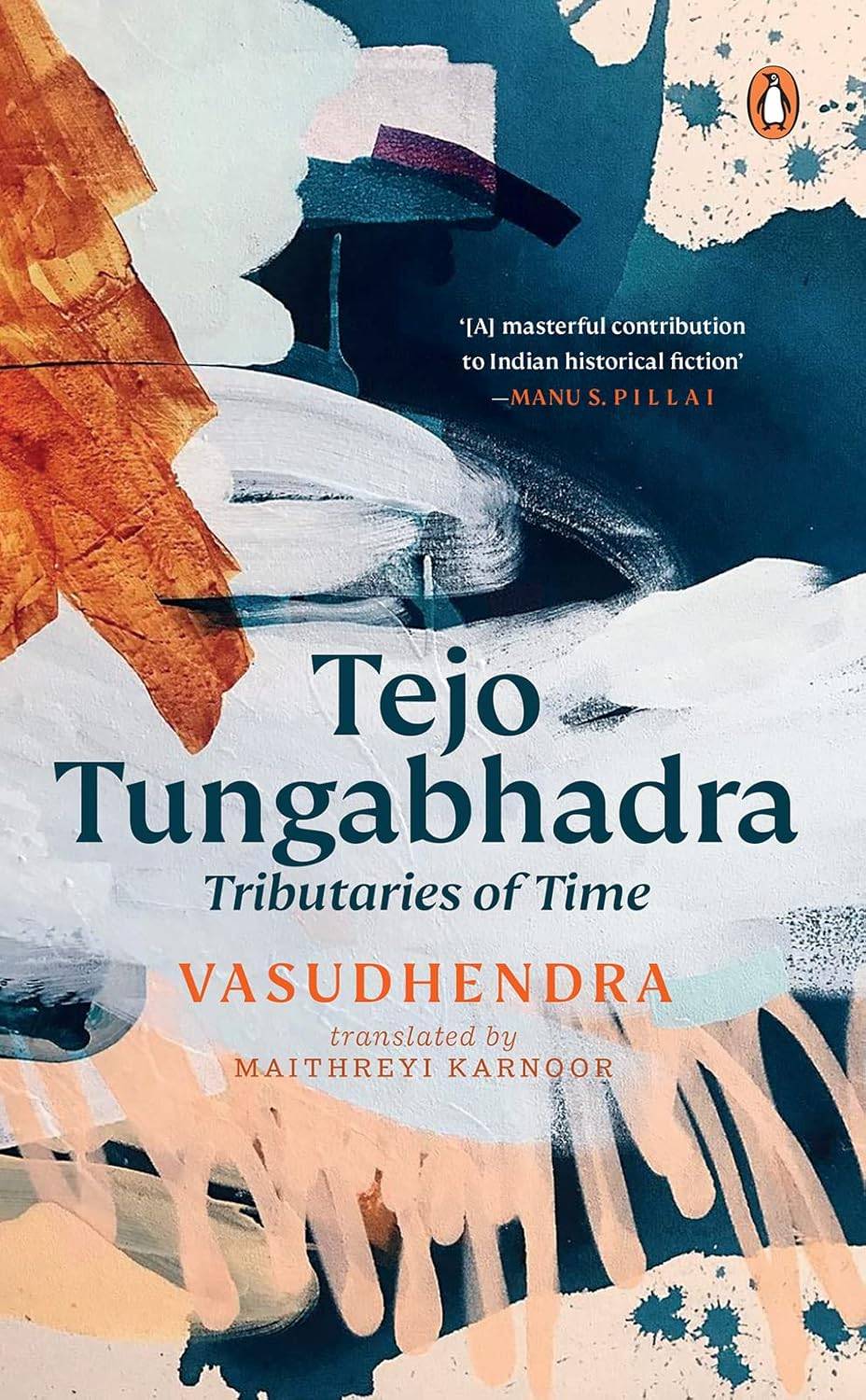
Tejo Tungabhadra: Tributaries of Time
- Author Name:
Maithreyi Karnoor +1
- Book Type:
- Description:
Tejo Tungabhadra narrates the story of two rivers on different continents whose souls are interconnected through history. On the banks of the river Tejo in Lisbon, Bella, a young Jewish refugee, and her family face daily threats to their lives and dignity from a deeply antisemitic society. Gabriel, her lover, sails to India with General Albuquerque's fleet, seeking wealth and a secure future. Meanwhile, on the banks of the Tungabhadra in the Vijayanagara Empire, the young couple Hampamma and Keshava find themselves caught in a storm of religious violence and the harsh cycle of tradition. The two stories come together in Goa with the power and energy of meeting rivers. Set in the late 15th and early 16th centuries, Tejo Tungabhadra is a grand saga of love, ambition, greed, and a lively passion for life amid the turbulent waves of history.
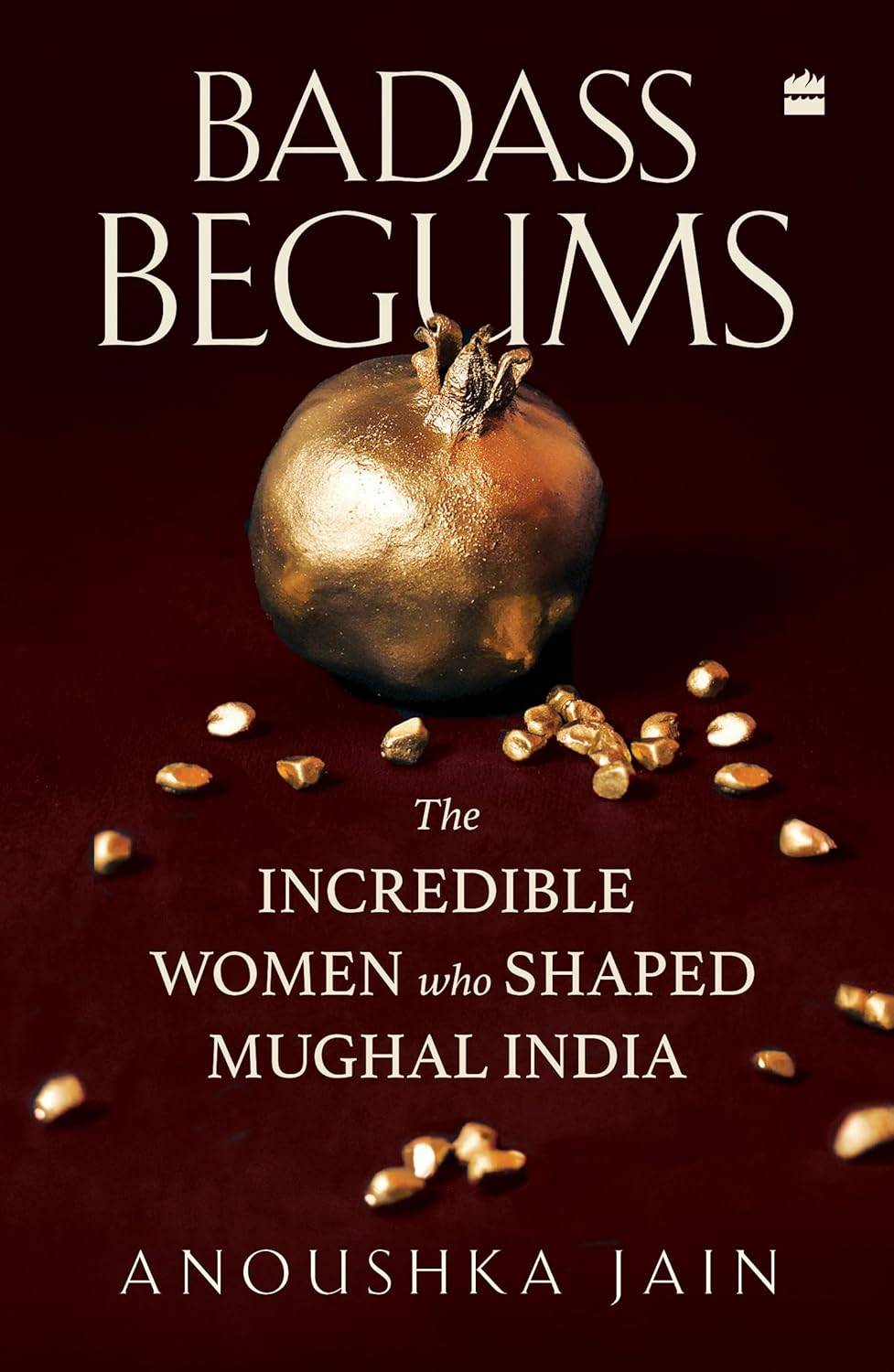
Badass Begums
- Author Name:
Anoushka Jain
- Book Type:
- Description:
History rarely highlights the formidable Mughal begums who boldly navigated imperial courts, brokered powerful deals, reshaped Delhi's skyline, created private spaces for women, fought battles, and resisted patriarchy - all from behind the purdah. In Badass Begums, Anoushka Jain introduces you to ten Mughal-era women whose lives were filled with ambition, romance, intrigue, and fierce resilience. Jahanara Begum, Shah Jahan's favorite daughter who designed Chandni Chowk; her sister, the fiery Roshanara Begum, who schemed with Aurangzeb to take over her father's empire; the indomitable Begum Samru, a tawaif-turned-ruler who led her own army into battles; Maham Anga and Mubarak Begum, whose counsel rivaled that of chief ministers; and the steadfast Qudsia Begum, who built riverfront gardens only to see them battered by rebellions - these stories come alive through a captivating narrative and walking tour maps of the places they inhabited or curated. Based on meticulous research and written with warmth, Badass Begums offers an eye-opening journey through the breathtaking legacies still hidden in Delhi’s by-lanes.
Draupadi
- Author Name:
Yarlagadda Lakshmi Prasad +1
- Book Type:
- Description:
Draupadi, originally written in Telugu, was first serialised in Andhra Jyoti before it came out in book form. The novel presented in a unique style, is not just an account of the different incidents occur around Draupadi but these incidents have been fused together into a fascinating story. The narrative process and the structural method of description used by Lakshmi Prasad fully engage the reader.

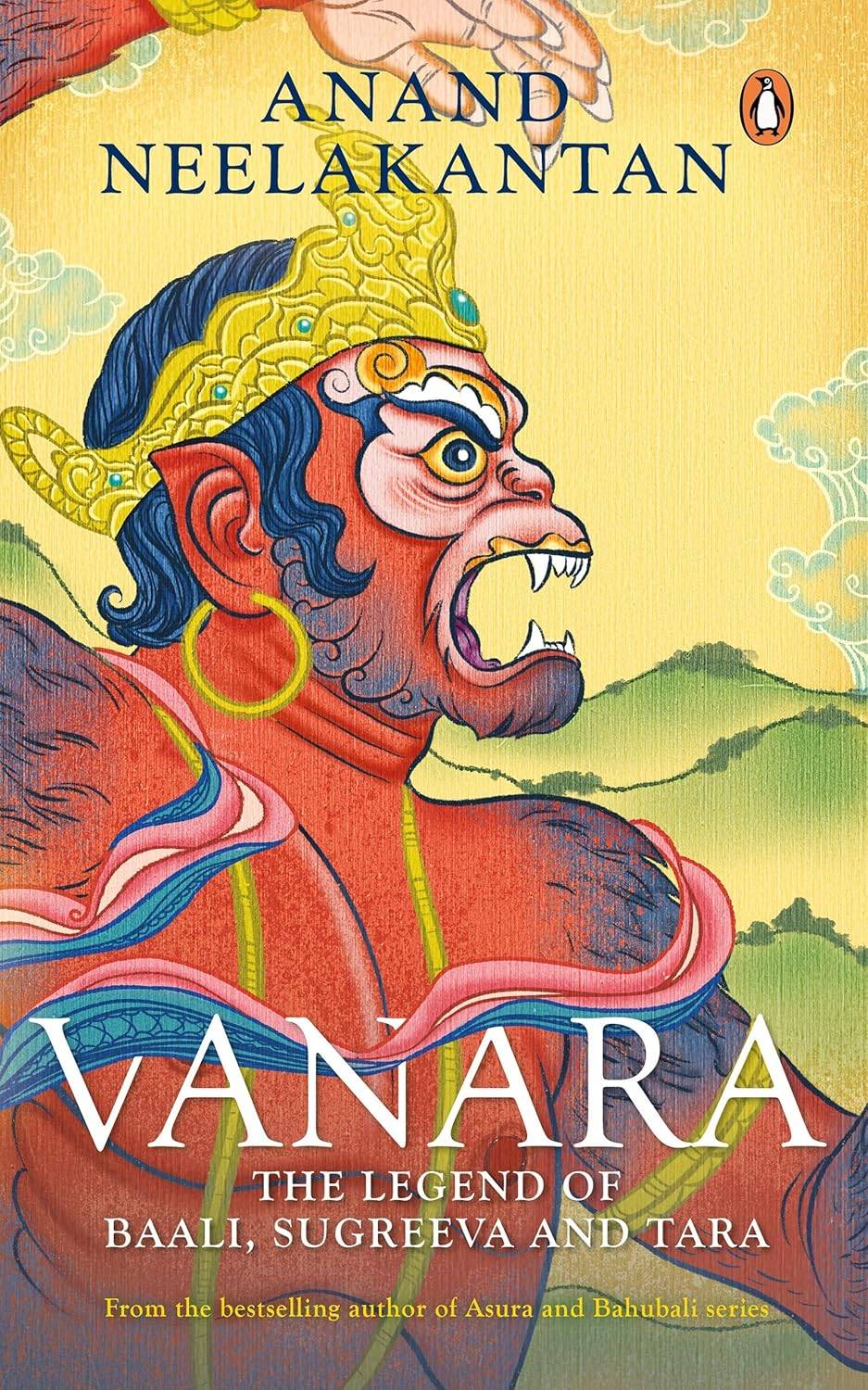
Vanara
- Author Name:
Anand Neelakantan
- Book Type:
- Description:
Baali and Sugreeva, orphan brothers from the Vana Nara tribe, were born into severe poverty and grew up as slaves like most of their fellow tribesmen. They were often called the vanaras, meaning monkey men. Caught between the ongoing war between the Deva tribes in the north and the Asura tribes in the south, the Vana Naras seemed to have lost all hope. However, Baali was determined not to remain a slave. With the help of his beloved brother Sugreeva, he built a nation for their people. The capital, Kishkindha, became a symbol of hope for freed slaves worldwide—a city of the people, by the people, for the people, where caste, creed, language, or skin color didn't matter. For a brief moment in history, it appeared mankind had found its ideal hero in Baali. But fate changed everything through Tara, daughter of a tribal healer. Loved by Baali and desired by Sugreeva, Tara sparked a brotherly war that would forever alter history. The love triangle involving Baali, Tara, and Sugreeva is arguably the first of its kind. Written by Anand Neelakantan, who also gave voice to Ravana in Asura, Duryodhana in the Ajaya series, and Sivagami in Baahubali, Vanara is a timeless story of love, lust, and betrayal. It’s Shakespearean in its tragic depth and epic in scope, giving voice to Baali, the greatest warrior in the Ramayana.
Whispering Waves
- Author Name:
Abhijit Sen
- Book Type:
- Description:
A haunting Bengali novel of Partition, exile & grief—Aditi rebuilds life in Kolkata while the ghost of her lost homeland and sister refuse to be forgotten.

Delhi’s Last Mushaira in 1845: A Translation of Dehli Ki Aakhri Shama
- Author Name:
Mirza Farhatullah Baig Dehlvi
- Book Type:
- Description:
First complete translation of the 1991 critical edition by Anjuman Taraqqi Urdu (Hind). Set at an inflection point in the history of Delhi, the mushaira Mirza Farhatullah Baig so lovingly paints is more than a gathering of poets. It is a snapshot of a world on the verge of being pushed into oblivion, a world Mirza saheb wants to preserve for future readers. Master poets like Mirza Ghalib and Momin Khan are seen in their prime at close quarters, and Daagh too, as a young poet on the threshold of fame. The Mughal emperor makes a brief appearance, but still leaves an indelible impression. As Rasheed Hasan Khan says, ...a mushaira... mirrored the tehzeeb of the time-the etiquette and protocol of the mehfil, the manner in which it was organized, everything it encompassed.

Nalanda
- Author Name:
Shivani Singh
- Book Type:
- Description:
In medieval India, Siddhartha is a young Buddhist monk studying at Nalanda, one of the world’s most renowned and ancient universities. The university’s senior teachers thrust him into the heart of history, ordering him to assist in the royal investigation of a suspicious death on campus. Mahipala, king of Magadha, suspects the death was murder. The royal officer leading the investigation is none other than Siddhartha’s brother, Aditya Raj, forcing the two brothers into an uneasy alliance. Between them lie the unforeseen forces that wiped Nalanda from India’s historical map. As the university’s fate is sealed, strange deaths occur in quick succession. Plagued by misery and doubt, Siddhartha unwittingly uncovers a secret that makes him question his faith, his rationality and, ultimately, his own existence. In the end, Nalanda is razed to the ground. This is fact. But the narrative reaches a climax through many other elements of alternative history and speculative spirituality. It reveals shocking esoteric practices involving the divine feminine—practices never disclosed to the masses, for reasons unknown. Venturing into historically uncharted territory and, in many ways, picking up where Dan Brown left off, Nalanda exposes a reality that is devastating, mind-altering and yet somehow liberating.

Four Angry Women
- Author Name:
Kabita Singha
- Book Type:
- Description:
In the vibrant, tumultuous Kolkata of the 1970s, four girls in their late-teens—Bulan, Renu, Suman, and Chuni–navigate a city brimming with tradition and transformation, in Kabita Singha’s first full-length novel. As the world around them shifts, they grapple with the complexities of womanhood, sexuality, friendship, and the relentless pursuit of their own voices amidst the societal expectations and burgeoning independence of a new era. They dream with each other, fight for each other, and discover what it truly means to survive and thrive in a city that demands as much as it gives.

From the Love Lanes of Lucknow - An Ode to Urdu Poetry
- Author Name:
Mehru Jaffer
- Book Type:
- Description:
Mehru Jaffer's captivating account of Lucknow’s romance with its classical Urdu poets magically transports us to the mehfils of Mir and Anis. From the Love Lanes of Lucknow celebrates the poetry of the Avadh region of India like never before, transporting its readers to a land that became the focal point of an unparalleled cultural renaissance.

Akbar’s Farewell: Letters from a Father
- Author Name:
- Book Type:
- Description:
Akbar the Great (1543-1605), the greatest of the Mughal emperors of India, was not only the most powerful and wealthiest monarch of his time, but undoubtedly, also the most enlightened one. A firm proponent of universal tolerance and religious freedom for all, he welcomed to his court, representatives of all religions known to him: Muslims, Hindus, Jains, Parsis, Jews, and even Jesuit priests from the Portuguese settlements in Goa. At a time when Europe found itself plagued by bloody religious wars, he succeeded in unifying the various creeds of Hindustan under his victorious banners, and created the strong Mughal Empire that still amazes us with the splendour of its art and architecture. Akbar's Farewell offers ample food for thought on fundamental issues that preoccupy the world: love and duty; power and justice; and fundamentalism against diversity and tolerance. Admirably researched and written in a magnificently evocative, compelling prose, it narrates the true story of Akbar's life and times, his swift and spectacular rise to absolute power, often against overwhelming odds, and his remarkably modern vision of a prosperous, diverse and tolerant Hindustan, against the backdrop of his eventful personal life, his relationship with his favourite wife, and tragic conflict with Salim (Jahangir), his only surviving son and bitter rival. Much more than a brilliantly written, moving historical novel, this book offers a unique historical perspective on the heart and soul of the Indian subcontinent.

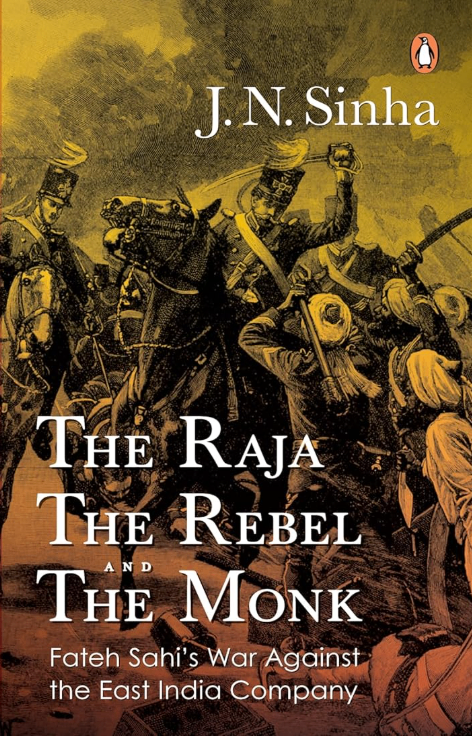
The Raja The Rebel and The Monk
- Author Name:
J. N. Sinha
- Book Type:
- Description:
In late eighteenth century India, an obscure king who ruled over Huseypur in northwest Bihar, challenged the might of the British. When overpowered by the East India Company forces, he escaped into the jungles of Gorakhpur, raised a people’s army and fought a guerilla war against them for nearly thirty years. Beaten many times, he always bounced back and did not surrender ever. He was Maharaja Fateh Bahadur Sahi. A warrior, patriot and innovator, Sahi visualised the dangers of impending imperialism and rose to meet the challenge. He devised new war logistics and resorted to guerilla warfare, including ascetics, destitute and bandits in his unique army. This happened years before the Indian Revolt of 1857 and the revolutions in America and France. Mainstream history is yet to look at him, but in the middle-Ganga valley, Sahi is remembered as a folk hero and a people’s king. This work is an effort to unravel Sahi’s unusual life. How did he operate and survive for so long? Could he be considered the progenitor of India’s first war of independence? The Raja, the Rebel and the Monk attempts to answer.
The Great Indian Novel
- Author Name:
Shashi Tharoor
- Book Type:
- Description:
In Shashi Tharoor's satirical masterpiece, the story of the Mahabharata is retold as recent Indian history, and renowned political personalities begin to resemble characters from the Mahabharata-all of whom have a curious and ambiguous relationship with Draupadi Mokrasi (D. Mokrasi for short) . . . Brimming with incisive wit and as enjoyable a read as it is cerebrally stimulating, The Great Indian Novel brilliantly retells reality as myth.

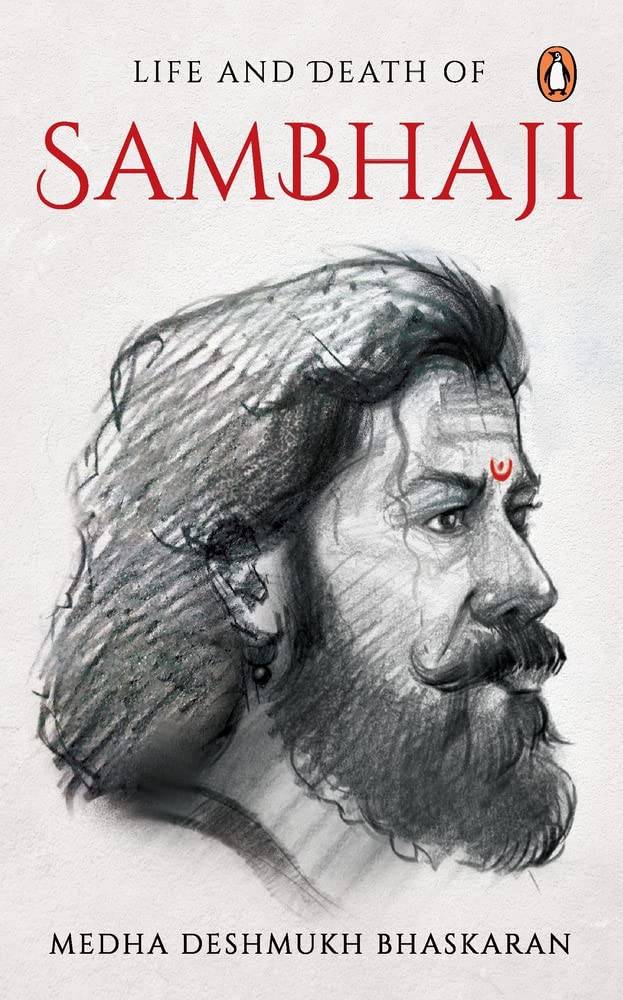
The Life and Death of Sambhaji
- Author Name:
Medha Deshmukh Bhaskaran
- Book Type:
- Description:
It begins to dawn on nine-year-old Sambhaji that his father has fled from Mughal emperor Aurangzeb and left him behind. He now has to find his way home with the help of strangers... Under the shadow of a renowned father, Sambhaji is thrown into the Maratha-Mughal conflict from a young age. His mistakes cost him dearly, and when his father suddenly dies and he becomes the chhatrapati, it's like inheriting a crown of thorns. Over the next nine years, he fights a constant battle-internally, as palace intrigues threaten his life, and externally, as Aurangzeb advances into the Deccan with his army. Even Shivaji had never faced such outright Mughal aggression. Can he protect the Maratha nation and Swaraj, his father's dream? Will he prove himself a worthy son in life and death? Though history has often been unkind to Sambhaji, it cannot deny that he inspired a generation of Maratha warriors who ultimately ended Aurangzeb's jihad.
Massacre At Midnight
- Author Name:
Chaudhary Kaushal Kishor Thakur
- Book Type:
- Description:
Massacre at Midnight is a fascinating tale of medieval intrigue and revenge in the best traditions of ‘magic realism’ with a touch of the divine. Set in the Mughal era, the story opens with the covetous Nawaab of Waariaul locking horns with the principled estate owner of Singhwaar over the possession of LaaDlii and Pyaare, a famed pair of hunting dogs. The Nawaab enlists the support of the Mughal army under false pretences, portraying Singhwaar’s Thaakur as a seditious renegade. The family is massacred to the last man, and Singhwaar is laid waste. The widow gives birth to a male heir in a fugue, abandoning the infant in the wilderness. The child is miraculously saved by the benevolent goddess Vana-Durgaa and becomes her favourite. When he comes of age, Destiny takes him to the imperial court at Delhi for a showdown with his father’s murderer, witnessed by the Great Mughal himself. Mainly based on folklore, ‘Massacre at Midnight’ is replete with enchanting old-world belief in miracles, spirits protecting family fortunes and poetic justice for the unjust, as well as glimpses of life in medieval Mithilaa.

Chandausi Junction
- Author Name:
Shankar Sahay
- Book Type:

- Description:
A collection of short-stories set in the 20th Century India for the 21st Century kids & a nostalgic walk, for their parents & grandparents. Although this book has been named after the city of Chandausi, it contains stories from various places like Rishikesh, Agra, Champaran, Tilhar, Sambhal, Kanpur, Banaras, Lucknow and many others. These are the short stories of a bygone era-a period when India had either not gained independence or had been independent for not more than 35 years. These are the tales of journeys-taken up from the early 20th century to the end of a millennium, from Shahjahanpur to Delhi, from Bijnor to Hyderabad, from Hathras to Sweden & Norway, from Lakshmi Talkies, Allahabad to Night Watchman, Bangalore, from Panki to USA, from Dehradun to Canada, from Chandausi to Australia and many others. We are sure in all these stories, you will be able to find at least one character, which reminds you of your own self-of what you are, were or always wanted to be. Let us know the character with whom you have been able to relate to the most. Happy reading. “Genius is one percent inspiration and 99 percent perspiration,”-Thomas A. Edison. -Here’s a collection of short stories to inspire the readers.

Unjudging Women
- Author Name:
Rachna Chaudhary
- Book Type:
- Description:
This book is based on a critical feminist reading of selected Delhi High Court judgements pronounced in the 1990s. It focuses on the phenomenon of female criminality and the pervasiveness of the disciplinary powers of law in our lives. Through an overview of existing studies on female crime in India and the interaction with the working) of the law and the legal system, This engagement pushes our understanding of law from an instrument of control and mode of social transformation to mere rhetoric. Not to argue for the futility of engaging with the law but emphasising the need to look at it closely and critically.

Kailas: Shiva's Abode
- Author Name:
Hemant Sharma +2
- Book Type:
- Description:
Wanderlust and the desire to know the land and society more had been fueling my wish to visit Kailas. There were many curiosities. All our major rivers have their source in the region. The largest reservoir of fresh water on earth is situated there. The celestial swans are found there. I recall that how in my childhood, my Grandmother used to describe Kailas as being akin to a dreamland. According to her, Shri Krishna has said in the Gita – Meruru shikhirinamaham – ‘Among mountains I am Kailas!’ It was Sage Mandhata who first set foot on this sacred soil. Adi Shankaracharya shed his mortal body here. Guru Nanak meditated here and Swaminarayana, the founder of the sect that bears his name, saw the vision of god here. The Ramayana and the Mahabharata mention Kailas. This is where Ravana had worshipped Lord Shiva. He wanted to take Kailas with him. Shiva guilefully dissuaded him from doing so. Arjuna performed penance here and received the Pashupata Astra from Shiva. Yudhishthir proceeded heavenwards via this route. One by one, all the family members fell by the roadside; only the faithful dog kept company. Bhasmasur, the Rakshas, a devotee of Shiva was reduced to cinders here. Today the dark shadow of civilisation has begun to fall even on Mansarovar. This lake is shrinking. The sacred water body, that once stretched across 410 square kilometres, is now shrunk to only 10 square kilometres. Consider this the rage of Nature. Had Kalidasa been alive, he would have been deeply saddened to see his beloved Himalaya in this state. Is it the same Himalaya that is described in Raghuvamsham and Kumar Sambhavam? Civilisation has reached a point where the divine dimensions of Himalaya are disturbed.

Case Files of The Dead
- Author Name:
Various Authors
- Book Type:
- Description:
Welcome to a mysterious land where ghosts. Ghouls and spirits rule. Welcome to a place where haunted houses and evil souls will make a shiver run down your spine. A spooky tale in the scenic hills of Mussoorie awaits you while uncanny happenings in a literary competition are sure to intrigue you. The case of a mysterious white Maruti baffles everyone, even as the unsuspecting jogger experiences something he had never bargained for. A group of friends will encounter the worst terror of their lives while nightmares of his death rack the young man! Author's In and The Book Bakers present an eclectic mix of true stories, legends, and fables that have often been a part of India's folklore—armed with some of the best authors in India's paranormal literature history. CASE FILES OF THE DEAD; India's first pure horror public anthology will turn every host into (G)Host!!!

An Alternative Perspective On Education
- Author Name:
Atul Kothari
- Book Type:
- Description:
Education is the foundation of the development of any country. But in our country, the First Education Policy was framed in 1968, 21 years after independence; the second policy was formulated in 1986; 34 years later, India got the National Educational Policy-2020 on 25th July, 2020. Besides these, certain commissions were also constituted for reforms in education, which made some good recommendations, but these could not be implemented for sheer want of political will. For an instance, the Kothari Commission in 1968, recommended 6 per cent of Gross Domestic Product (GDP) for expenditure on education, which was also adopted by the Education Policy-1986, but this is yet to be translated into practice. If we ignore pre-colonial period, the Bharat of post-independence has not yet been able to determine the aim of education. Character building and moulding a human i.e. holistic development of personality should be the aim of education. Essays on related subjects are included in this book. To identify the issues and problems that plague the education, and their solution, we carried out basic but innovative experiments in schools, colleges and universities. The original experiences of these exercises have been penned down as articles and research papers. This book is an anthology of the related writings.

Customer reviews
Review this book
Share your thoughts with other readers.
Customer reviews
"732 Miles" is a poignant and powerful novel by Dr. Keerth that takes readers on a journey through one of the most violent and troubling times in history - the Indo Pak partition. The author's portrayal of the experiences of the characters is heart-wrenching, encapsulating the pain, terror, and sadness felt by the victims. The book illustrates the destructive impact of religious hysteria and the profound impact it can have on humanity. However, it also reveals the resilience of the human spirit and the capacity for people to show compassion and kindness, even in the darkest of times. Despite its short length, the author has done a remarkable job of connecting readers emotionally with the characters. I highly recommend this intense short read to anyone who is interested in historical fiction, especially stories set during the partition. However, it is essential to note that this book contains some trigger warnings, so be prepared for an emotional journey
732 Miles opens with a scream—Bhavna's labour on the night of August 14, 1947, as India claims independence and a girl named Indya enters the world. Within days, the Radcliffe Line carves a boundary neither nation anticipated, and what began as celebration collapses into violence, separation, and loss. This historical novel centers Partition not as distant history but as lived rupture: families split by borders drawn in haste, women subjected to brutality, friendships severed by the accident of geography. The narrative choice to birth a character alongside the nation gives the story both intimate scale and symbolic weight, grounding the abstract horror of 1947 in one woman's unfolding life. For readers drawn to Partition fiction that foregrounds the human cost of political decisions, this novel renders a familiar tragedy through the singular lens of a life begun at the exact hour the subcontinent fractured.
What kind of reading experience does 732 Miles offer?
This is a reading experience anchored in sorrow and witness. The novel does not flinch from the violence of Partition—the rapes, the killings, the disorientation of displacement—but it filters that history through the life of a girl born in the same instant as the nation. Expect a narrative that moves between personal memory and collective trauma, where the intimacy of family life is always shadowed by the knowledge of what the border has done. It rewards readers who approach historical fiction not for nostalgia but for reckoning, and who are prepared for the emotional weight of a story where celebration and catastrophe are inseparable.
Who should read 732 Miles, and what does it expect from its reader?
- Readers interested in Partition narratives beyond the well-documented Punjab corridor—the title suggests a specific geography of loss.
- Those who value character-driven historical fiction where a single life becomes the lens for national trauma.
- Readers familiar with the broad strokes of 1947 who want fiction to animate the human consequences of the Radcliffe Line.
- Anyone drawn to stories about women's survival and agency within political catastrophe.
Why does Partition remain urgent for Indian readers today?
Partition is not history closed but a wound still referenced in contemporary politics, citizenship debates, and Hindu-Muslim relations. The violence of 1947—communal riots, forced migrations, the theft of women's bodies as territorial claim—set patterns that echo in present-day rhetoric about belonging and borders. For Indian readers today, Partition fiction like 732 Miles asks: what does it mean to inherit a nation born through such rupture? How do we remember a freedom that arrived entangled with mass death? This novel insists that the choices of August 1947 are not distant but formative.
What makes this author's approach to Partition distinctive?
The choice to begin the narrative on the night of August 14 itself—to make the protagonist's birth simultaneous with India's—creates a structural metaphor that runs through the novel. Indya does not observe Partition from outside; her existence is constituted by it. This framing shifts the story from historical documentation to existential inquiry: what does it mean to grow up as a living embodiment of a nation's trauma? The focus on a woman born into that moment, rather than on political architects or refugee testimonies alone, centers the domestic and the gendered, making the border a lived, intimate reality.
What does 732 Miles leave with the reader after the final page?
It leaves you with the recognition that independence and violence can occupy the same hour, that a nation's freedom can arrive through unimaginable cost. Emotionally, the novel asks you to hold both the joy of liberation and the grief of separation as coexisting truths. Intellectually, it foregrounds the gendered dimension of Partition—the use of women's bodies as territory, as revenge, as symbols—without sensationalizing it. Culturally, it reminds Indian readers that 1947 is not a closed chapter but a rupture that continues to shape how we understand community, citizenship, and belonging.

