
Contemporary Indian Short Stories Series IV
₹
300
₹ 249 (17% off)
Available
This collection of twenty-one short stories, written by different authors, represents a cross-section of contemporary Indian short fiction. Twenty short stories are translations from twenty languages of Indian creative writing in English and edited by Shantinath K. Desai. This is the fourth volume of Sahitya Akademi's series of such representative anthologies in English of contemporary Indian short stories.
Read moreAbout the Book
This collection of twenty-one short stories, written by different authors, represents a cross-section of contemporary Indian short fiction. Twenty short stories are translations from twenty languages of Indian creative writing in English and edited by Shantinath K. Desai.
This is the fourth volume of Sahitya Akademi's series of such representative anthologies in English of contemporary Indian short stories.
Book Details
Contemporary Indian Short Stories Series II
- Author Name:
Bhabani Bhattacharya
- Book Type:

- Description:
This collection of twenty-two short stories, written mostly between 1930 and 1950 by various authors, offers a snapshot of contemporary Indian short fiction. Twenty stories are translations from fourteen Indian languages, and two are original works in English. This demonstrates, if proof were needed, that Indian literature, despite being written in many languages, is unified - not by sameness, but by its rich diversity.

Indian Short Stories 1900 To 2000
- Author Name:
E. V. Ramakrishnan
- Book Type:
- Description:
This collection of 43 stories from 21 languages highlights India's diverse and intricate life. They depict everything from the chaos and mass hysteria of partition to the suppressed anger and self-pity of people trapped in broken homes. These narratives explore both outer experiences and internal struggles within Indian society. The stories emphasise the sacred and the profane, as well as the voices of the elite and the marginalised, serving as mirrors for self-reflection. Together, these tales trace a transformative century during which India emerged as a unified nation. The vivid imagery from the tumultuous 20th century is both disturbing and enlightening.

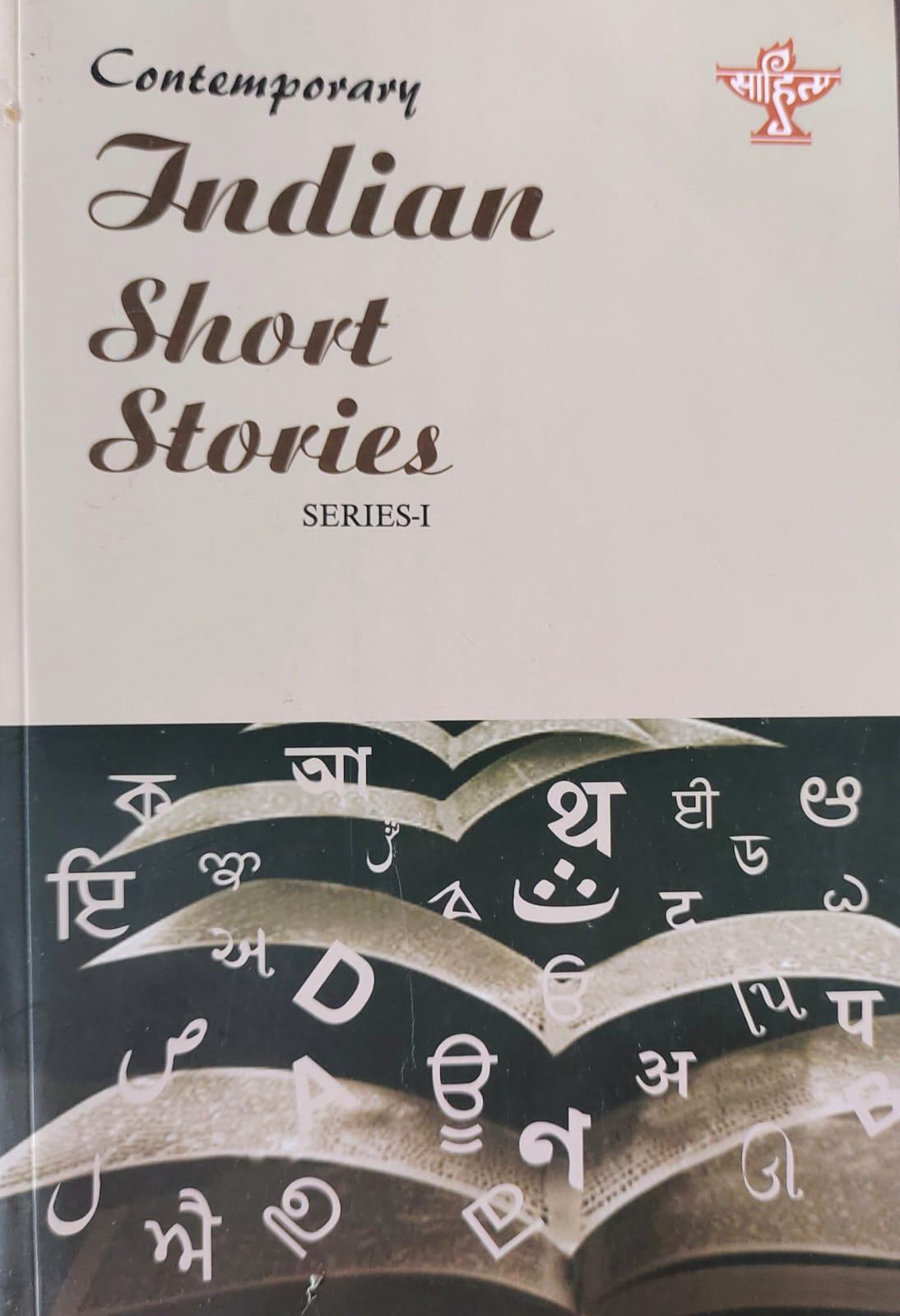
Contemporary Indian Short Stories Series I
- Author Name:
Humayun Kabir
- Book Type:
- Description:
This sheaf of fifteen short stories represents a cross-section of contemporary Indian Literature. Fourteen of them are translations. One each from fourteen modern languages of India and one is a specimen of Indian creative writing in English. Selected by the Sahitya Akademi's Advisory Boards of various languages, these stories provide fascinating glimpses into the panorama of Indian life, with its baffling variety, its rich contrast of the simple and sophisticated, the ancient and the modern. Here is evidence, if such were needed, that Indian literature is one of a stale uniformity but of a rich variety. This is the first volume of Sahitya Akademi's series of such representative anthologies in English of contemporary indian short stories. Second, third and fourth volume of stories written by different authors have also been published. Prof.Humayun Kabir has farwarded this volume.
The Journey Times
- Author Name:
Anand Kumar
- Book Type:
- Description:
‘An acute observation, a happening around life that interests you, can make an interesting story. You may blow up a simple incident with your language skill and contrive a story.’ ‘The unwritten novels and stories float in a world of mind. An author happens to pass through them. One of these may fit into the groove of his mind, like a key in the lock. Upon engagement with the corresponding hiatus, the book empties its contents into it.’ ‘Sometimes, a power possesses you. It speaks through you. Some beings take possession of a capable mind, and make him write their own story.’ ‘There is a mart of wizards. It has a story lane in it. The shopkeepers sit with small beautiful velvety bundles—black, silver, cherry red, orange, blue, green, and golden—each contains either ariovel or a story, or even a poem. Generally, the passers-by in this charmed alley aie the story-tellers and poets.’ ‘Often a Santa Claus-like bei|j> passes on Ms sleigh drawn by his seven reindeers-,- He bestows gifts to the spectators wfi) stand along his trail. Authors may find tender saplings of novels and stories. They are to be watered and raised, ijrtd then shaped with industry to a handsome form.’ Anand Kumar

Sculpted Stones - Mysteries of Mamallapuram
- Author Name:
Ashwin Prabhu
- Book Type:
- Description:
On Tamil Nadu’s coast lies a small town that centuries ago must have been filled with the sounds of hammering and chiselling on stone – Mamallapuram or Mahabalipuram, now a UNESCO World Heritage site. From a mammoth relief panel to cave temples and monoliths, it showcases sculptural art of astounding skill and a variety of styles rare to find in one location. The book takes us through this ‘open-air museum’ for a one-on-one ‘looking’ experience through its rich archive of 65 vivid photographs. The magnified visual details and narrative cues also throw up a sea of stories – and some riddles to be unravelled!

Pratinidhi Kahaniyan : Usha Priyamvada
- Author Name:
Usha Priyamvada +1
- Book Type:
- Description:
उषा प्रियम्वदा को पढ़ना एक साथ बहुत से बिम्बों में घिर जाना है। बिम्ब जो घुमड़ते बादलों की तरह अनायास तैरते चले आते हैं और एक सार्थक संगति में गुँथकर पहले दृश्य का रूप लेते हैं। कहानियों में परम्परा के निर्वहण की अभ्यस्तता और उसे तोड़ देने की सजगता एक साथ गुँथी हुई मिलती है। 1952 से 1989 तक के कालखंड में फैली उषा प्रियम्वदा की कहानियों का अधिकांश साठ के दशक में उनके विदेश प्रवास के बाद आया है। ज़ाहिर है, डायस्पोरा मनोविज्ञान रिवर्स कल्चरल शॉक से उबरने की क्रमिक प्रक्रिया को नॉस्टेल्जिया में तब्दील कर देता है। इसलिए उषा जी की कहानियों की ज़मीन भले ही विदेशी हो गई हो, वहाँ की खुली संस्कृति और उदार वर्जनामुक्त माहौल से सम्बन्धों में सहजता और कुंठाहीनता पनपी हो, लेकिन उनकी नायिका स्वयं को भारतीयता के संस्कारों से मुक्त नहीं कर पाई है। यही वजह है कि दाम्पत्येतर प्रेम सम्बन्ध बनाते हुए भी वह अपराध-बोध और लोकापवाद के भय से ग्रस्त रहती है। सरपट दौड़ते हुए अचानक ठिठककर खड़े हो जाना, और फिर बिना कुछ कहे अपनी खोह में दुबक जाना उनकी स्त्री की विशेषता है। उषा जी बेहद महीन और कलात्मक पच्चीकारी के साथ उसके चारों ओर रहस्यात्मकता का वातावरण बुनती हैं, जो एक सम्मोहक तिलिस्म का रूप धरकर पाठक के भीतर सीढ़ी-दर-सीढ़ी उतरता चला जाता है, ठीक कृष्णा सोबती की लम्बी कहानी 'तिन पहाड़' की जया की तरह।

Patna wala Pyar
- Author Name:
Abhilash Dutta
- Book Type:
- Description:
पटना वाला प्यार (कहानी संग्रह) में पटना की जीवन शैली, वहां की संस्कृति का प्रभाव कहानियों की पृष्ठभूमि है। पटना के संस्कार कहानी के पात्रों में स्पष्ट दिखाई दे रहे हैं। पटना को जैसा एक आम आदमी अख़बारों और ख़बरों के माध्यम से जानता होगा बिलकुल वैसा ही इस कहानी संग्रह में सहज ही परिलक्षित होता है। कहानी ‘एक मुलाकात’ में दिल्ली और पटना के बीच की यात्रा, कैसे एक प्रेम में फंसी लड़की को वेश्या बना देती है। वहीं ‘पटना वाला प्यार’ कहानी के दोनों भागों के प्यार, एक छोटे शहर की युवा हो रही पीढ़ी की अल्हड़ मति का शानदार चित्रण प्रस्तुत करती है। ‘रीयूनियन’ कहानी पढ़कर व्यक्ति को अपने जीवन के कटु सत्य का सहज ही साक्षात्कार हो जाता है। कहानी से पता चलता है कि जीवन में आने वाला हर शख़्स अपना एक वजूद रखता है। ‘लाल चच्चा’ कहानी हो या ‘फैसला’, ‘अज्ञात आतंकवादी’ हो या ‘सुसाइड जिम्मेदार कौन’ या फिर ‘परछाई’ समाज को सीधे-सीधे आईना दिखाने वाली कहानियाँ कही जा सकती है।

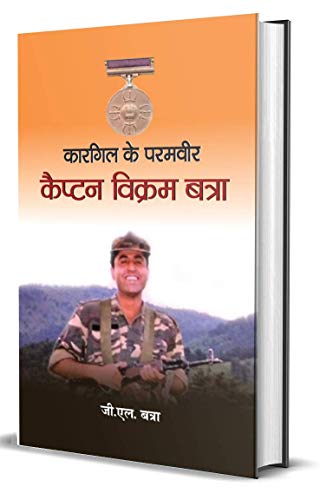
Kargil Ke Paramvir Captain Vikram Batra
- Author Name:
G.L. Batra
- Book Type:
- Description:
मैं या तो जीत का भारतीय तिरंगा लहराकर लौटूँगा या उसमें लिपटा हुआ आऊँगा, पर इतना निश्चित है कि मैं आऊँगा जरूर।’ कैप्टन बत्रा ने अपने साथी को यह कहकर किनारे धकेल दिया कि तुम्हें अपने परिवार की देखभाल करनी है और अपने सीने पर गोलियाँ झेल गए। कैप्टन बत्रा 7 जुलाई, 1999 को कारगिल युद्ध में अपने देश के लिए लड़ते हुए वीरगति को प्राप्त हुए। बेहद कठिन चुनौतियों और दुर्गम इलाके के बावजूद, विक्रम ने असाधारण व्यक्तिगत वीरता तथा नेतृत्व का परिचय देते हुए पॉइंट 5140 और 4875 पर फिर से कब्जा जमाया। उन्हें मरणोपरांत परमवीर चक्र से सम्मानित किया गया। विक्रम मात्र 24 वर्ष के थे। ‘कारगिल के परमवीर : कैप्टन विक्रम बत्रा’ में उनके पिताजी जी.एल. बत्रा ने अपने बेटे के जीवन की प्रेरणाप्रद घटनाओं का वर्णन किया है और उनकी यादों को फिर से ताजा किया है। उन्होंने आनेवाली पीढि़यों में जोश भरने और वर्दी धारण करनेवाले पुरुषों के कठोर जीवन का उल्लेख भी किया है।
Keshav Ki Lokpriya Kahaniyan
- Author Name:
Keshav
- Book Type:
- Description:
प्रसिद्ध कथाकार केशव जैसे जीवन के साधक हैं, वैसे ही भाषा के। भाषा के सिद्ध, पीर-फकीर, जहाँ भाषा उनकी चेरी है, उनका आदेश मानने को विवश, पर वह अज्ञेय या निर्मल जैसी नहीं है। केशव की कहानियों में जीवन के सभी रंग हैं, जिन्हें उन्होंने दसों अंगुलियों से पकड़ने की कोशिश की तो वे और भी खरे कथाकार बन गए। पहाड़ी जीवन के राग-रंग का कथा-संगीत गुनगुनाते किसी गायक की तरह, जिसका गाना अच्छा तो बहुत लगता है, लेकिन कोई उसे दोहरा नहीं सकता, क्योंकि यह सिद्धि गहन-गंभीर रियाज से किन्हीं-किन्हीं सर्जकों को ही नसीब होती है। केशव की रचनाओं में कोई दोहराव नहीं है, न कथ्य में, न ही भाषा में। कोई भी विचारधारा उनके कथ्य का निर्धारण नहीं करती, न ही उनकी भाषा पर स्लोगनों का कोई दुष्प्रभाव पड़ता है। जीवन के बीचोबीच से वे अपने कथ्य उठाते हैं और परिवेश में घट-अघट रहे जीवन उनकी साधना से सजी-धजी भाषा में रचना का जामा पहन लेते हैं। भाषा में कोई रचाव दिखाई नहीं पड़ता, दिखाई पड़ता है तो सिर्फ उसका वैभव, एकदम पारदर्शी, जैसे थिराए हुए जल में परिवेश के बहुरंगी दृश्य— पहाड़, पेड़, परिंदे, नदी, खड््ड, खेत, सड़क, पगडंडी, मवेशी, बच्चे, स्त्रियाँ और मर्द। सब-के-सब बोलते-बतियाते, कुछ कहते, कुछ सुनते या फिर चुपचाप, संवादलीन।

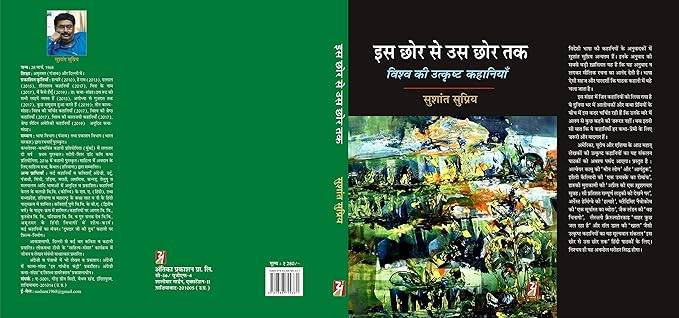
IS CHHOR SE US CHHOR TAK
- Author Name:
Sushant Supriy
- Book Type:
- Description:
Collection of short stories
Morpankhi
- Author Name:
Jawed Siddiqi
- Book Type:
- Description:
“Mor-Pankhi” is the second collection of short stories by the renowned fiction writer Javed Siddiqui, in which the many colours of life are portrayed with remarkable beauty. The stories in this book are not only engaging but also feature characters who feel vividly alive and close to reality. Set against the backdrop of a village like Chhota Syedpura, the author depicts, with great simplicity and impact, the harmony, tolerance, and unity among people of different sects and beliefs. This collection takes the reader back to beautiful memories of the past, when people from different walks of life lived together in mutual respect, sharing a spirit of love and acceptance. Javed Siddiqui’s storytelling style is captivating and graceful, holding the reader’s attention from beginning to end. “Mor-Pankhi” is a refined and valuable addition to Urdu literature, appealing not only to literary enthusiasts but also to general readers.

Ajor
- Author Name:
Ashok Shah
- Book Type:
- Description:
ग्रामीण जीवन की विडम्बनाएँ, समस्याएँ और उनसे संघर्ष; विकास के शहर-केन्द्रित मॉडल के अमानवीय अतिक्रमण के सामने सहमी खड़ी आदिवासी जीवन की आत्मनिर्भरता; शासन-प्रशासन की आधे-अधूरे मन से शुरू की गई जनकल्याण योजनाओं की हक़ीक़त और इस सबके बीच आम आदमी की जिजीविषा—अशोक शाह की कहानियों में इन चीज़ों को विस्तृत तथा प्रामाणिक विवरणों के साथ अंकित किया गया है। कई बार फ़िल्म-जैसी छवियों के माध्यम से वे समाज के हाशियों पर सिमटते समाज की पीड़ा को इतने तारतम्य के साथ प्रस्तुत करते हैं कि पूरा चित्र आँखों के आगे साकार हो जाता है। इस संग्रह में संकलित हर कहानी पाठक के सामने एक ऐसी दुनिया खोलती है जिसके बारे में हमने सुना भले हो, लेकिन इस तरह देखा कभी नहीं। पेशे से प्रशासनकि सेवाओं में रहे अशोक शाह मूलतः कवि हैं लेकिन कहानी उनके लिए उस समय बहुत ज़रूरी हो जाती है जब यथार्थ की जटिलता को समझने और समझाने में उन्हें अपेक्षाकृत ज़्यादा विस्तार आवश्यक लगने लगता है। उनका कवि होना इन कहानियों की संवेदना तथा वस्तु-चित्रण में भी बख़ूबी नज़र आता है। शिल्प को लेकर अतिरिक्त आग्रह की शिकार हिन्दी कहानी के परिदृश्य में इन कहानियों को इनकी वस्तु-विविधता के लिए ज़रूर पढ़ा जाना चाहिए। संग्रह की शीर्षक कहानी यद्यपि एक आशा तथा प्रसन्नतादायी बिन्दु पर समाप्त होती है, लेकिन उससे पहले की तटस्थ विवरणात्मकता आपको लगातार एक व्यथा से बींधे रहती है। बाक़ी कहानियाँ भी किसी न किसी कोण से हमें ऐसे ही व्यथित करती हैं।

Jadui Chashmen
- Author Name:
Dr. Manjari Shukla
- Book Type:
- Description:
डॉ मंजरी शुक्ला की पठनीय और शिक्षाप्रद बाल-कहानियों का संग्रह है 'जादुई चश्में' 'जादुई चश्में' लेखिका डॉ मंजरी शुक्ला का कहानी संग्रह है। इसमें लेखिका की चौदह कहानियों को संकलित किया गया है। कहानियाँ रोचक है और बच्चों को पढ़ने के लिए दी जा सकती हैं या इन्हें उन्हें पढ़कर सुनाया जा सकता है:

Chandausi Junction
- Author Name:
Shankar Sahay
- Book Type:

- Description:
A collection of short-stories set in the 20th Century India for the 21st Century kids & a nostalgic walk, for their parents & grandparents. Although this book has been named after the city of Chandausi, it contains stories from various places like Rishikesh, Agra, Champaran, Tilhar, Sambhal, Kanpur, Banaras, Lucknow and many others. These are the short stories of a bygone era-a period when India had either not gained independence or had been independent for not more than 35 years. These are the tales of journeys-taken up from the early 20th century to the end of a millennium, from Shahjahanpur to Delhi, from Bijnor to Hyderabad, from Hathras to Sweden & Norway, from Lakshmi Talkies, Allahabad to Night Watchman, Bangalore, from Panki to USA, from Dehradun to Canada, from Chandausi to Australia and many others. We are sure in all these stories, you will be able to find at least one character, which reminds you of your own self-of what you are, were or always wanted to be. Let us know the character with whom you have been able to relate to the most. Happy reading. “Genius is one percent inspiration and 99 percent perspiration,”-Thomas A. Edison. -Here’s a collection of short stories to inspire the readers.

Case Files of The Dead
- Author Name:
Various Authors
- Book Type:
- Description:
Welcome to a mysterious land where ghosts. Ghouls and spirits rule. Welcome to a place where haunted houses and evil souls will make a shiver run down your spine. A spooky tale in the scenic hills of Mussoorie awaits you while uncanny happenings in a literary competition are sure to intrigue you. The case of a mysterious white Maruti baffles everyone, even as the unsuspecting jogger experiences something he had never bargained for. A group of friends will encounter the worst terror of their lives while nightmares of his death rack the young man! Author's In and The Book Bakers present an eclectic mix of true stories, legends, and fables that have often been a part of India's folklore—armed with some of the best authors in India's paranormal literature history. CASE FILES OF THE DEAD; India's first pure horror public anthology will turn every host into (G)Host!!!

Contemporary Kashmiri Short Stories
- Author Name:
Hriday Kaul Bharati +1
- Book Type:
- Description:
The Kashmiri short story was born with the progressive movement in Kashmir and its acceptted the standards and values dictated by the movement unquesioningly. Nationalism and the desire for reaching out to people inspired most of the writers to switch over to Kashmiri, even though they had strated writing in Urdu. Dinanath Nadim's Javabi Card (Reply-Card) and Somnath Zutshi's Yell Phol Gash (when there was light) are the first two short stories written in Kashmiri

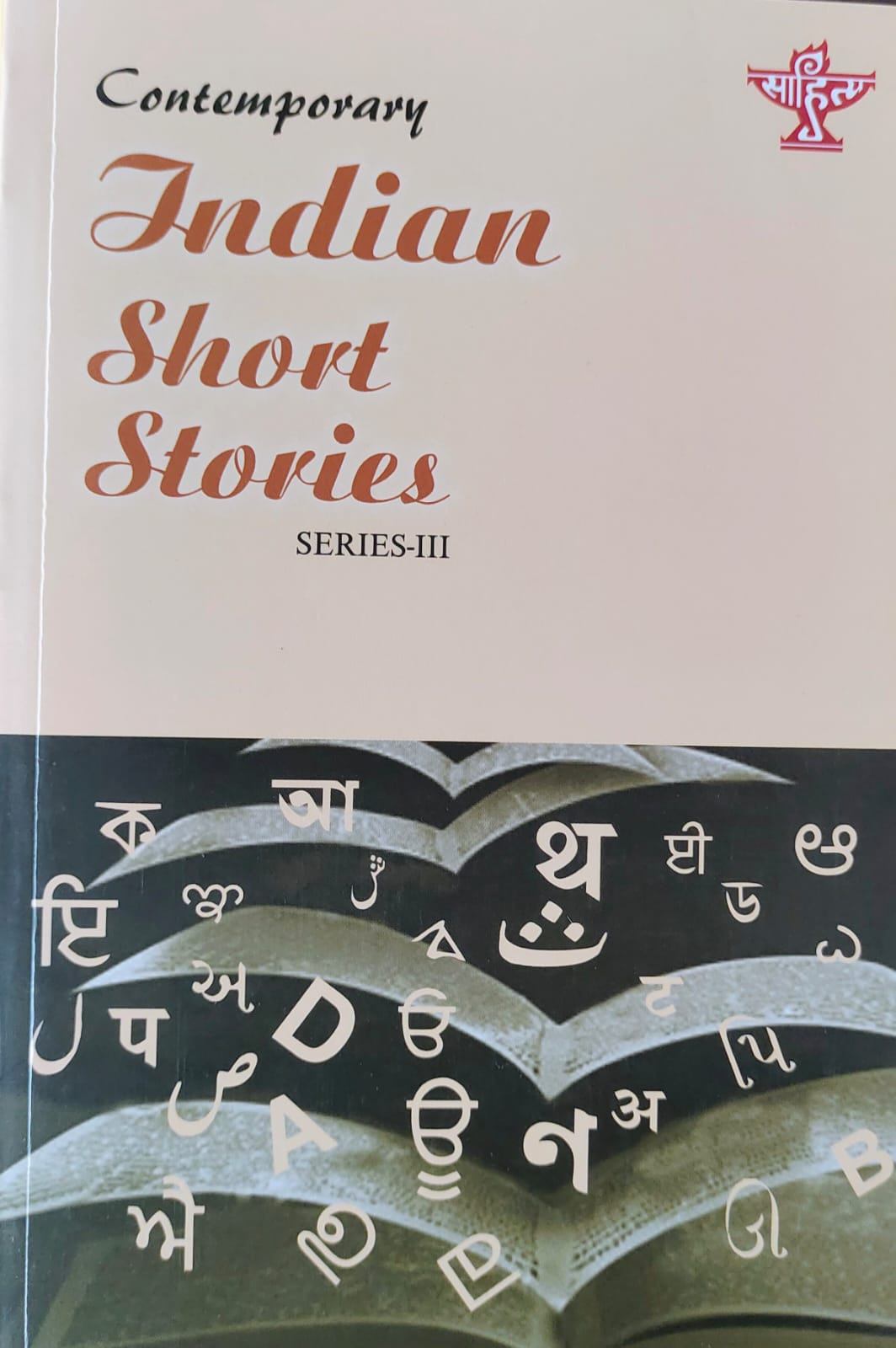
Contemporary Indian Short Stories Series III
- Author Name:
Sahitya Akademi
- Book Type:
- Description:
This sheaf of nineteen short stories, written by different authors, represents a cross-section of contemporary Indian short fiction. Eighteen stories are translations from eighteen modern Indian languages, and one is a specimen of Indian creative writing in English. Selected by the Sahitya Akademi's Advisory Boards of various languages, these stories, provide fascinating glimpses into the panorama of Indian life, with its baffling variety, its rich contrasts of the simple and the sophisticated, the ancient and the modern. Here is evidence, if such were needed that Indian literature is one though written in many languages its oneness consisting not of a stale uniformity but of a rich variety. This is the third volume of Sahitya Akademi series of such representative anthologies in English of contemporary Indian short story.
Here, There And Everywhere
- Author Name:
Smt. Sudha Murty
- Book Type:
- Description:
Wearer of many hats-philanthropist, entrepreneur, computer scientist, engineer, teacher-Sudha Murty has above all always been a storyteller extraordinaire. Winner of the R.K. Narayan Award for Literature, the Padma Shri, the Attimabbe Award from the government of Karnataka for excellence in Kannada literature, and the Raymond Crossword Lifetime Achievement Award, her repertoire includes adult non-fiction, adult fiction, children’s books, travelogues and technical books. Here, There and Everywhere is a celebration of her literary journey and is her 200th title across genres and languages. Bringing together her best-loved stories from various collections alongside some new ones and a thoughtful introduction, here is a book that is, in every sense, as multifaceted as its author.

The Scarecrow Chronicles
- Author Name:
Pathik Mitra
- Book Type:
- Description:
Look into the mirror of the sciety and all you see is a scarecrow!" An anthology that mirrors the society at large. Thirteen stories that take you to the streets of Kabul to the paddy fields in rural Bengal, from a chirstmas in Paris to a famine in Orissa, from the lavish life futility of a rockstar to the aspiring dreams of a prostitute from artistic nudity to meeting God. This anthology has it all. The roller coaster ride of emotions will justify life is nor black , nor white but mostly grey!! And the scarecrow in some paddy field will keep mocking the society and it's futile taboos!! Can we be the scarecrow? An anthology you may love or hate but can't ignore for sure!!

Epochal Voices
- Author Name:
Murari Madhusudan Thakur
- Book Type:
- Description:
A comparison of the lives and writing of Devkota and Nirala by Murari Madhusudan Thakur. Sahitya Akademi Award 2021

Customer Reviews
Be the first to write a review...
Contemporary Indian Short Stories Series IV offers something rare: a literary experience that refuses linguistic, regional, or thematic homogeneity. Edited by Shantinath K. Desai, this fourth volume in Sahitya Akademi's flagship anthology series gathers twenty-one authors writing in twenty Indian languages—from Kannada to Kashmiri, Malayalam to Marathi—each translated into English. The result is not a survey but a living map of how Indians imagine crisis, intimacy, memory, and change. One story might trace the disintegration of a joint family in a small town; another might centre a woman navigating urban anonymity. What unites them is not subject matter but a shared commitment to the short story as a form capable of bearing witness to the fragmentary nature of contemporary life. This is not an introduction to Indian writing—it is an immersion in its unresolved tensions and stylistic multiplicity.
What kind of reading experience will Contemporary Indian Short Stories Series IV give me?
This anthology offers a reading experience defined by constant tonal and stylistic shifts. Each story delivers a different emotional register—intimate realism, dark satire, lyrical memory—so you never settle into one mood or narrative voice. The collection rewards readers who enjoy observing how form and language shape meaning. You finish each story aware of a distinct authorial presence, then step into another world entirely. It is less a single book than a curated gallery of twenty-one separate sensibilities, each demanding attention on its own terms.
Who is this book best suited for, and what does it expect of its reader?
This anthology is best suited for readers curious about the breadth of India's literary imagination beyond dominant languages. It expects a willingness to encounter unfamiliar cultural contexts, regional references, and narrative structures that may not resolve neatly. Readers who value translation as an art form, who want exposure to voices from Assamese, Punjabi, Odia, and other traditions rarely anthologised in English, will find this collection essential. It is not for those seeking plot-driven entertainment—it is for those who read to expand their map of the world.
What is the cultural significance of a multilingual anthology like this to Indian readers today?
In an India where English and Hindi dominate publishing visibility, this anthology performs a crucial counter-narrative: it insists that literary vitality exists across all linguistic regions. By presenting twenty languages side by side, it resists the flattening of Indian culture into a monolith. For contemporary readers, it serves as a reminder that regional literatures are not peripheral but central to understanding India's plurality. The anthology documents not just stories but the persistence of diverse storytelling traditions in an era of rapid linguistic and cultural homogenisation.
What makes Shantinath K. Desai's editorial approach in this series distinctive?
Desai's editorial philosophy prioritises linguistic diversity over thematic unity. Rather than curating stories around a single subject—urbanisation, gender, caste—he selects one representative story from each of twenty languages, ensuring no single tradition dominates. This approach transforms the anthology into a structural argument: that India's literary identity is irreducibly plural. His introductions contextualise each story's linguistic and regional origin, making translation visible as an interpretive act. The result is an anthology that functions as both literature and cultural documentation.
What does this book leave the reader with long after they finish it?
- A visceral sense of India's linguistic and narrative multiplicity, impossible to grasp from any single tradition
- An expanded vocabulary for thinking about how region, language, and form shape storytelling
- Awareness of voices and literary traditions that remain under-translated and under-circulated in English
- A collection of images, characters, and moral dilemmas that resist easy resolution, staying with you as unresolved questions
- Gratitude for translation as a craft that makes cross-cultural reading possible