
Contemporary Indian Short Stories Series II
₹
200
₹ 166 (17% off)
Available
This collection of twenty-two short stories, written mostly between 1930 and 1950 by various authors, offers a snapshot of contemporary Indian short fiction. Twenty stories are translations from fourteen Indian languages, and two are original works in English. This demonstrates, if proof were needed, that Indian literature, despite being written in many languages, is unified - not by sameness, but by its rich diversity.
Read moreAbout the Book
This collection of twenty-two short stories, written mostly between 1930 and 1950 by various authors, offers a snapshot of contemporary Indian short fiction. Twenty stories are translations from fourteen Indian languages, and two are original works in English.
This demonstrates, if proof were needed, that Indian literature, despite being written in many languages, is unified - not by sameness, but by its rich diversity.
Book Details
Contemporary Indian Short Stories Series IV
- Author Name:
Shantinath K Desai
- Book Type:

- Description:
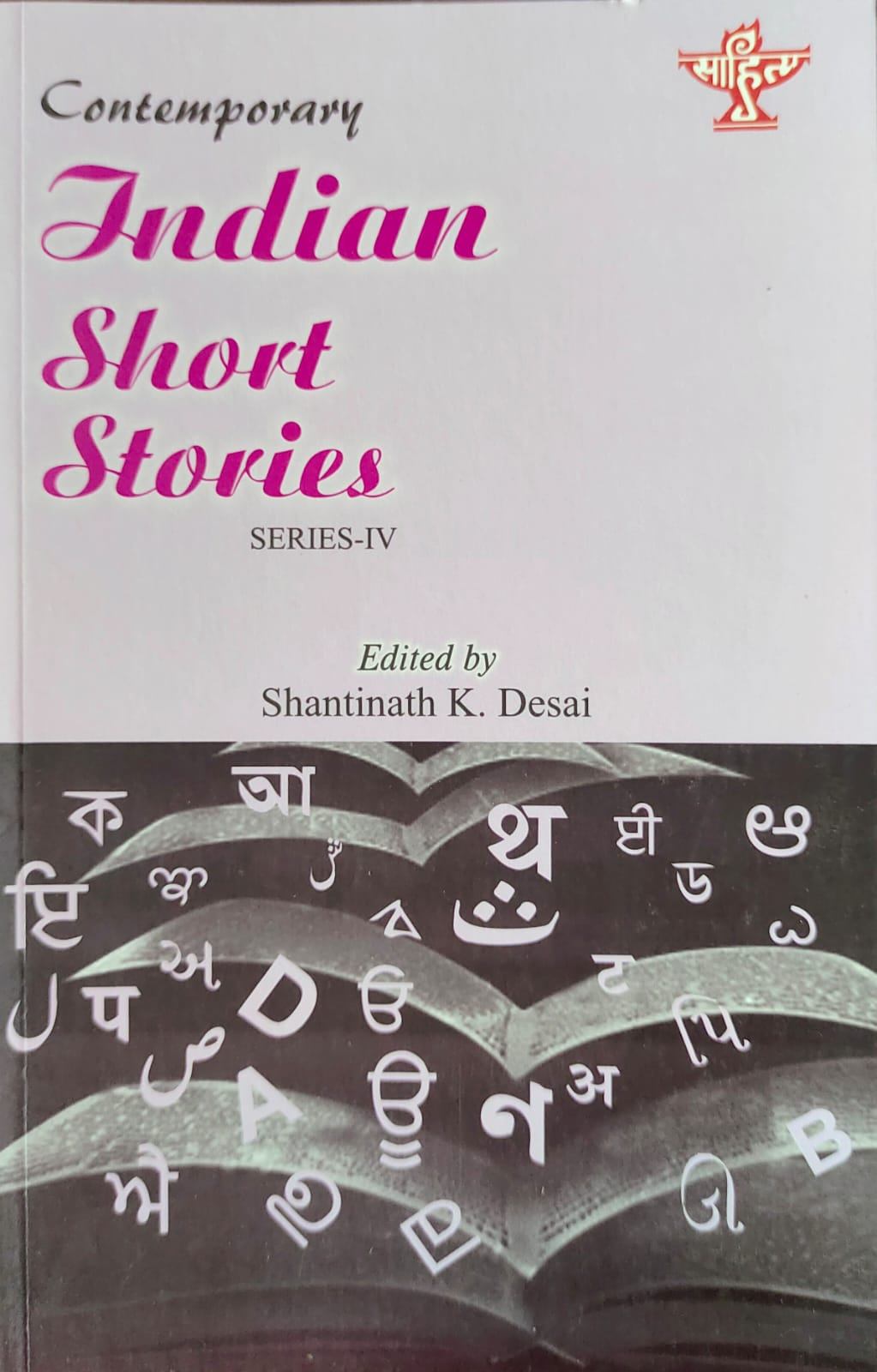
This collection of twenty-one short stories, written by different authors, represents a cross-section of contemporary Indian short fiction. Twenty short stories are translations from twenty languages of Indian creative writing in English and edited by Shantinath K. Desai. This is the fourth volume of Sahitya Akademi's series of such representative anthologies in English of contemporary Indian short stories.
Contemporary Kashmiri Short Stories
- Author Name:
Hriday Kaul Bharati +1
- Book Type:
- Description:
The Kashmiri short story was born with the progressive movement in Kashmir and its acceptted the standards and values dictated by the movement unquesioningly. Nationalism and the desire for reaching out to people inspired most of the writers to switch over to Kashmiri, even though they had strated writing in Urdu. Dinanath Nadim's Javabi Card (Reply-Card) and Somnath Zutshi's Yell Phol Gash (when there was light) are the first two short stories written in Kashmiri

Epochal Voices
- Author Name:
Murari Madhusudan Thakur
- Book Type:
- Description:
A comparison of the lives and writing of Devkota and Nirala by Murari Madhusudan Thakur. Sahitya Akademi Award 2021

Indian Short Stories 1900 To 2000
- Author Name:
E. V. Ramakrishnan
- Book Type:
- Description:
This collection of 43 stories from 21 languages highlights India's diverse and intricate life. They depict everything from the chaos and mass hysteria of partition to the suppressed anger and self-pity of people trapped in broken homes. These narratives explore both outer experiences and internal struggles within Indian society. The stories emphasise the sacred and the profane, as well as the voices of the elite and the marginalised, serving as mirrors for self-reflection. Together, these tales trace a transformative century during which India emerged as a unified nation. The vivid imagery from the tumultuous 20th century is both disturbing and enlightening.

Tales of Tomorrow
- Author Name:
Rana Nayar
- Book Type:
- Description:
Tales of Tomorrow is a fascinating, engaging mix of both old and young storytellers, guided by the brief that 'tomorrow' always leaps out of the ubiquitous womb of 'yesterday'. Chosen from among a vast array of short fiction that the ever-burgeoning Indian English has yielded over the past thirty years or more, Tales of Tomorrow endorses as well as interrogates the notion of Indianness, as it is often understood today. Some of these stories overpower us with the urgency of an insiders' view, while others tantalise us with a double vision of an 'insider-outsider', capturing all hues of the hydra- headed Indian reality. The collection reveals a new vibrant face of India, poised delicately on the edge of change and renewal. Drawn from different geographical regions, and representing the literary spirit, folk idiom and local culture of each, these stories authenticate a medley of bold, confident voices that are likely to resonate much longer than we may have imagined.

Adoration of the Ancients
- Author Name:
Ravichnadra P. Chittampalli +1
- Book Type:
- Description:
Adorations of the Ancients offers a complete English translation of all 19 stories from Vaddaradhane in a single volume. These stories represent the earliest prose in 10th-century Halagannada. Initially, they seem to be highly religious, emphasising ethics and morality aligned with the Jain tradition. However, as creative works, they function on multiple levels: realistic, mythical, fantastic, quasi-historical, worldly, monarchical, economic, and socio-cultural. The characters are consistently portrayed within various economic classes and, interestingly, rarely within caste groups. Women characters are depicted as strong and decisive. This translation is based on R.L. Anantharamaiah’s edition of Shivakotyacharya’s Vaddaradhane. It aims to balance the limitations and scope of equivalents and approximations, making the reading experience enjoyable while maintaining scholarly interest.

Mizo Songs and Folk Tales
- Author Name:
Laltluangliana Khiangte
- Book Type:
- Description:
The dialects and languages spoken by tribals in India are very large in number. The literary compositions in most of them have survived in oral form though some tribal languages have taken to writing as means of recording literary compositions. Conventionally, they have been perceived as mere anthropological curiosity, or at best a source for oral history. They have rarely been translated into English or an Indian language as a representation of tribal imagination. In order to meet the long felt need for brining out a systematic series of India's tribal literature, sahitya Akademi has established a project of Indian Literature in Tribal Languages and Oral Traditions.

Contemporary Indian Short Stories Series I
- Author Name:
Humayun Kabir
- Book Type:
- Description:
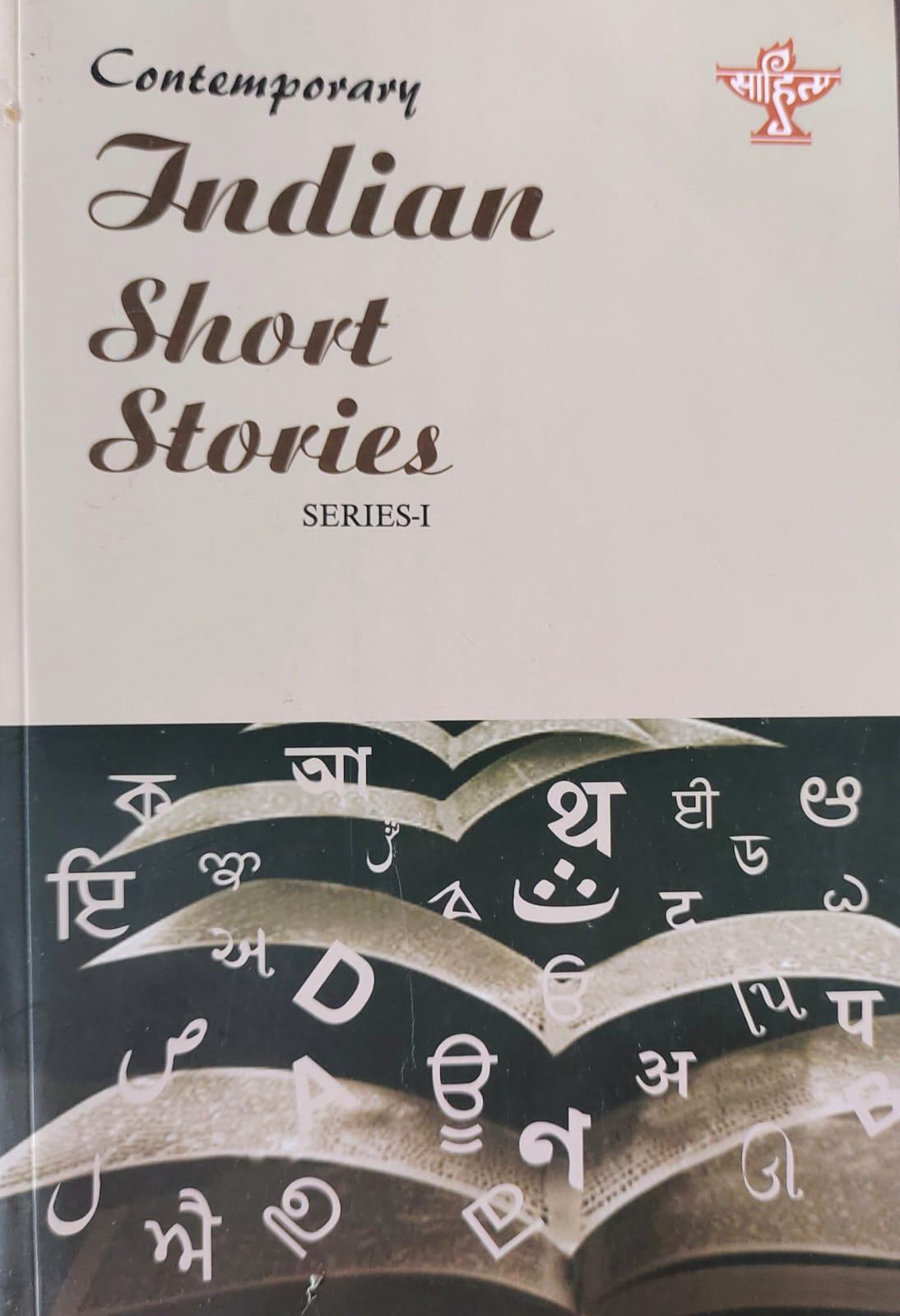
This sheaf of fifteen short stories represents a cross-section of contemporary Indian Literature. Fourteen of them are translations. One each from fourteen modern languages of India and one is a specimen of Indian creative writing in English. Selected by the Sahitya Akademi's Advisory Boards of various languages, these stories provide fascinating glimpses into the panorama of Indian life, with its baffling variety, its rich contrast of the simple and sophisticated, the ancient and the modern. Here is evidence, if such were needed, that Indian literature is one of a stale uniformity but of a rich variety. This is the first volume of Sahitya Akademi's series of such representative anthologies in English of contemporary indian short stories. Second, third and fourth volume of stories written by different authors have also been published. Prof.Humayun Kabir has farwarded this volume.
The Journey Times
- Author Name:
Anand Kumar
- Book Type:
- Description:
‘An acute observation, a happening around life that interests you, can make an interesting story. You may blow up a simple incident with your language skill and contrive a story.’ ‘The unwritten novels and stories float in a world of mind. An author happens to pass through them. One of these may fit into the groove of his mind, like a key in the lock. Upon engagement with the corresponding hiatus, the book empties its contents into it.’ ‘Sometimes, a power possesses you. It speaks through you. Some beings take possession of a capable mind, and make him write their own story.’ ‘There is a mart of wizards. It has a story lane in it. The shopkeepers sit with small beautiful velvety bundles—black, silver, cherry red, orange, blue, green, and golden—each contains either ariovel or a story, or even a poem. Generally, the passers-by in this charmed alley aie the story-tellers and poets.’ ‘Often a Santa Claus-like bei|j> passes on Ms sleigh drawn by his seven reindeers-,- He bestows gifts to the spectators wfi) stand along his trail. Authors may find tender saplings of novels and stories. They are to be watered and raised, ijrtd then shaped with industry to a handsome form.’ Anand Kumar

History of Marathi Literature
- Author Name:
Kusumawati Deshpande +1
- Book Type:
- Description:
Marathi has an unbroken literary tradition of over eight centuries, divided conveniently into two distinct periods, classical and modern. The Classical period spans six centuries, remarkable for poetry, devotional and heroic. Jnandev, Namdev, Eknath, Tukaram and Ramdas have become household names throughout India. While Virasaiva, Jain, and Muslim poets have enriched the secular and spiritual content, wandering minstrels have sung heroic ballads. New forms of literature have flowered from the nineteenth century under the impact of English education and western thought. The Chiplunkar, Apte, Anil Despande, Phadke, Khandekar, Mardhekar, Rege and Gadgil. Tracing the earliest reference to Maharashtra in a rock inscription of the fourth century, the history concludes with the formation of the state in 1960.

Selected Readings of Sri Ramanuja
- Author Name:
S Ranganath
- Book Type:
- Description:
Selected Readings of Sri Ramanuja: Sri Ramanujacharya is one of the three great acharyas whose Sahasramanotsava was recently celebrated with joy and grandeur. His efforts to uplift the poor and oppressed are remarkable. Over his 120-year life, he authored numerous works to inspire devotion in the masses by emphasising the concept of Saranagati or Prapatti (self-surrender to God). Scholars from both Eastern and Western traditions, including Swami Vivekananda and Dr. S. Radhakrishnan, as well as Goethe and Ninian Smart, have honoured Ramanuja with high praise. His altruistic service, compassion, and love for the uneducated and impoverished remain relevant today. This book, in 25 chapters, explores the influence of the Vishishtadvaita philosophy within Indian tradition, organised into three sections: Predecessors of Ramanuja, Ramanuja himself, and his Successors. The final chapter discusses Ramanuja's enduring significance for the 21st century, offering a comprehensive overview of his contributions to Indian thought.

Dakshina
- Author Name:
Sirpi Balasubramaniam
- Book Type:
- Description:
A literary digest of South Indian Languages.

THE TALE OF THE TWIN WARRIORS
- Author Name:
Bannanje Babu Amin +1
- Book Type:
- Description:
Oral epics in any Indian language are generally associated with certain specific communities, defined by their traditional occupations; and the present oral epic Koti Channaya belongs to the Billava community. This poetic narrative, which records the life and adventures of the two cultural heroes of the Billava community, their yearning for cultivable land, their brave opposition to the established powerful classes, and their tragic end, is sung by the members of the particular communities called Pambada and Parava of coastal Karnataka, during the annual worship of the twin heroes. The oral epic, Koti Chennaya unravels the world of Billava community (traditionally toddy-tappers) of coastal Karnataka recording in the process the life and adventures as also the travails and tribulations of the two cultural heroes of Billava community. Most of the oral epics begin with a 'Creation Myth', which begins with the creation of the entire universe step by step, thus focuses on the legendary first parents/ancestors of the community concerned. Such a myth, besides glorifying the cultural heroes of the epic, gives a privileged position to the community by linking it with the rest of the world and gives it a socio-cultural identity. Koti Channaya also begins with a 'Creation Myth'. A recent study undertaken by UNESCO says that half of the 6,700 languages spoken in the world at present face the danger of extinction before the end of this century.

A History Of Indian Literature 500-1399
- Author Name:
Sisir Kumar Das
- Book Type:
- Description:
A prequel to a History of Indian Literature 1800-1910, the present volume deals with the first nine hundred years of the medieval period of Indian Literary history. The literary scene in India during the period presents a fantastically varied and wide spectrum of thought and expressions, here vibrant, there dull, now vigorous and natural now sophisticated and recondite at once sublime and crude

ONCE UPON A TIME
- Author Name:
A Sethumadhavan +1
- Book Type:
- Description:
Once Upon a time by A. Sethumadhavan, is a novel which surrounds priyamvada, who is an HR professional, and a single parent at the centre of its narrative. The strong undercurrent of this award-winning title is the way woman asserts her independence and deft strokes in the book suggest how a professional woman scores. The novel very beautifully depicts the personal journey of a single parent, where are dilemmas which priyamvada faces, doing a tightrope walk between the labor force and the managements, trying to fill the vacuum in her daughter’s life and consciously attempting to steady her own emotional moorings.

Sculpted Stones - Mysteries of Mamallapuram
- Author Name:
Ashwin Prabhu
- Book Type:
- Description:
On Tamil Nadu’s coast lies a small town that centuries ago must have been filled with the sounds of hammering and chiselling on stone – Mamallapuram or Mahabalipuram, now a UNESCO World Heritage site. From a mammoth relief panel to cave temples and monoliths, it showcases sculptural art of astounding skill and a variety of styles rare to find in one location. The book takes us through this ‘open-air museum’ for a one-on-one ‘looking’ experience through its rich archive of 65 vivid photographs. The magnified visual details and narrative cues also throw up a sea of stories – and some riddles to be unravelled!

History of Indian English Literature
- Author Name:
M.K. Naik
- Book Type:
- Description:
Indian English literature began as an interesting by-product of an eventful encounter in the late eighteenth cntury between a vigorous and enterprising Britain and a stagnant and chaotic India, and is now nealy twi hundred years old. It is literature written originally in English by authors Indian by birth, ancestry or nationality. It is no part of English literature any more than American literature or Australian lterature can be said to be branch of British literature. It is legitimatly a part of Indian literature, since its differntia is the expression in it of an Indian ethos.

THE WORLD IS THE NEXT VILLAGE
- Author Name:
Solon Karthak +1
- Book Type:
- Description:
it is a collection of 25 travel tales that talk about his trips around the world.

History of Punjabi Literature
- Author Name:
Sant Singh Sekhon +1
- Book Type:
- Description:
The vitalityof Punjabi lietrature, its rootedness in its landscape, and its concern with the totality of human experience is evident everywhere in this volume. While it will be of undoubted value to the student of Punjabi literature, we also hope that its vitality and readability will make it attractive to other readers as well.

The Parsi Contribution to Indian Literature
- Author Name:
Coomi S Vevaina
- Book Type:
- Description:
Compilation of papers presented at symposium on Parsin Contribution to Indian Literature organised by Sahitya Akademi in 2015 at Mumbai.

Customer Reviews
Be the first to write a review...
Contemporary Indian Short Stories Series II gathers twenty-two voices from a transformative two-decade span — 1930 to 1950 — when India moved from colonial subjugation to independence. Twenty stories are translations from fourteen Indian languages; two are original English works. This is not a thematic anthology but a deliberate act of cultural cartography: the collection proves that Indian literature's unity lies in its diversity, not in homogeneity. Readers encounter Partition trauma alongside rural comedy, urban disillusionment alongside village ritual, each story rooted in a specific linguistic and regional consciousness. The translations preserve idiomatic texture, making Bengali sensibilities legible to Marathi readers, Kannada rhythms audible to Hindi speakers. Sahitya Akademi framed this as an argument: that India's literary strength lies in its refusal of a single voice, its insistence that many tongues can speak one civilization.
What kind of reading experience will the Contemporary Indian Short Stories Series II give me?
Contemporary Indian Short Stories Series II rewards readers who seek variety over continuity. You move from story to story across emotional registers — grief, satire, wonder, anger — and across geographies, each piece shaped by a different regional ethos. The pace shifts with each author; some stories unfold slowly with descriptive richness, others strike quickly with sharp social observation. You finish each story aware of its cultural origin, yet find recurring human concerns beneath linguistic differences. It leaves behind a mosaic impression: India as many distinct worlds that still recognize one another.
Who is this book best suited for, and what does it expect of its reader?
- Readers curious about India's literary traditions beyond English-language bestsellers, who want access to regional voices usually siloed by language.
- Students and scholars of comparative literature, translation studies, or mid-twentieth-century South Asian cultural history.
- Those interested in how Partition, independence, and rapid social change were processed in real time by writers across the subcontinent.
- Readers are comfortable with translations that sometimes retain idiom and cultural specificity rather than over-explaining for a global audience.
What is the cultural significance of this mid-century multilingual anthology to Indian readers today?
The 1930–1950 period saw India redefine itself politically and culturally, yet much of that literary reckoning occurred in regional languages that were invisible to English-dominant discourse. This collection becomes a counter-archive: it shows that Bengali, Marathi, Telugu, and other literatures were not peripheral but central to India's self-understanding. For contemporary readers navigating debates about linguistic identity and cultural homogenization, the anthology is evidence that unity through diversity was a lived literary practice, not just a slogan.
What makes Sahitya Akademi's curation of this anthology distinctive?
Rather than imposing a thematic framework — stories about women, or about villages — Sahitya Akademi chose to foreground linguistic and regional plurality itself as the organizing principle. The selection privileges quality and representativeness over celebrity; many authors here are canonical in their home languages but unknown outside them. The anthology functions as translation advocacy: it argues that Indian readers should have access to their own multilingual inheritance, and that translations are not secondary literature but essential bridges within a federated literary culture.
What does this book leave the reader with long after finishing it?
- A visceral sense of how many Indias existed simultaneously in the mid-twentieth century, each with its own literary voice and aesthetic priorities.
- Recognition that canonical English-language narratives of Indian modernity tell only part of the story; regional literatures hold equally vital accounts.
- An appreciation for the translator's role in making India legible to itself, not just to foreign readers.
- A curious, ongoing question: what am I still missing if I read only in one language?