
History of Marathi Literature
₹
50
41.5 (17% off)
Available
Marathi has an unbroken literary tradition of over eight centuries, divided conveniently into two distinct periods, classical and modern. The Classical period spans six centuries, remarkable for poetry, devotional and heroic. Jnandev, Namdev, Eknath, Tukaram and Ramdas have become household names throughout India. While Virasaiva, Jain, and Muslim poets have enriched the secular and spiritual content, wandering minstrels have sung heroic ballads. New forms of literature have flowered from the nineteenth century under the impact of English education and western thought. The Chiplunkar, Apte, Anil Despande, Phadke, Khandekar, Mardhekar, Rege and Gadgil. Tracing the earliest reference to Maharashtra in a rock inscription of the fourth century, the history concludes with the formation of the state in 1960.
Read moreAbout the Book
Marathi has an unbroken literary tradition of over eight centuries, divided conveniently into two distinct periods, classical and modern.
The Classical period spans six centuries, remarkable for poetry, devotional and heroic. Jnandev, Namdev, Eknath, Tukaram and Ramdas have become household names throughout India. While Virasaiva, Jain, and Muslim poets have enriched the secular and spiritual content, wandering minstrels have sung heroic ballads.
New forms of literature have flowered from the nineteenth century under the impact of English education and western thought. The Chiplunkar, Apte, Anil Despande, Phadke, Khandekar, Mardhekar, Rege and Gadgil.
Tracing the earliest reference to Maharashtra in a rock inscription of the fourth century, the history concludes with the formation of the state in 1960.
Book Details
THE TALE OF THE TWIN WARRIORS
- Author Name:
Bannanje Babu Amin +1
- Book Type:

- Description:
Oral epics in any Indian language are generally associated with certain specific communities, defined by their traditional occupations; and the present oral epic Koti Channaya belongs to the Billava community. This poetic narrative, which records the life and adventures of the two cultural heroes of the Billava community, their yearning for cultivable land, their brave opposition to the established powerful classes, and their tragic end, is sung by the members of the particular communities called Pambada and Parava of coastal Karnataka, during the annual worship of the twin heroes. The oral epic, Koti Chennaya unravels the world of Billava community (traditionally toddy-tappers) of coastal Karnataka recording in the process the life and adventures as also the travails and tribulations of the two cultural heroes of Billava community. Most of the oral epics begin with a 'Creation Myth', which begins with the creation of the entire universe step by step, thus focuses on the legendary first parents/ancestors of the community concerned. Such a myth, besides glorifying the cultural heroes of the epic, gives a privileged position to the community by linking it with the rest of the world and gives it a socio-cultural identity. Koti Channaya also begins with a 'Creation Myth'. A recent study undertaken by UNESCO says that half of the 6,700 languages spoken in the world at present face the danger of extinction before the end of this century.

Herstory
- Author Name:
Neha Bansal
- Book Type:
- Description:
Herstory is a new collection of poems by Neha Bansal, a civil servant, providing a fresh perspective on the lives of others.

Lady Tarzan
- Author Name:
Lavanya Karthik +1
- Book Type:
- Description:
लेडी टार्ज़न उर्फ जमुना टुडू ने जंगलों को बचाने के लिए अपनी जान दांव पर लगा दी. उनकी कहानी संघर्ष और प्रेम की कहानी है। लावण्या कार्तिक ने लेडी टार्ज़न की कहानी दोबारा सुनाई। कहानी पूछती है, "क्या हम किसी चीज़ से प्यार करते हैं?" यह प्रश्न हमें आशा देता है क्योंकि हम किसी ऐसे व्यक्ति के लिए खड़े हो सकते हैं जिससे हम प्यार करते हैं। समर्थन के लिए। राजीव ईपे के चित्र कहानी को ध्वनि प्रदान करते हैं। एक स्वस्थ जंगल की आवाज़. Age group 9-12 years

Pustaka Kollalu Hodevu Naavu
- Author Name:
Rukmini Banerji +1
- Book Type:
- Description:
Awaited

Petege Hoguvudu
- Author Name:
Meera Tendolkar +1
- Book Type:
- Description:
Details awaited

Prem Gali Ati Saankri
- Author Name:
Ramratan Awasthi
- Book Type:
- Description:
Book

Super Genius Computer Learner-3
- Author Name:
Manuj Bajaj +1
- Book Type:
- Description:
आधुनिक युग के विकास में कंप्यूटर का अतुलनीय योगदान है। आज किसी भी क्षेत्र में कंप्यूटर की उपस्थिति अनिवार्य रूप में देखी जा सकती है। हमारे राजमर्रा के लगभग सभी कार्य कंप्यूटर पर निर्भर हैं। बैंकका लेन-देन, टिकट, ए.टी.एम. सेवा, मोटरकार व हवाई जहाज नियंत्रण, पुस्तक-प्रकाशन, दस्तावेज तैयार करना, फोटो, फिल्म व संगीत से जुड़े कार्य, कक्षा में पढ़ाई करना इत्यादि सभी कार्य कंप्यूटर की मदद से सरलता से, तेजी से और त्रुटिहीनता के साथ पूरे हो जाते हैं। यही कारण है कि आज के युग को ‘कंप्यूटर का युग’ कहा जाता है। विज्ञान, तकनीकी, शोध, चिकित्सा, प्रौद्योगिकी, उड्डयन, संचार एवं शिक्षा के साथ-साथ कंप्यूटर ने कृषि के क्षेत्र में भी अहम भूमिका निभाई है। कंप्यूटर क्रांति ने विश्व को एकसूत्र में बाँध दिया है। इंटरनेट ने तो कंप्यूटर के प्रचार-प्रसार में और भी बड़ी भूमिका निभाई है। इंटरनेट के माध्यम से आज एक ‘क्लिक’ करके हम दुनिया के किसी भी कोने में पहुँच सकते हैं। इंटरनेट टेलीफोनी और इ-मेल ने संचार क्रांति को पंख लगा दिए हैं। इंटरनेट टेलीफोन से हम लगभग निशुल्क दुनिया के किसी भी कोने में टेलीफोन की तरह बात कर सकते हैं। ‘चैट’ के जरिए ‘लाइव’ बातचीत की जा सकती है।

Worlds First Book On Haiku Poetry
- Author Name:
Carlos Luis
- Book Type:
- Description:
Haiku is a very short form of Japanese poetry consisting of 17 syllables arranged in three lines of 5, 7, and 5 syllables respectively. But against all odds, this is a collection of feelings written in three lines. An economical masterpiece that Trades you through realities of life; speaking of love, relationships, paradoxes in life, you name it you have it in here.

Dear Moon
- Author Name:
Soumi Dutta
- Book Type:
- Description:
The story, written in an epistolary style, talks about attempts the narrator makes in order to erase the memories of her one true love, from her heart. But can such love be unremembered? Read on to find out.

Love In Jamshedpur
- Author Name:
Ajitabha Bose
- Book Type:
- Description:
Do you remember who was your first crush? Did you too dream of marrying her? Everyone does somehow, isn't it? So did Arnab! When he saw simpi for the very first time, he fell in for a forever-love. Yet, the dream took a different turn when she rejected him time and again. What lies ahead? Will Arnab be able to impress his first love? Or will he fail, again? Bestselling author, ajitabha Bose brings to you a true tale of love based in the small town of Jamshedpur.

My Senior Girlfriend
- Author Name:
Yash Sharma
- Book Type:
- Description:
Yash Sharma is author of the book fl.A.M.E.S. His book talks about romance and issues is that are relatable to the youth of this generation. It told the story of a girl who attempts to move on from her lover who had left her. His book get a decent response from young readers and the one of the biggest newspaper groups of Rajasthan with millions of readers reviewed favourably, giving it 5 out of 5 stars. Ash is a 21-year year-old from a small town in Rajasthan, rajgarh.He is pursuing his B.Tech. In Civil Engineering from Alwar district. He started writing at the early age of 13. His hobbies include reviewing books and movies, and writing scripts, screenplay and music. He has written more than a thousand quotes and poems. He is a bookworm and has quite an interest in politics and Hollywood. He is also a storyteller and an actor too. His passion for to be an actor lead him to theatre at a very young age. He has also wrote numerous plays for his school and college festivals.

Our Love That Fell Apart
- Author Name:
Nupur Luthra
- Book Type:
- Description:
Brian serves grey with divorce papers, announces he’s gay and is in love with someone else. Her whole world falls apart, filled with rage, she has no one to turn too. Brian feels bad and is miserable for causing her a lot of pain, but the heart wants what it wants. Brian and his lover get married, which causes grey further pain. What happens next? How does grey deal with the pain and agony? Does it all end well or does someone die in the end? Find out in our love falls apart.

The Gift
- Author Name:
Ruchi Prabhu
- Book Type:
- Description:
Don’t read this book. Do NOT read this book Go watch YouTube videos Go watch series on Netflix Go listen to some songs on Ganna.com But, Just put the book down quietly and walk away… WARNING! In this book I have had my share of experiencing romance, hatred, longing and drops the most. An individual observes a bunch to pick up nuisance of personalities and relationship dynamics of those around him/her. This book contains my way of expressing through haiku or Epigrams which evoke my personal feelings dealing with a good ending and sometimes with the ray of no hope in a scalding weather.

Mizo Songs and Folk Tales
- Author Name:
Laltluangliana Khiangte
- Book Type:
- Description:
The dialects and languages spoken by tribals in India are very large in number. The literary compositions in most of them have survived in oral form though some tribal languages have taken to writing as means of recording literary compositions. Conventionally, they have been perceived as mere anthropological curiosity, or at best a source for oral history. They have rarely been translated into English or an Indian language as a representation of tribal imagination. In order to meet the long felt need for brining out a systematic series of India's tribal literature, sahitya Akademi has established a project of Indian Literature in Tribal Languages and Oral Traditions.

Eyes I Have Been Searching For
- Author Name:
Haseena T
- Book Type:
- Description:
For avyukta falling in love was everything. She is vibrant that way, but she never knew where to find love until she met those eyes.

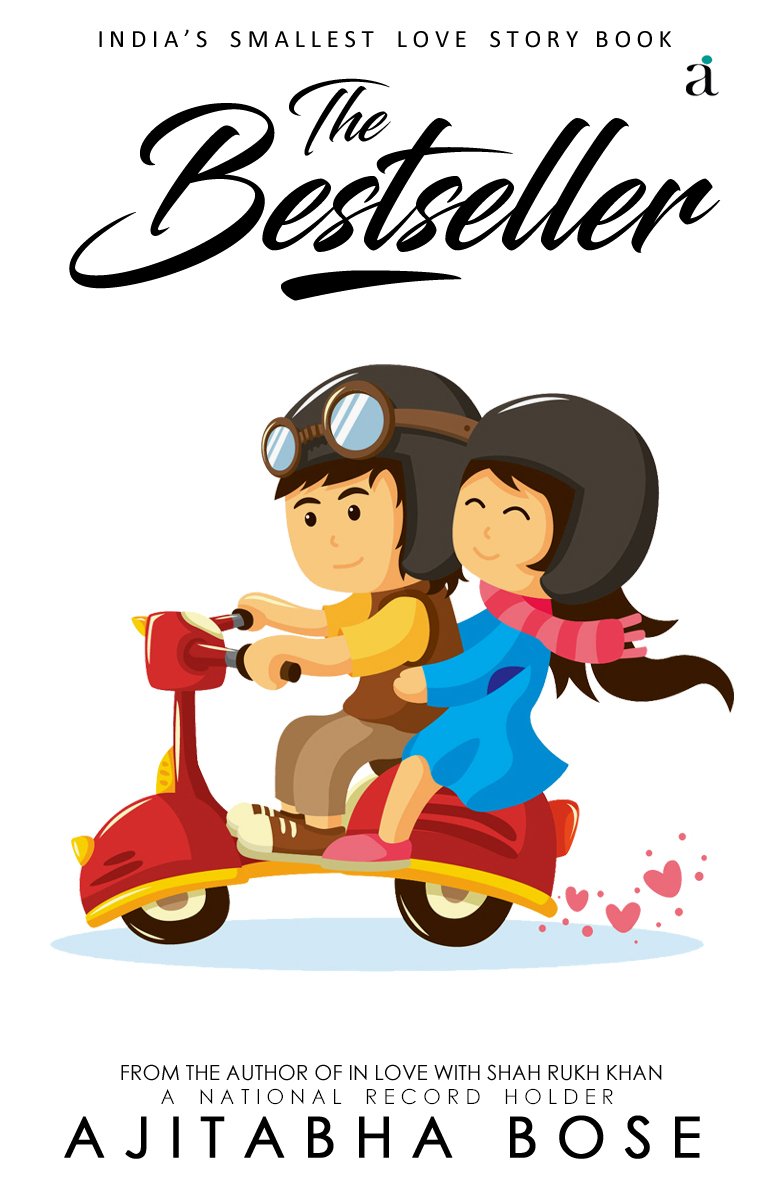
The Bestseller
- Author Name:
Ajitabha Bose
- Book Type:
- Description:
Every author wants to become a bestseller one day. Do you know over 1 lac books are published in India every year! Only a few become a bestseller. Have you ever wondered how it is to live a life of a Bestselling author? Come, join me and read a Story of life, love and dreams. It's a story of priyanshi and her dream to become a bestseller. || Book Teaser by Rajeev Khandelwal || "size doesn't matter when it's love." - Shah Rukh Khan || "ajitabha wants to bring a new trend in Books for the busy generation." - The Telegraph || "big love stories in small packages." - Hindustan times || "love stories runs in his veins." - India today || "it's not easy to sum Up a story in a few pages and keep the emotions intact! Ajitabha's attempt to that is worth appreciating." - Sudeep Nagarkar.
History of Indian English Literature
- Author Name:
M.K. Naik
- Book Type:
- Description:
Indian English literature began as an interesting by-product of an eventful encounter in the late eighteenth cntury between a vigorous and enterprising Britain and a stagnant and chaotic India, and is now nealy twi hundred years old. It is literature written originally in English by authors Indian by birth, ancestry or nationality. It is no part of English literature any more than American literature or Australian lterature can be said to be branch of British literature. It is legitimatly a part of Indian literature, since its differntia is the expression in it of an Indian ethos.

Swadheen Bharat Ka Hindi Sahitya Part 1
- Author Name:
Vishwanath Prasad Tiwari
- Book Type:
- Description:
स्वाधीन भारत का हिंदी साहित्य शीर्षक ग्रंथ, जिसका आलोच्य काल 1947-2010 है, हिंदी साहित्य की विविध प्रवृत्तियों और विधाओं का ऐतिहासिक तथा विश्लेषणात्मक अध्ययन प्रस्तुत करता है। यह एक ऐसा साहित्येतिहास ग्रंथ है जिसमें कोशिश की गई है कि उल्लेख्य योग्य सभी लेखकों एवं उनकी कृतियों का उल्लेख हो तथा महत्त्व के अनुसार उन लेखकों-कृतियों पर छोटी-बड़ी मूल्यांकपरक टिप्पणियाँ रहें। किसी प्रकार की व्यक्तिगत या विचारधारात्मक गुटबंदी से मुक्त होकर साहित्य का एक व्यापक समावेशी चित्र सामने आए, जो पाठकों, छात्रों और शोध-अध्येताओं के लिए उपयोगी हो।

History of Punjabi Literature
- Author Name:
Sant Singh Sekhon +1
- Book Type:
- Description:
The vitalityof Punjabi lietrature, its rootedness in its landscape, and its concern with the totality of human experience is evident everywhere in this volume. While it will be of undoubted value to the student of Punjabi literature, we also hope that its vitality and readability will make it attractive to other readers as well.

The Bestseller - Hindi
- Author Name:
Ajitabha Bose
- Book Type:
- Description:
Every author wants to become a bestseller one day. Do you know over 1 lac books are published in India every year! Only a few become a bestseller. Have you ever wondered how it is to live a life of a Bestselling author? Come, join me and read a Story of life, love and dreams. It's a story of priyanshi and her dream to become a bestseller. || Book Teaser by Rajeev Khandelwal || "size doesn't matter when it's love." - Shah Rukh Khan || "ajitabha wants to bring a new trend in Books for the busy generation." - The Telegraph || "big love stories in small packages." - Hindustan times || "love stories runs in his veins." - India today || "it's not easy to sum Up a story in a few pages and keep the emotions intact! Ajitabha's attempt to that is worth appreciating." - Sudeep Nagarkar.

Customer Reviews
Be the first to write a review...
History of Marathi Literature is Sahitya Akademi's definitive chronicle of an unbroken eight-century literary tradition that shaped Indian devotional consciousness. What sets this work apart is its dual architecture: six centuries of classical poetry dominated by saints like Jnandev, Namdev, Eknath, Tukaram, and Ramdas—names that echo in households far beyond Maharashtra—followed by the flowering of modern forms. The account honours not only the Bhakti mainstream but also the contributions of Virasaiva, Jain, and Muslim poets who enriched secular and spiritual expression, alongside wandering minstrels whose heroic ballads carried oral memory across generations. This is literary history as cultural inheritance, tracing how devotional verse, philosophical inquiry, and social chronicle intertwined to create a living tradition still read, recited, and revered today.
What kind of reading experience will this book give me?
This book offers a scholarly yet accessible journey through eight centuries of literary evolution. The pace is sweeping but anchored in specific voices—devotional poets, heroic balladists, philosophical minds—each section revealing how Marathi literature responded to spiritual yearning, social change, and political upheaval. It rewards readers who appreciate literary history as cultural archaeology, unearthing not just who wrote what, but why certain voices endured across centuries. The experience is layered: you encounter saints whose verses became household prayers, and lesser-known poets whose contributions reshaped secular expression.
Who is this book best suited for, and what does it expect of its reader?
This work is ideal for students and scholars of Indian literature, cultural historians, and Marathi speakers seeking to understand their literary inheritance. It expects familiarity with India's Bhakti movement and an appetite for chronological depth—readers willing to follow literary threads across classical and modern periods. Language enthusiasts exploring regional literatures beyond Hindi or Bengali will find this indispensable. While written in English, it assumes some prior knowledge of Indian literary traditions, making it less a casual introduction and more a comprehensive reference for serious readers.
What is the cultural significance of Marathi devotional poetry to Indian readers today?
Marathi devotional poetry remains spiritually and socially alive in contemporary India. Saints like Tukaram and Jnandev are not historical figures but active presences—their abhangs recited in temples, homes, and public gatherings across Maharashtra and beyond. This poetry democratized spiritual expression, rejecting caste hierarchies and Sanskrit exclusivity, making it foundational to India's egalitarian religious movements. Today, these verses inform Marathi identity, political rhetoric, and folk performance, bridging medieval devotion with modern social consciousness. Understanding this tradition is understanding a vernacular voice that shaped Indian pluralism.
What makes Sahitya Akademi's treatment of this subject distinctive?
Sahitya Akademi's approach balances canonical reverence with inclusive breadth. Unlike accounts focused solely on Bhakti giants, this history honours Virasaiva, Jain, and Muslim poets, acknowledging how Marathi literature absorbed cross-religious currents. It treats wandering minstrels and heroic ballads not as marginal folklore but as legitimate literary forms. The institutional authority of Sahitya Akademi—India's National Academy of Letters—lends this work scholarly credibility, making it a reference standard. Its structure, dividing classical and modern periods clearly, allows readers to grasp both continuity and rupture in Marathi literary evolution.
What does this book leave the reader with long after they finish it?
This book leaves readers with a profound sense of literary inheritance as living tradition. You finish understanding that Marathi literature is not a museum artefact but a breathing archive—saints whose metaphors still shape spiritual discourse, ballads that echo in folk memory, modern forms that built on devotional foundations. Emotionally, it instills respect for how a regional language sustained philosophical depth and social critique across centuries. Intellectually, it equips you to recognize continuities between medieval devotion and contemporary Marathi expression, seeing literature as cultural anchor. The lasting impression is of language as resilience.