
Kannada Literature - From Eleventh Century through the Nineteenth Century
₹
450
₹ 373.5 (17% off)
Available
he reader is surprised by the narrative's fracture of Kannada literary history, as it deliberately departs from the established taxonomy based on creed, caste, and esoteric affiliations. It is the only Kannada anthology of the middle period spanning over 9 centuries from the 11th to the 19th. There are translated selections refreshingly present, and the entire tradition of creative endeavours from the most fruitful and exciting period of condylar literature is presented in 4 formalistic sections. The texts, both popular and lesser-known literary compositions, successfully gathered in one place, offer insight into a significant shift in style, form, and theme. Its page is being written with a mnemonic episode from Devadatta and the end of the popular force key, Sangya Balya
Read moreAbout the Book
he reader is surprised by the narrative's fracture of Kannada literary history, as it deliberately departs from the established taxonomy based on creed, caste, and esoteric affiliations. It is the only Kannada anthology of the middle period spanning over 9 centuries from the 11th to the 19th. There are translated selections refreshingly present, and the entire tradition of creative endeavours from the most fruitful and exciting period of condylar literature is presented in 4 formalistic sections.
The texts, both popular and lesser-known literary compositions, successfully gathered in one place, offer insight into a significant shift in style, form, and theme. Its page is being written with a mnemonic episode from Devadatta and the end of the popular force key, Sangya Balya
Book Details
Adoration of the Ancients
- Author Name:
Ravichnadra P. Chittampalli +1
- Book Type:

- Description:
Adorations of the Ancients offers a complete English translation of all 19 stories from Vaddaradhane in a single volume. These stories represent the earliest prose in 10th-century Halagannada. Initially, they seem to be highly religious, emphasising ethics and morality aligned with the Jain tradition. However, as creative works, they function on multiple levels: realistic, mythical, fantastic, quasi-historical, worldly, monarchical, economic, and socio-cultural. The characters are consistently portrayed within various economic classes and, interestingly, rarely within caste groups. Women characters are depicted as strong and decisive. This translation is based on R.L. Anantharamaiah’s edition of Shivakotyacharya’s Vaddaradhane. It aims to balance the limitations and scope of equivalents and approximations, making the reading experience enjoyable while maintaining scholarly interest.

Urdu Dictionary for Beginners
- Author Name:
Timsal Masud
- Book Type:
- Description:
This comprehensive Urdu-English cum English-urdudictionary is crafted specifically for beginners, designed to aid in language learning and understanding. With clear definitions, contextual examples, and phonetic transcriptions, this dictionary simplifies the process of navigating between English and Urdu. Whether you're a student, traveler, or language enthusiast, this user-friendly guide will assist you in expanding your vocabulary and enhancing your language skills. Unlock the world of urduand English communication effortlessly with this essential reference tool.

Dakshina
- Author Name:
Sirpi Balasubramaniam
- Book Type:
- Description:
A literary digest of South Indian Languages.

A History Of Indian Literature 500-1399
- Author Name:
Sisir Kumar Das
- Book Type:
- Description:
A prequel to a History of Indian Literature 1800-1910, the present volume deals with the first nine hundred years of the medieval period of Indian Literary history. The literary scene in India during the period presents a fantastically varied and wide spectrum of thought and expressions, here vibrant, there dull, now vigorous and natural now sophisticated and recondite at once sublime and crude

Constitution, Culture and Nation
- Author Name:
Kalraj Mishra
- Book Type:
- Description:
Through this book, I am handing over the articles which I had written from time to time on the issues related to the Constitution, Indian Culture, and the nation to the readers out there. The Constitution of the country that was written after the independence of the country has the echo of this very culture of the nation. The Indian Constitution is based on the values of equality and liberty to all irrespective of caste, religion, class, etc. This is our culture. The Constitution, the culture, and nation are actually intertwined. I believe that the nation becomes stronger only when its people are committed to following the values associated with the Constitution and culture. Even though we got freedom from the British in 1947, the real freedom of the country means writing our own destiny. It is also important to uphold freedom. Upholding freedom means committing to fulfilling one’s duties towards its nation and enjoying the rights written in our Constitution. I like to call the ‘Indian Constitution’ a ‘global document of human rights’. The reason being the perfect blend of rights and duties consisting the lofty values allied with life on which the development of humanity is founded.

Rekhta urdu Learning Guide
- Author Name:
Professor Abdur Rasheed
- Book Type:
- Description:
The Rekhta urduLearning Guide (Hindi Edition) is your ultimate companion for mastering the beautiful urduscript. Whether you're a beginner or seeking to enhance your language skills, this comprehensive guide will empower you to read, write, and speak urduwith confidence. Written by Prof. Abdur Rasheed and Sumaira Nawaz, this guide combines clear instructions and handpicked examples to facilitate a seamless learning experience. With a focus on simplicity, the Rekhta urduLearning Guide has been carefully designed to ensure easy comprehension of the script. Each lesson is structured in a step-by-step manner, allowing learners to progress at their own pace. Whether you're interested in poetry, literature, or simply connecting with the rich cultural heritage of Urdu, this guide provides the essential foundation. Key Features and Benefits: QUICK LEARNING: Step-by-step instructions and handpicked examples enable rapid progress in mastering the urduscript. CLEAR INSTRUCTIONS: Prof. Abdur Rasheed and Sumaira Nawaz have meticulously crafted the guide with clarity in mind, making it accessible to learners of all levels. HOLISTIC APPROACH: In addition to learning the written language, the guide lays a strong foundation for spoken urduthrough enriching glossaries and practical exercises. SIMPLICITY AT ITS CORE: The book is written in the simplest possible way, ensuring an effortless learning experience for beginners. VERSATILITY: Whether you're a student, professional, or language enthusiast, this guide caters to your specific needs and goals. LANGUAGE IMMERSION: Immerse yourself in the beauty of urdupoetry, literature, and cultural nuances as you navigate through the guide. EXPERT AUTHORS: The guide is authored by Prof. Abdur Rasheed and Sumaira Nawaz, renowned experts in the field of urdulanguage and literature.

The Untold Story Of Kakori
- Author Name:
Smita Dhruv
- Book Type:
- Description:
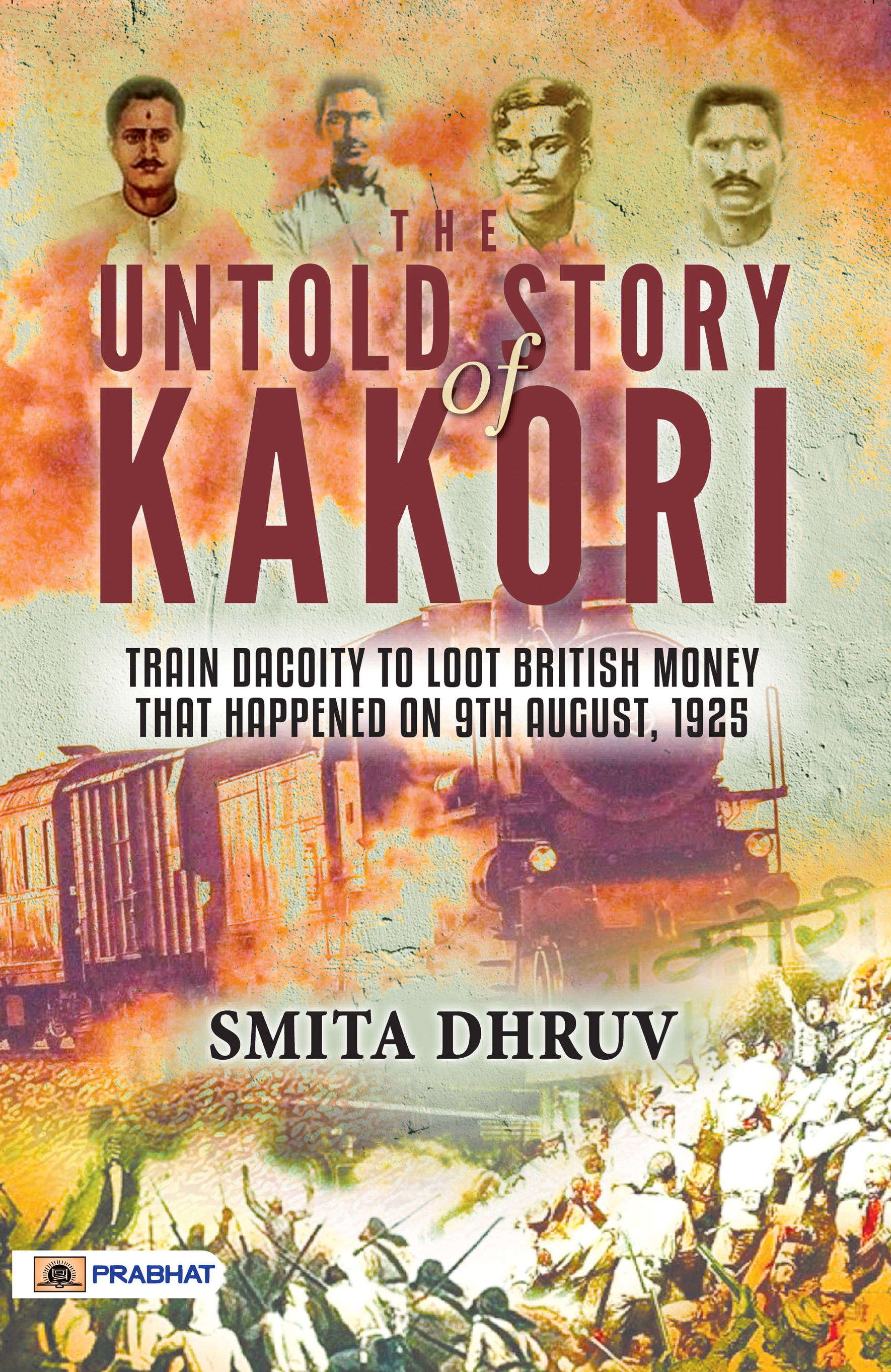
Do you remember “Kakori train loot” by Ten heroes ? It happened on 9th August, 1925. A real life drama by India’s martyrs around which this fiction is written. India’s Non Co-operation Movement against the British Government was started with a promise to free India within a year. When it was withdrawn abruptly in 1922, thousands of young freedom fighters were disillusioned. This deceit saw birth of a large number of revolutionaries fighting with all their might single-handedly against the ruling British in India. On this day, a team of ten young boys looted treasury of the Indian Railways near Kakori Railway Station, next to Lucknow. An event in the Golden history of India’s freedom fights and is a fictional story woven around it. This book brings alive those shining moments of gallantry by young, brave martyrs, who till today remain unknown to us. A nail biting portrayal of mental agony, dilemma and _ survival issues from the lives of heroes of our country and their families is a tribute to the Kakori boys
Chandausi Junction
- Author Name:
Shankar Sahay
- Book Type:

- Description:
A collection of short-stories set in the 20th Century India for the 21st Century kids & a nostalgic walk, for their parents & grandparents. Although this book has been named after the city of Chandausi, it contains stories from various places like Rishikesh, Agra, Champaran, Tilhar, Sambhal, Kanpur, Banaras, Lucknow and many others. These are the short stories of a bygone era-a period when India had either not gained independence or had been independent for not more than 35 years. These are the tales of journeys-taken up from the early 20th century to the end of a millennium, from Shahjahanpur to Delhi, from Bijnor to Hyderabad, from Hathras to Sweden & Norway, from Lakshmi Talkies, Allahabad to Night Watchman, Bangalore, from Panki to USA, from Dehradun to Canada, from Chandausi to Australia and many others. We are sure in all these stories, you will be able to find at least one character, which reminds you of your own self-of what you are, were or always wanted to be. Let us know the character with whom you have been able to relate to the most. Happy reading. “Genius is one percent inspiration and 99 percent perspiration,”-Thomas A. Edison. -Here’s a collection of short stories to inspire the readers.

Case Files of The Dead
- Author Name:
Various Authors
- Book Type:
- Description:
Welcome to a mysterious land where ghosts. Ghouls and spirits rule. Welcome to a place where haunted houses and evil souls will make a shiver run down your spine. A spooky tale in the scenic hills of Mussoorie awaits you while uncanny happenings in a literary competition are sure to intrigue you. The case of a mysterious white Maruti baffles everyone, even as the unsuspecting jogger experiences something he had never bargained for. A group of friends will encounter the worst terror of their lives while nightmares of his death rack the young man! Author's In and The Book Bakers present an eclectic mix of true stories, legends, and fables that have often been a part of India's folklore—armed with some of the best authors in India's paranormal literature history. CASE FILES OF THE DEAD; India's first pure horror public anthology will turn every host into (G)Host!!!

Child Health And Nutrition In India
- Author Name:
Sanjay Prasad +2
- Book Type:
- Description:
This book is an attempt to present, in a consolidated form of research articles that can provide a common platform for communication and discussion about healthcare and service providers, functionaries, scholars and social workers involved with child health and nutrition. The scope of this book is to present an overview of child health, maternal health and community issues in India and also attempt to highlight some of the important issues in this field.

Where Love Was Sinful
- Author Name:
Chirasree Bose
- Book Type:

- Description:
A tangled love on the battlefield of sinners… Maya: I’ve arrived in Delhi to meet my husband’s family after six months of our wedding. But what should have been a celebration turns catastrophic and people begin to die. Has it got anything to do with my secret? Shaaman: I love my wife, Maya, and God knows I have tried to be what she likes. But as I step into this house, my maternal grandfather’s house, I can feel the demon in me waking. I need help. But…what if it’s too late? Aahil: Maya. She always called me a mystery. And so I am. The mystery that started it all. The mystery that will end it all. Sparing none, not even her. Witness the most gruesome game of love, greed, revenge, power, betrayal, and hate in a tale full of sinners, a tale where love was sinful.

Unjudging Women
- Author Name:
Rachna Chaudhary
- Book Type:
- Description:
This book is based on a critical feminist reading of selected Delhi High Court judgements pronounced in the 1990s. It focuses on the phenomenon of female criminality and the pervasiveness of the disciplinary powers of law in our lives. Through an overview of existing studies on female crime in India and the interaction with the working) of the law and the legal system, This engagement pushes our understanding of law from an instrument of control and mode of social transformation to mere rhetoric. Not to argue for the futility of engaging with the law but emphasising the need to look at it closely and critically.

Kailas: Shiva's Abode
- Author Name:
Hemant Sharma +2
- Book Type:
- Description:
Wanderlust and the desire to know the land and society more had been fueling my wish to visit Kailas. There were many curiosities. All our major rivers have their source in the region. The largest reservoir of fresh water on earth is situated there. The celestial swans are found there. I recall that how in my childhood, my Grandmother used to describe Kailas as being akin to a dreamland. According to her, Shri Krishna has said in the Gita – Meruru shikhirinamaham – ‘Among mountains I am Kailas!’ It was Sage Mandhata who first set foot on this sacred soil. Adi Shankaracharya shed his mortal body here. Guru Nanak meditated here and Swaminarayana, the founder of the sect that bears his name, saw the vision of god here. The Ramayana and the Mahabharata mention Kailas. This is where Ravana had worshipped Lord Shiva. He wanted to take Kailas with him. Shiva guilefully dissuaded him from doing so. Arjuna performed penance here and received the Pashupata Astra from Shiva. Yudhishthir proceeded heavenwards via this route. One by one, all the family members fell by the roadside; only the faithful dog kept company. Bhasmasur, the Rakshas, a devotee of Shiva was reduced to cinders here. Today the dark shadow of civilisation has begun to fall even on Mansarovar. This lake is shrinking. The sacred water body, that once stretched across 410 square kilometres, is now shrunk to only 10 square kilometres. Consider this the rage of Nature. Had Kalidasa been alive, he would have been deeply saddened to see his beloved Himalaya in this state. Is it the same Himalaya that is described in Raghuvamsham and Kumar Sambhavam? Civilisation has reached a point where the divine dimensions of Himalaya are disturbed.

An Alternative Perspective On Education
- Author Name:
Atul Kothari
- Book Type:
- Description:
Education is the foundation of the development of any country. But in our country, the First Education Policy was framed in 1968, 21 years after independence; the second policy was formulated in 1986; 34 years later, India got the National Educational Policy-2020 on 25th July, 2020. Besides these, certain commissions were also constituted for reforms in education, which made some good recommendations, but these could not be implemented for sheer want of political will. For an instance, the Kothari Commission in 1968, recommended 6 per cent of Gross Domestic Product (GDP) for expenditure on education, which was also adopted by the Education Policy-1986, but this is yet to be translated into practice. If we ignore pre-colonial period, the Bharat of post-independence has not yet been able to determine the aim of education. Character building and moulding a human i.e. holistic development of personality should be the aim of education. Essays on related subjects are included in this book. To identify the issues and problems that plague the education, and their solution, we carried out basic but innovative experiments in schools, colleges and universities. The original experiences of these exercises have been penned down as articles and research papers. This book is an anthology of the related writings.

A TALE OF TWO CITIES
- Author Name:
Charles Dickens
- Book Type:
- Description:
This Book Doesnt have any Description.
The Road to Infinity
- Author Name:
Tanbir Dhingra
- Book Type:
- Description:
"A Self-Exploratory Odyssey to ‘Infinity’ and ‘Beyond’ with Infinite Thoughts encapsulating Infinite Emotions in Infinite Moments giving Infinite Chances to explore ‘Who You Are in the quest for ‘What Is life’. A magically crafted peregrination of quotations reveals a deep longing for a greater sense of meaning, happiness and contentment. It helps to create enchanting thoughts that incorporate the classic tools of transformation into a simple philosophy of living. This is not just another book that should find its way to the self-help shelf; rather it’s a coach to motivate you and a best friend to inspire you forever. The book teaches us wisdom to: Build a Life of Passion, Purpose and Peace Value Time as our most important commodity Stay Fit by creating healthy habits not restrictions Nourish our Relationships and value things we Love Cultivate innovation of Colors and creativity from Nature

Mathematics Wizard Srinivasa Ramanujan
- Author Name:
Narendra Govil +1
- Book Type:
- Description:
Mathematics Wizard Srinivasa Ramanujan The book depicts the interesting story of a mysterious Indian mathematician, Srinivasa Ramanujan, with no college education, whose mathematics in a series of letters to a Cambridge Mathematician, G.H. Hardy, shook the entire mathematics community. It is an exciting journey of a poor, self-taught and god-gifted mathematician who by the age of 31 became the youngest Fellow of Royal Society of London. Even after almost 100 years of his death at the age of 32, his results mysteriously find applications in modern world such as in the study of black holes, quantum gravity, cryptography and many others. Ramanujan’s life story and work has inspired numerous people and generations of mathematicians around the globe and continue to excite even today. We hope that the book will reach the current generation and generate interest in mathematics.

Worlds First Book On Haiku Poetry
- Author Name:
Carlos Luis
- Book Type:
- Description:
Haiku is a very short form of Japanese poetry consisting of 17 syllables arranged in three lines of 5, 7, and 5 syllables respectively. But against all odds, this is a collection of feelings written in three lines. An economical masterpiece that Trades you through realities of life; speaking of love, relationships, paradoxes in life, you name it you have it in here.

The Scarecrow Chronicles
- Author Name:
Pathik Mitra
- Book Type:
- Description:
Look into the mirror of the sciety and all you see is a scarecrow!" An anthology that mirrors the society at large. Thirteen stories that take you to the streets of Kabul to the paddy fields in rural Bengal, from a chirstmas in Paris to a famine in Orissa, from the lavish life futility of a rockstar to the aspiring dreams of a prostitute from artistic nudity to meeting God. This anthology has it all. The roller coaster ride of emotions will justify life is nor black , nor white but mostly grey!! And the scarecrow in some paddy field will keep mocking the society and it's futile taboos!! Can we be the scarecrow? An anthology you may love or hate but can't ignore for sure!!

The Art of Public Speaking
- Author Name:
Dale Carnegie
- Book Type:
- Description:
"Public speaking is a vital skill which is important in all spheres of life. Generally, people who are good at public speaking go a long way in their professional careers. Hence, acquiring sound public speaking skills at an early age is critical. The book, 'The Art of Public Speaking’ helps the readers in learning the various techniques of 'speaking with confidence'. Written using several examples and powerful narration, this book is a wholesome learning material for public speaking. It is authored by Dale Carnegie and it was published by Prabhat Prakashan in 2013. The book begins with the most essential component of public speaking - confidence. The author explains the various ways in which readers can improve their confidence so that once they go on stage, they have no fear. Then, it deals with important factors of speaking like when to pause and the various pausing techniques. Then, it moves on to the topic of delivering the content. More than what you speak, what is crucial is how you speak and hence delivery is the most important factor in public speaking. It discusses the various techniques of delivery and force. Additionally, there are notes on preparation and body language."

Customer Reviews
Be the first to write a review...
This anthology breaks with convention by refusing to classify Kannada Literature through the usual lenses of caste, creed, or esoteric sect. Instead, it organizes nine centuries of creative work — from the 11th to the 19th century — into four formalistic sections, allowing readers to trace the evolution of verse, narrative, and poetic voice without the ideological partitions that have long shaped Kannada literary historiography. Published by Sahitya Akademi, this is the only English-language anthology to cover this middle period in such depth, offering translated selections that span the most prolific era of the language's literary tradition.
For readers outside Kannada-speaking regions, this volume serves as a rare entry point into a literary culture that flourished parallel to the Bhakti movements, courtly patronage systems, and regional sultanates. The translated works retain the formal ingenuity of the originals while making the thematic richness — devotional yearning, social critique, philosophical inquiry — accessible to a contemporary English-reading audience. This is essential reading for anyone tracing the intellectual and aesthetic currents that shaped pre-modern South India.
What kind of reading experience does this Kannada literature anthology offer?
This anthology offers a cumulative, panoramic experience rather than a single emotional arc. You move through centuries of voice and form — devotional lyrics, courtly narratives, philosophical verse — organized not by sect but by literary structure. The reading rhythm is episodic and comparative, rewarding patience and attention to formal variation. It leaves you with a sense of the language's creative elasticity across nine centuries, not a single authorial vision.
Who should read this anthology and what background does it assume?
This book is best suited for readers interested in South Indian literary history, comparative literature, or the evolution of regional languages during the medieval and early modern periods. It assumes no prior knowledge of Kannada but rewards familiarity with devotional or courtly traditions across India. Linguists, translators, and scholars of formalism will find the structural organization especially valuable. General readers seeking narrative continuity may find it challenging without context.
Why does this anthology matter to readers interested in Indian literary heritage today?
It challenges the sectarian taxonomies — Veerashaiva, Vaishnava, Jain — that have long compartmentalized Kannada literary study, offering instead a formal lens that reveals aesthetic continuities across ideological divides. For contemporary readers navigating identity politics in Indian cultural discourse, this anthology models a historiography rooted in craft rather than creed. It also fills a critical gap: English translations of medieval Kannada remain scarce, making this a rare access point to a major regional tradition.
What makes this anthology's approach to Kannada literary history distinctive?
Unlike conventional anthologies that group works by religious affiliation or philosophical school, this volume organizes selections by formalistic categories — verse types, narrative structures, rhetorical modes. This editorial choice foregrounds the evolution of poetic technique and genre over sectarian lineage, allowing readers to see how devotional, philosophical, and courtly impulses coexisted and influenced one another within the same formal traditions. It is the only anthology to cover the 11th to 19th centuries in English with this structural clarity.
What does this anthology leave the reader with after finishing it?
You finish with a recognition of Kannada as a language of sustained formal experiment, not merely a vehicle for devotional or doctrinal expression. The anthology instills an appreciation for how literary forms — metres, narrative frames, rhetorical conceits — evolve across centuries while themes recur. Emotionally, it leaves a quiet respect for the translators' labour and the fragility of transmission. Intellectually, it offers a counter-narrative to caste- and creed-based literary historiography, urging readers to consider form as a unifying principle in regional literary study.