
Ins and Outs of INDIAN THEATRE
₹
200
₹ 166 (17% off)
Unavailable
Anthology of Essays on Contemporary Indian Theatre
Read moreFormat:
About the Book
Anthology of Essays on Contemporary Indian Theatre
Book Details
THE CHARIOT
- Author Name:
Raghavendra Patil +1
- Book Type:

- Description:
Raghavendra Patil (b.1951) belongs to the postmodernist group of writers in Kannada. Like his predecessors, U.R. Anantamurthy, Yahvant Chittal, Tejasvi and Shantinath Desai, he arrived at the novel through the short story. The Chariot (Teru), which won him the Sahitya Akademi Award, is his second novel. Though Patil belongs to the postmodern era, he does not share the thematic concerns or techniques of Western postmodernism. He is closer to the nativistic movement, which has already produced major writers like Chandrasekhar Kambar and Kum. Veerabhadrappa. He has also inherited some of the qualities of his famous uncle Anandakanda, such as an interest in local history and closeness to rural life. The story that Patil tells in The Chariot spans more than a hundred and fifty years, beginning with the years when the Peshva extended his rule to North Karnataka and ending with the years after the Emergency, and it relates to the Belagavi region, with its epicentre in an imagined but fully realised village named Dharamanatti. The novel offers two images of Teru, which in Kannada means both the chariot and the festival associated with it. The first is centred on an atrocious human sacrifice made in the name of religion by an autocratic ruler, and the second, distanced in time by a century and a half, mirrors the change from the feudal order to a democratic one, where religious superstition and feudal practices have been replaced by scepticism and the politics of power. The novel is remarkable for its innovative technique, which handles myth and reality with equal success.

ONCE UPON A TIME
- Author Name:
A Sethumadhavan +1
- Book Type:
- Description:
Once Upon a time by A. Sethumadhavan, is a novel which surrounds priyamvada, who is an HR professional, and a single parent at the centre of its narrative. The strong undercurrent of this award-winning title is the way woman asserts her independence and deft strokes in the book suggest how a professional woman scores. The novel very beautifully depicts the personal journey of a single parent, where are dilemmas which priyamvada faces, doing a tightrope walk between the labor force and the managements, trying to fill the vacuum in her daughter’s life and consciously attempting to steady her own emotional moorings.

Humanist Social Vision of a Jungle Poet
- Author Name:
Kuvempu +1
- Book Type:
- Description:
This book carries 51 poems of Kuvempu in translation with a long introduction to give the pan India audience an understanding of Kuvempu's major concerns. Prof Raghunath has made his choice carefully to represent Kuvempu's social concern, and that seems to be at the heart of his introductory piece.

THE WORLD IS THE NEXT VILLAGE
- Author Name:
Solon Karthak +1
- Book Type:
- Description:
it is a collection of 25 travel tales that talk about his trips around the world.

Ek Bate Baarah
- Author Name:
Sanju Jain +1
- Book Type:
- Description:
मैं नदी के आत्मीय की तरह नदी के पास जाता था।उसकी पीठ पर हाथ रखना चाहता था। नदी की पीठ पर हाथ रखने की जगह मेरे हाथ मेरी पीठ पर पहुँच जाते थे। तब मुझे पता चलता था कि मेरी पीठ के बीचोंबीच एक नदी का निशान है। हर व्यक्ति की पीठ के बीचोंबीच एक नदी का निशान है। नाधी से ही तो हमारी रीढ़ बनी है। पर नदी ने इतनी ज़रूरी बात पीठ पीछे क्यों कही?

Mitti Ki Gaadi
- Author Name:
Priyamvad
- Book Type:
- Description:
मिट्टी की गाड़ी प्रियंवद की लघु कहानियों का संग्रह है। मिट्टी की गाड़ी को 2018 में फेडरेशन ऑफ इंडियन पब्लिशर्स, नई दिल्ली द्वारा 11-17 वर्ष की आयु वर्ग में उत्कृष्टता प्रमाणपत्र प्राप्त हुआ। Age group 9-12 years

Hanji Naji
- Author Name:
Swayam Prakash +1
- Book Type:
- Description:
लेखक स्वयं प्रकाश कुछ भी कर सकते हैं. एक कहानी में, वह आपको इस तरह हंसा और रुला सकता है कि आपकी आंखें नम हो जाएंगी। सावधान, इस किताब में ऐसी कहानियाँ हैं जो आपको इतना हँसाएँगी कि आपका पेट दर्द करने लगेगा। इसका प्रभाव ग्लूकोज की तरह होता है। यह आपकी जीभ पर लगते ही घुल जाएगा और आपको हंसने पर मजबूर कर देगा. यह भी संभव है कि किस्सा आपके रक्तप्रवाह तक पहुंचे और आपके दिल को गर्म कर दे। यह आपको मास्टर कहानीकार चैपलिन की याद दिला सकता है। 30 बेमिसाल हास्य कहानियाँ.सुनी तो आपने होंगी लेकिन उन्हें इस शैली में केवल स्वयं प्रकाश ही बता सकते हैं. जो लोग लेखन शैली के मूल्य को कम आंकते हैं, उनके लिए हमारे पूर्वज ग़ालिब साहब याद दिलाते हैं कि इस दुनिया में कई अच्छे कहानीकार हैं... हांजी के बोलने के भाव, उनकी चारपाई, केश, टोपी और उनकी दाढ़ी, ठुड्डी ये सब अतनु रॉय के चित्रों में देखा जा सकता है। Age group 9-12 years

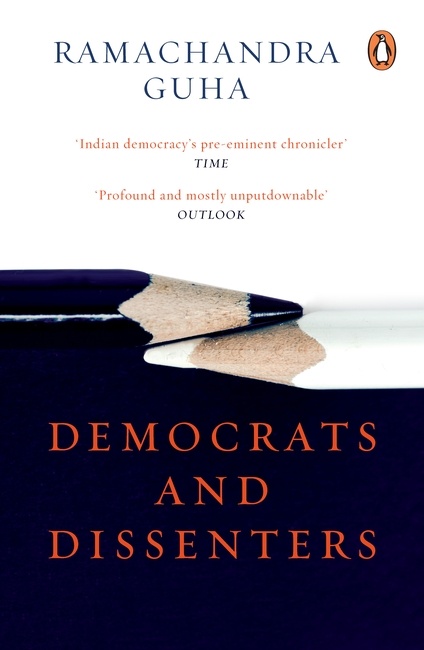
Democrats and Dissenters
- Author Name:
Ramchandra Guha
- Book Type:
- Description:
A major new collection of essays by Ramachandra Guha, Democrats and Dissenters is a work of rigorous scholarship on topics of compelling contemporary interest, written with elegance and wit. The book covers a wide range of themes: from the varying national projects of India’s neighbours to political debates within India itself, from the responsibilities of writers to the complex relationship between democracy and violence. It has essays critically assessing the work of Amartya Sen and Eric Hobsbawm, commentaries on the tragic predicament of tribals in India–who are, as Guha demonstrates, far worse off than Dalits or Muslims, yet get a fraction of the attention–and on the peculiar absence of a tradition of conservative intellectuals in India. Each essay takes up an important topic or an influential intellectual, as a window to explore major political and cultural debates in India and the world. Democrats and Dissenters is a book that is widely read, and even more widely discussed.
Zamin Humko Ghumati Hai
- Author Name:
Gulzar +1
- Book Type:
- Description:
मैं कलम से, एलन रंगों से और सुशील काग़ज़ के खिलौने बनाकर बच्चों को बहला रहे थे। जब क्लास ख़त्म हुई तो देखा बच्चे रंग, कलम और काग़ज़ के खिलौने से हमें बहला रहे थे। ~गुलज़ार Age group 6-8 years

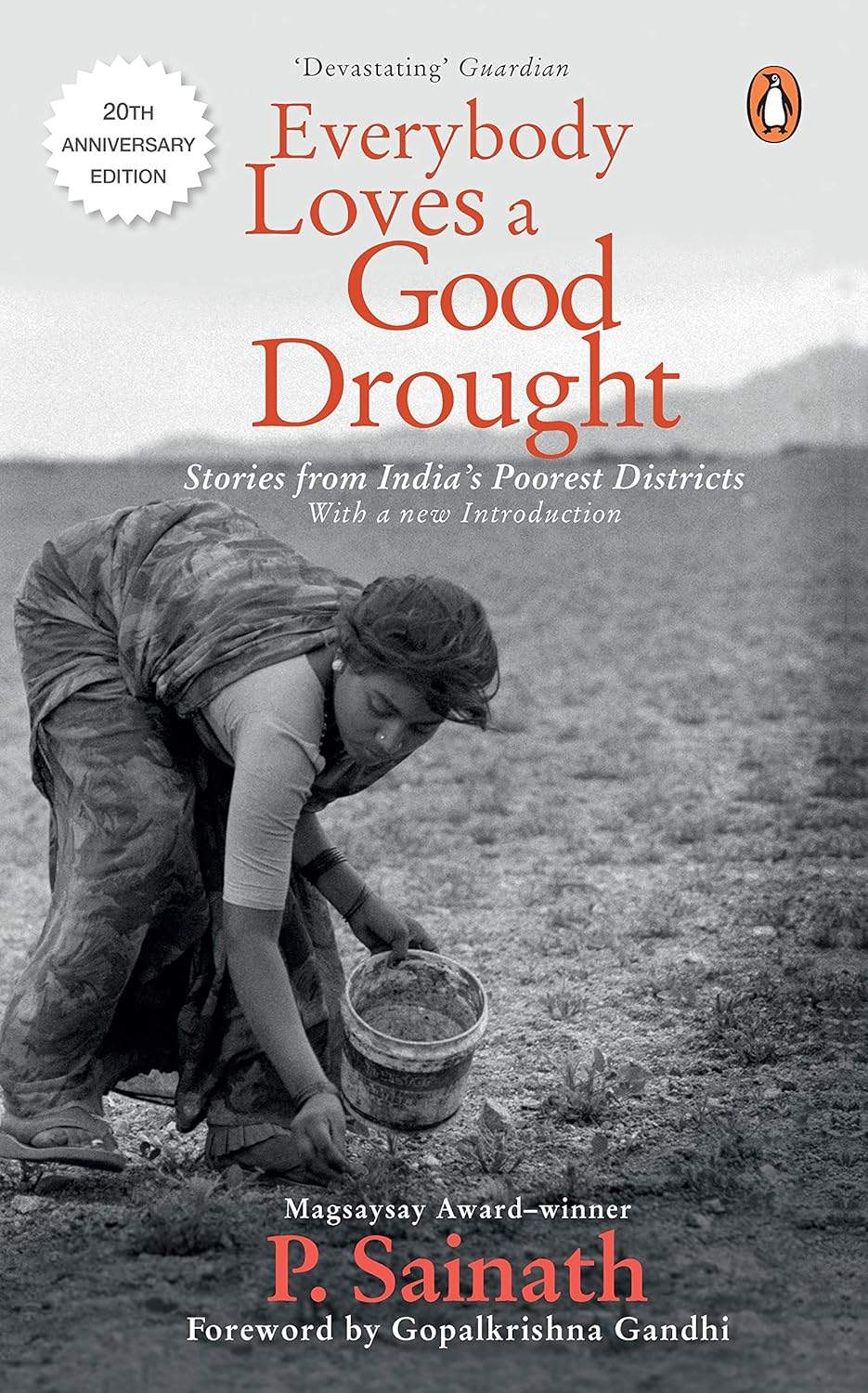
Everybody Loves A Good Drought
- Author Name:
P. Sainath
- Book Type:
- Description:
A CLASSIC OF REPORTAGE FROM RURAL INDIA BY AWARD-WINNING AUTHOR, WITH A FOREWORD BY GOPALKRISHNA GANDHI – Prescribed in over 100 universities – Reveals the human face of poverty – Key to understanding issues of globalization, human rights, development economics in India – One of the classics of journalism Acclaimed across the world, prescribed in over 100 universities and colleges, and included in part in The Century’s Greatest Reportage (Ordfront, 2000), alongside the works of Gabriel Garcia Marquez, Studs Terkel and John Reed, Everybody Loves a Good Drought is the established classic on rural poverty in India. Twenty years after publication, it remains unsurpassed in the scope and depth of reportage, providing an intimate view of the daily struggles of the poor and the efforts, often ludicrous, made to uplift them. An illuminating introduction accompanying this twentieth-anniversary edition reveals, alarmingly, how a large section of India continues to suffer in the name of development so that a small percentage may prosper. Besides exposing chronic misgovernance, it is also a devastating comment on the media’s failure to speak for the voiceless.
Ishq Ka Mata
- Author Name:
Priyamvad +1
- Book Type:
- Description:
मैं इश्क़ का माता खोल किवड़ीया रंगी चुनरिया ईश्वर अल्लाह बाँध गठरिया ठुमक ठुमक इतराता मैं इश्क़ का माता Age 12+

Jasinta Ki Dairy
- Author Name:
Jasinta Kerketta +1
- Book Type:
- Description:
सोचती हूँ भाषाओं का काम क्या है? किसी को आवाज़ दो तो वह पलट कर देखता है और मुस्कुराता है। बस इतनी-सी बात है। जिनकी भाषा हम नहीं जानते हैं उन्हें अपनी भाषा में बात करते देखते हैं और खुश होते हैं तो उनका अपनी भाषा पर यक़ीन बढ़ता है। अभाव, बीमारी, ग़रीबी, दुख के भी साधारण लोगों ने अपने जीवन में थोड़ा थोड़ा प्रेम, थोड़ी थोड़ी आत्मीयता और मनुष्यता बचाकर रखी है। उन्हें देखते हुए सोचती हूँ की धरती में प्रेम सबसे ताकतवर मूल्य है।

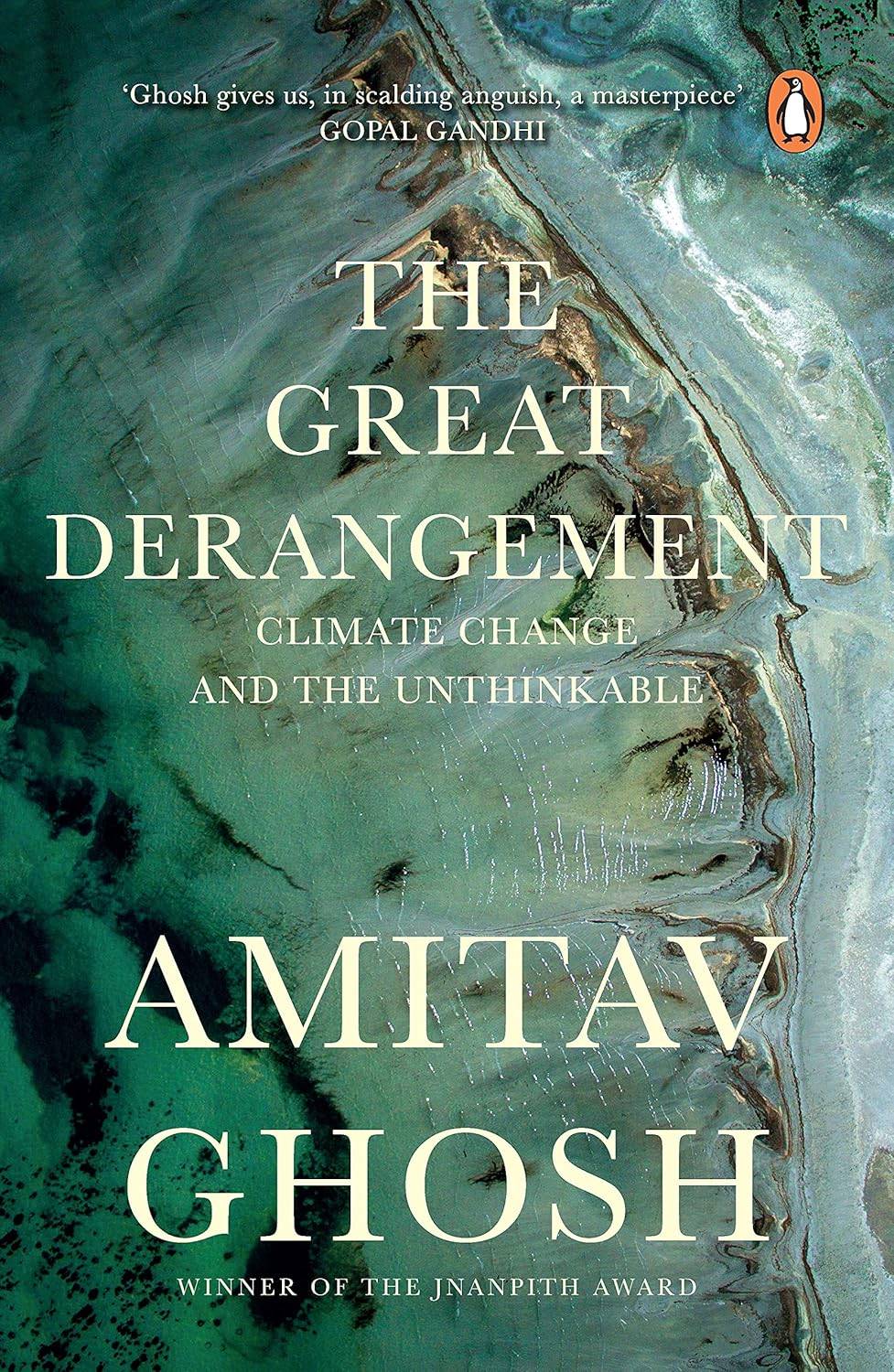
The Great Derangement
- Author Name:
Amitav Ghosh
- Book Type:
- Description:
One of India's greatest writers, Amitav Ghosh, argues that future generations may well think so. How else can we explain our imaginative failure in the face of global warming? In this groundbreaking return to non-fiction, Ghosh examines our inability-at the level of literature, history and politics-to grasp the scale and violence of climate change. The climate crisis asks us to imagine other forms of human existence-a task to which fiction, Ghosh argues, is the best suited of all forms. The Great Derangement serves as a brilliant writer's summons to confront the most urgent task of our time.
CHASO SELECTED SHORT STORIES
- Author Name:
K.Chandrahas +1
- Book Type:
- Description:
Chaso, short for Chaganti Somayajulu, was born in 1915 in Srikakulam and spent most of his life in Vizianagaram. He began his literary journey as a poet in English and later in Telugu. He was also an essayist and wrote one play. However, his true passion was the short story, which he considered a lyrical poem. His first short story, 'Chinnaaji,' published in 1942, was critically acclaimed, and by 1945 he was recognised as a leading figure and master of the genre. He set high standards for himself and, throughout a life dedicated to literature, published only about 50 stories. He was the first Telugu writer to incorporate Marxist ideas into short stories, though his stories are notably free of rhetoric. His narratives often portray the raw lives of the poor and the very poor, characterised by brevity, reticence, and compression. He was a founding member of the Progressive Writers Association. An atheist, Chaso willed his body for medical research, which his family honoured after his death in 1994.

Dancing Bear
- Author Name:
Jung A Park +2
- Book Type:
- Description:
Somu the bear is unusual. He can dance! But Somu wants to be free and unchained. Can his friend Altaf understand that? This poignant story is about friendship between a young boy and an animal and the boy’s unique understanding of what the animal truly wants. This story describes the true predicament of dancing bears in India.

Rajyog
- Author Name:
Swami Vivekanand
- Book Type:
- Description:
योग विद्या के आचार्य कहते हैं कि धर्म का आधार पूर्वकालीन अनुभूतियाँ जरूर हैं, लेकिन धार्मिक होने के लिए इन अनुभूतियों से स्वयं गुजरना अनिवार्य है। सिर्फ कहे हुए का अनुकरण करके कोई धार्मिक नहीं हो सकता। धर्म के सत्यों का जब तक आप स्वयं अनुभव नहीं कर लेते तब तक धर्म की बात करना व्यर्थ है, और उसके नाम पर खून बहाना केवल हिंसा। योग ही वह माध्यम है जिसके द्वारा हम उन अनुभूतियों को स्वयं अनुभूत और अर्जित कर सकते हैं। विवेकानन्द इसे एक व्यावहारिक और वैज्ञानिक प्रणाली मानते हैं। जिस तरह वैज्ञानिक बाह्य वस्तुओं पर परीक्षण करता है, उसी तरह योग का परीक्षण-स्थल मन है, और उसका साधन भी। यह पुस्तक राजयोग के सिद्धांतों को सरल और सहज भाषा में व्याख्यायित करती है। पुस्तक के पहले भाग में न्यूयॉर्क में छात्रों को योग की शिक्षा देने के लिए स्वामी विवेकानंद ने जो वक्तव्य दिए थे, वे संकलित हैं और दूसरे भाग में पतंजलि के योग सूत्र, उन सूत्रों के अर्थ और उन पर संक्षिप्त टीका शामिल है।

Gyanyog
- Author Name:
Swami Vivekanand
- Book Type:
- Description:
‘ज्ञानयोग’ में स्वामी विवेकानन्द के वेदान्त पर दिए गए विश्लेषणपरक भाषणों को संकलित किया गया है। इनमें कुछ भाषण लंदन में, कुछ अमेरिका में और कुछ अत्यत्र दिए गए थे। उनका मानना था कि व्यक्तिगत और सामाजिक जीवन में वेदान्त निर्णायक रूप में उपयोगी साबित हो सकता है; कि वह मनुष्य के अब तक किए गए चिन्तन का उच्चतम फल है, संसार की समस्त विचार-सरणियों को अन्ततः उसी में विलीन होना है। अत्यन्त सरल और सुगम भाषा में दिए गए इन वक्तव्यों में उन्होंने माया क्या है, मनुष्य का वास्तविक स्वरूप क्या है, माया और ईश्वर की अवधारणा का विकास किस प्रकार हुआ, संसार क्या है, आत्मा का स्वभाव क्या है, अमरत्व क्या है, आदि विषयों पर विचार किया है। विवेकानन्द के चिन्तन की विशेषता ये है कि दर्शन के गूढ़ प्रश्नों पर वे जो भी विचार करते हैं, उसे हमारे भौतिक और वर्तमान जीवन से जोड़ते हुए, उसकी रोशनी में व्याख्यायित करते हुए करते हैं, यह विशेषता इन आलेखों और वक्तव्यों में भी दृष्टिगोचर होती है।

Vichar Ka Kapda
- Author Name:
Anupam Mishra
- Book Type:
- Description:
‘‘क़ायदे से अनुपम मिश्र न लेखक थे, न पत्रकार। वे साफ़ माथे के एक आदमी थे जो हर हालत में माथा ऊँचा और साफ़ रखना चाहते थे। उनकी निराकांक्षा उनकी बुनियादी बेचैनियों को ढाँप नहीं पाती थी। ये बेचैनियाँ ही उन्हें कई बार ऐसे प्रसंगों, व्यक्तियों, घटनाओं, वृत्तियों को खुली नज़र देखने-समझने की ओर ले जाती थीं। उनकी संवेदना में ऐसी ऐन्द्रियता थी कि वे विचार का कपड़ा भी पहचान लेती थीं। कुल मिलाकर अनुपम मिश्र की अकाल मृत्यु के बाद शेष रह गई सामग्री में से किया गया यह संचयन हिन्दी में सहज, निर्मल और पारदर्शी, मानवीय गरमाहट से भरे गद्य का विरल उपहार है। हमें मरणोत्तर अनुपम मिश्र को उनकी भरी-पूरी जीवन्तता में प्रस्तुत करने में प्रसन्नता है।” —अशोक वाजपेयी

Ped Aur Parchhai
- Author Name:
Udyan Vajpeyi +1
- Book Type:
- Description:
प्रसिद्ध कवि और लेखक उदयन वाजपेयी के लघु निबंध और भज्जू श्याम के चित्र इस पुस्तक का निर्माण करते हैं। उदयन वाजपेई के निबंध कल्पनाशील और चतुराई से गढ़े गए हैं। वह परिभाषाओं से निपटता नहीं है बल्कि वह किसी चीज़ को देखने के वैकल्पिक तरीकों पर विचार करता है। इस प्रकार वह वस्तु को उसकी प्रचलित परिभाषाओं से मुक्त कर देता है। भज्जू श्याम के चित्र सोच-समझकर बनाए गए और विस्तृत हैं। उनके सूक्ष्म विवरणों का आनंद लेने के लिए उन्हें ध्यानपूर्वक, बारीकी से देखें। Age group 9-12 years

Kuchh Bola gaya, Kuchh Likha Gaya
- Author Name:
Subhah Mishra
- Book Type:
- Description:
इस पुस्तक में संगृहीत निबंध दरअसल पारंपरिक निबंधों की संरचना से विद्रोह करते हैं, खासकर ललित निबंधों की मृतप्राय देह से प्रेत जगाने की कोशिश तो ये बिल्कुल ही नहीं हैं। इन निबंधों के सहारे न सिर्फ हमारे समाज, संस्कृति और पूरे समय की पड़ताल की जितनी कोशिश है, उतनी ही उसे नए संदर्भों में देखने-परखने की ललक भी है। इस पुस्तक के अधिकांश निबंध आज के जीवन-यथार्थ को उसके समूचे अर्थ-संदर्भों में प्रकट करते हैं। साथ ही समय की जटिलता और उसकी व्याख्या की अनिवार्यता में संवाद की स्थिति भी निर्मित करने का ये विवेकपूर्ण साहस और प्रयास हैं। 1947 से लेकर आज तक सत्ता और उसके सलाहकारों की भूमिका में उतरे उतावले बुद्धिजीवियों ने इन सबको अप्रासंगिक घोषित करने के लिए भाषा के खिलवाड़ से संस्कृति को सत्ता का हिस्सा बनाने के लिए बहुत ही श्रम के साथ नए मुहावरे गढ़े। ये निबंध इन चालाकियों को भी अनावृत करते हैं। इन निबंधों को पढ़ना अपने समय से संवाद है। —भालचंद्र जोशी

Customer Reviews
Be the first to write a review...
Ins and Outs of Indian Theatre brings together critical perspectives on the multifaceted landscape of contemporary Indian stage practice — a domain where centuries-old performance vocabularies coexist with urgent political commentary and experimental form. Published by Sahitya Akademi, this anthology acknowledges that Indian theatre is not one tradition but many: the proscenium experiments of metropolitan companies, the street jatra performances rooted in rural Bengal, the activist natak mandalis of Maharashtra, and the Sanskrit-derived forms still performed in temple courtyards. Each essay examines a distinct facet — language politics on stage, the economics of regional theatre, the role of the director in collaborative creation, or the tension between entertainment and social critique. What emerges is not a unified theory but a map of plural practices, each responding to local audiences, censorship climates, and the question of what theatre means when cinema and digital media dominate Indian leisure time.
What kind of reading experience does Ins and Outs of Indian Theatre offer?
This anthology offers an analytical journey through the diversity and contradictions of contemporary Indian stage practice. Each essay brings a different lens — historical, critical, practitioner-led — so the reading experience feels cumulative rather than linear. You encounter rigorous observation rather than celebration, grounded in the realities of funding shortages, censorship, and the challenge of sustaining live performance cultures in a screen-dominated era. The tone is scholarly yet accessible, rewarding readers who want to think seriously about theatre as both art and social institution.
Who is this book best suited for and what does it expect of its reader?
- Students and scholars of Indian drama, performance studies, or cultural history seeking critical frameworks beyond Western theatrical theory.
- Theatre practitioners — directors, actors, playwrights — curious about the broader ecosystem they work within and the challenges facing other regional traditions.
- Readers with some familiarity with Indian languages and cultural geography, as essays often reference specific linguistic or regional contexts.
- Anyone interested in how art forms adapt under economic and political pressure in postcolonial India.
What is the cultural significance of contemporary Indian theatre to Indian readers today?
Indian theatre remains one of the few cultural spaces where regional languages thrive on their own terms, resisting Hindi and English dominance. It is also a testing ground for political speech in an era of heightened surveillance — street theatre groups still perform dissent in forms that cinema cannot risk. For many communities, theatre preserves oral storytelling traditions and local dialects that are disappearing from everyday life. Understanding contemporary theatre means understanding how communities assert identity, question power, and keep alive performance knowledge passed down through generations, not institutions.
What makes this anthology's treatment of Indian theatre distinctive?
This anthology does not romanticise Indian theatre as ancient or timeless. Instead, it treats theatre as a living, financially precarious practice shaped by state patronage systems, urban-rural divides, and the generational shift away from live performance. The essays acknowledge internal contradictions — how folk forms are both preserved and museumified, how English-language theatre often mirrors Western aesthetics while regional language theatre innovates in isolation. Sahitya Akademi's editorial choice emphasises plurality: no single theatrical lineage is positioned as the authentic or representative Indian tradition.
What does this book leave the reader with long after they finish it?
It leaves you with a sharper awareness of how fragile and resilient live performance cultures are in India — how much labour, negotiation, and passion it takes to sustain a theatre company outside Delhi or Mumbai. You see theatre not as escapism but as contested public space, where questions of caste, language, gender, and censorship play out in real time. The book also instills respect for the sheer diversity of practice: there is no monolithic "Indian theatre," only theaters, each embedded in specific linguistic and economic realities, each asking what it means to gather an audience in the same room.