
The Accidental Anthology
₹
175
₹ 148.75 (15% off)
Available
"The stories compiled in this anthology depict the minds of varied people – from a curious 10-year-old to a confused teenager; from a broken heart to a psychopath; from a dumb creature to ... Well, READ ON to find more."
Read moreAbout the Book
"The stories compiled in this anthology depict the minds of varied people – from a curious 10-year-old to a confused teenager; from a broken heart to a psychopath; from a dumb creature to ...
Well, READ ON to find more."
Book Details
Chandausi Junction
- Author Name:
Shankar Sahay
- Book Type:


- Description:
A collection of short-stories set in the 20th Century India for the 21st Century kids & a nostalgic walk, for their parents & grandparents. Although this book has been named after the city of Chandausi, it contains stories from various places like Rishikesh, Agra, Champaran, Tilhar, Sambhal, Kanpur, Banaras, Lucknow and many others. These are the short stories of a bygone era-a period when India had either not gained independence or had been independent for not more than 35 years. These are the tales of journeys-taken up from the early 20th century to the end of a millennium, from Shahjahanpur to Delhi, from Bijnor to Hyderabad, from Hathras to Sweden & Norway, from Lakshmi Talkies, Allahabad to Night Watchman, Bangalore, from Panki to USA, from Dehradun to Canada, from Chandausi to Australia and many others. We are sure in all these stories, you will be able to find at least one character, which reminds you of your own self-of what you are, were or always wanted to be. Let us know the character with whom you have been able to relate to the most. Happy reading. “Genius is one percent inspiration and 99 percent perspiration,”-Thomas A. Edison. -Here’s a collection of short stories to inspire the readers.

Case Files of The Dead
- Author Name:
Various Authors
- Book Type:
- Description:
Welcome to a mysterious land where ghosts. Ghouls and spirits rule. Welcome to a place where haunted houses and evil souls will make a shiver run down your spine. A spooky tale in the scenic hills of Mussoorie awaits you while uncanny happenings in a literary competition are sure to intrigue you. The case of a mysterious white Maruti baffles everyone, even as the unsuspecting jogger experiences something he had never bargained for. A group of friends will encounter the worst terror of their lives while nightmares of his death rack the young man! Author's In and The Book Bakers present an eclectic mix of true stories, legends, and fables that have often been a part of India's folklore—armed with some of the best authors in India's paranormal literature history. CASE FILES OF THE DEAD; India's first pure horror public anthology will turn every host into (G)Host!!!

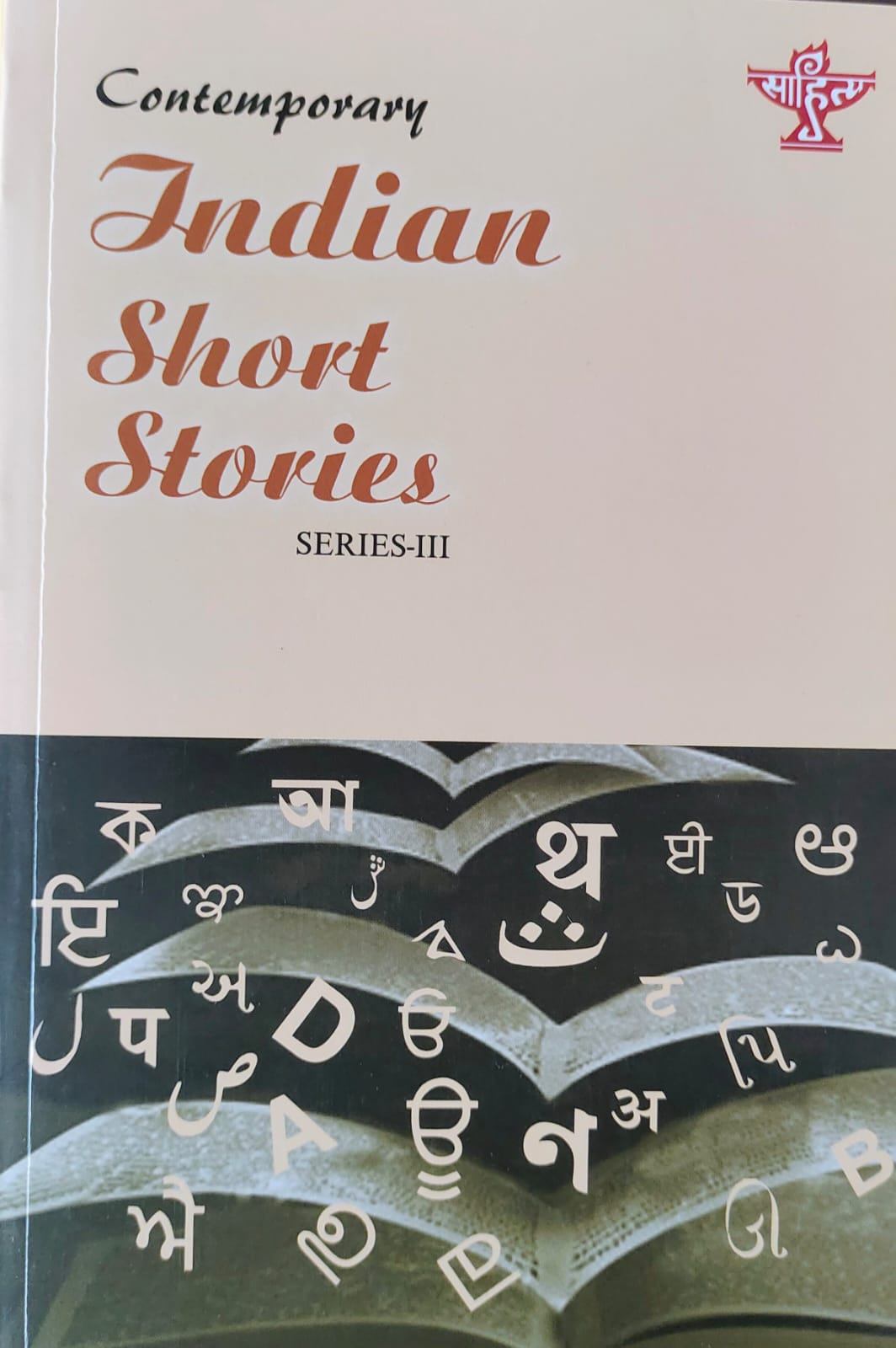
Contemporary Indian Short Stories Series III
- Author Name:
Sahitya Akademi
- Book Type:
- Description:
This sheaf of nineteen short stories, written by different authors, represents a cross-section of contemporary Indian short fiction. Eighteen stories are translations from eighteen modern Indian languages, and one is a specimen of Indian creative writing in English. Selected by the Sahitya Akademi's Advisory Boards of various languages, these stories, provide fascinating glimpses into the panorama of Indian life, with its baffling variety, its rich contrasts of the simple and the sophisticated, the ancient and the modern. Here is evidence, if such were needed that Indian literature is one though written in many languages its oneness consisting not of a stale uniformity but of a rich variety. This is the third volume of Sahitya Akademi series of such representative anthologies in English of contemporary Indian short story.
Contemporary Kashmiri Short Stories
- Author Name:
Hriday Kaul Bharati +1
- Book Type:
- Description:
The Kashmiri short story was born with the progressive movement in Kashmir and its acceptted the standards and values dictated by the movement unquesioningly. Nationalism and the desire for reaching out to people inspired most of the writers to switch over to Kashmiri, even though they had strated writing in Urdu. Dinanath Nadim's Javabi Card (Reply-Card) and Somnath Zutshi's Yell Phol Gash (when there was light) are the first two short stories written in Kashmiri

CHASO SELECTED SHORT STORIES
- Author Name:
K.Chandrahas +1
- Book Type:
- Description:
Chaso, short for Chaganti Somayajulu, was born in 1915 in Srikakulam and spent most of his life in Vizianagaram. He began his literary journey as a poet in English and later in Telugu. He was also an essayist and wrote one play. However, his true passion was the short story, which he considered a lyrical poem. His first short story, 'Chinnaaji,' published in 1942, was critically acclaimed, and by 1945 he was recognised as a leading figure and master of the genre. He set high standards for himself and, throughout a life dedicated to literature, published only about 50 stories. He was the first Telugu writer to incorporate Marxist ideas into short stories, though his stories are notably free of rhetoric. His narratives often portray the raw lives of the poor and the very poor, characterised by brevity, reticence, and compression. He was a founding member of the Progressive Writers Association. An atheist, Chaso willed his body for medical research, which his family honoured after his death in 1994.

The Best Stories of Mohapatra Nilamani Sahoo
- Author Name:
Guruprasad Mohapatra +1
- Book Type:
- Description:
The Best Stories of Mohapatra Nilamani Sahoo: This book is a translation of Mohapatra Nilamani Sahoo's short stories, written in his inimitable style. The stories, originally written in Odia, were truly representative of Odia culture and traditions; the narrative is unique and deeply emotional and carries the readers with the flow. This volume is a specimen of Mohapatra Nilamani Sahoo's short stories for the wider readership

Here, There And Everywhere
- Author Name:
Smt. Sudha Murty
- Book Type:
- Description:
Wearer of many hats-philanthropist, entrepreneur, computer scientist, engineer, teacher-Sudha Murty has above all always been a storyteller extraordinaire. Winner of the R.K. Narayan Award for Literature, the Padma Shri, the Attimabbe Award from the government of Karnataka for excellence in Kannada literature, and the Raymond Crossword Lifetime Achievement Award, her repertoire includes adult non-fiction, adult fiction, children’s books, travelogues and technical books. Here, There and Everywhere is a celebration of her literary journey and is her 200th title across genres and languages. Bringing together her best-loved stories from various collections alongside some new ones and a thoughtful introduction, here is a book that is, in every sense, as multifaceted as its author.

The Scarecrow Chronicles
- Author Name:
Pathik Mitra
- Book Type:
- Description:
Look into the mirror of the sciety and all you see is a scarecrow!" An anthology that mirrors the society at large. Thirteen stories that take you to the streets of Kabul to the paddy fields in rural Bengal, from a chirstmas in Paris to a famine in Orissa, from the lavish life futility of a rockstar to the aspiring dreams of a prostitute from artistic nudity to meeting God. This anthology has it all. The roller coaster ride of emotions will justify life is nor black , nor white but mostly grey!! And the scarecrow in some paddy field will keep mocking the society and it's futile taboos!! Can we be the scarecrow? An anthology you may love or hate but can't ignore for sure!!

Contemporary Indian Short Stories Series II
- Author Name:
Bhabani Bhattacharya
- Book Type:
- Description:
This collection of twenty-two short stories, written mostly between 1930 and 1950 by various authors, offers a snapshot of contemporary Indian short fiction. Twenty stories are translations from fourteen Indian languages, and two are original works in English. This demonstrates, if proof were needed, that Indian literature, despite being written in many languages, is unified - not by sameness, but by its rich diversity.

Epochal Voices
- Author Name:
Murari Madhusudan Thakur
- Book Type:
- Description:
A comparison of the lives and writing of Devkota and Nirala by Murari Madhusudan Thakur. Sahitya Akademi Award 2021

Short Stories from Pakistan
- Author Name:
Intizar Hussain +2
- Book Type:
- Description:
The short stories - originally written in Urdu, Punjabi, Sindhi, Pushto, and Saraiki, and now translated into English - showcased in this anthology engage with the above questions in their own ways, articulating a multiplicity of voices and experiences. They chronicle the birth of the nation of Pakistan in traumatic circumstances and its chequered history over the past fifty years by depicting the "desire and aspirations, fear and horror, pride, shame, helplessness and a thousand other unnamed feelings" of their protagonists. In doing so, they also depict the immensely varied and rich tapestry of cultural life in Pakistan.

Beyond The Backyard
- Author Name:
P.Sathyavathi +2
- Book Type:
- Description:
Women’s voices no longer solely portray confinement to kitchens and backyards or victimhood. Instead, they emphasise unseen restrictions faced by individuals and significant barriers within global contexts. This collection of twenty-nine short stories covers diverse themes, complex narratives, unique characters, inventive metaphors, and alternative viewpoints. All stories aim for a just and equitable world. Key topics include Dalit, minority, and tribal issues, farmers’ struggles, new forms of exploitation in high-tech sectors under Globalisation, and existential questions, which are central to these women's writings. Over a dozen passionate translators helped bring these stories to English-speaking readers. The shift of women from victims to survivors to saviours would be even more impactful if men and women worked together to build a casteless, classless, environmentally mindful society- an aspiration our writers share.

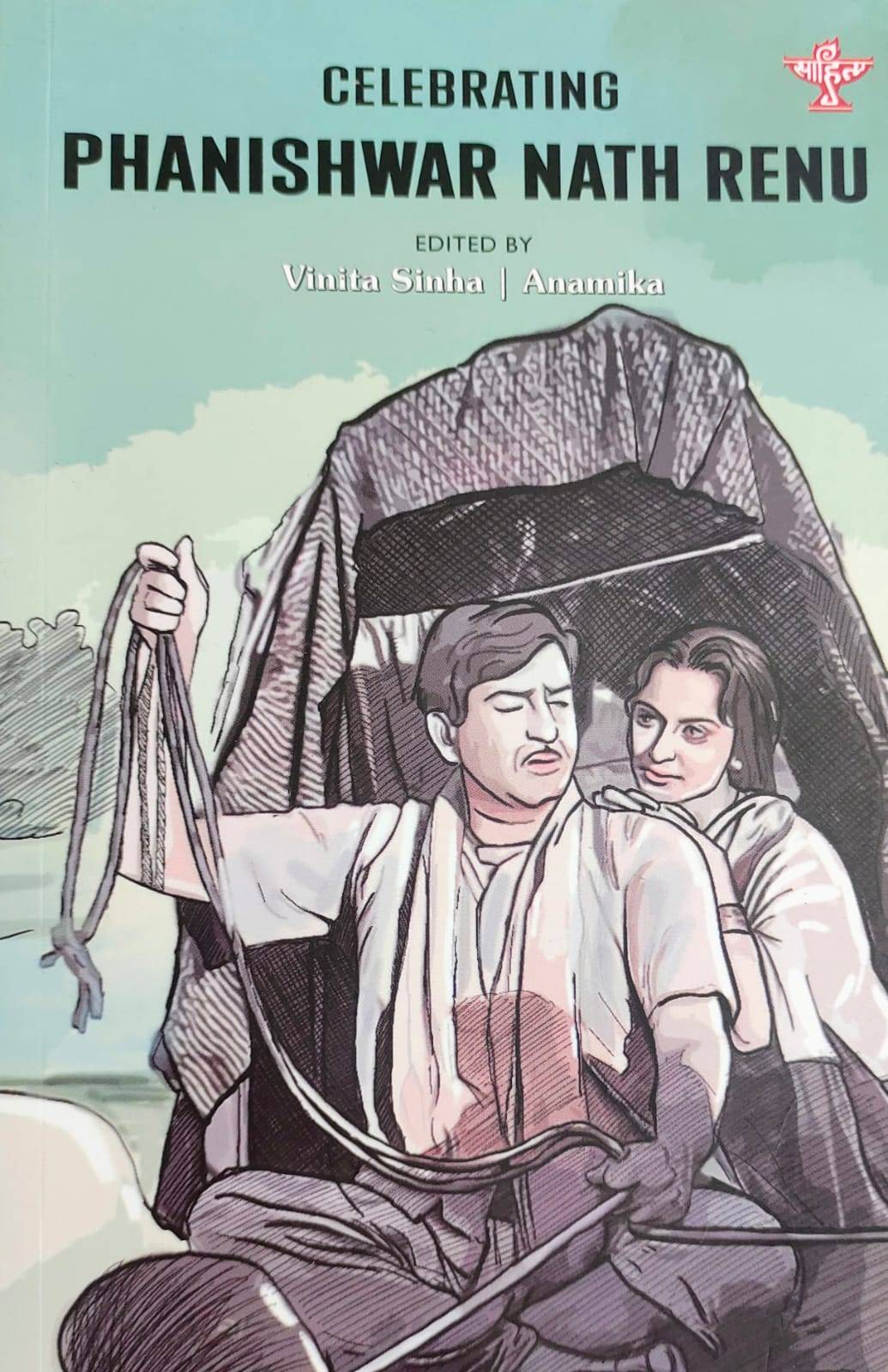
Celebrating Phanishwar Nath Renu
- Author Name:
Vinita Sinha +2
- Book Type:
- Description:
Phanishwar Nath Renu’s fiction offers a vivid portrayal of human actions set in their authentic geographical context. The author boldly diverges from conventional linguistic norms, capturing a distinct form of Hindi rooted in his regional community's language. This regional dialect becomes an integral part of his storytelling. The primary challenge in translating his work into a language like English lies in capturing the essence of Bihar's sounds and the creative linguistic twists that give his stories their unique flavour. Only when these local nuances and inventive distortions resonate in English can the original spirit be truly conveyed. The success of these translations is evident in the translators' heartfelt efforts to evoke the essence of the originals in their own distinctive styles.
Something Unspoken Too
- Author Name:
Prem Parkash +1
- Book Type:
- Description:
Something Unspoken Too, Kujjh Ankeha Vi, which won Prem Parkash the prestigious Sahitya Akademi Award in 1992, is now being rendered into English as Something Unspoken Too. Most of the stories iun this collection bear testimony to this unique facet of Prem Parkash's art and craft, through which he searches for the hidden, the unrevealed, the mysterious and the unspoken, all in an effort to understand the complexities of human motives and actions. Thestories in this collection move precariously across the spectruuum of words and silences, giving rise to spaces in which the unarticulated can aesthetically be located. Prem Parkash is a 'poet' of the twilight zone, a wanderer of forbidden territories and a cartographer of complex human relationships.

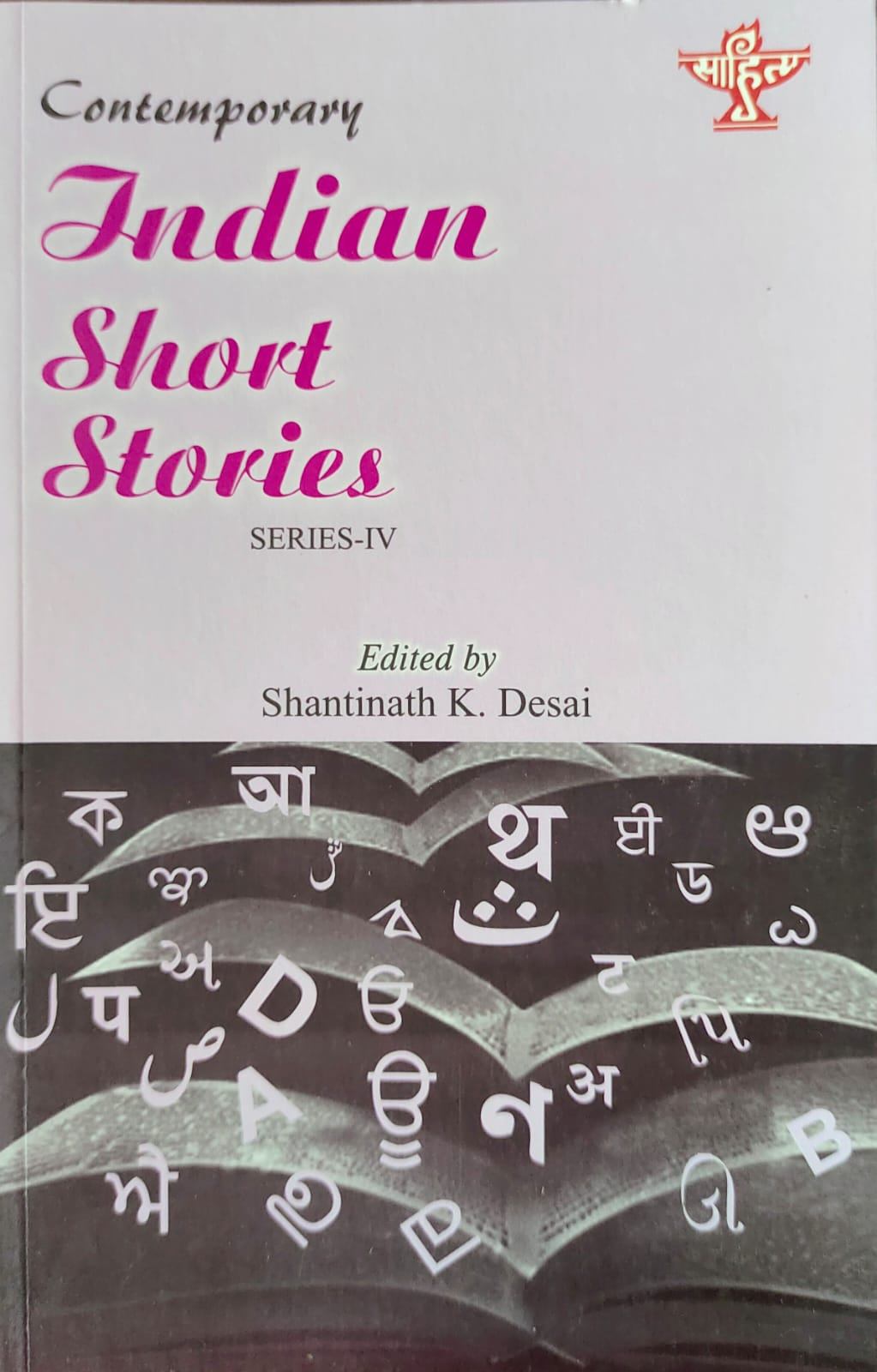
Contemporary Indian Short Stories Series IV
- Author Name:
Shantinath K Desai
- Book Type:
- Description:
This collection of twenty-one short stories, written by different authors, represents a cross-section of contemporary Indian short fiction. Twenty short stories are translations from twenty languages of Indian creative writing in English and edited by Shantinath K. Desai. This is the fourth volume of Sahitya Akademi's series of such representative anthologies in English of contemporary Indian short stories.
Mystery of the Missing Cap and Others Award Winning Stories
- Author Name:
Manoj Das
- Book Type:
- Description:
Mystery of the Missing Cap and Others Stories, originally published as Manoj Dasanka Katha O Kahini was the first collection of short stories in Odia to receive the Sahitya Akademi Award (1972). The collection spans twenty-two years of the writer's contribution to Odia short story. While Sri Das has won wider recognitions through his subsequently written stories, roping into the circle of his admires writers like Graham Greene and H.R.F. Keating, this collection marks a mile stone in the evolution of Odia fiction, infusing into the genre of short stories a neew vitality through a combination of deep psychological insight into characters and situations and a remarkable precision in sytle. The translation is by the author himself whoalso occupies a special places in Indian writing in English.

Peddibhotla Subbaramaiah Short Stories
- Author Name:
Peddibhotla Subbaramaiah
- Book Type:
- Description:
Peddibhotla Subbaramaiah's short stories are the English translations of the Telugu book Peddibhotla Subbaramaiah Kathalu, which has won the Sahitya Akademi Award. This collection includes thirty-four stories that explore a variety of themes, delicate issues, unique events, and different incidents. These stories vividly depict society, social realism, and social consciousness. Each story sheds light on a different facet of social reality, showcasing sharp and perceptive observations of society. The collection mainly concentrates on middle-class struggles, jealousy, and daily life.

Indian Stories Vol 1
- Author Name:
K. Sreenivassarao
- Book Type:
- Description:
Volume 1 of Indian Stories is a curated selection of short stories translated into English from various Indian languages. This volume goes beyond being a simple collection; it captures the evolving social conditions and value systems over the past sixty years. The diverse stories showcase the richness of Indian culture and tradition, while also featuring universal elements that resonate with contemporary audiences and other cultures. The narratives within this anthology reflect the essence of India over time, weaving in mystical elements as they bridge the past and present. The dynamism, wisdom, and human qualities present in these tales ensure their relevance for generations. This is the first volume in a series, with each installment designed to highlight different aspects of Indian culture.

Six Stories - Bhagirath Mishra
- Author Name:
Bhagirath Mishra
- Book Type:
- Description:
Bhagirath Mishra’s genius lies in capturing heart- wrenching tales in a fluent and evocative language. His characters unravel from the shadows and folds, intrigue, and win your heart. This brief curation, translated from Bengali by Subhashis Gangopadhyay, Mrinal Kanti Dasgupta, Amlan Biswas, and Amita Roy, introduces one of Bengal’s most prolific writers to global readers through six of his best-known stories.

Indian Short Stories 1900 To 2000
- Author Name:
E. V. Ramakrishnan
- Book Type:
- Description:
This collection of 43 stories from 21 languages highlights India's diverse and intricate life. They depict everything from the chaos and mass hysteria of partition to the suppressed anger and self-pity of people trapped in broken homes. These narratives explore both outer experiences and internal struggles within Indian society. The stories emphasise the sacred and the profane, as well as the voices of the elite and the marginalised, serving as mirrors for self-reflection. Together, these tales trace a transformative century during which India emerged as a unified nation. The vivid imagery from the tumultuous 20th century is both disturbing and enlightening.

Customer Reviews
Be the first to write a review...
The Accidental Anthology is built on a simple structural gamble: can a single collection hold the voice of a ten-year-old and a psychopath without one cancelling the other out? The answer lies in how honestly each story commits to its speaker's distorted lens. A child sees the world through questions that adults have stopped asking. A heartbroken narrator collapses time into before and after. A creature without language—described only as "dumb"—becomes a consciousness we recognize despite its silence. The anthology does not smooth these voices into a unified tone; it lets them collide, each story a sealed chamber of perspective.
What makes this collection accidental is worth asking. The title suggests these voices were not gathered by theme or moral, but by the author's willingness to follow wherever interiority led—adolescent confusion, romantic wreckage, pathology. For readers drawn to psychological realism and the challenge of unstable narrators, this is a book that rewards attention to how a mind speaks, not just what it says.
What kind of reading experience will The Accidental Anthology give me?
This collection asks you to reset your emotional register with every story. You move from the open curiosity of childhood into the closed logic of obsession, from grief's fog into predatory clarity. The pace is interior—each story unfolds at the speed of thought, not action. What lingers is not plot resolution but the unsettling accuracy of each voice: how a psychopath's reasoning feels reasonable from inside, how heartbreak distorts memory into myth. It rewards readers who enjoy inhabiting minds rather than following events.
Who is this book best suited for, and what does it expect of its reader?
Best for readers who treat short fiction as a study in perspective, not escapism. If you are drawn to unreliable narrators, psychological realism, or collections that refuse tonal consistency, this will hold your attention. It expects you to shift empathy quickly—to follow a child's wonder, then sit inside a mind capable of cruelty without moral commentary cushioning the transition. Not ideal for readers seeking comfort or thematic unity. Ideal for those curious about how voice constructs reality differently in every skull.
What is the cultural or historical significance of this anthology's subject to Indian readers today?
Indian short fiction has long explored social realism and family systems; this collection turns inward to psychological fragmentation. At a time when mental health, adolescent identity, and the ethics of empathy are urgent conversations in urban India, these stories offer no solutions—only the raw texture of varied consciousnesses. The "dumb creature" and the psychopath are not metaphors for marginalization; they are studies in what it feels like to process the world through a non-normative lens, a theme increasingly visible in contemporary Indian literature.
What makes this author's treatment of psychological interiority distinctive?
The author refuses to editorialize. There is no framing device that says "this is the broken mind, this is the healthy one." A psychopath's logic is rendered with the same narrative respect as a child's wonder. The structural choice—to leap between ages, mental states, and even species—suggests that interiority itself, not morality or sanity, is the true subject. Each voice is given full authority over its story, which makes the collection feel less like a curated argument and more like eavesdropping on unguarded thought.
What does this book leave the reader with long after they finish it?
A sharper awareness of how radically different the same world looks depending on who is looking. You finish the book and realize that the child, the psychopath, and the heartbroken lover are not separate species—they are modes of attention, each one a distortion lens we have all worn at different times. What stays is not catharsis but a kind of diagnostic humility: the recognition that every mind is both a valid instrument and a funhouse mirror, including your own.