Peddibhotla Subbaramaiah Short Stories
About the book
Peddibhotla Subbaramaiah's short stories are the English translations of the Telugu book Peddibhotla Subbaramaiah Kathalu, which has won the Sahitya Akademi Award. This collection includes thirty-four stories that explore a variety of themes, delicate issues, unique events, and different incidents. These stories vividly depict society, social realism, and social consciousness. Each story sheds light on a different facet of social reality, showcasing sharp and perceptive observations of society. The collection mainly concentrates on middle-class struggles, jealousy, and daily life.
Read more₹
350
₹ 290.5 17% off
Available
Format
About the Book
Peddibhotla Subbaramaiah's short stories are the English translations of the Telugu book Peddibhotla Subbaramaiah Kathalu, which has won the Sahitya Akademi Award.
This collection includes thirty-four stories that explore a variety of themes, delicate issues, unique events, and different incidents. These stories vividly depict society, social realism, and social consciousness. Each story sheds light on a different facet of social reality, showcasing sharp and perceptive observations of society. The collection mainly concentrates on middle-class struggles, jealousy, and daily life.
Book details
- Format
- Paperback
- Publisher
- Sahitya Akademi
- Weight
- 550 grams
- ISBN-13
- 9789355480644
- Pages
- 424
- Reading time
- ~14 hrs
- Age
- 18+
- Country of origin
- India
- Dimensions
- 13 × 20 cm
- Language
- English
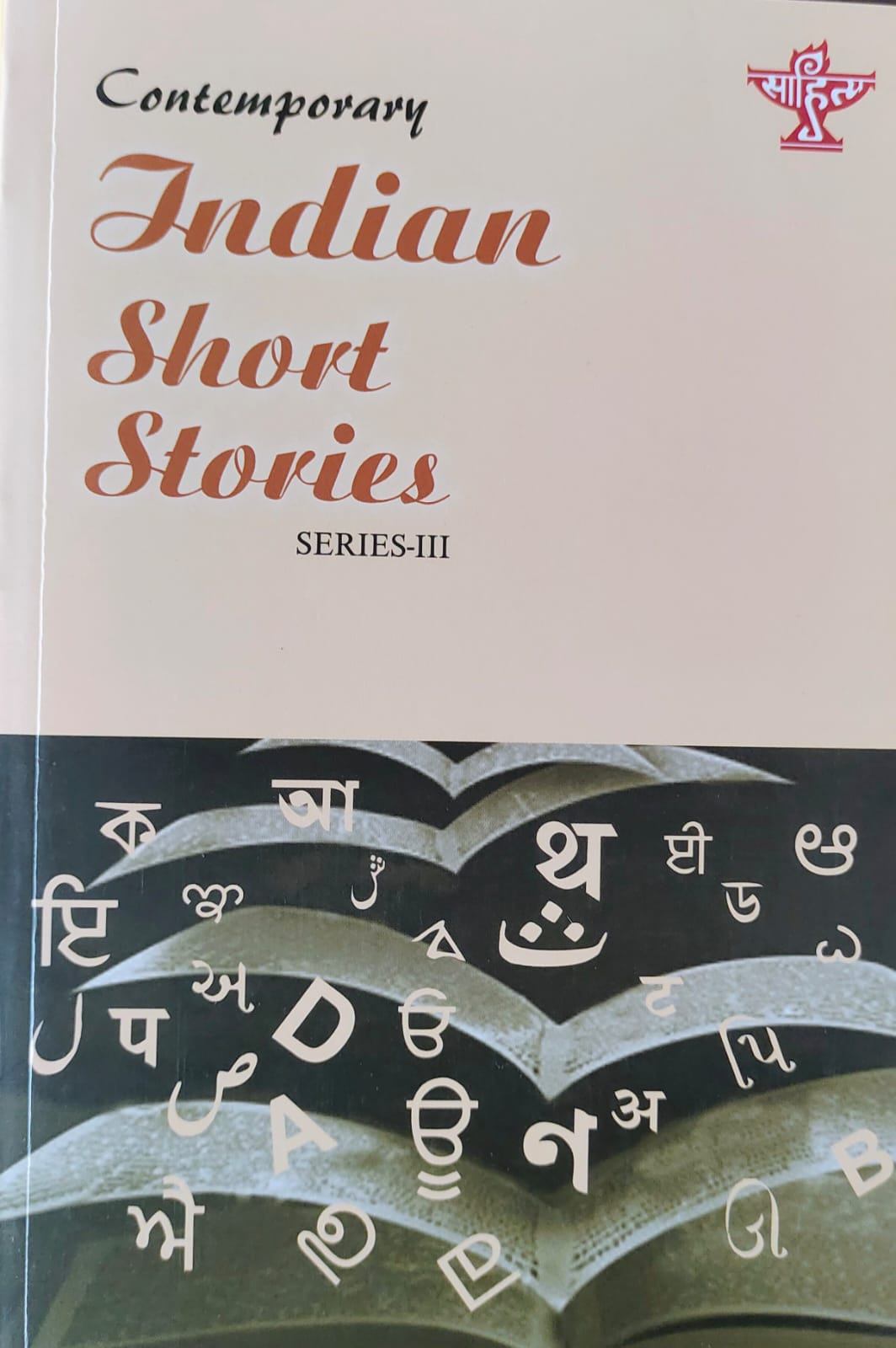
Contemporary Indian Short Stories Series III
- Author Name:
Sahitya Akademi
- Book Type:

- Description:
This sheaf of nineteen short stories, written by different authors, represents a cross-section of contemporary Indian short fiction. Eighteen stories are translations from eighteen modern Indian languages, and one is a specimen of Indian creative writing in English. Selected by the Sahitya Akademi's Advisory Boards of various languages, these stories, provide fascinating glimpses into the panorama of Indian life, with its baffling variety, its rich contrasts of the simple and the sophisticated, the ancient and the modern. Here is evidence, if such were needed that Indian literature is one though written in many languages its oneness consisting not of a stale uniformity but of a rich variety. This is the third volume of Sahitya Akademi series of such representative anthologies in English of contemporary Indian short story.
MAYIL WILL NOT BE QUIET
- Author Name:
Niveditha Subramaniam +1
- Book Type:
- Description:
Introducing Mayil Ganeshan, a lively 12-year-old who finally has the opportunity to express herself fully in her diary. This is a significant step towards achieving her goal of becoming a writer, as she hopes to make up for all the unfinished stories and the aimless novel she had written before. In her diary, Mayil shares a spontaneous, sensitive, honest, intimate, and often humorous account of her life and thoughts as a perceptive young girl going through the ups and downs of adolescence. This coming-of-age book is a must-read, with enough humor, heart, and wisdom to entertain and inspire readers of all ages. Age 10+

THE CHARIOT
- Author Name:
Raghavendra Patil +1
- Book Type:
- Description:
Raghavendra Patil (b.1951) belongs to the postmodernist group of writers in Kannada. Like his predecessors, U.R. Anantamurthy, Yahvant Chittal, Tejasvi and Shantinath Desai, he arrived at the novel through the short story. The Chariot (Teru), which won him the Sahitya Akademi Award, is his second novel. Though Patil belongs to the postmodern era, he does not share the thematic concerns or techniques of Western postmodernism. He is closer to the nativistic movement, which has already produced major writers like Chandrasekhar Kambar and Kum. Veerabhadrappa. He has also inherited some of the qualities of his famous uncle Anandakanda, such as an interest in local history and closeness to rural life. The story that Patil tells in The Chariot spans more than a hundred and fifty years, beginning with the years when the Peshva extended his rule to North Karnataka and ending with the years after the Emergency, and it relates to the Belagavi region, with its epicentre in an imagined but fully realised village named Dharamanatti. The novel offers two images of Teru, which in Kannada means both the chariot and the festival associated with it. The first is centred on an atrocious human sacrifice made in the name of religion by an autocratic ruler, and the second, distanced in time by a century and a half, mirrors the change from the feudal order to a democratic one, where religious superstition and feudal practices have been replaced by scepticism and the politics of power. The novel is remarkable for its innovative technique, which handles myth and reality with equal success.

The Saga of the Cactus Land
- Author Name:
Vairamuthu +1
- Book Type:
- Description:
The Saga of the Cactus Land: A novel that comes from the very soul of the writer, a book that germinated within the innermost recesses of his heart and exploded into this brilliant, heart-warming, gentle and yet scorching tale of his family's life in the inhospitable dry lands and the experiences of his people when everything that they owned and cherished was suddenly lost following the construction of the Vaigai dam, which resulted in their village finding itself deep down on the river-bed of the Vaigai. The story revolves around the central character of Peyathevar, a quintessential good man, hard-working, unremittingly honest, strong, manly and yet with the capacity to break down and cry, as also the incredible will-power to pull himself up and fight. His relationship with his grandson Mokkarasu, a very salient element in the novel, is a throbbing vein of tenderness and love that runs through the story. The simple, hard-working villagers lose their beloved land, on which they had lived, loved, ploughed, weeded, harvested, played and procreated - in short, spent their entire lives. They become refugees in their own country. The story of these innocent, largely unlettered people comes vibrantly alive because the characters are based on real people and because of the compassion and empathy that permeate its telling. 'The mud of this earth is our food...it is our medicine' says Peyathevar at one point. But alas, that mud becomes the underwater grave of the village of Kallikkadu.

The Blue Horse and Other Amazing Animals from Indian History
- Author Name:
Nandini Sengupta
- Book Type:
- Description:
SHORTLISTED FOR THE AUTHER AWARDS 2021 (BEST AUTHOR - CHILDREN) This isn't just a story about humans making history.So, step aside, chroniclers and historians. For centuries, we've been overlooked, forgotten, and only occasionally footnoted (thanks a lot). It's time we took our rightful place in the spotlight. We've been the strongest allies, loyal friends- and we might even say we were the soulmates of great kings and queens, princes and princesses, warriors and officials. From risking our lives to save theirs and leading them to victory in battles to providing constant joy and love, we've done it all. Explore Akbar's dazzling court with his favourite cheetah, Samand Manik. Discover the heroic Battle of Haldighati from Chetak's perspective. Learn what Chhatrapati Shivaji was really like, straight from his dog, Waghya. Packed with daring adventures, epic romances, and touching moments, these underdog stories- oh, don't get upset, Bucephalus, it's just a figure of speech!- are unlike anything you've read before!

Thattakam
- Author Name:
Kovilan +1
- Book Type:
- Description:
Thattakam is the story of a generation of people who lived in a small village called Kandanasseri in Kerala. The village as well as the people, had a glorious historic past studded with myths, legends and real events of social and political significance. It is both a real and an imaginary story at the same time. Even today, the village retains elements of its traditional past while peeking into modernity. English translation by Vasanthi Sankaanarayanan of the Sahityā Akademi Award-winning Malayalam novel Thattakam by Kovilan (V. V. Ayyappan).

ONCE UPON A TIME
- Author Name:
A Sethumadhavan +1
- Book Type:
- Description:
Once Upon a time by A. Sethumadhavan, is a novel which surrounds priyamvada, who is an HR professional, and a single parent at the centre of its narrative. The strong undercurrent of this award-winning title is the way woman asserts her independence and deft strokes in the book suggest how a professional woman scores. The novel very beautifully depicts the personal journey of a single parent, where are dilemmas which priyamvada faces, doing a tightrope walk between the labor force and the managements, trying to fill the vacuum in her daughter’s life and consciously attempting to steady her own emotional moorings.

Humanist Social Vision of a Jungle Poet
- Author Name:
Kuvempu +1
- Book Type:
- Description:
This book carries 51 poems of Kuvempu in translation with a long introduction to give the pan India audience an understanding of Kuvempu's major concerns. Prof Raghunath has made his choice carefully to represent Kuvempu's social concern, and that seems to be at the heart of his introductory piece.

Is Hamam mein
- Author Name:
Chitra Mudgal
- Book Type:
- Description:
कहानी को लेकर होनेवाली तमाम चर्चाओं को ध्यान में रखा जाए तो यह विश्वास करना पड़ेगा कि किसी के लिए कहानी केवल भाषा है, किसी के लिए केवल स्थिति चित्रण, कुछ के लिए केवल विचार है तो कुछ के लिए सिर्फ संवेदनाओं का अभिलेख। हरेक के अपने-अपने प्रवर्तक और समर्थक हैं, जो कभी इसे तो कभी उसे कहानी का शिखर घोषित करते रहते हैं। अपने उत्साह में वे यह भुला देते हैं कि कथा साहित्य के व्यापक कैनवस पर अलग-अलग रंगों के रूप में तो उनका कुछ महत्त्व हो सकता है, लेकिन किसी एक को ही कहानी का सर्वोच्च पैमाना नहीं बनाया जा सकता। अर्थरहित भाषा का झुनझुना कब तक बज सकता है, या जीवन-स्थितियों से रहित संवेदना का या संवेदनाविहीन जीवन-स्थितियों का क्या अर्थ है? बहुत से रचनाकार ऐसे हैं, जो प्रचलित मुहावरों और फैशनों से अप्रभावित रहते हुए इस बात के प्रति सचेत हैं कि कहानी वह सबकुछ है और इन सबसे मिलकर बनती है। चित्रा मुद्गल इन्हीं सचेत दृष्टि सम्पन्न रचनाकारों में हैं। उनकी कहानियों का मुख्य सरोकार समकालीन जीवन-स्थितियों में मनुष्य के भीतरी संसार का उद्घाटन है। लेकिन यह भीतरी कशमकश भी बदलते जीवन-परिवेश का आत्मीय ब्योरों और कलात्मक नजर के साथ अंकन भी करती चलती है। इस तरह ये इकहरी अभिव्यक्ति की कहानियाँ न होकर कई स्तरों पर प्रभावित करनेवाली कहानियाँ हैं। ये कहानियाँ मानवीय सम्बन्धों की आन्तरिक जटिलताओं का अंकन पात्रों को उनके परिवेश से काटकर शिमला या कश्मीर के डाकबँगलों में ले जाकर नहीं, बल्कि उनके दैनन्दिन जीवन के संघर्षों के बीच, सामाजिक व्यवस्था की पृष्ठभूमि में करती हैं, जहाँ रोजी-रोटी का संघर्ष भी है और पारिवारिक परम्पराओं तथा जीवन की रूढ़ स्थितियों से टकराव भी। —रमाकान्त

Katha Saptak - Dheerendra Asthana
- Author Name:
Dhirendra Asthana
- Book Type:
- Description:
collection of seven brilliant stories - बहादुर को नींद नहीं आती - पराधीन - मेरी फ़र्नांडीस क्या तुम तक मेरी आवाज़ पहुँचती है? - उस रात की गंध - मुहिम - और आदमी रोया - चीख

Fuhar
- Author Name:
Yogi Mahajan +1
- Book Type:
- Description:
Fuhar-stories

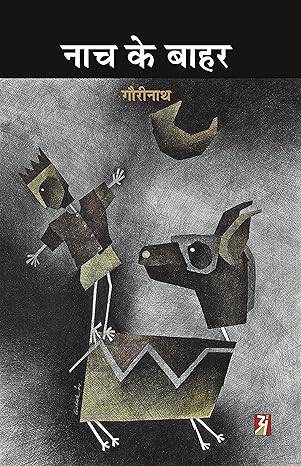
Nach Ke Bahar
- Author Name:
Gourinath
- Book Type:
- Description:
A Collection of Short Stories by Gourinath
Katha Saptak Hari Bhatnagar
- Author Name:
Hari Bhatnagar
- Book Type:
- Description:
Collection of 7 brilliant stories: - बिल्ली नहीं दीवार - सामूहिक नरसंहार - ज़ाफ़र मियाँ की शहनाई - शिकंजा - माई - शर्म - बजरंग पांडे के पाड़े

Chandausi Junction
- Author Name:
Shankar Sahay
- Book Type:

- Description:
A collection of short-stories set in the 20th Century India for the 21st Century kids & a nostalgic walk, for their parents & grandparents. Although this book has been named after the city of Chandausi, it contains stories from various places like Rishikesh, Agra, Champaran, Tilhar, Sambhal, Kanpur, Banaras, Lucknow and many others. These are the short stories of a bygone era-a period when India had either not gained independence or had been independent for not more than 35 years. These are the tales of journeys-taken up from the early 20th century to the end of a millennium, from Shahjahanpur to Delhi, from Bijnor to Hyderabad, from Hathras to Sweden & Norway, from Lakshmi Talkies, Allahabad to Night Watchman, Bangalore, from Panki to USA, from Dehradun to Canada, from Chandausi to Australia and many others. We are sure in all these stories, you will be able to find at least one character, which reminds you of your own self-of what you are, were or always wanted to be. Let us know the character with whom you have been able to relate to the most. Happy reading. “Genius is one percent inspiration and 99 percent perspiration,”-Thomas A. Edison. -Here’s a collection of short stories to inspire the readers.

The Best Stories of Mohapatra Nilamani Sahoo
- Author Name:
Guruprasad Mohapatra +1
- Book Type:
- Description:
The Best Stories of Mohapatra Nilamani Sahoo: This book is a translation of Mohapatra Nilamani Sahoo's short stories, written in his inimitable style. The stories, originally written in Odia, were truly representative of Odia culture and traditions; the narrative is unique and deeply emotional and carries the readers with the flow. This volume is a specimen of Mohapatra Nilamani Sahoo's short stories for the wider readership

Case Files of The Dead
- Author Name:
Various Authors
- Book Type:
- Description:
Welcome to a mysterious land where ghosts. Ghouls and spirits rule. Welcome to a place where haunted houses and evil souls will make a shiver run down your spine. A spooky tale in the scenic hills of Mussoorie awaits you while uncanny happenings in a literary competition are sure to intrigue you. The case of a mysterious white Maruti baffles everyone, even as the unsuspecting jogger experiences something he had never bargained for. A group of friends will encounter the worst terror of their lives while nightmares of his death rack the young man! Author's In and The Book Bakers present an eclectic mix of true stories, legends, and fables that have often been a part of India's folklore—armed with some of the best authors in India's paranormal literature history. CASE FILES OF THE DEAD; India's first pure horror public anthology will turn every host into (G)Host!!!

Contemporary Kashmiri Short Stories
- Author Name:
Hriday Kaul Bharati +1
- Book Type:
- Description:
The Kashmiri short story was born with the progressive movement in Kashmir and its acceptted the standards and values dictated by the movement unquesioningly. Nationalism and the desire for reaching out to people inspired most of the writers to switch over to Kashmiri, even though they had strated writing in Urdu. Dinanath Nadim's Javabi Card (Reply-Card) and Somnath Zutshi's Yell Phol Gash (when there was light) are the first two short stories written in Kashmiri

Contemporary Indian Short Stories Series II
- Author Name:
Bhabani Bhattacharya
- Book Type:
- Description:
This collection of twenty-two short stories, written mostly between 1930 and 1950 by various authors, offers a snapshot of contemporary Indian short fiction. Twenty stories are translations from fourteen Indian languages, and two are original works in English. This demonstrates, if proof were needed, that Indian literature, despite being written in many languages, is unified - not by sameness, but by its rich diversity.

The Scarecrow Chronicles
- Author Name:
Pathik Mitra
- Book Type:
- Description:
Look into the mirror of the sciety and all you see is a scarecrow!" An anthology that mirrors the society at large. Thirteen stories that take you to the streets of Kabul to the paddy fields in rural Bengal, from a chirstmas in Paris to a famine in Orissa, from the lavish life futility of a rockstar to the aspiring dreams of a prostitute from artistic nudity to meeting God. This anthology has it all. The roller coaster ride of emotions will justify life is nor black , nor white but mostly grey!! And the scarecrow in some paddy field will keep mocking the society and it's futile taboos!! Can we be the scarecrow? An anthology you may love or hate but can't ignore for sure!!

Epochal Voices
- Author Name:
Murari Madhusudan Thakur
- Book Type:
- Description:
A comparison of the lives and writing of Devkota and Nirala by Murari Madhusudan Thakur. Sahitya Akademi Award 2021

Frequently asked questions
Delivery, payment and returns for this book.
<p>This collection offers a sober, unflinching reading experience that privileges observation over sentiment. The emotional tone is restrained—Subbaramaiah does not dramatise suffering or celebrate resilience. Instead, he presents social injustices and moral failures with clinical precision, trusting you to feel the weight without authorial guidance. The pace varies across thirty-four stories, some compressed into a few pages, others unfolding slowly to reveal systemic cruelty. This is not a book that provides catharsis. It leaves you alert to the quiet violences embedded in everyday social transactions, and it rewards readers who appreciate restraint, ambiguity, and the courage to depict life without moral easy exits.</p>
<p>This book is best suited for readers interested in <strong>social realism</strong>, <em>Dalit and caste studies</em>, or regional Indian literature that resists romanticisation. It expects familiarity with or curiosity about <em>Telugu rural and semi-urban life</em> in the mid-twentieth century, though the themes—caste hierarchy, economic exploitation, gendered violence—remain urgent today. The stories assume you can tolerate ambiguity and moral discomfort; Subbaramaiah rarely offers heroes or clear resolutions. If you read to understand how literature documents social structure rather than to escape into narrative pleasure, this collection will meet you with rigour and respect.</p>
<p>Subbaramaiah's work remains culturally significant because the social fractures he documented—<strong>caste-based discrimination</strong>, rural poverty, the exploitation of labour, the policing of women's autonomy—persist in contemporary India. These stories function as historical evidence of how systemic injustices were lived and rationalised in <em>post-independence Andhra Pradesh</em>, yet they read as uncomfortably current. For readers engaging with debates around <em>caste census</em>, agrarian distress, or Dalit assertion, this collection offers literary grounding. It refuses nostalgia for village life and exposes the violence that underpins social cohesion, making it essential reading for understanding how realist fiction can serve as both archive and critique.</p>
<p>Subbaramaiah's distinction lies in his <strong>refusal to redeem</strong> his characters or their circumstances. Unlike writers who infuse social realism with hope or resistance, he presents injustice as structural, embedded, and often internalised by victims themselves. His prose is economical—no lyricism softens the blows, no authorial voice intervenes to guide interpretation. This clinical distance is deliberate: it mirrors the way caste and class operate as impersonal systems. The <em>Sahitya Akademi Award</em> recognised this rare courage—to depict society without offering consolation, and to trust that unvarnished truth is literature's highest responsibility. His stories do not advocate; they document, and in that documentation lies their moral force.</p>
<p>This collection leaves you with a heightened awareness of the <strong>social mechanics of cruelty</strong>—how caste, class, and gender function not through spectacle but through accumulated small violences, silences, and exclusions. Emotionally, it cultivates discomfort rather than satisfaction; you finish these stories alert to injustice in its quietest forms. Intellectually, it challenges any nostalgic or essentialist view of Indian village life, replacing it with a clear-eyed recognition of systemic oppression. Culturally, it offers a literary map of <em>mid-century Telugu society</em> that remains disturbingly legible today. Long after reading, you find yourself recognising Subbaramaiah's social patterns in contemporary news, in lived experience, in the gaps between official narratives and ground realities.</p>
Customer reviews
Review this book
Share your thoughts with other readers.
Customer reviews
No written reviews yet. Be the first to share what you thought.
Peddibhotla Subbaramaiah Short Stories brings thirty-four narratives from Peddibhotla Subbaramaiah Kathalu, the Sahitya Akademi Award-winning Telugu collection, into English for the first time. These stories do not comfort—they confront. Subbaramaiah writes from within the caste hierarchies, economic anxieties, and moral compromises of mid-twentieth-century Andhra Pradesh, observing how social structures bend individual lives into predictable shapes. A schoolteacher's quiet humiliation, a farmer's calculated betrayal, a widow's invisible labor—each story isolates a single social truth and renders it in unforgiving detail. The prose is spare, the observations clinical, the emotional register deliberately restrained. What makes this collection essential is its refusal to mythologize rural India or offer redemptive arcs. Subbaramaiah trusts the reader to sit with discomfort, to recognize these social patterns as alive today, and to understand that realism, at its sharpest, is a form of witness.
What kind of reading experience do Peddibhotla Subbaramaiah's short stories offer?
Peddibhotla Subbaramaiah's Short Stories collection offers a sober, unflinching reading experience that privileges observation over sentiment. The emotional tone is restrained—Subbaramaiah does not dramatize suffering or celebrate resilience. Instead, he presents social injustices and moral failures with clinical precision, trusting you to feel the weight without authorial guidance. The pace varies across thirty-four stories, some compressed into a few pages, others unfolding slowly to reveal systemic cruelty. This is not a book that provides catharsis. It leaves you alert to the quiet violences embedded in everyday social transactions, and it rewards readers who appreciate restraint, ambiguity, and the courage to depict life without moral easy exits.
Who should read this Sahitya Akademi Award-winning collection, and what does it expect of its reader?
Peddibhotla Subbaramaiah's Short Stories are best suited for readers interested in social realism, Dalit and caste studies, or regional Indian literature that resists romanticization. It expects familiarity with or curiosity about Telugu rural and semi-urban life in the mid-twentieth century, though the themes—caste hierarchy, economic exploitation, gendered violence—remain urgent today. The stories assume you can tolerate ambiguity and moral discomfort; Subbaramaiah rarely offers heroes or clear resolutions. If you read to understand how literature documents social structure rather than to escape into narrative pleasure, this collection will meet you with rigour and respect.
What is the cultural significance of Subbaramaiah's social realism to Indian readers today?
Subbaramaiah's work remains culturally significant because the social fractures he documented—caste-based discrimination, rural poverty, the exploitation of labour, the policing of women's autonomy—persist in contemporary India. These stories function as historical evidence of how systemic injustices were lived and rationalized in post-independence Andhra Pradesh, yet they read as uncomfortably current. For readers engaging with debates around caste census, agrarian distress, or Dalit assertion, this collection offers literary grounding. It rejects nostalgia for village life and exposes the violence that underpins social cohesion, making it essential reading for understanding how realist fiction can serve as both an archive and a critique.
What makes this Sahitya Akademi Award-winning author's approach to social issues distinctive?
Subbaramaiah's distinction lies in his refusal to redeem his characters or their circumstances. Unlike writers who infuse social realism with hope or resistance, he presents injustice as structural, embedded, and often internalized by victims themselves. His prose is economical—no lyricism softens the blows, no authorial voice intervenes to guide interpretation. This clinical distance is deliberate: it mirrors the way caste and class operate as impersonal systems. The Sahitya Akademi Award recognized this rare courage—to depict society without offering consolation, and to trust that unvarnished truth is literature's highest responsibility. His stories do not advocate; they document, and in that documentation lies their moral force.
What does this collection leave the reader with after finishing it?
Peddibhotla Subbaramaiah's Short Stories collection leaves you with a heightened awareness of the social mechanics of cruelty—how caste, class, and gender function not through spectacle but through accumulated small violences, silences, and exclusions. Emotionally, it cultivates discomfort rather than satisfaction; you finish these stories alert to injustice in its quietest forms. Intellectually, it challenges any nostalgic or essentialist view of Indian village life, replacing it with a clear-eyed recognition of systemic oppression. Culturally, it offers a literary map of mid-century Telugu society that remains disturbingly legible today. Long after reading, you find yourself recognizing Subbaramaiah's social patterns in contemporary news, in lived experience, in the gaps between official narratives and ground realities.

