
Footprints
₹
150
₹ 127.5 (15% off)
Available
Her thoughtful verses which often revolt to gain the roots, upwardly or downwardly enrich the poetry readers with wonderful insights. When she is not recreating the world with her poetry, she indulges in gardening.
Read moreAbout the Book
Her thoughtful verses which often revolt to gain the roots, upwardly or downwardly enrich the poetry readers with wonderful insights. When she is not recreating the world with her poetry, she indulges in gardening.
Book Details
Thank You for Leaving
- Author Name:
Rithvik Singh Rathore
- Book Type:

- Description:
Dear reader, I wrote this book for the ones who feel everything too deeply. The rare souls who still listen to their hearts and believe in love. The ones who don’t hurt others just because they’re in pain. The ones who wear their hearts on their sleeves and carry kindness within. The ones who overthink, over-invest in people and over-love, always. This book is an ocean full of feelings, so if at any point, you feel like you’re drowning, take a moment to remind yourself that it’s a privilege to feel emotions as intensely as you do. Some people are so disconnected from their hearts that they don’t allow themselves to feel anything at all. That being said, I wish you a happy reading. This book will make you cry. Love, Rithvik

The Darkness is Vanishing
- Author Name:
Ramesh Pokhriyal 'Nishank'
- Book Type:
- Description:
The poems of Ramesh Pokhriyal "Nishank" represent innate, passionate ramifications and poetic mystification for readers. While they may include hymns and religious instructions, what stands out is the sentimental piety in the poems offered within this collection. As a poet, Nishank surveys possibilities, comparing them to actualities, facts, theories, alternatives, and ideals, weighing them together. Thus, his work is both insightful and foresightful, providing a sense of life’s worth. Remarkably, these poems are not complex; they are simple and pliable. The doctrines and practices they endorse are not new or recent but align with established norms. The poems that emerge from darkness invigorate the spirit, making our hearts dance and enveloping us in a mystical softness, enchanting enough to soothe distressed feelings while instilling a sense of truth, clarity, and refinement. Nishank conjures images of everyday, affable life, depicting socially intellectual and passionate men who dance, croon, and fall yet rise again—shortly devastated but soon resilient. His poems are both popular and distinctly contemplative. Hidden behind his voice lies every man; if you wish to understand his character, let the doors of the heart open and allow them to speak. *** The ardor for humankind may pulse in every throb of my heart; let there be a beautiful person within me. My only desire in this life is to die for my country, with my life as an emblem for humanity. *** Like worms clothing the wheat, jealousy, like termites, hollow out the preposterous. *** To erase darkness, those who burn like torches do so even in adverse torrents; they never extinguish. *** Happiness resides in the present, not in the future; it rests in the depths of the mind. —From this collection.

Verses in Bloom
- Author Name:
Swati Sani
- Book Type:
- Description:
“Verses in Bloom” is a rare collection of 150+ timeless couplets from the most prominent poets of Urdu. The book contains these couplets in Urdu, Devanagari and Roman scripts, accompanied by an English translation, capturing their true essence. Through these couplets, the book also provides an insight about different stages of life and love.

Har Mauqe Ke Liye Sher
- Author Name:
Sanjiv Saraf
- Book Type:
- Description:
"हर मौक़े के लिए शेर" उर्दू शाइरी की सदा-बहार खूबसूरती को इस तरह पेश करती है कि वो न सिर्फ़ आसानी से समझ में आए, बल्कि पढ़ने वाला अपनी ज़िंदगी के वाक़िआत को भी इन शेरों के आईने में देख सके। इस संग्रह में ऐसे यादगार शेर शामिल हैं जो इंसानी ज़िंदगी के पूरे दाइरे की तस्वीर पेश करते हैं - चाहे वो हमारे बदलते जज़्बात के विषय में, चाहे ज़िंदगी के ख़ुश-नुमा लम्हों की यादें हो। वो तमाम मौक़े जो हमारी ज़िंदगी को शक्ल देते हैं, इन अशआर में इज़्हार पाते हैं। चाहे मोहब्बत हो या जुदाई, खुशी हो या तड़प, जश्न हो या चिंता - हर एहसास और हर लम्हे के लिए इस संकलन में ऐसा कोई न कोई शेर मौजूद है, जो उलझी से उलझी परिस्थितियों में भी आपके दिल को अपनी बात कहने के लिए सुलझे हुए शब्द मुहय्या करता है। सोच-समझकर चुने और खूबसूरती से पेश किए गए ये शेर पढ़ने, याद कर के दोस्तों को सुनाने और पलट कर फिर से पढ़ने और विचार करने के लिए हैं। "हर मौक़े के लिए शेर" सिर्फ़ उद्धरणों की किताब नहीं बल्कि एक साथी है, जो ज़िंदगी के जज़्बात और लम्हों को को शाइरी की रोशनी से मुनव्वर करती है।

The Eloquence of Ghalib
- Author Name:
Swati Sani
- Book Type:
- Description:
"The Eloquence of Ghalib" is a captivating collection of English poetry that honours the poetic genius of Mirza Ghalib. This collection captures the essence of Ghalib's literary prowess and brings his profound verses to life in English. Each poem is a masterful expression, echoing the spirit of Ghalib's eloquence. The book explores a spectrum of themes, from love and melancholy to profound musings on life, ensuring a diverse and enriching poetic experience. The timeless reverie of Ghalib's poetry shines through "The Eloquence of Ghalib," making it a cherished literary treasure. Whether you are a dedicated poetry enthusiast or new to Ghalib's world, this book is an ideal gift and a must-have for those who appreciate the beauty of his words, now accessible in English. Crafted with premium materials, this book ensures durability, allowing you to revisit the timeless charm of Ghalib's poetry for years to come.

Rocks of Hampi
- Author Name:
Chandrasekhar Kambar +1
- Book Type:
- Description:
Chandrasekhar Kambar draws his strength deeply from folklore as well as contemporary life and his poems are embodied in an earthyly, sensual language. His poetry works at a different altogether from what logical and analytical prose does. Profound insights into life get expressed metaphorically in him. English translation by O.L. Nagabhushan Swamy of Chandrasekhar Kambar's Kannada poems. Sahitya Akademi 2004.

Muddled Muff's Musings
- Author Name:
D. V. Gundappa +1
- Book Type:
- Description:
Mankutimmana Kagga (rendered in English as Muddled Muff's Musings) is a collection of sprightly yet profound verses that explore concepts such as the meaning of life, truth, and beauty. Mankutimmana Kagga, also known in English as Muddled Muff's Musings, is a collection of lively yet profound verses that explore concepts such as the meaning of life, truth, beauty, happiness, and the human experience. This literary classic has gained immense popularity among both scholarly and general audiences. Its gentle, non-preachy, and self-deprecating tone has endeared it to generations of readers since its first publication in 1943. It has rightfully earned the affectionate titles of "Kannada Bhagavad Gita" and "Gundopanishad," presenting happiness, the human experience, and related themes in an intimate and relatable manner. It is a literary classic that has enjoyed immense popularity among both erudite scholars and the general public. Its gentle, non-preachy, and self-deprecatory tone has endeared it to generations of readers since its first publication in 1943. It has deservedly garnered love and regard as "Kannada Bhagavad Gita" and "Gundopanishad."

I Don't Love You Anymore
- Author Name:
Rithvik Singh Rathore
- Book Type:
- Description:
Dear reader, I hope this book feels like a warm hug to you. I wrote this book for the ones who feel everything too deeply. You’re right, I wrote this book for you. This book was meant to find you if you’ve ever loved someone who didn’t love you back, if you’ve ever over-invested in the wrong people or if you have a hard time letting go. I Don’t Love You Anymore is a book that’ll feel like home to you. I promise it’ll hold you gently on your worst days. Love, Rithvik

Ocean in a Drop - Ghalib Decoded
- Author Name:
Mirza Ghalib
- Book Type:
- Description:
"Ghalib was a poet who mocked hardship, a philosopher who dared to argue with God, and a man who turned disappointment into an art form. Though often wrapped in layers of difficult language and intricate thought, at the heart of his vast poetic “ocean” lies a single, luminous “drop” - his deeply human individuality. He was the ultimate maverick: urbane, ironic, and restlessly modern, forever questioning, forever unsettled. Ocean in a Drop draws back the curtain on Urdu’s greatest genius. Stripping away academic clutter, this book approaches Ghalib through his most iconic she’rs, revealing the man behind the mystique. You will discover: ~ The Persona: The ego, the wit, and the “shroudless” independence of a 19th-century rebel. ~ The Wound: How he transformed neglect and betrayal into a mark of distinction. ~ The Edge: His playful yet profound walk along the borders of faith, existence, and the void. This is not a textbook. It is a conversation - intimate, unguarded - with a man who understood that life is chaotic, and that humour is often its only redemption. Whether you have long admired him or are meeting him for the first time, this is Ghalib as he was meant to be known: sharp, soulful, and unmistakably his own."

Warmth
- Author Name:
Rithvik Singh Rathore
- Book Type:
- Description:
Dear reader, If you have a heart, you will fall in love. And chances are, someone will end up breaking your heart. I wrote this book after someone broke mine. What do you do when the only person you’ve ever loved with your whole heart decides to leave your life? You keep trying to run away from the hurt, but to no avail. This book is a product of all the running I did from heartbreak. I feel everything too deeply, and when my heart broke, I collected all the broken pieces, and they fueled my art. This book is everything I wrote after someone I loved left me. There’s too much heartbreak in these pages, but also too much hope and, more than anything, a promise that life can’t always hurt you. I hope healing finds its way to you soon. Love, Rithvik

Middlemist Red
- Author Name:
Priyanka Das
- Book Type:
- Description:
The key is in your hand and now it's upto you how do you unlock yourself

Humanist Social Vision of a Jungle Poet
- Author Name:
Kuvempu +1
- Book Type:
- Description:
This book carries 51 poems of Kuvempu in translation with a long introduction to give the pan India audience an understanding of Kuvempu's major concerns. Prof Raghunath has made his choice carefully to represent Kuvempu's social concern, and that seems to be at the heart of his introductory piece.

Life Trials
- Author Name:
Ramesh Pokhriyal 'Nishank'
- Book Type:
- Description:
Shri Ramesh Pokhriyal "Nishank", like all romantic poets, is generally a poet who is strong-willed and intelligent and possesses an unusually subtle mind. While going through his poetry and nature poetry, we see nature sympathetically with unusual unreputable emotional responses. Moreover, it stands in sharp contrast to rationalistic moods. Nishank is fond of personifying nature and is desirous of associating with the beauteous forms of the world that coexist with the laws and order of the universe. When Nishank fuses scientific and religious notions, he proposes a metaphysical idea adapted to the cosmos' natural design. Hence, through this choicest collection of his poems, Nishank agrees with the universal phenomenon that nature provides an influence which spontaneously refines and purifies the soul of the human generation. A "must-read" collection of representative poems of Shri Nishank.

The Infinite Forest
- Author Name:
Rashmi Kaushik +1
- Book Type:
- Description:
Through fragments of myth, poetry, and shadowed memory, the book traces the path of a woman who is both wound and blade, both destruction and divinity- an eternal return to power she never truly lost.

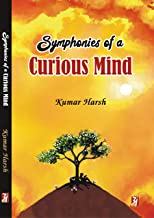
Symphonies of a Curious Mind
- Author Name:
Hash Kumar
- Book Type:
- Description:
We all speak in one language or the other. The many cultures have varieties languages that help them interact with one another. However, our mind sometimes lack the words to express the emotions that it experiences in bouts ecstasy and enlightenment. This book holds a such verses that have not escaped the mind in a way original to the author. Kumar Harsh has put his mind and heart in perfect synchrony and has written these with utmost care and affection. The readers might find it delightful to read. It's a treat for the heart and mind. Symphonies a Curious Mind will take you back to all those unfelt emotions and will remind you things intangible, even those close to touch sometimes. A harmony modern times. Organic, Dexterous, Easy.
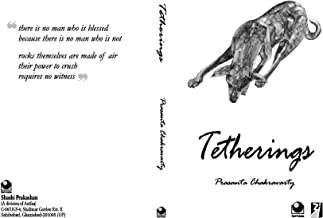
Tetherings
- Author Name:
Prasanta Chakravarty
- Book Type:
- Description:
Poery
Andaz e Bayan Aur Mirza Ghalib's 100 Selected Ghazals
- Author Name:
Sanjiv Saraf
- Book Type:
- Description:
Mirza Ghalib's Urdu ghazals are a timeless symphony of words, a delicate dance of emotions, and a profound exploration of the human experience. Revered for his eloquence, Ghalib weaves couplets that transcend time and culture, leaving an indelible mark on readers' hearts. His poetry, often characterised by its intricate metaphors and profound philosophical insights, takes the reader on a journey through the complexities of love, life and the enigmatic nature of existence." Andaz e Bayan Aur" presents Ghalib's splendid ghazals alongside their elegant English translations, allowing readers to savour the essence of his verses. Moreover, the QR codes enhance readers' experience by providing access to beautifully composed recitations, bringing Ghalib's poetry to life in both word and melody.

The Glistening Soul
- Author Name:
Sweta Parmar "Nikki"
- Book Type:
- Description:
This creation is a collection of poetic reflections that is intended not only to inspire but motivate you to lead a renewed life. I tried that each one of these poems can derive a different perspective or reflection in your life. I have been penning down feelings for few years whenever I found and felt something interesting. ‘The Glistening Soul’, is a collection of same feelings. The ideas and reflections in this creation are penned by my own words and verse though it may relate to any other verse in some view-points.

Songs of Life (Collection of Poems)
- Author Name:
Dr. A.P.J. Abdul Kalam
- Book Type:
- Description:
The Songs of Life is presented with selected poems from my books of poem Life Tree, Luminous Sparks and My Journey and also some of my new poems. The purpose of this Songs of Life is to celebrate the human life. In spite of many sufferings all around, God has blessed us with his grace in multiple dimensions of nature smiling at us. Hence, Songs of Life is the Song of every heart and soul in happiness and, in sorrow. The result of the poems should be to cheer our hearts.

Herstory
- Author Name:
Neha Bansal
- Book Type:
- Description:
Herstory is a new collection of poems by Neha Bansal, a civil servant, providing a fresh perspective on the lives of others.

Customer Reviews
28/02/2023
Nagma Shaikh
poetry is an encient way to heal the wounds that are not visible to the naked eyes. the wounds that people can't see. that why it heals us and brings the serenity that we crave in someone or somewhere. Footprints by Neelam Dadhwal is just a tender touch to the wouds that no one understands. Each poem depicts emotions that are ignored but stays deep within your core that you can't fathom but pour yourself each words as an ointment that works wonders without you noticing it. This book really gives you an inspiration to think and understand what's actually going on with you. every poem holds different emotions to the different moods. one of my best one was Reborn, it actually tell you the story in short. Footprint became my best poetry read for this month unknowingly.. Being the devotee of poem. I love the depth of her work. Her words touched the deepest parts of my heart.
26/02/2023
Swapna Peri
Often poetry is a powerful medium to showcase one’s thoughts more vividly. With fewer words, poetry has charisma, unlike prose, which is not everyone’s cup of tea. These poems by author Neelam Dadhwal explain how women tend to forget themselves and their self-importance. There are 29 poems in the book, each written with elegance, pain and thoughtful words. The poems range from love, despair, life issues, conflicts of interest in lives, anger, romance, relationships, and many more human emotions. With complex imagination and simple words, the poems are wonderfully presented. Throughout the globe, survival struggles, particularly among women, have persisted for millennia. Women have always encountered prejudice in all aspects of life. Nobody ever seems to care about the psychological duress that women endure. Women have always been deemed the weaker species and discouraged from venturing alone or with male companions. To discover and share motivation, people would frequently quote from famous feminist novels and discuss strong women. However hard we tried, this was absolute mistrust because accomplished women were few and some of them were marred by controversies of the time, but this situation began to change. The book is fascinating, with no points to be disliked, but some poems are hard-hitting with a pinch of brutal honesty.
Footprints is defined by its dual movement: a poetry that revolts against surface complacencies while digging—upwardly and downwardly—toward the origins that anchor identity, place, and perception. The poet writes from a sensibility shaped as much by the garden as by the page, yielding verses attuned to growth, decay, and the tension between cultivation and wildness. This is not confessional poetry nor nature writing in the pastoral sense; it is meditative rebellion, rooted in the physical world yet reaching toward insight that resists easy categorization. The language is thoughtful, often spare, inviting readers into quiet reckonings with what lies beneath polished certainties.
Readers who prize poetry that refuses platitudes—who are drawn to verse that listens as much as it speaks—will find Footprints a rewarding companion. It asks not for passive reception but for co-creation of meaning, a willingness to trace the poet's journey through soil and syllable alike.
What kind of reading experience does Footprints offer?
Footprints offers a contemplative, unhurried encounter with poetry that invites you to pause and reconsider what lies beneath familiar surfaces. The tone is meditative yet restless, marked by a quiet rebellion against conventional certainties. These verses reward slow reading—they unfold meaning incrementally, like roots seeking water. The experience is grounding rather than escapist, leaving you with the texture of earth and thought intertwined, a sense of having traveled both inward and downward into questions that do not resolve quickly.
Who will find Footprints most rewarding, and what does it expect of its reader?
- Readers who value poetry that prioritizes insight over spectacle, and who are comfortable with ambiguity and layered meaning.
- Those interested in the intersection of nature and interiority—gardeners, naturalists, or anyone attuned to cycles of growth and decay.
- Readers seeking verse that engages philosophical questions without didacticism, poetry that thinks rather than pronounces.
- An appetite for spare, thoughtful language and the patience to sit with a poem's silences as much as its speech.
What is the cultural significance of poetry that seeks roots in contemporary India?
In an India navigating rapid urbanization and cultural flux, poetry that literally and metaphorically digs for roots speaks to a widespread hunger for continuity and grounding. The impulse to revolt while seeking origins mirrors a generation questioning inherited narratives yet unwilling to abandon connection to place, tradition, and the natural world. Footprints addresses this duality—the need to challenge surfaces while honoring depth—making it culturally resonant for readers negotiating modernity's dislocations without severing ties to what sustains identity and memory.
What makes this poet's treatment of nature and revolt distinctive?
The poet writes from the dual vantage of gardener and thinker, merging physical labor with intellectual inquiry in ways that refuse the romanticization of nature. Revolt here is not loud protest but quiet refusal—of easy answers, of separation between body and mind, of nature as mere backdrop. The gardening practice becomes epistemology: knowledge gained through tending, waiting, accepting failure. This grounds the poetry in material reality while allowing it to reach toward metaphysical questions, a balance that distinguishes it from both overtly political verse and purely aesthetic exercises.
What does Footprints leave the reader with after finishing it?
- A heightened attentiveness to the overlooked—the small gestures of growth, the intelligence of roots, the meanings held in soil and silence.
- Questions rather than answers, invitations to continue thinking about origins, belonging, and the relationship between revolt and rootedness.
- A vocabulary for navigating duality—the need to honor depth while questioning surfaces, to cultivate while allowing wildness.
- A quiet resilience, the kind that comes from touching earth and recognizing continuity beneath upheaval.