
A Tale for Dolphins/Seals
₹
249
₹ 206.67 (17% off)
Available
Dear all, Mammals (Mammalia) are vertebrate species of the animal kingdom, which also includes us humans. All mammals have habits and family ties like us. They all have feelings similar to ours. Mammals constitute the majority of the animals forced to live in so-called entertainment centers such as dolphin parks, zoos, and circuses. It should be known that a dolphin, a fur seal, a lion, or a monkey living in such places is not happy at all. I should add that I do not exclude any other living species kept in captivity besides mammals. All of them were forcibly removed from their natural habitats and detained on the pretext of some legal loopholes or therapeutic practices that have no scientific basis.
Read moreAbout the Book
Dear all,
Mammals (Mammalia) are vertebrate species of the animal kingdom, which also includes us humans. All mammals have habits and family ties like us. They all have feelings similar to ours. Mammals constitute the majority of the animals forced to live in so-called entertainment centers such as dolphin parks, zoos, and circuses. It should be known that a dolphin, a fur seal, a lion, or a monkey living in such places is not happy at all. I should add that I do not exclude any other living species kept in captivity besides mammals. All of them were forcibly removed from their natural habitats and detained on the pretext of some legal loopholes or therapeutic practices that have no scientific basis.
Book Details
Paati's Beat
- Author Name:
Jeeva Raghunath
- Book Type:

- Description:
Paati goes on and on and on… crushing, grinding and chewing betel leaves and betel nuts. Thaatha can’t bear it any more! He asks Thambu Teacher for help, and he tells Thaatha what to do – but the noise only gets noisier! With cacophony, rhythm and repetition, this cumulative tale is inspired by the author’s mother’s fondness for chewing betel leaves. Perfect for storytelling, it is sure to have adults and children eagerly echo its infectious beats. Hilarious illustrations capture action and expression in this din-filled delight of a picture book that calls out to be read aloud!

Dadu Takes Me To Gurudwara By Tanvi Nishchal
- Author Name:
Tanvi Nishchal
- Book Type:
- Description:
Tag along with Mahi as she visits Gurudwara for the first time with her best buddy, Dadu and how he answers her whats and whys

Moti Guj - The Mutineer
- Author Name:
Rudyard Kipling
- Book Type:
- Description:
Awaiting description

How The Leopard Got His Spots
- Author Name:
Rudyard Kipling
- Book Type:
- Description:
Awaiting description

Crow vs Vada (English)
- Author Name:
Aruna Shekar
- Book Type:
- Description:
The tea stall opens. Hot masala vadas pile up on the table… and the game begins. Crow just wants one! But the tea-seller is watching her, and there are more competitors in the mix. Crisp text follows the action move by move, and Crow’s cheeky retorts pep up the fun of the animated pictures. Who wins?

The Elephant's Child
- Author Name:
Rudyard Kipling
- Book Type:
- Description:
Awaiting description

Lily and The Living Shadow By Aarna Grover
- Author Name:
Aarna Grover
- Book Type:
- Description:
What if your shadow had a secret? When 10-year-old Lilly spots her shadow acting strange, she's swept into a magical world of talking forests, enchanted creatures, and hidden powers. With her brave friends and a mysterious keychain, she faces secrets that could change her world- and hers alone. A spellbinding story about friendship, courage, and the light within

THE SHADOW & OTHER MORAL TALES
- Author Name:
Kamini Gayakwad
- Book Type:
- Description:
The wolf was very happy to see the limping horse. He went to the horse and asked the reason for limping. The horse said that its hind right leg was injured. The wolf reached to see that leg. But what happened? Anyone can break a single branch, but a bunch! A fox caught the tortoise but it was difficult to break its shell. The turtle said brother fox if you put me in water, the shell will become soft. The fox did the same. You can guess what happened after that. Did Turtle show up again? The woodcutter, whose axe fell in the river, and the river god wanted to give gold and silver axe, but he kept asking for his iron axe, was he stupid or honest? This book is a treasure of many such stories. In it, there is intelligence, there is humor, and there is moral education, but most importantly-everything is in very simple language.

The Talking fish and other folktales
- Author Name:
Kamini Gayakwad
- Book Type:
- Description:
Explore a world of enchanting stories in "The Talking Fish and Other Folktales." Meet Chand the goldsmith, learn the lessons a wise For Me imparts to lazy sons, discover the rabbit's clever sea-crossing trick, and unravel the playful deceptions between Nanduka and Lakshahinang. Touch the elephant with Blind Men and grasp diverse perspectives. Beautifully illustrated, this book promises answers to intriguing questions, creating a delightful journey through folklore's rich tapestry. Immerse yourself in captivating tales that entertain, educate, and leave an indelible mark. Perfect for all ages, this collection is a magical addition to your literary treasures.

The Ugly Duckling
- Author Name:
Hans Christian Andersen
- Book Type:
- Description:
A duckling, faces indifference from his siblings because of his odd appearance. But gradually grows up to become a beautiful swan. It teaches us a moral that we shouldn't judge a book by its cover.

Hurry Hari Hurry
- Author Name:
Devashish Makhija
- Book Type:

Common Man Watches Cricket
- Author Name:
R K Laxman
- Book Type:
- Description:
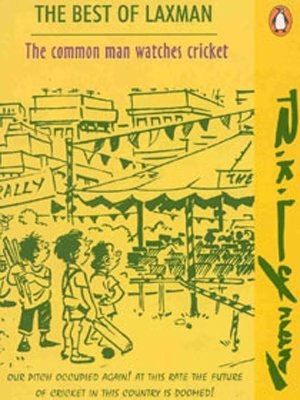
From financial crises to the woes of householders, from political instability to rampant corruption, Laxman's cartoons capture the entire gamut of contemporary Indian experience. Hilarious and thought-provoking at the same time, this is a treasure house of humour from one of the most striking voices commenting on Indian socio-political life today. This is a revised edition of the original published in 1998.
Toddler Yoga
- Author Name:
Sanskriti Sharma Singh
- Book Type:
- Description:
Are you fascinated with animals? Do you like moving about? Is it fun for you when you make silly faces? Do you want to be healthier and happier? Yayy! Then this book is definitely for you! Read, move, act, and have fun with your friends and family! Toddler Yoga helps you learn different yoga poses in a fun and engaging way. If that's not enough, you also learn the alphabet while you're at it! Sanskriti Sharma Singh is a Clinical Psychologist and a hands-on mother who is committed to the holistic development of her child. She finds the practice of Yoga, among other things, most suited to achieve this goal.

The Blind Vulture & Other Fables
- Author Name:
Kamini Gayakwad
- Book Type:
- Description:
The blind vulture was amused by the flattery of the cat and allowed it to come to its nest, what was the result of this? The jackal ran as fast as he could, and not looking where he was going fell into a bucket of indigo dye. He dyed blue, and because of this colour he became the king of the jungle, But what happened after that? The sage turned the mouse into a wolf, then what did the wolf do? An old lion is luring a man with a bracelet. What will man do on this? These stories teach that even a weak person can beat the big ones by using intelligence. And a mighty can be ruined by his own stupidity.

A Vote for Laughter
- Author Name:
R K Laxman
- Book Type:
- Description:
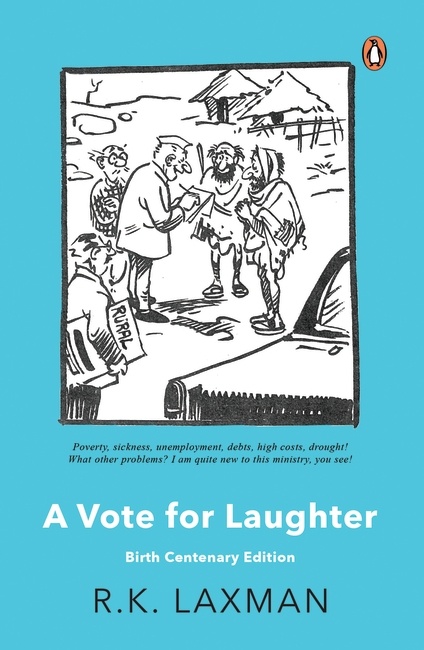
A witty look at the strange world of politics by our best-loved cartoonist This exhilarating collection by R.K. Laxman takes a humorous look at the colourful personalities, peculiar codes of conduct and bombastic rhetoric that characterize the inimitable world of politics. A Vote for Laughter contains a hundred of the classic Common Man cartoons that have to do with political subjects, from party meetings, election campaigns and VVIP movements to cabinet reshuffles, horse trading and foreign tours, not to forget the activity that for Laxman defines the Indian politician: the impulse to rush to the well of the House. These are accompanied by a hundred of the funniest jokes about politics and politicians, collected from all over the world. A Vote for Laughter will entertain everyone who enjoys seeing the farcical streak in our contemporary politics, even as we take pride in being the largest democracy in the world.
Chandausi Junction
- Author Name:
Shankar Sahay
- Book Type:

- Description:
A collection of short-stories set in the 20th Century India for the 21st Century kids & a nostalgic walk, for their parents & grandparents. Although this book has been named after the city of Chandausi, it contains stories from various places like Rishikesh, Agra, Champaran, Tilhar, Sambhal, Kanpur, Banaras, Lucknow and many others. These are the short stories of a bygone era-a period when India had either not gained independence or had been independent for not more than 35 years. These are the tales of journeys-taken up from the early 20th century to the end of a millennium, from Shahjahanpur to Delhi, from Bijnor to Hyderabad, from Hathras to Sweden & Norway, from Lakshmi Talkies, Allahabad to Night Watchman, Bangalore, from Panki to USA, from Dehradun to Canada, from Chandausi to Australia and many others. We are sure in all these stories, you will be able to find at least one character, which reminds you of your own self-of what you are, were or always wanted to be. Let us know the character with whom you have been able to relate to the most. Happy reading. “Genius is one percent inspiration and 99 percent perspiration,”-Thomas A. Edison. -Here’s a collection of short stories to inspire the readers.

Unjudging Women
- Author Name:
Rachna Chaudhary
- Book Type:
- Description:
This book is based on a critical feminist reading of selected Delhi High Court judgements pronounced in the 1990s. It focuses on the phenomenon of female criminality and the pervasiveness of the disciplinary powers of law in our lives. Through an overview of existing studies on female crime in India and the interaction with the working) of the law and the legal system, This engagement pushes our understanding of law from an instrument of control and mode of social transformation to mere rhetoric. Not to argue for the futility of engaging with the law but emphasising the need to look at it closely and critically.

Kailas: Shiva's Abode
- Author Name:
Hemant Sharma +2
- Book Type:
- Description:
Wanderlust and the desire to know the land and society more had been fueling my wish to visit Kailas. There were many curiosities. All our major rivers have their source in the region. The largest reservoir of fresh water on earth is situated there. The celestial swans are found there. I recall that how in my childhood, my Grandmother used to describe Kailas as being akin to a dreamland. According to her, Shri Krishna has said in the Gita – Meruru shikhirinamaham – ‘Among mountains I am Kailas!’ It was Sage Mandhata who first set foot on this sacred soil. Adi Shankaracharya shed his mortal body here. Guru Nanak meditated here and Swaminarayana, the founder of the sect that bears his name, saw the vision of god here. The Ramayana and the Mahabharata mention Kailas. This is where Ravana had worshipped Lord Shiva. He wanted to take Kailas with him. Shiva guilefully dissuaded him from doing so. Arjuna performed penance here and received the Pashupata Astra from Shiva. Yudhishthir proceeded heavenwards via this route. One by one, all the family members fell by the roadside; only the faithful dog kept company. Bhasmasur, the Rakshas, a devotee of Shiva was reduced to cinders here. Today the dark shadow of civilisation has begun to fall even on Mansarovar. This lake is shrinking. The sacred water body, that once stretched across 410 square kilometres, is now shrunk to only 10 square kilometres. Consider this the rage of Nature. Had Kalidasa been alive, he would have been deeply saddened to see his beloved Himalaya in this state. Is it the same Himalaya that is described in Raghuvamsham and Kumar Sambhavam? Civilisation has reached a point where the divine dimensions of Himalaya are disturbed.

Case Files of The Dead
- Author Name:
Various Authors
- Book Type:
- Description:
Welcome to a mysterious land where ghosts. Ghouls and spirits rule. Welcome to a place where haunted houses and evil souls will make a shiver run down your spine. A spooky tale in the scenic hills of Mussoorie awaits you while uncanny happenings in a literary competition are sure to intrigue you. The case of a mysterious white Maruti baffles everyone, even as the unsuspecting jogger experiences something he had never bargained for. A group of friends will encounter the worst terror of their lives while nightmares of his death rack the young man! Author's In and The Book Bakers present an eclectic mix of true stories, legends, and fables that have often been a part of India's folklore—armed with some of the best authors in India's paranormal literature history. CASE FILES OF THE DEAD; India's first pure horror public anthology will turn every host into (G)Host!!!

An Alternative Perspective On Education
- Author Name:
Atul Kothari
- Book Type:
- Description:
Education is the foundation of the development of any country. But in our country, the First Education Policy was framed in 1968, 21 years after independence; the second policy was formulated in 1986; 34 years later, India got the National Educational Policy-2020 on 25th July, 2020. Besides these, certain commissions were also constituted for reforms in education, which made some good recommendations, but these could not be implemented for sheer want of political will. For an instance, the Kothari Commission in 1968, recommended 6 per cent of Gross Domestic Product (GDP) for expenditure on education, which was also adopted by the Education Policy-1986, but this is yet to be translated into practice. If we ignore pre-colonial period, the Bharat of post-independence has not yet been able to determine the aim of education. Character building and moulding a human i.e. holistic development of personality should be the aim of education. Essays on related subjects are included in this book. To identify the issues and problems that plague the education, and their solution, we carried out basic but innovative experiments in schools, colleges and universities. The original experiences of these exercises have been penned down as articles and research papers. This book is an anthology of the related writings.

Customer Reviews
Be the first to write a review...
A Tale for Dolphins/Seals by Basak Sozer takes humour beyond the predictable human gaze, inviting readers into a dual-world narrative where dolphins and seals navigate their own absurdities with intelligence and irony. Sozer's unconventional structure—splitting perspectives between two marine species—challenges the reader to question whose lens deserves comedy and whose experience carries weight. This is not anthropomorphic whimsy; it is satirical precision dressed in playful form. The book rewards those who appreciate humour that disarms rather than panders, who seek laughter grounded in observation rather than formula. Published by Unbound Script, Sozer's work speaks to readers drawn to experimental voice and off-centre wit—those who trust a book that refuses to announce its punchlines but trusts the reader to find them in the silences between species, cultures, and expectations.
What kind of reading experience will A Tale for Dolphins/Seals give me?
This book offers a playful yet contemplative reading experience that shifts between lightness and depth without warning. The humour is subtle, often arriving through juxtaposition and irony rather than outright jokes. Readers will find themselves smiling at unexpected turns of phrase and pausing to consider what the absurdity reveals about human behaviour. The dual perspective structure—dolphins and seals observing their worlds—creates a rhythm that is neither hurried nor passive. It rewards attention and trust, leaving behind a quiet satisfaction rather than loud catharsis.
Who is this book best suited for, and what does it expect of its reader?
- Readers who enjoy unconventional narrative structures and are comfortable with ambiguity.
- Those drawn to absurdist or philosophical humour rather than situational comedy.
- Fans of satire that operates through indirection—who appreciate wit embedded in observation.
- Readers curious about non-human perspectives as a lens for human critique.
- Anyone seeking humour that trusts intelligence over explanation and doesn't signal its punchlines.
What is the cultural significance of using animal perspectives in contemporary Indian humour today?
In contemporary India, where anthropocentrism dominates public discourse—from environmental policy to urban planning—a book that centres non-human voices challenges readers to decentralise human experience. This approach resonates with growing conversations around ecological awareness, inter-species ethics, and the limits of human-centric satire. By choosing dolphins and seals, Sozer bypasses familiar postcolonial or mythological tropes, offering a satirical angle that feels fresh and unanchored from expected cultural references. It speaks to readers eager for humour that questions whose stories get told and whose absurdities matter.
What makes Basak Sozer's treatment of humour distinctive in this book?
Sozer refuses to perform humour—the comedy emerges from structure, perspective, and restraint rather than punchlines or exaggeration. The dual-world format itself is a satirical device, creating parallels and contrasts that generate meaning without explicit commentary. Sozer's voice is observational and understated, trusting the reader to locate irony in what is not said. This approach resists the pressure to entertain loudly, instead offering humour as a byproduct of intelligent observation. The book feels less like a comedy and more like a meditation on the absurd that happens to be funny.
What does this book leave the reader with long after finishing it?
Readers carry away a quiet shift in perspective—a lingering awareness that humour can emerge from decentering the familiar. The book plants questions about whose experiences we consider absurd and whose we take seriously, without insisting on answers. There is an intellectual playfulness that continues beyond the final page, a sense that comedy need not conclude neatly to be effective. Emotionally, it leaves a feeling of lightness paired with substance, the rare satisfaction of laughter that respects the reader's capacity for nuance and reflection.