
THE TALE OF THE TWIN WARRIORS
₹
100
₹ 83 (17% off)
Available
Oral epics in any Indian language are generally associated with certain specific communities, defined by their traditional occupations; and the present oral epic Koti Channaya belongs to the Billava community. This poetic narrative, which records the life and adventures of the two cultural heroes of the Billava community, their yearning for cultivable land, their brave opposition to the established powerful classes, and their tragic end, is sung by the members of the particular communities called Pambada and Parava of coastal Karnataka, during the annual worship of the twin heroes. The oral epic, Koti Chennaya unravels the world of Billava community (traditionally toddy-tappers) of coastal Karnataka recording in the process the life and adventures as also the travails and tribulations of the two cultural heroes of Billava community. Most of the oral epics begin with a 'Creation Myth', which begins with the creation of the entire universe step by step, thus focuses on the legendary first parents/ancestors of the community concerned. Such a myth, besides glorifying the cultural heroes of the epic, gives a privileged position to the community by linking it with the rest of the world and gives it a socio-cultural identity. Koti Channaya also begins with a 'Creation Myth'. A recent study undertaken by UNESCO says that half of the 6,700 languages spoken in the world at present face the danger of extinction before the end of this century.
Read moreAbout the Book
Oral epics in any Indian language are generally associated with certain specific communities, defined by their traditional occupations; and the present oral epic Koti Channaya belongs to the Billava community. This poetic narrative, which records the life and adventures of the two cultural heroes of the Billava community, their yearning for cultivable land, their brave opposition to the established powerful classes, and their tragic end, is sung by the members of the particular communities called Pambada and Parava of coastal Karnataka, during the annual worship of the twin heroes. The oral epic, Koti Chennaya unravels the world of Billava community (traditionally toddy-tappers) of coastal Karnataka recording in the process the life and adventures as also the travails and tribulations of the two cultural heroes of Billava community. Most of the oral epics begin with a 'Creation Myth', which begins with the creation of the entire universe step by step, thus focuses on the legendary first parents/ancestors of the community concerned. Such a myth, besides glorifying the cultural heroes of the epic, gives a privileged position to the community by linking it with the rest of the world and gives it a socio-cultural identity. Koti Channaya also begins with a 'Creation Myth'. A recent study undertaken by UNESCO says that half of the 6,700 languages spoken in the world at present face the danger of extinction before the end of this century.
Book Details
History of Marathi Literature
- Author Name:
Kusumawati Deshpande +1
- Book Type:

- Description:
Marathi has an unbroken literary tradition of over eight centuries, divided conveniently into two distinct periods, classical and modern. The Classical period spans six centuries, remarkable for poetry, devotional and heroic. Jnandev, Namdev, Eknath, Tukaram and Ramdas have become household names throughout India. While Virasaiva, Jain, and Muslim poets have enriched the secular and spiritual content, wandering minstrels have sung heroic ballads. New forms of literature have flowered from the nineteenth century under the impact of English education and western thought. The Chiplunkar, Apte, Anil Despande, Phadke, Khandekar, Mardhekar, Rege and Gadgil. Tracing the earliest reference to Maharashtra in a rock inscription of the fourth century, the history concludes with the formation of the state in 1960.

Herstory
- Author Name:
Neha Bansal
- Book Type:
- Description:
Herstory is a new collection of poems by Neha Bansal, a civil servant, providing a fresh perspective on the lives of others.

Lady Tarzan
- Author Name:
Lavanya Karthik +1
- Book Type:
- Description:
लेडी टार्ज़न उर्फ जमुना टुडू ने जंगलों को बचाने के लिए अपनी जान दांव पर लगा दी. उनकी कहानी संघर्ष और प्रेम की कहानी है। लावण्या कार्तिक ने लेडी टार्ज़न की कहानी दोबारा सुनाई। कहानी पूछती है, "क्या हम किसी चीज़ से प्यार करते हैं?" यह प्रश्न हमें आशा देता है क्योंकि हम किसी ऐसे व्यक्ति के लिए खड़े हो सकते हैं जिससे हम प्यार करते हैं। समर्थन के लिए। राजीव ईपे के चित्र कहानी को ध्वनि प्रदान करते हैं। एक स्वस्थ जंगल की आवाज़. Age group 9-12 years

Pustaka Kollalu Hodevu Naavu
- Author Name:
Rukmini Banerji +1
- Book Type:
- Description:
Awaited

Petege Hoguvudu
- Author Name:
Meera Tendolkar +1
- Book Type:
- Description:
Details awaited

Prem Gali Ati Saankri
- Author Name:
Ramratan Awasthi
- Book Type:
- Description:
Book

Super Genius Computer Learner-3
- Author Name:
Manuj Bajaj +1
- Book Type:
- Description:
आधुनिक युग के विकास में कंप्यूटर का अतुलनीय योगदान है। आज किसी भी क्षेत्र में कंप्यूटर की उपस्थिति अनिवार्य रूप में देखी जा सकती है। हमारे राजमर्रा के लगभग सभी कार्य कंप्यूटर पर निर्भर हैं। बैंकका लेन-देन, टिकट, ए.टी.एम. सेवा, मोटरकार व हवाई जहाज नियंत्रण, पुस्तक-प्रकाशन, दस्तावेज तैयार करना, फोटो, फिल्म व संगीत से जुड़े कार्य, कक्षा में पढ़ाई करना इत्यादि सभी कार्य कंप्यूटर की मदद से सरलता से, तेजी से और त्रुटिहीनता के साथ पूरे हो जाते हैं। यही कारण है कि आज के युग को ‘कंप्यूटर का युग’ कहा जाता है। विज्ञान, तकनीकी, शोध, चिकित्सा, प्रौद्योगिकी, उड्डयन, संचार एवं शिक्षा के साथ-साथ कंप्यूटर ने कृषि के क्षेत्र में भी अहम भूमिका निभाई है। कंप्यूटर क्रांति ने विश्व को एकसूत्र में बाँध दिया है। इंटरनेट ने तो कंप्यूटर के प्रचार-प्रसार में और भी बड़ी भूमिका निभाई है। इंटरनेट के माध्यम से आज एक ‘क्लिक’ करके हम दुनिया के किसी भी कोने में पहुँच सकते हैं। इंटरनेट टेलीफोनी और इ-मेल ने संचार क्रांति को पंख लगा दिए हैं। इंटरनेट टेलीफोन से हम लगभग निशुल्क दुनिया के किसी भी कोने में टेलीफोन की तरह बात कर सकते हैं। ‘चैट’ के जरिए ‘लाइव’ बातचीत की जा सकती है।

Worlds First Book On Haiku Poetry
- Author Name:
Carlos Luis
- Book Type:
- Description:
Haiku is a very short form of Japanese poetry consisting of 17 syllables arranged in three lines of 5, 7, and 5 syllables respectively. But against all odds, this is a collection of feelings written in three lines. An economical masterpiece that Trades you through realities of life; speaking of love, relationships, paradoxes in life, you name it you have it in here.

Dear Moon
- Author Name:
Soumi Dutta
- Book Type:
- Description:
The story, written in an epistolary style, talks about attempts the narrator makes in order to erase the memories of her one true love, from her heart. But can such love be unremembered? Read on to find out.

Love In Jamshedpur
- Author Name:
Ajitabha Bose
- Book Type:
- Description:
Do you remember who was your first crush? Did you too dream of marrying her? Everyone does somehow, isn't it? So did Arnab! When he saw simpi for the very first time, he fell in for a forever-love. Yet, the dream took a different turn when she rejected him time and again. What lies ahead? Will Arnab be able to impress his first love? Or will he fail, again? Bestselling author, ajitabha Bose brings to you a true tale of love based in the small town of Jamshedpur.

My Senior Girlfriend
- Author Name:
Yash Sharma
- Book Type:
- Description:
Yash Sharma is author of the book fl.A.M.E.S. His book talks about romance and issues is that are relatable to the youth of this generation. It told the story of a girl who attempts to move on from her lover who had left her. His book get a decent response from young readers and the one of the biggest newspaper groups of Rajasthan with millions of readers reviewed favourably, giving it 5 out of 5 stars. Ash is a 21-year year-old from a small town in Rajasthan, rajgarh.He is pursuing his B.Tech. In Civil Engineering from Alwar district. He started writing at the early age of 13. His hobbies include reviewing books and movies, and writing scripts, screenplay and music. He has written more than a thousand quotes and poems. He is a bookworm and has quite an interest in politics and Hollywood. He is also a storyteller and an actor too. His passion for to be an actor lead him to theatre at a very young age. He has also wrote numerous plays for his school and college festivals.

Mizo Songs and Folk Tales
- Author Name:
Laltluangliana Khiangte
- Book Type:
- Description:
The dialects and languages spoken by tribals in India are very large in number. The literary compositions in most of them have survived in oral form though some tribal languages have taken to writing as means of recording literary compositions. Conventionally, they have been perceived as mere anthropological curiosity, or at best a source for oral history. They have rarely been translated into English or an Indian language as a representation of tribal imagination. In order to meet the long felt need for brining out a systematic series of India's tribal literature, sahitya Akademi has established a project of Indian Literature in Tribal Languages and Oral Traditions.

Our Love That Fell Apart
- Author Name:
Nupur Luthra
- Book Type:
- Description:
Brian serves grey with divorce papers, announces he’s gay and is in love with someone else. Her whole world falls apart, filled with rage, she has no one to turn too. Brian feels bad and is miserable for causing her a lot of pain, but the heart wants what it wants. Brian and his lover get married, which causes grey further pain. What happens next? How does grey deal with the pain and agony? Does it all end well or does someone die in the end? Find out in our love falls apart.

The Gift
- Author Name:
Ruchi Prabhu
- Book Type:
- Description:
Don’t read this book. Do NOT read this book Go watch YouTube videos Go watch series on Netflix Go listen to some songs on Ganna.com But, Just put the book down quietly and walk away… WARNING! In this book I have had my share of experiencing romance, hatred, longing and drops the most. An individual observes a bunch to pick up nuisance of personalities and relationship dynamics of those around him/her. This book contains my way of expressing through haiku or Epigrams which evoke my personal feelings dealing with a good ending and sometimes with the ray of no hope in a scalding weather.

Eyes I Have Been Searching For
- Author Name:
Haseena T
- Book Type:
- Description:
For avyukta falling in love was everything. She is vibrant that way, but she never knew where to find love until she met those eyes.

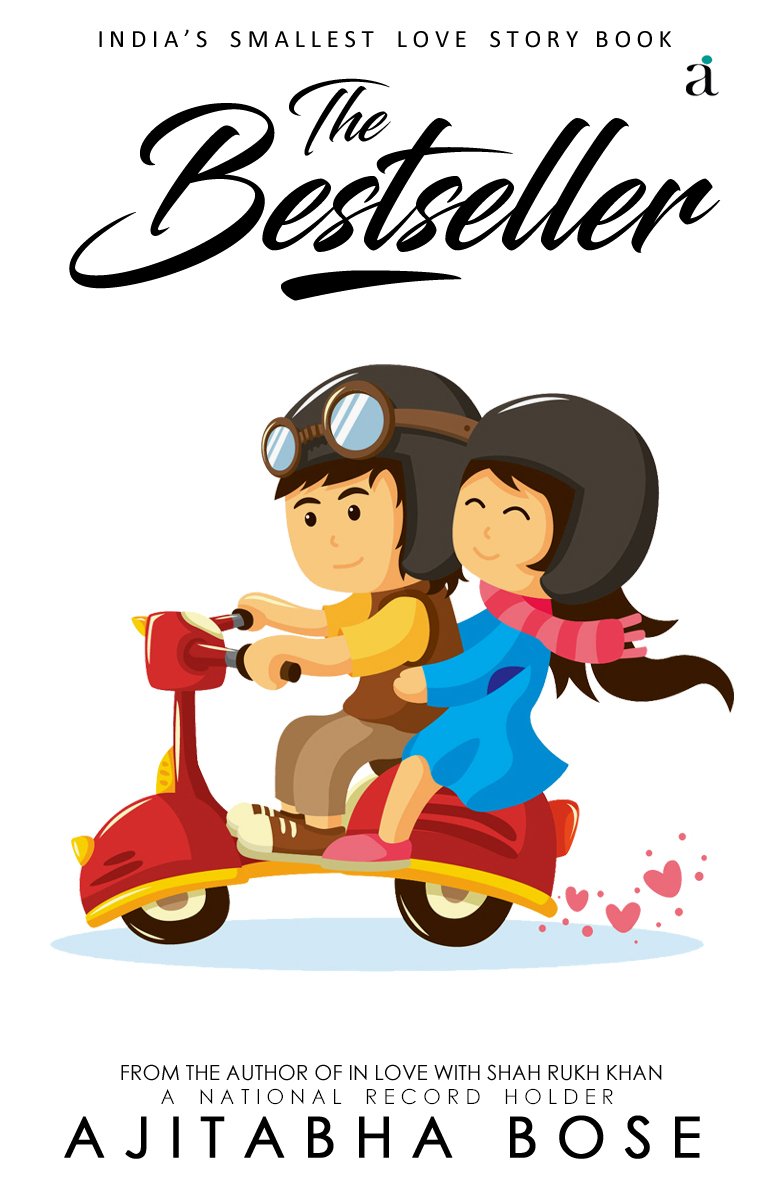
The Bestseller
- Author Name:
Ajitabha Bose
- Book Type:
- Description:
Every author wants to become a bestseller one day. Do you know over 1 lac books are published in India every year! Only a few become a bestseller. Have you ever wondered how it is to live a life of a Bestselling author? Come, join me and read a Story of life, love and dreams. It's a story of priyanshi and her dream to become a bestseller. || Book Teaser by Rajeev Khandelwal || "size doesn't matter when it's love." - Shah Rukh Khan || "ajitabha wants to bring a new trend in Books for the busy generation." - The Telegraph || "big love stories in small packages." - Hindustan times || "love stories runs in his veins." - India today || "it's not easy to sum Up a story in a few pages and keep the emotions intact! Ajitabha's attempt to that is worth appreciating." - Sudeep Nagarkar.
Captain Vikram Batra
- Author Name:
Rishi Raj
- Book Type:
- Description:
Vikram Batra (Known by Luv, Shershah, Kargil-ka-She) was born on September 9, 1974 in Palampur district of Himachal Pradesh. Rank—Captain Unit—13 Jammu and Kashmir Rifles War—Kargil War (Operation Vijay – 1999) Award—Param Vir Chakra (Posthumously) Whenever any discussion comes up regarding the Kargil war, the first name that reminds to us is that of Captain Vikram Batra, the valiant son of India. Captain Vikram Batra of 13 Jammu and Kashmir Rifles is one of those bravehearts who contributed in the victory of the Kargil war after fiercely fighting on multiple peaks one after another. Captain Vikram Batra showed unprecedented valour in the Kargil war and attained martyrdom. He was awarded with the ‘Param Vir Chakra’ posthumously.

Captain Anuj Nayyar
- Author Name:
Rishi Raj
- Book Type:
- Description:
Anuj was born on August 28, 1975 in Delhi. He was a resident of Janakpuri in South West Delhi. Rank—Captain Unit—17 JAT Regiment War—Kargil War (Operation Vijay – 1999) Award—Maha Vir Chakra (Posthumously) Special Recognition—A road named after him known as "Captain Anuj Nayyar Marg" in Janakpuri, Delhi. Also, there is a hall in Delhi University's South Campus that is named in memory of Captain Anuj Nayyar.

Grenadier Yogendra Singh Yadav
- Author Name:
Rishi Raj
- Book Type:
- Description:
Yogendra Singh Yadav was born on May 10, 1980 in the Ahir village of Aurangabad in Bulandshahr district of Uttar Pradesh. Rank—Grenadier, Retired as Honorary Captain Unit—18 Grenadiers War—Kargil War (Operation Vijay – 1999) Award—ParamVir Chakra Recognition—five months old when he joined the Indian Army. He became the youngest 'ParamVir Chakra' awardee at the age of 19 years. The entire world will always remember the exemplary valour displayed by the Indian soldiers in the Kargil war. Grenadier Yogendra Singh Yadav not only defeated the enemy but also dodged death in this war. At the time of receiving the ParamVir Chakra award he was only 19 years of age. He is the youngest soldier to have received the ParamVir Chakra.

Captain Saurabh Kalia
- Author Name:
Rishi Raj
- Book Type:
- Description:
Saurabh Kalia was born on June 29, 1976 at Amritsar (Punjab) to Smt Vijaya and Dr. N K Kalia. Rank—Captain Unit—4 Battalion, JAT Regiment War—Kargil War (Operation Vijay – 1999) You should not only read and know about this great heroic story of our brave soldiers, but also share it with your friends, parents and siblings, so that we never lose sight of what these heroes did for our nation. Captain Saurabh Kalia is a true inspiration for all of us as he sacrificed his life for our country. He displayed unflinching confidence, valour and bravery in the Kargil war. Our country will always be grateful to its hero.

Customer Reviews
Be the first to write a review...
The Tale of the Twin Warriors preserves a living oral epic from Karnataka's Billava community, traditionally toddy tappers and cultivators who carried this narrative across generations through performance. Unlike literary epics authored by named poets, this work emerges from communal memory—sung by performers called Pambada at rituals and festivals—documenting the hunger for land ownership among marginalized communities in coastal Karnataka. At its centre are the twin heroes Koti and Channaya, cultural icons whose defiance of powerful landlord classes speaks to historical struggles over land rights, dignity, and social hierarchy. The narrative ends not in triumph but in tragedy, a pattern common to oral epics that honour resistance even when it fails. Published by Sahitya Akademi, this translation brings the cadence and moral world of Tulu oral tradition into English, offering readers a window into how non-elite communities encode their collective aspirations, defeats, and ethical codes in poetic form that survives outside textual culture.
What kind of reading experience does The Tale of the Twin Warriors offer?
This book delivers the rhythmic, episodic cadence of oral storytelling rather than the linear plotting of a novel. Expect a narrative shaped by repetition, ritual invocations, and heightened dialogue—hallmarks of performance traditions. The emotional arc is not suspenseful but elegiac: you know from early on that heroism here leads to martyrdom, not victory. It rewards patience with world-building rooted in community life, agricultural cycles, and the social geography of coastal Karnataka. The tone is solemn and celebratory at once, honouring resistance while accepting tragic fate.
Who should read this book and what does it expect from its reader?
- Readers interested in oral literature, folklore studies, or Dalit and Bahujan cultural narratives.
- Those curious about how marginalized communities use epic form to encode historical memory and assert cultural identity.
- Readers willing to engage with unfamiliar narrative structures—repetition, ritual framing, and episodic development—rather than conventional plot arcs.
- Students of Indian social history, caste dynamics, and agrarian struggles in pre-modern South India.
- Anyone seeking literary traditions beyond Sanskritic or colonial canons.
What is the cultural significance of this epic's subject to Indian readers today?
The struggle for land and dignity by the Billava community mirrors ongoing debates about caste, landownership, and economic exclusion across rural India. At a time when Dalit and Bahujan cultural assertion is gaining visibility, this epic provides a historical precedent: communities have long created their own counter-narratives to dominant literary traditions. It challenges the assumption that oral cultures are passive or archaic, revealing instead sophisticated systems for preserving resistance and moral instruction. For contemporary readers, it is both historical document and living text, still performed in Karnataka.
What makes this book's treatment of the oral epic form distinctive?
Rather than sanitizing or summarizing the oral epic into a linear prose narrative, this translation preserves the performance texture—invocations, repeated epithets, and the communal voice of the Pambada singers. It situates the epic within its ritual context, explaining how and when it is sung, by whom, and for what purpose. This editorial choice honours the social function of the epic, not just its content. The book refuses to present the Billava community as timeless or romantic, instead anchoring the narrative in specific historical tensions over land and caste.
What does this book leave the reader with after finishing it?
A recognition that literary culture in India extends far beyond written texts and named authors. The tragic fate of Koti and Channaya lingers not as defeat but as moral witness—communities remember those who resisted, even when they lost. Readers gain a vocabulary for understanding how oral epics function as archives of subaltern experience, preserving grievances and aspirations outside state or Brahminical records. Emotionally, the book leaves a quiet respect for the resilience of cultural memory and the communities who have sustained it against historical erasure.