
The Forgotten Masters
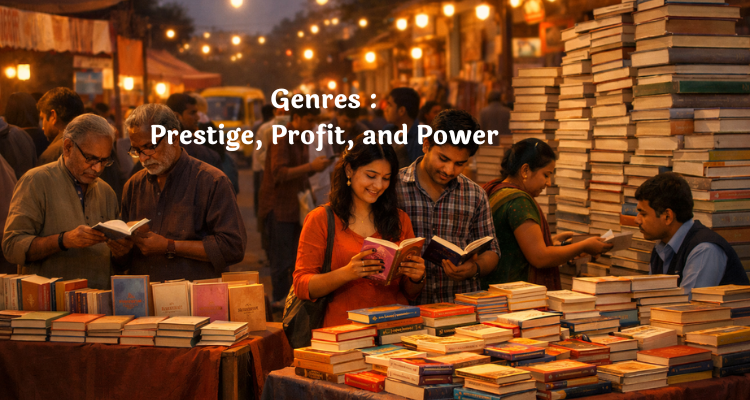
Walk into any second-hand bookstore in India, and you’ll find them, names you might have heard once in passing, or not at all; writers who built our literary foundations but now linger in the quiet corners of dusty shelves.
Once celebrated, now forgotten : they are not merely absent from reading lists.
They are missing from memory.
Before writing became a profession, before festivals, podcasts, and book launches, there were writers who wrote because they had to.
Not to be seen. But to make sense of the world.
They didn’t chase visibility. They wrote in obscurity.
They wrote when it wasn’t fashionable to write,
Today, I am going to talk about a few of them, as the list is endless, and may be, some where, I have also not known some names or read them, or about them, as I am also one from you..
Shrilal Shukla - India’s First Realist of the Everyday
In Raga Darbari, Shrilal Shukla gave India one of its sharpest mirrors.
He chronicled post-independence corruption not as scandal, but as routine.
His wit was surgical, his irony compassionate. Every bureaucrat, every rural officer, every politician you read about today; you’ve already met in Raga Darbari.
Yet Shukla rarely makes the social media reels about “Indian classics.” Maybe because his truth still makes us uncomfortable.
Qurratulain Hyder - The River That Remembered Everything
Urdu literature found its epic storyteller in Qurratulain Hyder.
Her masterpiece Aag Ka Dariya (River of Fire) is not just a novel; it’s a meditation on the continuity of civilization. Spanning centuries, from Chandragupta Maurya to post-Partition India, Hyder redefined what fiction could do.
She didn’t just write stories; she built bridges across languages, cultures, and time.
Her Urdu flowed into English like a second heartbeat.
Gopinath Mohanty - The Odia Visionary Who Wrote of the Voiceless
From Odisha came Gopinath Mohanty, one of the earliest and most profound chroniclers of tribal life.
His novels Paraja and Amrutara Santana are humane portraits of people the modern world prefers to ignore.
Mohanty’s writing was raw and poetic, filled with the rhythm of forests, the stillness of rivers, and the loneliness of the forgotten.
He made readers see that the heart of India does not beat in cities, but in silence.
Indira Goswami (Mamoni Raisom) - The Courage to Bleed on Paper
Indira Goswami from Assam - novelist, scholar, activist, was never afraid of pain.
In The Moth-Eaten Howdah of the Tusker, she explored the inner lives of widows in Vaishnavite society with unflinching honesty.
Her Pages Stained with Blood took readers into the aftermath of the 1984 anti-Sikh riots in Delhi.
Goswami’s writing was both wound and weapon. She turned trauma into truth.
Vilas Sarang - Marathi’s Existential Maverick
Long before the world spoke of absurdism, Vilas Sarang was writing stories in Marathi that could sit beside Kafka or Camus.
His collection Fair Tree of the Void questions existence, morality, and alienation with a tone both haunting and humorous.
Sarang was never part of a movement. He was an island, and that’s what made him timeless.
Bama - The Voice That Refused to Whisper
From Tamil Nadu came Bama Faustina Soosairaj, better known as Bama.
Her autobiographical work Karukku broke new ground in Dalit feminist writing.
Bama wrote not for pity, but for power; reclaiming her identity as a Dalit Christian woman in a world doubly stacked against her.
Her prose cut like glass. Each sentence carried anger, dignity, and grace.
P. Kesava Dev - Malayalam’s Forgotten Modernist
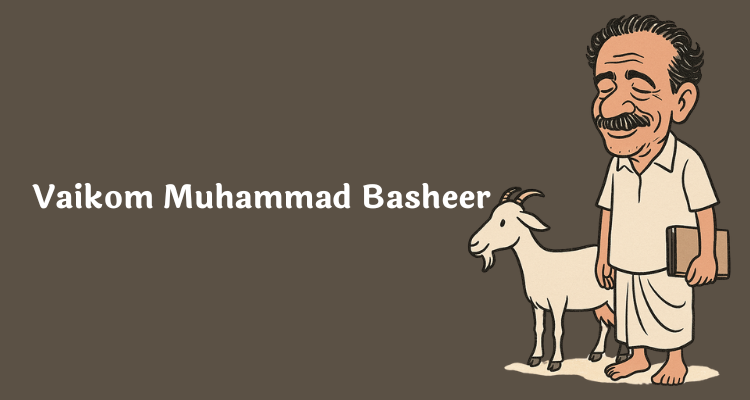
Malayalam literature remembers Basheer, but often forgets P. Kesava Dev, a radical who wrote about class, caste, and rebellion before it became popular to do so.
His novel Aaranyakam and autobiography Ethirppu (Resistance) broke conventions both in form and thought.
Dev’s stories were full of moral ambiguity - human, flawed, honest.
He gave the marginalized not just a voice, but a language of defiance.
Fakir Mohan Senapati - The Satirist Who Saw the Future
Often called the father of modern Odia prose, Fakir Mohan Senapati’s Chha Mana Atha Guntha (Six Acres and a Third) is a masterclass in realism and satire.
It was India’s first novel to expose rural exploitation through dark humor; decades before “social realism” became a literary category.
His irony could cut steel, yet his compassion softened every blow.
Rajinder Singh Bedi — Urdu’s Architect of the Everyday
A contemporary of Manto and Chughtai, Rajinder Singh Bedi was the quiet craftsman of Urdu fiction.
His story Lajwanti, about a man whose wife returns after being abducted during Partition; remains one of the most tender, unsettling portraits of shame and redemption in South Asian writing.
While others wrote of tragedy, Bedi wrote of aftermaths; the silences after the scream.
Bibhutibhushan Bandopadhyay - The Man Who Saw the World in a Small Village
Everyone remembers Pather Panchali because of Satyajit Ray’s film.
But before it was cinema, it was literature; Bibhutibhushan’s pure, aching, poetic rendering of rural Bengal.
He wrote about poverty without reducing it, about innocence without romanticizing it.
His prose carried the humility of observation; the rarest quality in writing today.
These names, sorry, writers were not content creators.
They didn’t trend. They didn’t “go viral.”
They wrote because silence was unbearable. They built India’s moral and emotional architecture when it was still under construction.
And then, somehow, we left them behind.
In our rush for newness, we forgot the ones who taught us how to see.
Every generation believes it has discovered truth.
But truth was already written in the simplicity of Shrilal Shukla’s sarcasm, the ferocity of Bama’s voice, the quiet dignity of Mohanty’s tribals, and the wounded grace of Indira Goswami’s women.
To read them is not to go back in time.
It is to remember that the real India - complex, broken, beautiful - still speaks through those we forgot to read.







Add a comment
Add a comment