
How Indian Fiction Grew Up with Urban India

Once upon a time, Indian fiction was infused with the scents of wet earth, temples, and mango orchards.
Then came the 1990s cable TV, credit cards, call centres, and cappuccinos.
The India that read Malgudi Days woke up one morning to One Night @ the Call Centre. Suddenly, the hero was no longer a freedom fighter or philosopher. He was a techie, a struggler, an MBA graduate, just like you, me, and the person next to you.
That’s when the new Indian fiction grew up.
Post-Liberalisation: The Love Story of Literature and Lifestyle
The economic liberalisation of 1991 didn’t just open markets; it opened storylines. A new middle class was being born, with dreams as global as their accents. Writers began to mirror this new India, with stories full of ambition, heartbreak, and EMI deadlines.
Chetan Bhagat became the poster boy of this shift - Five Point Someone and 2 States turned ordinary campuses and cross-cultural love stories into national conversations. Critics sneered, but readers - millions of them - found themselves on the page for the first time.
Anuja Chauhan brought advertising boardrooms and Delhi’s posh colonies alive with The Zoya Factor, while Durjoy Datta made the idea of love in the 21st century both aspirational and chaotic. Rupa Bajwa’s The Sari Shop and Ira Trivedi’s What Would You Do to Save the World? Looked at urban India’s glossy surface and the insecurities beneath.
For the first time, Indian novels didn’t look up to the West - they looked around.
Heartbreak, Hustle, and the Hero in Us
This wave of “pop fiction” introduced us to a new kind of protagonist - one who is confused, flawed, and perennially tired. The kind who texts his ex at 2 a.m., takes an Uber to a job he doesn’t love, and writes emails with “per my last mail” before breaking into existential despair.
Ravinder Singh’s I Too Had a Love Story taught India that vulnerability sells, while Preeti Shenoy gave women characters who balanced heartbreak with ambition. These stories didn’t try to be “literary”; they tried to be real.
Somewhere between coffee dates, job interviews, and rented apartments, Indian fiction found its new rhythm, not grand epics, but quiet chaos.
The Rise of the Indian Urban Universe
If the 1950s were about villages and the 1980s about small towns, the 2000s belonged to metros. Writers began naming cafés, malls, and office corridors - Barista, Cyber City, Brigade Road, Powai. Fiction moved from mythic backdrops to GPS locations.
Madhuri Banerjee’s Losing My Virginity and Other Dumb Ideas and Parinda Joshi’s Made in China caught the hustle and humour of a city that never sleeps.
Kanishk Tharoor, Sudeep Nagarkar, and Parul Khanna added texture, exploring friendships, flings, and failures in a way earlier generations didn’t dare.
These weren’t escapist fantasies; they were lifestyle diaries - relatable, rapid, and real.
The Pop Fiction Debate: Fast Food or Fresh Air?
Of course, the critics weren’t kind. “Airport fiction,” they called it, too light, too commercial, too predictable. But what they missed was how these books pulled a whole generation back to reading.
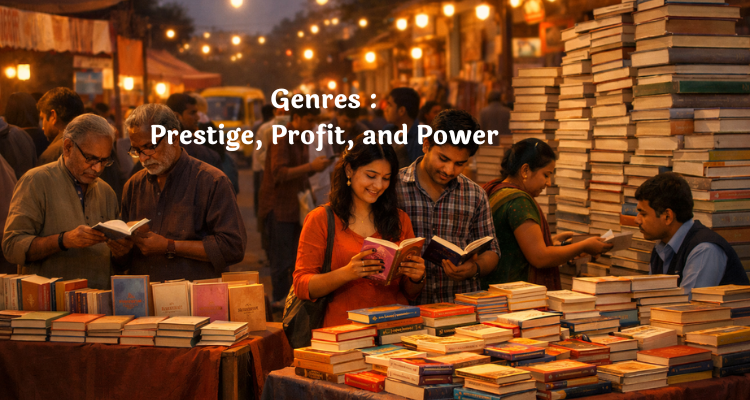
Before Bhagat and Datta, English novels in India were mostly read by elites. After them, you could spot paperbacks in trains, college canteens, even kirana shops. Suddenly, reading wasn’t snobbish; it was cool.
Sure, pop fiction didn’t give us philosophical depth, but it did something far more radical: it made us feel seen.
And if we’re being honest, that’s what literature has always been about.
Love, Loss, and the Language of Now
Urban fiction didn’t just document India’s transition; it enabled it. It made space for new voices, small-town dreamers writing big-city stories, self-published authors finding readers online, and digital platforms like Rachnaye giving regional fiction a tech-savvy home.
Today, this genre has matured. We see it in Manu Pillai’s historical nonfiction, Avni Doshi’s introspective prose, and Meenakshi Reddy Madhavan’s feminist fiction. The lattes are still there, but now, they come with reflection.
The heartbreaks are quieter. The hustle is sharper. And the stories? More layered, more Indian, more us.
How Indian Fiction Found Its Voice in Urban Noise
As India urbanised, its fiction stopped apologising for being messy. It started celebrating that very mess, the crowded metros, the Tinder heartbreaks, the 9-to-5 monotony, and the midnight dreams.
Our writers began to say what the billboards and algorithms couldn’t, that even in a country moving at 5G speed, love still hurts, ambition still burns, and loneliness still lingers.
So, the next time you sip your overpriced latte and scroll through a web series trailer, remember, before these stories were streamed, they were written.











Add a comment
Add a comment