
Deewaan-e-Ghalib: Sariir-e-Khaama
₹
599
₹ 479.2 (20% off)
Unavailable
Deewaan-e-Ghalib: Sariir-e-Khaama' is the English translation of Ghalib's numerous splendid ghazals by Najeeb Jung. In this book, Najeeb Jung provides a fascinating English interpretation of the poetic excellence of Mirza Ghalib compiled in 'Deewan-e-Ghalib'. Most certainly, this narration of Ghalib is unique - it comes from the heart, the words not taken from any dictionary or style - and that is why I find it close to my heart. Truly, Najeeb bhai has blended Ghalib’s urdukalaam into English with such a unique flow that the intoxication has doubled. Gulzar, Poet, Lyricist & Film Director, Najeeb Jung sahab has undertaken a bold venture, and that too with a poet like Mirza Ghalib, whose poetry, by universal acclaim, is soaked in mysticism and philosophy. This volume shall bring some of Ghalib’s poetry within the reach of those who cannot access it in the original script. I felicitate Najeeb Jung sahab for undertaking this laudable venture. Mohammad Hamid Ansari, Former Vice President of India, Former Chairman of the Rajya Sabha & Author Najeeb Jung realise that in innumerable translations of Ghalib in English, the cultural and linguistic connotations have been relegated to the margins in exchange for fluency and domestication, and he tries to provide what eludes Robert Bly, Francis Pritchett, Adrienne Rich, Ralph Russel, and others. His translation is an intricate encounter with the text and a deep awareness of the cultural, social, and literary conditions of Ghalib’s times. An effort that will attract loving readers. Gopi Chand Narang, Author, Urdu Critic, Theorist & Linguist.
Read moreFormat:
About the Book
Deewaan-e-Ghalib: Sariir-e-Khaama' is the English translation of Ghalib's numerous splendid ghazals by Najeeb Jung. In this book, Najeeb Jung provides a fascinating English interpretation of the poetic excellence of Mirza Ghalib compiled in 'Deewan-e-Ghalib'. Most certainly, this narration of Ghalib is unique - it comes from the heart, the words not taken from any dictionary or style - and that is why I find it close to my heart. Truly, Najeeb bhai has blended Ghalib’s urdukalaam into English with such a unique flow that the intoxication has doubled. Gulzar, Poet, Lyricist & Film Director, Najeeb Jung sahab has undertaken a bold venture, and that too with a poet like Mirza Ghalib, whose poetry, by universal acclaim, is soaked in mysticism and philosophy. This volume shall bring some of Ghalib’s poetry within the reach of those who cannot access it in the original script. I felicitate Najeeb Jung sahab for undertaking this laudable venture. Mohammad Hamid Ansari, Former Vice President of India, Former Chairman of the Rajya Sabha & Author Najeeb Jung realise that in innumerable translations of Ghalib in English, the cultural and linguistic connotations have been relegated to the margins in exchange for fluency and domestication, and he tries to provide what eludes Robert Bly, Francis Pritchett, Adrienne Rich, Ralph Russel, and others. His translation is an intricate encounter with the text and a deep awareness of the cultural, social, and literary conditions of Ghalib’s times. An effort that will attract loving readers. Gopi Chand Narang, Author, Urdu Critic, Theorist & Linguist.
Book Details
Qalb e Faiz
- Author Name:
Najeeb Jung
- Book Type:

- Description:
" 'Qalb-e-Faiz' is the English translation of Faiz Ahmad Faiz's numerous splendid ghazals by Najeeb Jung. In this book, Najeeb Jung provides a fascinating English interpretation of the poetic excellence of Faiz Ahmad Faiz compiled in 'Qalb-e-Faiz'. " "Najeeb Jung is a true Delhi boy who has lived many lives. He grew up on the streets of Darya Ganj, went to St Columba’s School and St Stephens College. Now retired, he can be found back in Delhi though he divides his time with his grandchildren in New York and the monsoon in Goa. In a previous life, he was a civil servant with over two decades of service to the IAS. He has also worked at the Asian Development Bank in Manila, been a Visiting Fellow at the Oxford Institute for Energy Studies in Oxford, and a Director on the Board of the Reserve Bank of India. He has been the Vice-Chancellor of Jamia Millia Islamia and then went on to serve his beloved city as the 20th Lt. Governor of Delhi. Najeeb has written two monographs on Natural Gas in Asia; edited an anthology of essays titled The Political Economy of Energy and Growth; published a compilation of essays under the title 'The Sting of a Bee'; and penned a book on contemporary social, cultural and political affairs in urdutitled 'Fikr o Aagahi'. This work is the culmination of a lifelong love affair with the words of Ghalib which began as a young child whose mother recited poetry to him. "

The Darkness is Vanishing
- Author Name:
Ramesh Pokhriyal 'Nishank'
- Book Type:
- Description:
The poems of Ramesh Pokhriyal "Nishank" represent innate, passionate ramifications and poetic mystification for readers. While they may include hymns and religious instructions, what stands out is the sentimental piety in the poems offered within this collection. As a poet, Nishank surveys possibilities, comparing them to actualities, facts, theories, alternatives, and ideals, weighing them together. Thus, his work is both insightful and foresightful, providing a sense of life’s worth. Remarkably, these poems are not complex; they are simple and pliable. The doctrines and practices they endorse are not new or recent but align with established norms. The poems that emerge from darkness invigorate the spirit, making our hearts dance and enveloping us in a mystical softness, enchanting enough to soothe distressed feelings while instilling a sense of truth, clarity, and refinement. Nishank conjures images of everyday, affable life, depicting socially intellectual and passionate men who dance, croon, and fall yet rise again—shortly devastated but soon resilient. His poems are both popular and distinctly contemplative. Hidden behind his voice lies every man; if you wish to understand his character, let the doors of the heart open and allow them to speak. *** The ardor for humankind may pulse in every throb of my heart; let there be a beautiful person within me. My only desire in this life is to die for my country, with my life as an emblem for humanity. *** Like worms clothing the wheat, jealousy, like termites, hollow out the preposterous. *** To erase darkness, those who burn like torches do so even in adverse torrents; they never extinguish. *** Happiness resides in the present, not in the future; it rests in the depths of the mind. —From this collection.

Verses in Bloom
- Author Name:
Swati Sani
- Book Type:
- Description:
“Verses in Bloom” is a rare collection of 150+ timeless couplets from the most prominent poets of Urdu. The book contains these couplets in Urdu, Devanagari and Roman scripts, accompanied by an English translation, capturing their true essence. Through these couplets, the book also provides an insight about different stages of life and love.

Thank You for Leaving
- Author Name:
Rithvik Singh Rathore
- Book Type:
- Description:
Dear reader, I wrote this book for the ones who feel everything too deeply. The rare souls who still listen to their hearts and believe in love. The ones who don’t hurt others just because they’re in pain. The ones who wear their hearts on their sleeves and carry kindness within. The ones who overthink, over-invest in people and over-love, always. This book is an ocean full of feelings, so if at any point, you feel like you’re drowning, take a moment to remind yourself that it’s a privilege to feel emotions as intensely as you do. Some people are so disconnected from their hearts that they don’t allow themselves to feel anything at all. That being said, I wish you a happy reading. This book will make you cry. Love, Rithvik

Har Mauqe Ke Liye Sher
- Author Name:
Sanjiv Saraf
- Book Type:
- Description:
"हर मौक़े के लिए शेर" उर्दू शाइरी की सदा-बहार खूबसूरती को इस तरह पेश करती है कि वो न सिर्फ़ आसानी से समझ में आए, बल्कि पढ़ने वाला अपनी ज़िंदगी के वाक़िआत को भी इन शेरों के आईने में देख सके। इस संग्रह में ऐसे यादगार शेर शामिल हैं जो इंसानी ज़िंदगी के पूरे दाइरे की तस्वीर पेश करते हैं - चाहे वो हमारे बदलते जज़्बात के विषय में, चाहे ज़िंदगी के ख़ुश-नुमा लम्हों की यादें हो। वो तमाम मौक़े जो हमारी ज़िंदगी को शक्ल देते हैं, इन अशआर में इज़्हार पाते हैं। चाहे मोहब्बत हो या जुदाई, खुशी हो या तड़प, जश्न हो या चिंता - हर एहसास और हर लम्हे के लिए इस संकलन में ऐसा कोई न कोई शेर मौजूद है, जो उलझी से उलझी परिस्थितियों में भी आपके दिल को अपनी बात कहने के लिए सुलझे हुए शब्द मुहय्या करता है। सोच-समझकर चुने और खूबसूरती से पेश किए गए ये शेर पढ़ने, याद कर के दोस्तों को सुनाने और पलट कर फिर से पढ़ने और विचार करने के लिए हैं। "हर मौक़े के लिए शेर" सिर्फ़ उद्धरणों की किताब नहीं बल्कि एक साथी है, जो ज़िंदगी के जज़्बात और लम्हों को को शाइरी की रोशनी से मुनव्वर करती है।

The Eloquence of Ghalib
- Author Name:
Swati Sani
- Book Type:
- Description:
"The Eloquence of Ghalib" is a captivating collection of English poetry that honours the poetic genius of Mirza Ghalib. This collection captures the essence of Ghalib's literary prowess and brings his profound verses to life in English. Each poem is a masterful expression, echoing the spirit of Ghalib's eloquence. The book explores a spectrum of themes, from love and melancholy to profound musings on life, ensuring a diverse and enriching poetic experience. The timeless reverie of Ghalib's poetry shines through "The Eloquence of Ghalib," making it a cherished literary treasure. Whether you are a dedicated poetry enthusiast or new to Ghalib's world, this book is an ideal gift and a must-have for those who appreciate the beauty of his words, now accessible in English. Crafted with premium materials, this book ensures durability, allowing you to revisit the timeless charm of Ghalib's poetry for years to come.

Footprints
- Author Name:
Neelam Dadhwal
- Book Type:
- Description:
Her thoughtful verses which often revolt to gain the roots, upwardly or downwardly enrich the poetry readers with wonderful insights. When she is not recreating the world with her poetry, she indulges in gardening.

Rocks of Hampi
- Author Name:
Chandrasekhar Kambar +1
- Book Type:
- Description:
Chandrasekhar Kambar draws his strength deeply from folklore as well as contemporary life and his poems are embodied in an earthyly, sensual language. His poetry works at a different altogether from what logical and analytical prose does. Profound insights into life get expressed metaphorically in him. English translation by O.L. Nagabhushan Swamy of Chandrasekhar Kambar's Kannada poems. Sahitya Akademi 2004.

Muddled Muff's Musings
- Author Name:
D. V. Gundappa +1
- Book Type:
- Description:
Mankutimmana Kagga (rendered in English as Muddled Muff's Musings) is a collection of sprightly yet profound verses that explore concepts such as the meaning of life, truth, and beauty. Mankutimmana Kagga, also known in English as Muddled Muff's Musings, is a collection of lively yet profound verses that explore concepts such as the meaning of life, truth, beauty, happiness, and the human experience. This literary classic has gained immense popularity among both scholarly and general audiences. Its gentle, non-preachy, and self-deprecating tone has endeared it to generations of readers since its first publication in 1943. It has rightfully earned the affectionate titles of "Kannada Bhagavad Gita" and "Gundopanishad," presenting happiness, the human experience, and related themes in an intimate and relatable manner. It is a literary classic that has enjoyed immense popularity among both erudite scholars and the general public. Its gentle, non-preachy, and self-deprecatory tone has endeared it to generations of readers since its first publication in 1943. It has deservedly garnered love and regard as "Kannada Bhagavad Gita" and "Gundopanishad."

Ocean in a Drop - Ghalib Decoded
- Author Name:
Mirza Ghalib
- Book Type:
- Description:
"Ghalib was a poet who mocked hardship, a philosopher who dared to argue with God, and a man who turned disappointment into an art form. Though often wrapped in layers of difficult language and intricate thought, at the heart of his vast poetic “ocean” lies a single, luminous “drop” - his deeply human individuality. He was the ultimate maverick: urbane, ironic, and restlessly modern, forever questioning, forever unsettled. Ocean in a Drop draws back the curtain on Urdu’s greatest genius. Stripping away academic clutter, this book approaches Ghalib through his most iconic she’rs, revealing the man behind the mystique. You will discover: ~ The Persona: The ego, the wit, and the “shroudless” independence of a 19th-century rebel. ~ The Wound: How he transformed neglect and betrayal into a mark of distinction. ~ The Edge: His playful yet profound walk along the borders of faith, existence, and the void. This is not a textbook. It is a conversation - intimate, unguarded - with a man who understood that life is chaotic, and that humour is often its only redemption. Whether you have long admired him or are meeting him for the first time, this is Ghalib as he was meant to be known: sharp, soulful, and unmistakably his own."

I Don't Love You Anymore
- Author Name:
Rithvik Singh Rathore
- Book Type:
- Description:
Dear reader, I hope this book feels like a warm hug to you. I wrote this book for the ones who feel everything too deeply. You’re right, I wrote this book for you. This book was meant to find you if you’ve ever loved someone who didn’t love you back, if you’ve ever over-invested in the wrong people or if you have a hard time letting go. I Don’t Love You Anymore is a book that’ll feel like home to you. I promise it’ll hold you gently on your worst days. Love, Rithvik

Warmth
- Author Name:
Rithvik Singh Rathore
- Book Type:
- Description:
Dear reader, If you have a heart, you will fall in love. And chances are, someone will end up breaking your heart. I wrote this book after someone broke mine. What do you do when the only person you’ve ever loved with your whole heart decides to leave your life? You keep trying to run away from the hurt, but to no avail. This book is a product of all the running I did from heartbreak. I feel everything too deeply, and when my heart broke, I collected all the broken pieces, and they fueled my art. This book is everything I wrote after someone I loved left me. There’s too much heartbreak in these pages, but also too much hope and, more than anything, a promise that life can’t always hurt you. I hope healing finds its way to you soon. Love, Rithvik

Humanist Social Vision of a Jungle Poet
- Author Name:
Kuvempu +1
- Book Type:
- Description:
This book carries 51 poems of Kuvempu in translation with a long introduction to give the pan India audience an understanding of Kuvempu's major concerns. Prof Raghunath has made his choice carefully to represent Kuvempu's social concern, and that seems to be at the heart of his introductory piece.

Middlemist Red
- Author Name:
Priyanka Das
- Book Type:
- Description:
The key is in your hand and now it's upto you how do you unlock yourself

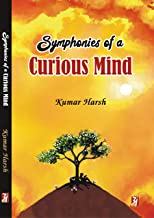
Symphonies of a Curious Mind
- Author Name:
Hash Kumar
- Book Type:
- Description:
We all speak in one language or the other. The many cultures have varieties languages that help them interact with one another. However, our mind sometimes lack the words to express the emotions that it experiences in bouts ecstasy and enlightenment. This book holds a such verses that have not escaped the mind in a way original to the author. Kumar Harsh has put his mind and heart in perfect synchrony and has written these with utmost care and affection. The readers might find it delightful to read. It's a treat for the heart and mind. Symphonies a Curious Mind will take you back to all those unfelt emotions and will remind you things intangible, even those close to touch sometimes. A harmony modern times. Organic, Dexterous, Easy.
The Infinite Forest
- Author Name:
Rashmi Kaushik +1
- Book Type:
- Description:
Through fragments of myth, poetry, and shadowed memory, the book traces the path of a woman who is both wound and blade, both destruction and divinity- an eternal return to power she never truly lost.

Life Trials
- Author Name:
Ramesh Pokhriyal 'Nishank'
- Book Type:
- Description:
Shri Ramesh Pokhriyal "Nishank", like all romantic poets, is generally a poet who is strong-willed and intelligent and possesses an unusually subtle mind. While going through his poetry and nature poetry, we see nature sympathetically with unusual unreputable emotional responses. Moreover, it stands in sharp contrast to rationalistic moods. Nishank is fond of personifying nature and is desirous of associating with the beauteous forms of the world that coexist with the laws and order of the universe. When Nishank fuses scientific and religious notions, he proposes a metaphysical idea adapted to the cosmos' natural design. Hence, through this choicest collection of his poems, Nishank agrees with the universal phenomenon that nature provides an influence which spontaneously refines and purifies the soul of the human generation. A "must-read" collection of representative poems of Shri Nishank.

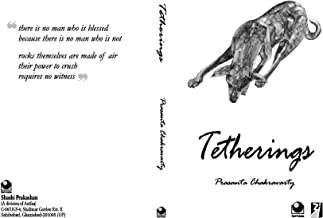
Tetherings
- Author Name:
Prasanta Chakravarty
- Book Type:
- Description:
Poery
The Glistening Soul
- Author Name:
Sweta Parmar "Nikki"
- Book Type:
- Description:
This creation is a collection of poetic reflections that is intended not only to inspire but motivate you to lead a renewed life. I tried that each one of these poems can derive a different perspective or reflection in your life. I have been penning down feelings for few years whenever I found and felt something interesting. ‘The Glistening Soul’, is a collection of same feelings. The ideas and reflections in this creation are penned by my own words and verse though it may relate to any other verse in some view-points.

Gypsy Mind, Caged Soul
- Author Name:
Rajan Verma
- Book Type:
- Description:
Gypsy Mind, Caged Soul is a collection of selected poems by the author. As the title suggests the human mind loves to travel, explore and dream. It’s the soul that gets caged owing to worldly wrap of duties responsibilities & boundries created by us being in that space. But the soul transcends barriers of any kinds. The only escape, therefore, is to venture into the unknown through the world of poetry. A bouquet of emotions is presented in this book.

Customer Reviews
Be the first to write a review...
Deewaan-e-Ghalib: Sariir-e-Khaama is not a conventional translation. Najeeb Jung refuses the safety of dictionaries and academic register, choosing instead to carry Mirza Ghalib's 19th-century Urdu ghazals into English through feeling and cadence. Where most translators parse Ghalib's metaphysical complexity word by word, Jung renders it as a reader first encounters poetry — through rhythm, suggestion, and emotional architecture. This approach preserves what makes Ghalib endure: the tension between longing and irony, devotion and doubt, the sacred and the profane. Jung's English does not domesticate Ghalib; it extends his voice into a new idiom without flattening his ambiguity. For readers who know Ghalib in Urdu, this translation offers a fresh emotional angle. For those meeting him in English for the first time, it is an entry point that does not condescend. The book serves both as literary artifact and living encounter with one of India's most inexhaustible poets.
What kind of reading experience does Deewaan-e-Ghalib: Sariir-e-Khaama offer?
This translation delivers Ghalib's ghazals as felt experience rather than decoded text. Najeeb Jung translates from intuition and emotional resonance, not literal equivalence, so the English reads like poetry first and scholarship second. The pace is contemplative — each couplet invites pause. Readers encounter longing, metaphysical doubt, erotic suggestion, and ironic self-awareness layered into compact verses. The book rewards slow, repeated reading. It leaves behind a sense of intimacy with a voice that is simultaneously 19th-century and uncannily contemporary, formal yet conversational.
Who is this book best suited for and what does it expect of its reader?
This book suits readers curious about Urdu literary tradition but uncomfortable with academic annotations. It serves those who want access to Ghalib without needing fluency in Persian-inflected Urdu poetics. The translation expects emotional openness more than cultural background — Jung writes for feeling, not footnotes. Ideal for readers of contemporary poetry who value ambiguity and compression, and for anyone interested in how classical Indian verse speaks to longing, loss, and doubt. It does not require prior knowledge of ghazal form, but readers familiar with it will appreciate Jung's fidelity to tone over structure.
What is the cultural significance of Ghalib's poetry to Indian readers today?
Ghalib remains the Urdu poet most quoted in everyday Indian conversation — his couplets surface in films, social media, and political discourse. His ability to fuse mystical devotion with skepticism, romance with irony, resonates in a culture negotiating tradition and modernity. For contemporary India, Ghalib embodies intellectual cosmopolitanism rooted in Delhi's pre-colonial culture. His ghazals speak to urban loneliness, unrequited longing, and the comedy of human pretension — themes alive in modern metropolitan life. This translation makes that relevance accessible to English-language readers who inherit Ghalib culturally but not linguistically.
What makes Najeeb Jung's translation of Ghalib distinctive?
Jung translates from emotional memory rather than philological precision. He avoids the stiffness that comes from over-explaining Ghalib's allusions or flattening his paradoxes into clarity. Where academic translations add footnotes to decode references to wine, Sufi metaphor, or Persian poetics, Jung lets ambiguity stand. His English preserves the compression and suggestiveness of the original couplets. The result feels like a poet responding to another poet across time, rather than a scholar decoding a text. This makes the translation readable as standalone English poetry, not just a study aid.
What does this book leave the reader with after finishing it?
Readers come away with a sense of having met a mind that refuses easy consolation. Ghalib does not resolve longing into fulfillment or doubt into faith — he sustains both in permanent tension. The book leaves behind a vocabulary for articulating complex inner states: the pleasure of hopeless devotion, the dignity of unfulfilled desire, the comedy of self-delusion. Emotionally, it cultivates a taste for irony without cynicism. Culturally, it connects readers to a poetic tradition that shaped modern Hindi and Urdu film lyric, literary Urdu prose, and the language of romantic disappointment across South Asia.