
Binodini
₹
90
₹ 74.7 (17% off)
Unavailable
Binodini, a novel written by the Nobel laureate Dr Rabindranath Tagore, tells the tale of a well-to-do middle-class family of Calcutta. Originally written in Bānglā with the title Chokhar Bāli (literally meaning 'sand in the eye'), the novel has been translated into English by Krishna Kripalani. The translator in his foreword to the novel opines, "It centers round the problem of human relationship and tells of what happens behind the staid facade of a well-to-do, middle-class Bengali home of the period, where a widowed mother lives with her only son on whom she dotes". Apart from telling the story of the family, the novel revolves around two main characters or rather say protagonists-Binodini, a young, talented, educated and beautiful widow; and Mahendra spoilt brat of his foolish mother. Binodini is written, taking the backdrop of contemporary society of Calcutta.
Read moreFormat:
About the Book
Binodini, a novel written by the Nobel laureate Dr Rabindranath Tagore, tells the tale of a well-to-do middle-class family of Calcutta. Originally written in Bānglā with the title Chokhar Bāli (literally meaning 'sand in the eye'), the novel has been translated into English by Krishna Kripalani.
The translator in his foreword to the novel opines, "It centers round the problem of human relationship and tells of what happens behind the staid facade of a well-to-do, middle-class Bengali home of the period, where a widowed mother lives with her only son on whom she dotes".
Apart from telling the story of the family, the novel revolves around two main characters or rather say protagonists-Binodini, a young, talented, educated and beautiful widow; and Mahendra spoilt brat of his foolish mother. Binodini is written, taking the backdrop of contemporary society of Calcutta.
Book Details
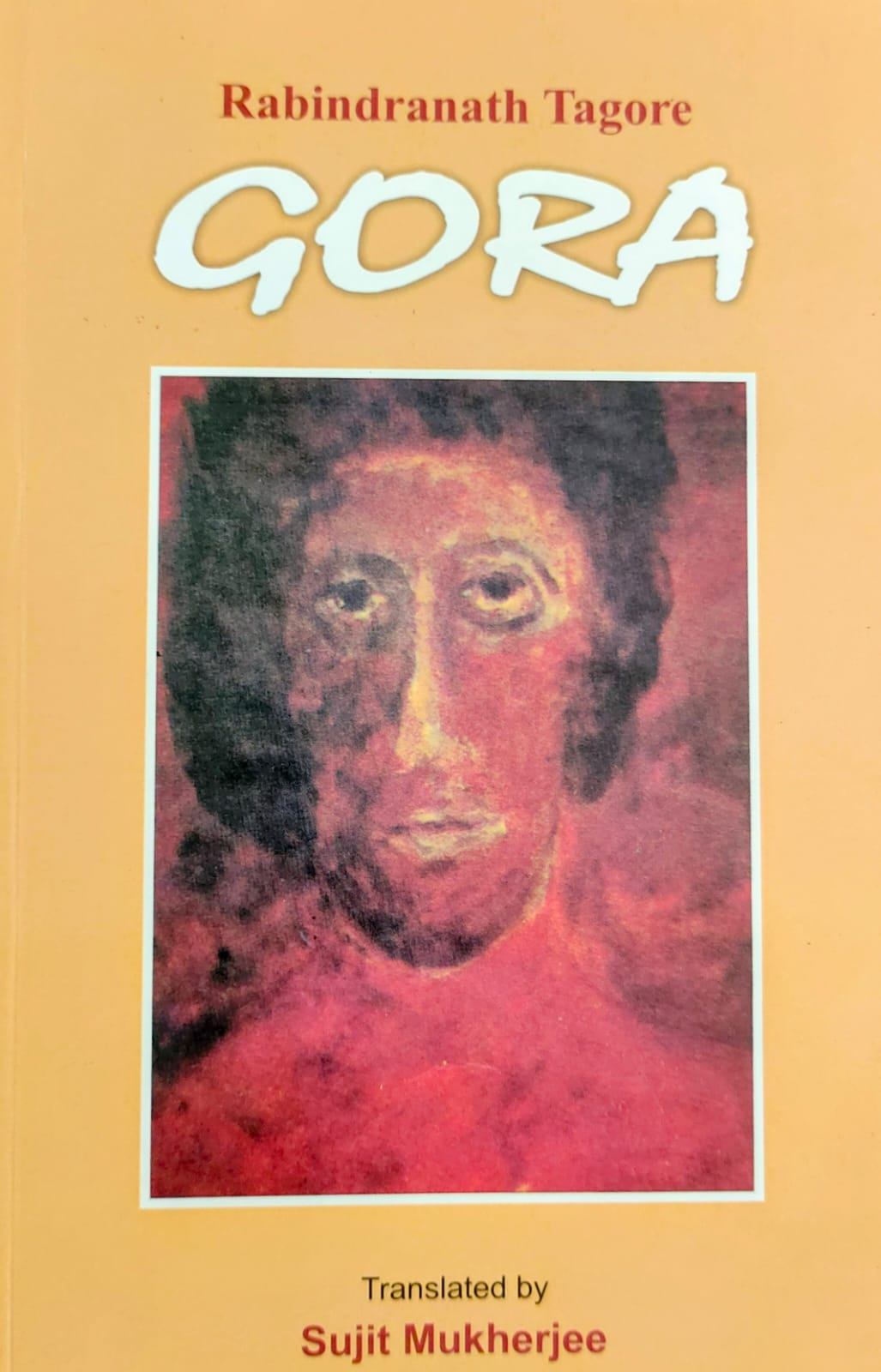
Gora
- Author Name:
Rabindranath Thakur
- Book Type:

- Description:
English Translation of Rabindranath Tagore's Bengali novel Gora. Gora consists of two parallel love stories of two pairs of lovers: Gora and Sucharita, Binoy and Lolita. Their emotional development is shown in the background of the social and political problems prevalent in India towards the end of the 19th-century. The novel is the longest novel written by Tagore. It deeply influences the Indian society and emerged as a debate between Brahmo Samaj and Hinduism.
Rabindranath Tagore - Memoirs & Letters [Vol 1]
- Author Name:
Rabindranath Tagore
- Book Type:
- Description:
Eighth in the line of eleven siblings, Rabindranath Tagore was sent to Europe for the first time at the age of seventeen to learn the Western ways of life. This concise curation of ten letters and an excerpt from his autobiographical memoir translated from the original Bengali into English reveals to the readers, not the wise old world-poet but a young man in the making as he steps out into the wide, foreign world for the first time. Vivid descriptions glimmering with the most fascinating medley of effortless humor, wisdom and innocence have made these letters stand the test of time. One needs no introduction or background to spend an afternoon with this book, to see the world he shows, to sail and ride, laugh and sing in a strange new (old) world.
![Rabindranath Tagore - Memoirs & Letters [Vol 1]](https://dxn5wl0ucl63k.cloudfront.net/9a44b516-7b2f-44c8-b8e9-bafbbb15e5a2/books-images/ed3ef2f9-05a6-4394-b7ec-f74032c51343.jpg)
The Hungry Stones And Other Stories (Pb)
- Author Name:
Rabindra nath Tagore
- Book Type:
- Description:
This book has no description

India Through People: 25 Gamechangers
- Author Name:
Devika Cariapa
- Book Type:
- Description:
What does it take for a person to alter the course of a nation? Spotlighting 25 such change-making individuals, the book looks at the times in which they lived, the challenges they dealt with, and the paths they forged. Quick introductions position personalities as game changers, chatty stories sketch their profiles, crisp timelines fill in the gaps, insightful quotations balance perspectives, and creative collages present visual montages. What emerges is the powerful journey of a country at the threshold of change, committed to charting its own course, helmed by its richest resource – its people. Age 10+

Clouds And Waves
- Author Name:
Sunaina Coelho +1
- Book Type:
- Description:
An endearing poem of a child who refuses tempting invitations, instead staying with her mother at playtime, blissful in her company. Words woven with great tenderness by the greatest poet of all times, a gentle verse for all the little ones.

The Astronomer
- Author Name:
Harshvardhan Kadam +1
- Book Type:
- Description:
Have you ever tried to catch the moon? Is the moon really that far away? A curious little girl really doesnít think so, but her elder brother keeps telling her otherwise! Can she convince him? Find out as she shares a delightful dialogue with her Dada. Another timeless gem from Gurudev.

Middle-Aged Teenagers
- Author Name:
C. Rajshekhar Rao
- Book Type:
- Description:
The ‘Middle-Aged Teenagers’ is a short novel with a strong story line and clearly etched out characters which Indian readers will relate to. It is the story of a group of friends who, now in their 40s, embark on a stag weekend to Goa, hoping to relive earlier times. Happily married but looking for excitement elsewhere, the five get out of the mundane to be their natural selves. The story brings out the contrast between this trip and one taken 23 years ago when they were just out of school, cash-strapped and immature. But what the two trips have in common is their propensity to run into trouble. If they had steered clear of misery as teenagers, they find themselves in a bigger pit on this trip. In a hilarious climax that has them at the mercy of underworld goons at a sleazy joint, they end up fulfilling their long forgotten desires that laid buried under the pressure of home and hearth. The story has a subtle but strong message for the readers— that they can pursue their desires, which are often not very difficult to achieve.

Panorama
- Author Name:
Lakshiminiwas Jhunjhunwala
- Book Type:
- Description:
One rarely comes across creative contributions that emerge from the objective analysis of life experiences, an interest in serving others, and an ever-growing spiritual urge. ‘Panorama’ belongs to this category. Savor it, and be ready to marvel at the vast and wide expanse it covers. From individual to Industry, from innovators to illustrious achievers, from preachers to politicians, from bureaucracy to business, it makes the reader traverse through the last seven decades. It paints a vivid picture of, in what India gained, what it missed out. It contains revealing interactions with V.P. Singh, Ram Manohar Lohia, Acharya Vinoba Bhave, and Indira Gandhi. He studies Gandhi and Subhash in great depth and detail. The sensitivity of the author emerges very prominently when he talks about Ramakrishna Paramhansa, Trailang Swami, Swami Vivekananda, Sri Aurobindo, Dalai Lama, and also APJ Abdul Kalam. From Vedic mathematics to Mandukya Upanishad, from progress to politics, from development to defence, the author presents his understanding and interpretations with considerable ease for the benefit of the readers. One is often reminded of the pursuit of understanding the basic premise contained in ‘Satyam, Shivam, Sundaram; Truth, Beauty and Goodness’. The multi-dimensional coverage contained in the PANORAMA tells it all.

Stella
- Author Name:
Neelam Saxena Chandra
- Book Type:
- Description:
Stella is different from the other teenage girls in her chawl. At sixteen, while other girls are too busy whiling away the time, she has a dream—a dream of making it big in life. Her mother, Sheila, a maid-servant, wholeheartedly supports her and remains her backbone. Isn’t it the way with all common people; each day facing new problems in even more perplexed situations. Out of nowhere, a new trouble brews up! An attempt by some of the hooligans in the chawl to outrage Stella’s modesty leaves Sheila distressed. She is forced to shift to the servant quarters of Mr Arya, in whose house Stella cooks to make a living. Stella, now all grown to be a beautiful young woman, unaware of life’s sudden unfolding, falls prey to circumstances unavoidable! She gets romantically attached to Mr Arya’s son, Himanshu, who craftily makes her believe that he will marry her one day. Destiny has something else in store for her. Soon, to her horror, she discovers that she is pregnant and that alarms her to no end. She then decides to commit suicide. Will Stella be able to come out of the distress that surrounds her? Read more to find out… Neelam Saxena Chandra, an author of 36 books, holds a record with the Limca Book of Records for the most publications in a year in English and Hindi (2015). She works as Joint Secretary (U.P.S.C.). She has won an award in a poetry contest by the American Embassy, the Premchand Award by the Ministry of Railways, the Rabindranath Tagore International Poetry Award, and the Freedom Award by Radio City for her lyrics. She was listed in the Forbes list as one of the most popular seventy-eight authors in the country in 2014. She can be contacted at neelamsaxena27@hotmail.com.

Massacre At Midnight
- Author Name:
Chaudhary Kaushal Kishor Thakur
- Book Type:
- Description:
Massacre at Midnight is a fascinating tale of medieval intrigue and revenge in the best traditions of ‘magic realism’ with a touch of the divine. Set in the Mughal era, the story opens with the covetous Nawaab of Waariaul locking horns with the principled estate owner of Singhwaar over the possession of LaaDlii and Pyaare, a famed pair of hunting dogs. The Nawaab enlists the support of the Mughal army under false pretences, portraying Singhwaar’s Thaakur as a seditious renegade. The family is massacred to the last man, and Singhwaar is laid waste. The widow gives birth to a male heir in a fugue, abandoning the infant in the wilderness. The child is miraculously saved by the benevolent goddess Vana-Durgaa and becomes her favourite. When he comes of age, Destiny takes him to the imperial court at Delhi for a showdown with his father’s murderer, witnessed by the Great Mughal himself. Mainly based on folklore, ‘Massacre at Midnight’ is replete with enchanting old-world belief in miracles, spirits protecting family fortunes and poetic justice for the unjust, as well as glimpses of life in medieval Mithilaa.

Maaya : A Tryst With Self
- Author Name:
Minal Arora
- Book Type:
- Description:
Maaya – A tryst with self, is the story Maaya, who, through her love for a man, Rahul, took on an incredible journey within, where she understood and experienced love in its purest, truest form. When Maaya first met Rahul, he touched a part of her soul that she had suppressed long ago in order to become the perfect girl for the love of her life, Kunal, whom she was engaged to. As Rahul and Maaya realised their feelings for each other, they also realised the futility of it all. A few days of togetherness was all they enjoyed before they accepted that they weren’t meant to be. Maaya gracefully let go of him to marry Kunal and have her happily ever after. Little did she expect that he would show up again in her life, at a point where she had separated from Kunal after six years of marriage, and her pursuit for his love would lead her to see love in a light she had never seen it in before. She never knew her inner journey was awaiting to be unleashed. She goes through ecstasy, joy, grief, failure, misery and sadness due to the love she longs to have in her life. On the road she travels to re-unite with her twin-soul, unexpectedly leads her to becoming a spiritual healer, the experience of which, opened her up to an infinite horizon where she not only found love, but found herself. Maaya is the essence of human experience through a woman, beyond time, which began with her loving someone so intensely that she dissolved in whom she loved and then finding herself through what followed. The book carries deep revelations about soul mate and twin-soul relationships including how they have been a source to spiritual upliftment for both the twins and how they can prove instrumental in transcending the limitations of each other. Time and again these lovers meet and part, giving each other an experience so intense that it leaves each in a state where they have no choice but to look within for the void they experience while the other isn’t around. The book carries deeper experiential understanding of what the need for love might bring one to experience. It is a tryst with self-facilitated through the twin. Maaya is a journey deep within, all the way to the sub-conscious and exploring long lost memories from past lives and beyond. In her desperation to be loved by Rahul, Maaya travels into her several past lives, encounters herself as love, as sadness, as betrayal, as grief, as loss, as failure and yet realizes that all these were mere experiences transient in nature and they only led her to loving herself and believing in herself even more in this moment. Minal Arora, as a past life therapist and mentor has held the hand of many in their journey within, to explore the explored dimensions of their being, to understand how the soul operates out of human consciousness and how relationships, both good and bad, play a vital role in learning our lessons. All relationships are important, but this book is focused on how the relationship with a twin-soul can allow one to be revealed deep secrets or mysteries of the universe to live a more powerful

The Break Up
- Author Name:
Vijayendra Haryal
- Book Type:
- Description:
This book attempts in right earnest to take you through the pursuit of love and its various ‘interpretations’ by means of 21 short stories and 7 poems. You may identify yourself with a character, either in full or in part, in a story or in many stories. You may smile, laugh, cry, rejoice and be one with your inner self. Or you may just shrug it off as ‘cheesy’ and ‘childish’! Whatever the case may be, I believe it will be an ‘amusing’ experience. Emotions are what make us human and life worth living. Love of all is proclaimed to be the purest. With patience dwindling fast and faith fading away, bonds for a lifetime are broken in just a few months, or even in a matter of days, more frequently than ever before. The story ‘The Break Up’ mirrors a guy and a gal who ‘interpret’ the relationship differently and then break up. Besides this story, you may find in some stories a glimpse of love that goes beyond just a ‘guy’ and ‘gal’ relationship. A sincere effort is made to bring out a ‘holistic’ view of the emotion.

The Friday Fair
- Author Name:
Debasmita Dasgupta +1
- Book Type:
- Description:
Here comes a timeless poem by one of the greatest poets of all times. swinging in rhyme and rhyme, this poem unfurls vividly to create a kaleidoscope of colours, smells and sound. A sure keep forever book!

Umrao Jaan Ada
- Author Name:
Mirza Hadi Ruswa
- Book Type:
- Description:
उन्नीसवीं सदी की मशहूर तवायफ़ उमराव जान ‘अदा’ लखनऊ और आस-पास के इलाक़ों की ख़ास महफ़िलों की रौनक़ हुआ करती थी। उसकी ख़ूबसूरती, शोख़ अदाओं, नाच-गाने और शायरी के मद्दाहों में उस ज़माने के ख़ानदानी रईस, जोशीले नवाबज़ादे और नामी ग़ुण्डे तक शामिल थे। लेकिन फ़ैज़ाबाद के एक जमादार की बेटी अमीरन के मशहूर तवायफ़ उमराव जान बनने की कहानी काफ़ी अफ़सोसनाक है और पढ़ने वाले इसे पढ़ते हुए जज़्बाती हो उठते हैं। इस कहानी को मिर्ज़ा हादी रुस्वा ने इस तरह से बयान किया है कि उमराव जान की ज़िन्दगी के सफ़र का हर मंज़र हमारी आँखों के सामने ज़िन्दा हो उठता है। इस किताब को पहली बार 1899 में छापा गया था और उसके बाद से इस कहानी को कई बार किताबों और फ़िल्मों की शक्ल में सामने लाया जा चुका है मगर लोगों में इसकी दिलचस्पी आज भी बरक़रार है।

Rumi - Ek Aaina Si Zindagi
- Author Name:
Rabisankar Bal
- Book Type:
- Description:
Rabishankar Bal’s novel “Rumi – Ek Aaina Si Zindagi” portrays the spiritual revolution that transformed Jalaluddin Balkhi into Maulana Rumi. The work offers a fresh interpretation of the centuries-spanning influence of the Masnavi and Rumi’s poetry. Exploring the turning points of love, separation, and creative passion in Rumi’s life, the book delves deep into the layers of his inner world. Narrated through the gaze of Ibn Battuta, this account conveys the soul’s yearning for a “Ghar Wapsi”. The book preserves within itself that pain and quest that call the human being back toward their true homeland. Rabishankar Bal (1962–2017) was among the renowned short-story writers of Bengali literature, whose creative work spanned more than three decades. He wrote more than fifteen novels, several collections of short stories and poetry, as well as non-fiction works. He also made significant contributions through the selection and translation of Saadat Hasan Manto’s chosen writings. His celebrated novel Dozakhnama was honoured with the Bankimchandra Smriti Award (2011). The English translations of his works, Dozakhnama and Aaina Jeevan, were also widely appreciated. This novel has been translated from Bengali by well-known translator Amrita Bera.

Maut ki Kitab
- Author Name:
Khalid Jawed
- Book Type:
- Description:
मौत की किताब' प्रसिद्ध उर्दू नॉवेल-निगार ख़ालिद जावेद की बहु-चर्चित नॉवेल है जो जिंदगी और मौत के सफों के बीच भरे खालीपन को आवाज देती है| ऊपर से देखने पर यह खुदकुशी के कारण तलाशती किताब लगती है लेकिन गहरे अर्थों में पूरी शिद्दत से दुनिया को जीने लायक खूबसूरत बनाने की वकालत करती है| 'मौत की किताब' के अंतिम के कुछ पृष्ठ अलिखित हैं जो संभावनाओं और सोच के तारों को अनंत विस्तार देते हैं. अपने इन सादे पन्नों से जिंदगी के शून्य को यह किताब व्याख्यायित करती है|

Marg e Dawaam
- Author Name:
Siddique Aalam
- Book Type:
- Description:
Marg-e-Dawaam is a thought-provoking Urdu work by Siddique Aalam that explores the depths of human emotions, existence, and life's journey through powerful expression and literary elegance. Published by Rekhta Foundation, this book reflects the richness of Urdu literature with meaningful themes, poetic sensitivity, and impactful narration. The title itself, meaning “The Path of Eternity,” symbolises a philosophical and emotional journey that connects readers with ideas of love, loss, time, and spiritual reflection. Written in a graceful Urdu style, Marg-e-Dawaam appeals to readers who appreciate classic literary depth and contemporary thought blended together. This edition by Rekhta Publication is carefully designed for Urdu literature lovers, making it a valuable addition to personal collections and reading libraries.

Hajoor Aaman
- Author Name:
Shabbir Ahmad
- Book Type:
- Description:
हजूर आमा भादी समाज के अफ़राद की सूरत-ए-हाल को पेश करता है। इस नॉवेल में सियासी, समाजी, तारीख़ी और तहज़ीबी हवालों से भी वाक़ियात क़लमबन्द किए गए हैं, जिसमें देबलीना की दास्तान-ए-इश्क़, भादी समाज की तवह्हुम-परस्ती, शुमाली बंगाल में गोरखा लैंड तहरीक के हालात को बुनियाद बनाया गया है। नॉवेल का उस्लूब-ए-बयान रवाँ है जिसमें myth और इज्तिमाई लाशऊर कारफ़रमा हैं। अपनी ज़बान-ओ-बयान के ऐतबार से नॉवेल में readability की सिफ़त मौजूद है।

Out of Love
- Author Name:
Swetha R Mohan
- Book Type:
- Description:
Some relationships in life begin casually and come with us for a very long-time, more than we expected! Sometimes we misunderstand people and a few times we misunderstand what they mean to us. When we realize it, It is too late. Do we get a chance to restart? This fiction is about a few people in their prime part of life - late teens to early twenties. Priya, the Talkative, boisterous girl sets the pace of the story. She can be friends with anyone unlike sanjana, who sees her bestial and only friend in Oriya. All Indian teenage girls have a thing in common - their liking for Reel life heroes. The girls were no exception. They are die-hard fans of an upcoming actor from a star family, Rishi. Not an everyday thing, but it did happen to them. Priya, sanjana and Rishi cross paths. They meet, greet, get friendly and get closer. It is about these three people's journey - their emotions, their behaviour, and their relationship. The same love that brings them closer drifts them apart when dynamics change. Out of love, do they make, break or mend their relationship!.

Cheat Sheet Of A Street Fighter
- Author Name:
Abhishek Sharma
- Book Type:
- Description:
The best way to know about a man's character is to go with him for a couple of rounds in the ring. You would know more about him than he himself does. The writer started learning martial arts to get better at street fights as he invariably found himself indulging in them during his years growing up and unknowingly became a student of the combat arts until he finally settled down and had a life. Although considered a nuisance in itself and rightly so the fights that he found himself in and the combat anecdotes of the greats made contributions of the highest order in his approach and attitude towards life. The lessons learnt on the streets and in the Rings gave a definite direction to his life which otherwise was missing. He in this book has tried to comprehend these virtues for the readers and hopes to make a small contribution in the Enrichment of all those who are willing to take a hit or two with a grin on their faces. "Keep your head low, eyes high and mouth shut." - kyokushin Karate.

Customer Reviews
Be the first to write a review...
Binodini — published in Bengali as Chokhar Bali (literally, 'sand in the eye') — is Rabindranath Tagore's subtle, unflinching study of emotional entanglement in a Calcutta middle-class home at the turn of the twentieth century. The novel centres on Binodini, a young widow whose intelligence and charm quietly unsettle the household into which she is welcomed. Translator Krishna Kripalani notes that this is a work about human relationships behind the "staid facade" — the formal courtesies, the unspoken claims, the tensions between duty and desire that Victorian Bengali society chose not to name.
Tagore probes beneath respectability to ask: what does a widow do with longing? What does a possessive mother owe her son's wife? What happens when affection becomes appropriation? The novel's psychological realism made it controversial in its time and has ensured its place as one of the Nobel laureate's most enduring works, translated and adapted repeatedly across Indian languages and cinema.
What kind of reading experience does Binodini offer?
This novel offers a slow, psychologically immersive experience grounded in silences and unspoken intentions. Tagore moves beneath domestic routine to reveal jealousy, attraction, and moral ambivalence within a household governed by respectability. The emotional tone is restrained yet intensely intimate — you observe characters withholding, adjusting, rationalising their desires. It rewards readers who appreciate interiority over incident, character study over dramatic plot turns, and the tension between social form and private feeling.
Who is Binodini best suited for and what does it expect of its reader?
This book is ideal for readers interested in early twentieth-century Indian social psychology, the politics of widowhood, and Tagore's literary legacy beyond his poetry. It expects patience with a quieter narrative pace, curiosity about the codes of bhadralok Bengali society, and willingness to engage with moral ambiguity — none of the principal characters are simply sympathetic or villainous. Readers familiar with novels of manners or domestic realism in European literature will recognise a kindred form adapted to colonial Calcutta's middle class.
What is the cultural significance of this novel's treatment of widowhood to Indian readers today?
Binodini addresses the suppression of young widows' agency and sexuality, a subject still resonant in debates about patriarchal kinship, autonomy, and remarriage rights in India. Tagore wrote this when widow remarriage was legally permissible but socially transgressive. The novel does not offer easy reform rhetoric; instead, it exposes how denial and propriety distort human bonds. For contemporary readers, it clarifies how much social reform was personal and psychological, not merely legislative, and how those tensions persist in Indian families navigating tradition and individual desire.
What makes Tagore's approach to this domestic drama distinctive?
Tagore refuses melodrama and moral absolutes. Rather than framing Binodini as victim or seductress, he grants her intelligence, desire, and contradictory motives. He withholds authorial judgment, allowing characters to reveal themselves through gesture, hesitation, and self-deception. His psychological realism — rare in early twentieth-century Bengali fiction — treats domesticity as a site of genuine existential conflict. Krishna Kripalani's translation preserves Tagore's restrained prose, making the novel accessible to English readers while maintaining the cultural texture of the original Chokhar Bali.
What does Binodini leave the reader with long after finishing it?
- A lingering discomfort with how easily affection curdles into possession and how social respectability enables emotional cruelty.
- An awareness of the interior lives that patriarchal households disciplined into silence, particularly those of widows and daughters-in-law.
- Questions about complicity — how even well-meaning people can enforce structures that suffocate those they claim to protect.
- A sense of Tagore's moral vision: compassionate but unsparing, interested in human frailty more than heroism or reform slogans.