
And Tomorrow Comes Another Day
₹
237
₹ 201.45 (15% off)
Available
How does a lady feel when her wedded life breaks into pieces and she gets raped by her mother-in-law in-law. What does she look like the future starting there? Won't life go blank and turn into a question mark? This lady was dhiani, a rape victim. Same way what happens when a man comes to realize that his wife is a call girl? This was phani who adored his life partner to the core. Dhiani over looked everything. She turned out to be more grounded after all this and particularly when her parents never trusted her and deserted her. Starting there she saw how to live without contingent upon somebody. Later at a point, phani and dhiani fell in love with each other. It was phani, who was a consistent backing for her. Life is simple, it has numerous today's and every today has a tomorrow and each tomorrow we have an issue sitting tight for us to handle it. Same way, This story spins around dhiani and phani who face different difficulties in their day - to-day lives to withhold a relationship. They change their difficulties into circumstances which made them feel more certain. They gathered all the lessons what life gave them and that helped them to bolster Shruthi, their closest companion and sheetal's dhiani's sister.
Read moreAbout the Book
How does a lady feel when her wedded life breaks into pieces and she gets raped by her mother-in-law in-law. What does she look like the future starting there? Won't life go blank and turn into a question mark? This lady was dhiani, a rape victim. Same way what happens when a man comes to realize that his wife is a call girl? This was phani who adored his life partner to the core. Dhiani over looked everything. She turned out to be more grounded after all this and particularly when her parents never trusted her and deserted her. Starting there she saw how to live without contingent upon somebody. Later at a point, phani and dhiani fell in love with each other. It was phani, who was a consistent backing for her. Life is simple, it has numerous today's and every today has a tomorrow and each tomorrow we have an issue sitting tight for us to handle it. Same way, This story spins around dhiani and phani who face different difficulties in their day - to-day lives to withhold a relationship. They change their difficulties into circumstances which made them feel more certain. They gathered all the lessons what life gave them and that helped them to bolster Shruthi, their closest companion and sheetal's dhiani's sister.
Book Details
Things End But Memories Last Forever
- Author Name:
Kumar Milan
- Book Type:

- Description:
One often meets his destiny on the road he takes to avoid it� Have you ever: Been in true love? Not love at first sight but love at every sight? Met the love of your life after 4 years only to lose her again? Faced a psycho stalker? Messed with family of cops? Get caught boozing by none other than your mother on your own birthday? Well, if this excites you even a bit, this would be an enthralling read for you. Things End But Memories Last Forever. The book tells the real life bitter-sweet incidents and discloses a candid narration by a mad, love struck and bemused guy, Abhi, who confesses about every last details of his past life to his best friend after a near death escape in a car accident. The tale of his first love Nikita, and much more. As time goes on, you�ll understand. What lasts, lasts; what doesn�t, doesn�t. We are habituated to miss those people the most, who left us for no reason�

Out of Love
- Author Name:
Swetha R Mohan
- Book Type:
- Description:
Some relationships in life begin casually and come with us for a very long-time, more than we expected! Sometimes we misunderstand people and a few times we misunderstand what they mean to us. When we realize it, It is too late. Do we get a chance to restart? This fiction is about a few people in their prime part of life - late teens to early twenties. Priya, the Talkative, boisterous girl sets the pace of the story. She can be friends with anyone unlike sanjana, who sees her bestial and only friend in Oriya. All Indian teenage girls have a thing in common - their liking for Reel life heroes. The girls were no exception. They are die-hard fans of an upcoming actor from a star family, Rishi. Not an everyday thing, but it did happen to them. Priya, sanjana and Rishi cross paths. They meet, greet, get friendly and get closer. It is about these three people's journey - their emotions, their behaviour, and their relationship. The same love that brings them closer drifts them apart when dynamics change. Out of love, do they make, break or mend their relationship!.

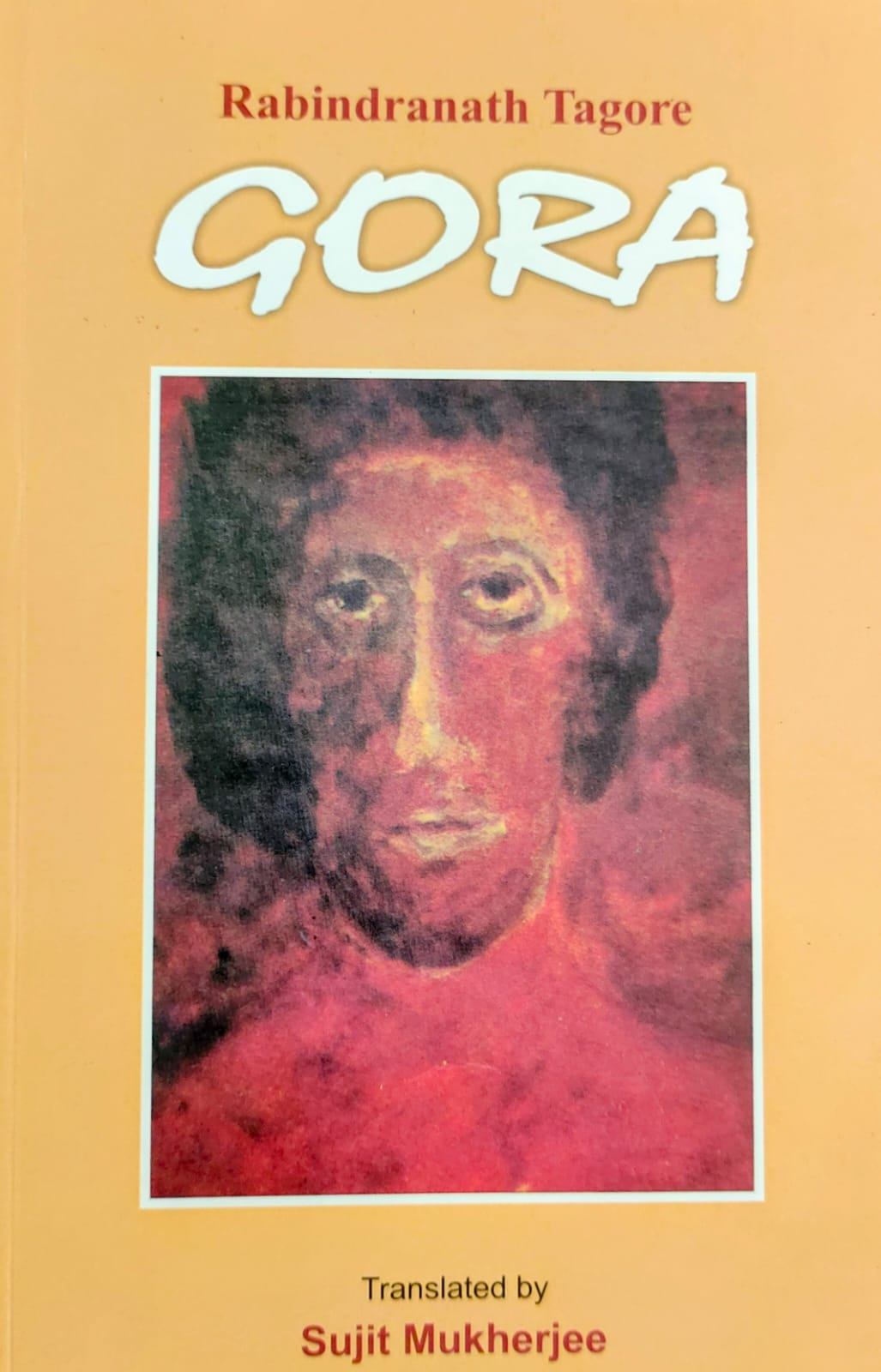
Gora
- Author Name:
Rabindranath Thakur
- Book Type:
- Description:
English Translation of Rabindranath Tagore's Bengali novel Gora. Gora consists of two parallel love stories of two pairs of lovers: Gora and Sucharita, Binoy and Lolita. Their emotional development is shown in the background of the social and political problems prevalent in India towards the end of the 19th-century. The novel is the longest novel written by Tagore. It deeply influences the Indian society and emerged as a debate between Brahmo Samaj and Hinduism.
Worlds First Book On Haiku Poetry
- Author Name:
Carlos Luis
- Book Type:
- Description:
Haiku is a very short form of Japanese poetry consisting of 17 syllables arranged in three lines of 5, 7, and 5 syllables respectively. But against all odds, this is a collection of feelings written in three lines. An economical masterpiece that Trades you through realities of life; speaking of love, relationships, paradoxes in life, you name it you have it in here.

Cheat Sheet Of A Street Fighter
- Author Name:
Abhishek Sharma
- Book Type:
- Description:
The best way to know about a man's character is to go with him for a couple of rounds in the ring. You would know more about him than he himself does. The writer started learning martial arts to get better at street fights as he invariably found himself indulging in them during his years growing up and unknowingly became a student of the combat arts until he finally settled down and had a life. Although considered a nuisance in itself and rightly so the fights that he found himself in and the combat anecdotes of the greats made contributions of the highest order in his approach and attitude towards life. The lessons learnt on the streets and in the Rings gave a definite direction to his life which otherwise was missing. He in this book has tried to comprehend these virtues for the readers and hopes to make a small contribution in the Enrichment of all those who are willing to take a hit or two with a grin on their faces. "Keep your head low, eyes high and mouth shut." - kyokushin Karate.

The Sea
- Author Name:
Swati Guha
- Book Type:
- Description:
Two strangers, Achira and Samudra wash ashore in one shared accommodation in the maddening city of Mumbai. Despite the differences in their present occupations and past wars they fought, their understanding of life’s luminescence and dark, conversations roll. Words give birth to eloquent silences, silences melt away with words oozing from deep within. Written in a unique dialogic form and masterfully translated by V. Ramaswamy, “The Sea” also quietly celebrates its eco-feminist bearing as it attempts to reveal the inner lives of humans as they weave words to connect, to acknowledge fall and rise beyond, to live and be free.

Agneyam
- Author Name:
P. Vatsala +1
- Book Type:
- Description:
Agneyam tells the story of Nangema, a Namboodiri woman forced to leave her native home in Palghat due to poverty. She journeys alone through the perilous paths of Wayanad and creates a life for herself and her family in that wild land. She was a real person, not a figment of Vatsala's imagination. Living in Wayanad, she carved out a life for herself, but as events unfolded, she returned to her native Palghat, stayed with her daughter, and died peacefully. Vatsala knew her intimately and was inspired to write her exhilarating and tragic life story as a novel, "AGNEYAM." Vatsala is one of Kerala's leading women writers. Through her, the real Nangema becomes an artistic marvel - a woman born into luxury but falling into poverty; brave enough to change her life by moving to Wayanad, working as a cook, running a small shop, and eventually owning and cultivating land. An independent and courageous woman, aided by the untamed land. This is their story. But it is also the story of the Kurichia bonded labourers, the original landowners, and their helpless, fearful, and impoverished existence. Vatsala crafts this story in her unique, feminine, compassionate, lyrical language, writing with complete empathy for her protagonist. The result is a significant literary work from a historical, sociological, and literary perspective, always emphasising the woman's point of view. Vatsala has authored many novels and short stories, but this novel stands out for its lyrical language and powerful depiction of an independent woman. The translator, Vasanthi Sankaranarayanan, is a student of literature, cinema, theater, and dance. Her doctoral dissertation focuses on "Malayalam Cinema, Society and Politics of Kerala. " As a native of Kerala with a deep interest in Malayalam literature and women's studies, this is her third translation of a Malayalam novel- her previous works being "Agnisakshi" by late Lalithambika Antarjanam and "Brashtu" by Matampu Kunhukuttan.

Until We Meet Again
- Author Name:
Ajitabha Bose
- Book Type:
- Description:
How far will you go to meet your love again? More often than not, we rekindle our hopes in the desire to hold onto things which are to be let go. More often than not, that thing is love. That's what brought together shivangi and Karan. Two people who were Poles apart from each other But shared one common thread of love. While Karan was a simple guy from next door, shivangi was a girl with big dreams. Though she had an orthodox family, their love dared to be United. Their passion had another life to run to, and so did they, until fate played its twisted game and a mishap knocked them on the door. Bestselling author ajitabha Bose brings you another heartwarming tale of love, trust and a forever you might have never read.

A Divine Tale of Destinies Shanaki Chananthaki
- Author Name:
Mahalaxami Naidu
- Book Type:
- Description:
One of the amazing things we have been given as humans is the unquenchable desire to have dreams and knack to make it happen. “A divine tale of destinies – shanaki chananthaki” a mythological tale unfolds against the back drop of Mahabharata war and throws light on the impact the war had on lives other than Pandavas and Kauravas. Growing up as a princess of a powerful kingdom, she did not have the rights to chase her dream. Chananthaki, an exceptionally beautiful princess of chanantakraj has to choose whether to chase her dream or to be an upright royal heir who has to follow the protocols of a royal princess. Will she be able to fight against all odds to accomplish her dream? Who is shanaki? Will chananthaki be able to turn shanaki’s dream into reality? Let’s find out together in this intriguing divine tale of destinies.

In Love With Shah Rukh Khan
- Author Name:
Ajitabha Bose
- Book Type:
- Description:
Everyone has a dream. It’s just that some dreams get fulfilled, and others remain confined in hearts. In love with Shah Rukh Khan by Ajitabha Bose.

Zindagi - Story of Life
- Author Name:
Vastvik Amera
- Book Type:
- Description:
Some stories are untold, some are buried deep, but every story deserves to be elicited. Authors' Ink Publications bring to you; a compendium of some unheard thoughts, some untouched emotions,some life changing stories.

Dear Moon
- Author Name:
Soumi Dutta
- Book Type:
- Description:
The story, written in an epistolary style, talks about attempts the narrator makes in order to erase the memories of her one true love, from her heart. But can such love be unremembered? Read on to find out.

Its My Love Story
- Author Name:
Ajitabha Bose
- Book Type:
- Description:
India's most popular pocket book writer brings to you his first novel. It's a story inspired from real life incidents. A story based on the college life of 6 friends. It's a love story of Aditya and janvi. Aditya is from Jamshedpur and moves to Delhi for his graduation. He aspires to become a successful filmmaker. Janvi is a delhiite and loves travelling. She dreams to settle in Italy someday. Life takes a different turn when love brought them together. What lies ahead? Where will destiny lead them? Bestselling author ajitabha Bose brings to you another heartwarming tale of love, friendship and dreams.

Memoirs of Love
- Author Name:
Arkaprava De +1
- Book Type:
- Description:
'Experience lost relationships in their most cherished memories. Even when nothing good lasts forever, some stories never cease to be. "Memoirs of Love" is one such collection of tales from the heart for the heart. Exploring a range of emotions, each story enters the world of a unique character. Moving and buoyant, this treasure trove of lost love is an indispensable book.'

Flamingos Beyond Pink
- Author Name:
Kanika Israni Karda
- Book Type:
- Description:
What would you do if your new beginning seems to be the end of something precious, if you lose the only person you’ve ever had as family, if the cost of the love you seek is compromising on who you are? Kavya On some days in your life, you don’t get a say in what happens to your dreams, you just have to swallow the lump in your throat and the pain in your heart and just let life lead you to the place it’s meant to. Maahi The most basic thing about tragedy is, that it stuns you into the kind of grief, that your entire life, the things that mattered to you, the things that used to upset you, concern you or made you happy seem like a huge bunch of lies. Ananya I believe there is a certain point in a person’s life, where they sincerely, almost desperately wish for a magic wand or a mystical creature to shed some light on what went wrong. A state where your entire world is overshadowed by the fact that you failed. And while, no one openly blurts it out on your face, you can feel it by the way people look at you. On a sudden trip to Srinagar, they find each other. Will they be able to find themselves? Flamingos Beyond PINK is a striking tale of self-discovery, heartbreak, longing, friendship and courage. The courage it takes to become who you are.

Forever - A Promise
- Author Name:
Jasbir Singh
- Book Type:
- Description:
Goal is a rich and educated man who has everything in life. Tara is a simple and beautiful girl from a small village in Kathmandu. Gopal meets Tara for the first time in his house. It is love-at-first-sight, but he has no hope that his love will be fulfilled. She does not respond to him at first, and even runs away shyly upon seeing him. But that is maybe because she has feelings for him too. Then, Tara leaves the village and no one knows her whereabouts. Goal is depressed, but there is still a little hope left in his heart. Will Gopal be able to find Tara, and will he be able to tell his feelings for her? How will she respond? Will she accept him? Will their love story begin? Will the hypocrisy of the society allow their love to prosper? Is Gopal’s love for Tara true? Or is it just like many other “love stories” now a days — merely time-pass? This is the story of how goal and Tara made their love story successful even though the whole world was against them. See the different faces of society as they put obstacles in their path, but how true love succeeds in the end. So, would you like to know how they made their love story possible, even when the whole world was against them? All right! Let’s travel through the journey of their love by reading this novel, and see the different faces of society and find answers to them all. Welcome to an old tale of friendship, love, sacrifice, and inspiration. This book will make you believe that promises are not meant to be broken. It will make you once again in the existence of true love, and that true love never dies.

The Gift
- Author Name:
Ruchi Prabhu
- Book Type:
- Description:
Don’t read this book. Do NOT read this book Go watch YouTube videos Go watch series on Netflix Go listen to some songs on Ganna.com But, Just put the book down quietly and walk away… WARNING! In this book I have had my share of experiencing romance, hatred, longing and drops the most. An individual observes a bunch to pick up nuisance of personalities and relationship dynamics of those around him/her. This book contains my way of expressing through haiku or Epigrams which evoke my personal feelings dealing with a good ending and sometimes with the ray of no hope in a scalding weather.

Nano Tales
- Author Name:
Various Authors
- Book Type:
- Description:
This book contains 38 Nano tales by different authors depicting life, motivation and inspiration. This is the world’s first book to be published on Nano tales. Nano tale is a small story written in little words with a strong message. The figure of speech used by the writers is at its best. Irony, rhetoric, sarcasm, pun, and satire are some essential tools of a Nano tale. The words are limited, but the message is loud and clear.

Our Love That Fell Apart
- Author Name:
Nupur Luthra
- Book Type:
- Description:
Brian serves grey with divorce papers, announces he’s gay and is in love with someone else. Her whole world falls apart, filled with rage, she has no one to turn too. Brian feels bad and is miserable for causing her a lot of pain, but the heart wants what it wants. Brian and his lover get married, which causes grey further pain. What happens next? How does grey deal with the pain and agony? Does it all end well or does someone die in the end? Find out in our love falls apart.

Evening
- Author Name:
Neeraj
- Book Type:
- Description:
It is a story of an Indian boy--his innocent childhood, his fascinating family, his adventurous friendship, his adorable first crush, his struggles, his pain, and his journey to the ??? Let's keep it a suspense, shall we??? It is a touching story based on real life. and it gives its readers a meaningful experience. Nikhil is a small town boy, who is enjoying his childhood with his best friend, Akshay. He has a loving family and shares a special bond with his grandfather. As the kids grow up, they face their ups and downs, failure and success, pain and wisdom. It is a cute and fascinating story about childhood , friendship and love. It's a story about school life, and all the fun and drama associated with it. So, grab a copy and relive those innocent childhood moments! A good story leaves its readers with a beautiful experience, and justifies their effort of reading it. --- NEERAJ

Customer Reviews
Be the first to write a review...
And Tomorrow Comes Another Day confronts the wreckage of intimate betrayal with unsparing honesty. Dhiani's wedded life does not merely dissolve—it is violently destroyed when her mother-in-law rapes her, a transgression that turns trust into rubble and the future into a question mark. Phani, who loved his wife to the core, must reconcile the woman he cherished with the discovery that she is a call girl. These are not tales of redemption through love or external rescue; they are portraits of two people who must decide whether to remain paralysed by trauma or to fashion a tomorrow from fragments. The novel refuses easy catharsis, tracking instead how Dhiani becomes stronger not despite her trauma but through a deliberate choice to overlook everything that seeks to define her by her violation. It is a book about the agency that survives catastrophe.
What kind of reading experience will And Tomorrow Comes Another Day give me?
This novel offers an emotionally raw and confrontational reading experience that does not soften the violence or betrayal its characters endure. The tone is direct and unvarnished, centred on psychological survival rather than dramatic climax. It moves with the uneven rhythm of trauma recovery—moments of clarity interrupted by doubt, strength built quietly rather than declared. Readers seeking comfort or romance will find instead a sober study of how people choose to continue when trust collapses. The book rewards patience and emotional maturity, leaving behind not resolution but recognition of the human capacity to carry forward.
Who is this book best suited for, and what does it expect of its reader?
This book is for readers prepared to sit with uncomfortable truths about family violence, sexual trauma, and marital deception without the cushion of literary distance. It expects you to hold space for characters who do not fit victim or survivor archetypes neatly—who make choices that may confuse or unsettle. Ideal for those interested in contemporary Indian fiction that addresses sexual violence and women's agency beyond headline narratives. Readers should bring emotional stamina and a willingness to engage with trauma not as plot device but as lived psychological reality that reshapes identity.
What is the cultural significance of this book's subject to Indian readers today?
The novel confronts two violences rarely named together in Indian fiction: sexual assault by a family member and the moral panic surrounding women's sexual labour. Both subjects remain shrouded in shame within Indian families, where silence protects reputation over survivors. By centring Dhiani's rape by her mother-in-law, the book challenges the myth that domestic spaces are safe and that women are violated only by strangers. By presenting Phani's wife without moralising her profession, it questions who is allowed complexity in stories of marriage and betrayal. These themes resonate in an India where #MeToo exposed familial perpetrators and where sex workers' voices remain marginalised.
What makes this author's treatment of trauma and survival distinctive?
The author refuses the narrative arc of healing through love or external rescue that dominates popular trauma fiction. Dhiani's strength is not discovered through a redemptive relationship or therapeutic breakthrough but through an active decision to overlook—to refuse to let violation become her entire story. This is not erasure but agency: the choice of what to carry forward. The dual narrative structure, juxtaposing Dhiani's assault with Phani's discovery of his wife's profession, resists simple victim-perpetrator binaries. Both characters are granted interiority and moral complexity, making this a study of broken trust rather than a morality tale.
What does this book leave the reader with after finishing it?
This book leaves readers with a sobering recognition that survival is not a single triumphant moment but a series of small, unglamorous decisions to continue. You will carry the weight of Dhiani's question mark—the way trauma transforms the future from a certainty into something provisional. Emotionally, it instils respect for the messy, non-linear work of rebuilding selfhood after betrayal. Culturally, it challenges readers to confront the specific violences enabled by family hierarchy and the ways Indian society punishes women's sexuality while ignoring their suffering. The lasting impression is one of quiet, uncomfortable admiration for endurance without rescue.