
Anna
₹
255
₹ 211.65 (17% off)
Available
Everyone regarded Anna as one of the most remarkable figures produced by Tamil Nadu. His greatness stems from the widespread acclaim he received from prominent leaders of his era. His various talents demonstrate his capabilities as an effective administrator, deep thinker, prolific writer, insightful journalist, and above all, a humanitarian that leaves us in awe of his literary contributions. He observed the living conditions of Tamils during his time and aimed to instigate change through his writing and speeches. Inspired by Periyar's thoughts and pride in Tamil heritage, he emerged as a towering advocate for humanism, dedicated to protecting the Tamil community and working toward their advancement. Anna once referenced influential figures like Shelley, Byron, Keats, Coleridge, Emerson, and Bacon, remarking that they are not foreigners in the truest sense. Is Tiruvalluvar simply a Tamil? They are all global citizens and educators, and Anna holds a similar esteemed position as a worldwide citizen. Anna is recognised as a pioneer in short stories that explore the tension between tradition and modernity. He is a relentless journalist and a guiding light as a dramatist. In addition to being a remarkable orator, his political acumen further defines him as the genius of his century. In summary, Anna is a true phenomenon.
Read moreAbout the Book
Everyone regarded Anna as one of the most remarkable figures produced by Tamil Nadu. His greatness stems from the widespread acclaim he received from prominent leaders of his era. His various talents demonstrate his capabilities as an effective administrator, deep thinker, prolific writer, insightful journalist, and above all, a humanitarian that leaves us in awe of his literary contributions.
He observed the living conditions of Tamils during his time and aimed to instigate change through his writing and speeches. Inspired by Periyar's thoughts and pride in Tamil heritage, he emerged as a towering advocate for humanism, dedicated to protecting the Tamil community and working toward their advancement.
Anna once referenced influential figures like Shelley, Byron, Keats, Coleridge, Emerson, and Bacon, remarking that they are not foreigners in the truest sense. Is Tiruvalluvar simply a Tamil? They are all global citizens and educators, and Anna holds a similar esteemed position as a worldwide citizen.
Anna is recognised as a pioneer in short stories that explore the tension between tradition and modernity. He is a relentless journalist and a guiding light as a dramatist. In addition to being a remarkable orator, his political acumen further defines him as the genius of his century. In summary, Anna is a true phenomenon.
Book Details
Baduku
- Author Name:
Geeta Nagbhushan +1
- Book Type:

- Description:
Dr. Geetha Nagabhushana's work primarily focuses on the struggles of the distressed, exploited, and naïve individuals from slums or the lowest strata of the Hindu caste system. Her unique storytelling provides a glimpse into real-life experiences that resonate deeply with us, rather than simply presenting fictional characters. The Kannada dialect used in "Baduku" deserves special recognition for its authenticity and cultural richness. Throughout the novel, the hardships faced by those in the lowest tiers of the Varna system are depicted without any apologies. The portrayal of women's struggles in "Baduku" serves as a critique of patriarchal society. The novel offers a comprehensive view of society, addressing various forms of atrocity and oppression, including issues related to class, caste, and gender, as well as the challenges faced by both urban and rural downtrodden communities. There is no fair treatment found in any of these intersections.

The Tale of a Place
- Author Name:
S.K. Pottekkat +1
- Book Type:
- Description:
Prema Jayakumar provides the English translation of S.K. Pottekkar's acclaimed Malayalam novel, ' Oru Deshanthinte Katha, ' published by Sahitya Akademi in 2015. The narrative centres on Sreedharan, a boy from Athiranippadam, portraying villagers' lives through the perspectives of the narrator and other characters. Set during British India, the story begins with Sreedharan's return to his hometown after more than 40 years. He is dropped near a petrol overhead tank on the site of his teenage love's house. He recounts the lives of the residents of Athiranippadam. The novel is segmented into five parts: childhood, early youth, teenage years, and a final section called "marmarangal." It features a story told by Velu Mooper, who witnesses events after Sreedharan's father's death, following his extensive travels to North India, Africa, and Europe. Throughout the story, he encounters individuals who leave lasting impressions from different stages of life, including Emma from Switzerland, a Bengali Babu, his half-brothers Kunhappu and Gopalettan (who caused him suffering by contracting syphilis), the mother goddess psyche of a Tamil Brahmin woman, with whom he longs, a girl who loved him unrequitedly before dying of tuberculosis, pranks with the " Supper Circuit Set, " lost loves, profound loneliness, his father's legendary life, and his journeys across continents. He started by dropping off his widowed mother at her family's home, initially at Elanhippoyil, then heading to Bombay- a solitary voyage into the vast, bewildering world, as SKP describes. This haunting autobiographical novel spans about 60 years of history, reflecting on themes of memory, nostalgia, hardship, dreams, and numbness. It concludes with a monologue: "Forgive me, the representative of the new generation of Athiranippadam, forgive me for trespassing into your land, and consider me merely an antique collector, a non-native!"

Daatu
- Author Name:
S.L. Bhyrappa +2
- Book Type:
- Description:
Daatu is a powerful novel that explores the rigid boundaries of caste and community in rural India, and what it takes to cross them. Set in Karnataka, the story unfolds around deeply entrenched social structures where identity is dictated by birth, and every step outside those boundaries comes at a cost. At its core, Daatu is about transgression — the act of “crossing over.” Whether it is caste, relationships, or social norms, the novel examines what happens when individuals challenge the invisible lines that define their lives. The narrative is layered with realism, capturing village life with honesty and nuance. It reflects how traditions, power, and fear shape human behaviour, while also revealing moments of resistance, dignity, and change. Recognised as a significant work in Indian literature, Daatu offers readers not just a story, but a lens into the complexities of caste, morality, and social transformation.

Carvalho
- Author Name:
K.P. Purnachandra Tejaswi +1
- Book Type:
- Description:
Carvalho is one of the most widely read and admired novels of Tejaswi. It is a novek which can be read at varioud levels as it presents many worlds. The dream if science and mystery and the everyday world of ordinary but amazing men and women. The novel explored the various facets of our complex civilisation like agriculture law and politics. It is a novel which will apppeal to readers of all ages. To Children it will appeal as a story of adventure, mystery and thrill; grown-ups can enjoy it as a work which offers stimulating insights into the world of men and women and Nature, and connoisseurs of art can see in it a baffling and inviting vision of art and metaphysics and wisdom.

Jatara
- Author Name:
Boya Jangaiah +1
- Book Type:
- Description:
Jatara is a novella (1988) that deals with the predicament of women in the countryside. It graphically captures the realities of the village society in Telangana as major and minor characters come alive. The writer presents the theme of corruption in all its stark dimensions-physical and moral degradation, psychological and emotional blackmail, and surrender to superstitions and deceit from the point of view of the protagonist. The author remains objective, a bystander, in focusing on the bright and dark sides of the rural society, on interpersonal relations, and their belief systems, while subtly suggesting what was needed. For its humanist vision and gripping narrative, the novella remains a classic in Telugu fiction.

Two Letters
- Author Name:
Upendra Nath Jha 'Vyas'
- Book Type:
- Description:
Two Letters is the English translation of the Sahitya Akademi Award-winning Maithili novel, Du Patra. The novel is structured as two letters, written by two women to two men, not to one another. The narrative centres on four characters, with the two men being the recipients of the letters. The two women, placed at opposite ends of the cultural spectrum and value systems, grapple with the fundamentals of the cultural dichotomy between the West and India, under the shadow of their personal tragedies. The novel delves deeply into the women's inner selves and psyches. The first letter is written by Indu to her husband, Surendra, who has been in the USA for about a decade. When Ramesh, a cousin of Indu, goes to the USA for about a year and meets Surendra, he is introduced to a young American woman, Jessica, with whom he develops a friendship. On coming back home, Ramesh sends a copy of Indu's letter (written to her husband) to Jessica. The second letter is written by Jessica to Ramesh. Experimental in form, the novel is pacy in prose and intense in narrative.

Parva
- Author Name:
S.L. Bhyrappa
- Book Type:
- Description:
The novel narrates the story of the Hindu epic Mahabharata, primarily using monologue as a literary technique. Several principal characters from the original Mahabharata reminisce about their entire lives. Both the setting and the context for the reminiscence are the onset of the Kurukshetra War. Parva is acknowledged as S.L. Bhyrappa's greatest work. Non-Kannadigas who have read it in its Hindi and Marathi translations consider it one of the masterpieces of modern Indian literature. It transforms an ancient legend into a modern novel. In this process, it has gained rational credibility and a human perspective. The main incident, the Bharata war, symbolic of the birth pangs of a new world order, depicts a heroic but vain effort to arrest the disintegration and continue the prevailing order. It is viewed from the standpoints of the partisan participants and judged with reference to the objective understanding of Krishna. Narration, dialogue, monologue, and commentary are all employed for its presentation. Shot through with irony, pity, and objective understanding, the novel ends with the true tragic vision of faith in life and hope for mankind. Parva has been translated into several major Indian languages: Bengali, Hindi, Marathi, Tamil, and Telugu, apart from English. The novel narrates the story of the Hindu epic Mahabharata, primarily using monologue as a literary technique. Several principal characters from the original Mahabharata reminisce about their entire lives. Both the setting and the context for the reminiscence are the onset of the Kurukshetra War.

The Best Stories of Mohapatra Nilamani Sahoo
- Author Name:
Guruprasad Mohapatra +1
- Book Type:
- Description:
The Best Stories of Mohapatra Nilamani Sahoo: This book is a translation of Mohapatra Nilamani Sahoo's short stories, written in his inimitable style. The stories, originally written in Odia, were truly representative of Odia culture and traditions; the narrative is unique and deeply emotional and carries the readers with the flow. This volume is a specimen of Mohapatra Nilamani Sahoo's short stories for the wider readership

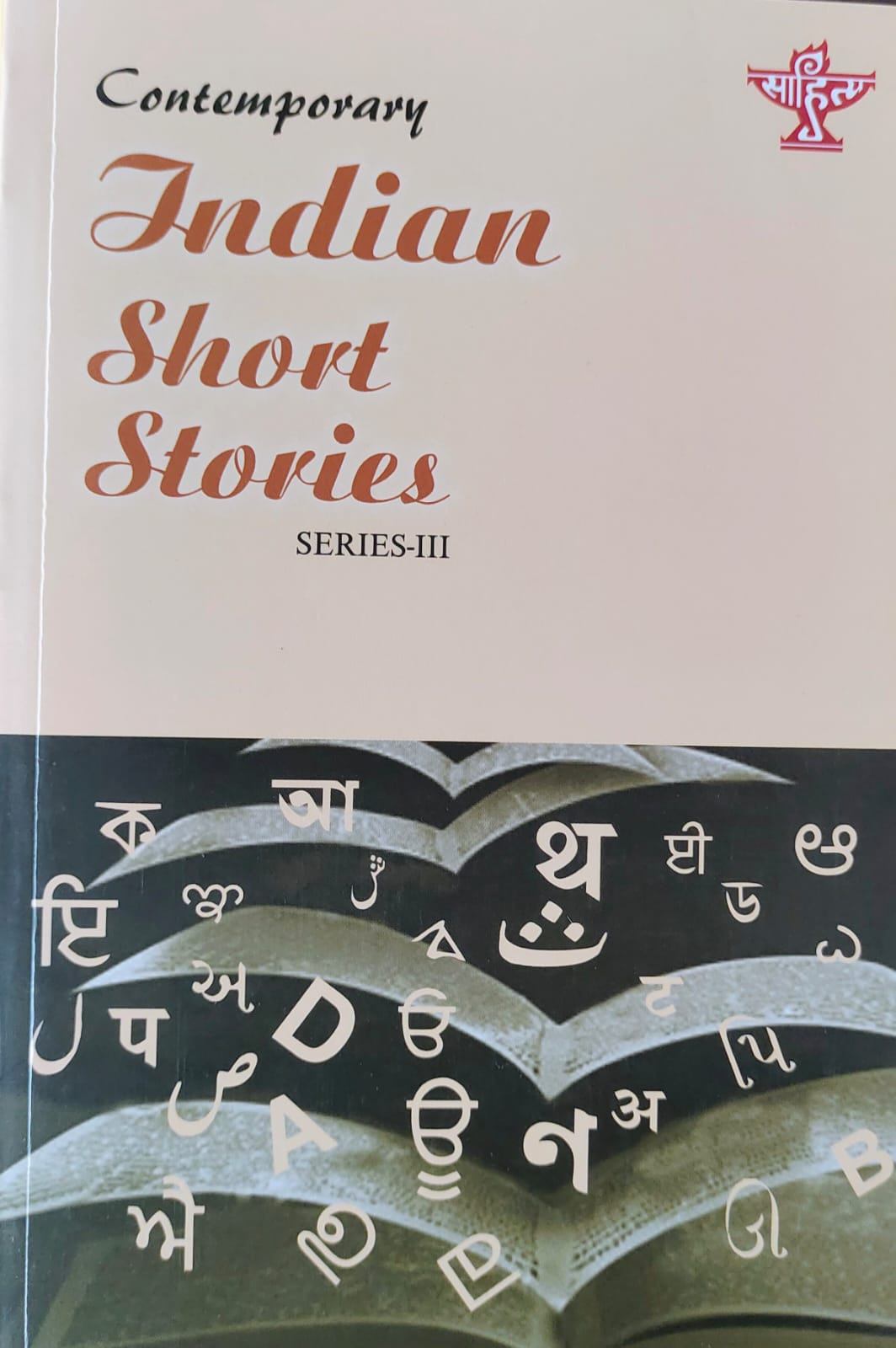
Contemporary Indian Short Stories Series III
- Author Name:
Sahitya Akademi
- Book Type:
- Description:
This sheaf of nineteen short stories, written by different authors, represents a cross-section of contemporary Indian short fiction. Eighteen stories are translations from eighteen modern Indian languages, and one is a specimen of Indian creative writing in English. Selected by the Sahitya Akademi's Advisory Boards of various languages, these stories, provide fascinating glimpses into the panorama of Indian life, with its baffling variety, its rich contrasts of the simple and the sophisticated, the ancient and the modern. Here is evidence, if such were needed that Indian literature is one though written in many languages its oneness consisting not of a stale uniformity but of a rich variety. This is the third volume of Sahitya Akademi series of such representative anthologies in English of contemporary Indian short story.
CHASO SELECTED SHORT STORIES
- Author Name:
K.Chandrahas +1
- Book Type:
- Description:
Chaso, short for Chaganti Somayajulu, was born in 1915 in Srikakulam and spent most of his life in Vizianagaram. He began his literary journey as a poet in English and later in Telugu. He was also an essayist and wrote one play. However, his true passion was the short story, which he considered a lyrical poem. His first short story, 'Chinnaaji,' published in 1942, was critically acclaimed, and by 1945 he was recognised as a leading figure and master of the genre. He set high standards for himself and, throughout a life dedicated to literature, published only about 50 stories. He was the first Telugu writer to incorporate Marxist ideas into short stories, though his stories are notably free of rhetoric. His narratives often portray the raw lives of the poor and the very poor, characterised by brevity, reticence, and compression. He was a founding member of the Progressive Writers Association. An atheist, Chaso willed his body for medical research, which his family honoured after his death in 1994.

Short Stories from Pakistan
- Author Name:
Intizar Hussain +2
- Book Type:
- Description:
The short stories - originally written in Urdu, Punjabi, Sindhi, Pushto, and Saraiki, and now translated into English - showcased in this anthology engage with the above questions in their own ways, articulating a multiplicity of voices and experiences. They chronicle the birth of the nation of Pakistan in traumatic circumstances and its chequered history over the past fifty years by depicting the "desire and aspirations, fear and horror, pride, shame, helplessness and a thousand other unnamed feelings" of their protagonists. In doing so, they also depict the immensely varied and rich tapestry of cultural life in Pakistan.

Beyond The Backyard
- Author Name:
P.Sathyavathi +2
- Book Type:
- Description:
Women’s voices no longer solely portray confinement to kitchens and backyards or victimhood. Instead, they emphasise unseen restrictions faced by individuals and significant barriers within global contexts. This collection of twenty-nine short stories covers diverse themes, complex narratives, unique characters, inventive metaphors, and alternative viewpoints. All stories aim for a just and equitable world. Key topics include Dalit, minority, and tribal issues, farmers’ struggles, new forms of exploitation in high-tech sectors under Globalisation, and existential questions, which are central to these women's writings. Over a dozen passionate translators helped bring these stories to English-speaking readers. The shift of women from victims to survivors to saviours would be even more impactful if men and women worked together to build a casteless, classless, environmentally mindful society- an aspiration our writers share.

Agneyam
- Author Name:
P. Vatsala +1
- Book Type:
- Description:
Agneyam tells the story of Nangema, a Namboodiri woman forced to leave her native home in Palghat due to poverty. She journeys alone through the perilous paths of Wayanad and creates a life for herself and her family in that wild land. She was a real person, not a figment of Vatsala's imagination. Living in Wayanad, she carved out a life for herself, but as events unfolded, she returned to her native Palghat, stayed with her daughter, and died peacefully. Vatsala knew her intimately and was inspired to write her exhilarating and tragic life story as a novel, "AGNEYAM." Vatsala is one of Kerala's leading women writers. Through her, the real Nangema becomes an artistic marvel - a woman born into luxury but falling into poverty; brave enough to change her life by moving to Wayanad, working as a cook, running a small shop, and eventually owning and cultivating land. An independent and courageous woman, aided by the untamed land. This is their story. But it is also the story of the Kurichia bonded labourers, the original landowners, and their helpless, fearful, and impoverished existence. Vatsala crafts this story in her unique, feminine, compassionate, lyrical language, writing with complete empathy for her protagonist. The result is a significant literary work from a historical, sociological, and literary perspective, always emphasising the woman's point of view. Vatsala has authored many novels and short stories, but this novel stands out for its lyrical language and powerful depiction of an independent woman. The translator, Vasanthi Sankaranarayanan, is a student of literature, cinema, theater, and dance. Her doctoral dissertation focuses on "Malayalam Cinema, Society and Politics of Kerala. " As a native of Kerala with a deep interest in Malayalam literature and women's studies, this is her third translation of a Malayalam novel- her previous works being "Agnisakshi" by late Lalithambika Antarjanam and "Brashtu" by Matampu Kunhukuttan.

Draupadi
- Author Name:
Yarlagadda Lakshmi Prasad +1
- Book Type:
- Description:
Draupadi, originally written in Telugu, was first serialised in Andhra Jyoti before it came out in book form. The novel presented in a unique style, is not just an account of the different incidents occur around Draupadi but these incidents have been fused together into a fascinating story. The narrative process and the structural method of description used by Lakshmi Prasad fully engage the reader.

Something Unspoken Too
- Author Name:
Prem Parkash +1
- Book Type:
- Description:
Something Unspoken Too, Kujjh Ankeha Vi, which won Prem Parkash the prestigious Sahitya Akademi Award in 1992, is now being rendered into English as Something Unspoken Too. Most of the stories iun this collection bear testimony to this unique facet of Prem Parkash's art and craft, through which he searches for the hidden, the unrevealed, the mysterious and the unspoken, all in an effort to understand the complexities of human motives and actions. Thestories in this collection move precariously across the spectruuum of words and silences, giving rise to spaces in which the unarticulated can aesthetically be located. Prem Parkash is a 'poet' of the twilight zone, a wanderer of forbidden territories and a cartographer of complex human relationships.

Rocks of Hampi
- Author Name:
Chandrasekhar Kambar +1
- Book Type:
- Description:
Chandrasekhar Kambar draws his strength deeply from folklore as well as contemporary life and his poems are embodied in an earthyly, sensual language. His poetry works at a different altogether from what logical and analytical prose does. Profound insights into life get expressed metaphorically in him. English translation by O.L. Nagabhushan Swamy of Chandrasekhar Kambar's Kannada poems. Sahitya Akademi 2004.

Mystery of the Missing Cap and Others Award Winning Stories
- Author Name:
Manoj Das
- Book Type:
- Description:
Mystery of the Missing Cap and Others Stories, originally published as Manoj Dasanka Katha O Kahini was the first collection of short stories in Odia to receive the Sahitya Akademi Award (1972). The collection spans twenty-two years of the writer's contribution to Odia short story. While Sri Das has won wider recognitions through his subsequently written stories, roping into the circle of his admires writers like Graham Greene and H.R.F. Keating, this collection marks a mile stone in the evolution of Odia fiction, infusing into the genre of short stories a neew vitality through a combination of deep psychological insight into characters and situations and a remarkable precision in sytle. The translation is by the author himself whoalso occupies a special places in Indian writing in English.

Indian Stories Vol 1
- Author Name:
K. Sreenivassarao
- Book Type:
- Description:
Volume 1 of Indian Stories is a curated selection of short stories translated into English from various Indian languages. This volume goes beyond being a simple collection; it captures the evolving social conditions and value systems over the past sixty years. The diverse stories showcase the richness of Indian culture and tradition, while also featuring universal elements that resonate with contemporary audiences and other cultures. The narratives within this anthology reflect the essence of India over time, weaving in mystical elements as they bridge the past and present. The dynamism, wisdom, and human qualities present in these tales ensure their relevance for generations. This is the first volume in a series, with each installment designed to highlight different aspects of Indian culture.

Indian Short Stories 1900 To 2000
- Author Name:
E. V. Ramakrishnan
- Book Type:
- Description:
This collection of 43 stories from 21 languages highlights India's diverse and intricate life. They depict everything from the chaos and mass hysteria of partition to the suppressed anger and self-pity of people trapped in broken homes. These narratives explore both outer experiences and internal struggles within Indian society. The stories emphasise the sacred and the profane, as well as the voices of the elite and the marginalised, serving as mirrors for self-reflection. Together, these tales trace a transformative century during which India emerged as a unified nation. The vivid imagery from the tumultuous 20th century is both disturbing and enlightening.

My Father’s Friend and Other Stories
- Author Name:
Ashokamitran +1
- Book Type:
- Description:
Ashokamitran published the collection of stories called Appavin Snehidar (My Father's Friend) in 1991. All the stories are shot through with a comic vision that marks Ashokamitran's and nine short stories, all of which were written between 1990 and 1991. Ashokamitran writes in a spare and understated style about the changing cityscape in India today, and about the lives of ordinary men and women caught up in the tragic circumstances of every day life. All the stories are shot through with a comic vision that marks Ashokamitran's work and gives it its compassion.

Customer Reviews
Be the first to write a review...
Anna opens not with political chronology but with the force of a personality who commanded respect across ideological lines in mid-20th-century India. C.N. Annadurai—known simply as Anna—was a rare convergence: a Chief Minister who wrote plays, a journalist whose editorials ignited mass movements, a Dravidian leader whose humanism transcended party lines. Published by Sahitya Akademi, this portrait examines how Annadurai observed the social fractures of Tamil society and responded not only through governance but through literature—prose that named injustice, drama that rehearsed dignity. What distinguishes this treatment is its focus on Anna as a writer first, whose literary contributions were inseparable from his politics. The book situates his work within Tamil Nadu's linguistic pride movements, caste reform debates, and the cultural assertion that redefined South Indian identity in the decades following Independence.
What kind of reading experience does this book about Anna offer?
This book offers a reflective, layered reading experience that privileges insight over chronology. Rather than a conventional political biography, it approaches C.N. Annadurai as a figure whose greatness resided in multiplicity—administrator, thinker, writer, humanitarian. The tone is admiring but analytical, examining how literary talent and political vision reinforced one another. It rewards readers who value intellectual biography, who want to understand how words on a page translate into social transformation, and who are curious about the cultural currents that shaped post-Independence Tamil Nadu.
Who is this book best suited for and what does it expect of its reader?
This book suits readers with an interest in South Indian political history, Dravidian ideology, or the intersection of literature and public life in India. It expects no prior expertise but rewards some familiarity with Tamil Nadu's linguistic pride movements and caste reform debates. Ideal for students of Indian political thought, general readers curious about regional leaders who shaped national discourse, and anyone interested in how a writer's prose can become a society's conscience. The book assumes a reader willing to engage with ideas, not just events.
What is the cultural significance of Anna's legacy to Indian readers today?
Anna's legacy speaks directly to contemporary debates about linguistic federalism, regional identity, and social justice in India. His insistence that governance must be rooted in cultural dignity—not just economic development—resonates in an era where language politics, caste representation, and regional autonomy remain live issues. The Dravidian movement he led redefined what it meant to be Tamil and Indian simultaneously, a dual identity many regions still negotiate. His example of a leader who wielded both pen and policy offers a model for public intellectuals today.
What makes this Sahitya Akademi treatment of Anna distinctive?
This treatment foregrounds Anna's identity as a literary figure rather than only a political one. Where many accounts focus on electoral victories or administrative reforms, this book examines his plays, journalism, and essays as primary instruments of social change. It highlights how his writing named caste hierarchies, rehearsed democratic dignity, and mobilized mass sentiment in ways speeches alone could not. The Sahitya Akademi perspective privileges his contributions to Tamil prose and drama, positioning him within India's literary history as much as its political one.
What does this book leave the reader with after finishing it?
- An understanding of how literature can function as political architecture—shaping ideology, mobilizing communities, and institutionalizing reform
- A portrait of leadership grounded in humanism, where policy emerges from empathy rather than expediency
- A sense of Tamil Nadu's distinct trajectory within Indian federalism, rooted in linguistic pride and social reform
- Appreciation for the intellectual depth required to translate ideas into movements and movements into governance
- Questions about what contemporary Indian politics has lost—or retained—of Anna's model of the writer-administrator