
The Nostalgia Trap in Indian Reading
Ever Wondered?:
- Indian readers still heavily gravitate toward older, classic Indian novelists. Why?
- Is it a matter of content quality, nostalgia, or just a lack of discovery of new authors?
- Are contemporary authors doing something wrong, or are they just getting started?
- How marketing, algorithms, and human brain patterns shape reading choices
- Is the problem with readers… or the emotional shadow cast by legendary names?
- A humorous yet honest take on how "compare mode" might be killing new literature.
- Suggestions for readers, publishers, and writers to break this cycle
“In the Beginning, There Was Premchand…”
Let’s admit it.
Every time someone asks for a recommendation in Indian literature, the conversation goes something like:
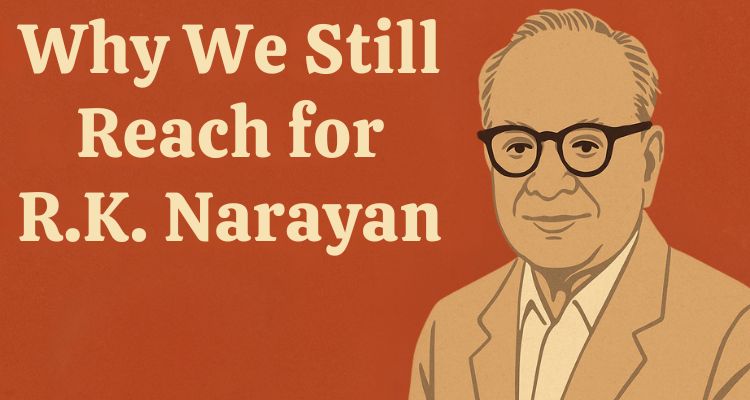
“Arre, read R.K. Narayan. Have you read Malgudi Days? Or something by Tagore, maybe… or Ruskin Bond?”
“What about this new writer? This debut novel looks really interesting!”
“Oh… hmm… okay… but is it like Narayan’s work?” 🤔
And just like that, a perfectly fresh contemporary book gets thrown into a literary cage match with a legend from a different century.
Why Do We Still Crave the Classics, or Is This Just a Show-off?
Let's understand them from both sides.
Classics are a security blanket of nostalgia. Books by old masters feel like your grandmother’s rajma chawal: comforting, familiar, and immune to criticism.
You’re not reading just a story. You’re reading your childhood. Or at least your idea of India in sepia tones.
From Class 7 Hindi textbooks to BA English syllabi, we are raised on a steady diet of Premchand, Mulk Raj Anand, and Rabindranath Tagore.
No one gave us "How to Read New Indian Literature Without Guilt."
“Old is gold,” they say. But sometimes gold gets a bit too shiny.
Just because R.K. Narayan’s work remains relevant doesn’t mean today’s stories are irrelevant.
(Also: we don’t do this in music. No one says, “Arijit Singh is okay, but have you heard Lata Mangeshkar in 1954?”)
For many non-readers, classics are the safest hill to climb socially. They’re unimpeachable, widely known, and carry the cultural weight of someone “deeply literary.” No risk, no effort, maximum literary street cred.
But here’s the twist: Real readers explore.
They don’t gatekeep. They don’t fear unknown names.
They discover, and they discuss, without needing to prove anything.
Remember: The bookshelf is for reading. Not just flexing.
Where Do Contemporary Indian Writers Stand?
Let’s be honest—some are flourishing. Think:
- Perumal Murugan (translated Tamil fiction breaking barriers)
- Geetanjali Shree (Booker-winning Hindi fiction)
- Anuk Arudpragasam, Meena Kandasamy, and Manoj Rupda - all pushing boundaries
But for every one name doing well, a hundred others are trying to get noticed under the shadow of literary grandpas.
Why Aren’t Contemporary Writers Always ‘Trending’?
The “Compare Mode” Problem
Readers often start new books by wondering:
"Is this like Khushwant Singh?”
"Would Rushdie have written this better?"
It’s like expecting every new actor to match Amitabh Bachchan’s baritone or every cricketer to bat like Tendulkar. Impossible, right?
Marketing Has Replaced Merit (Sometimes)
Let’s face it:
The book with the best trailer wins.
Today, algorithms influence authority. The best-written book may sit quietly while a mediocre one goes viral with a clever Instagram reel.
But… isn’t that how everything works now? From samosas to cinema?
Reader Habits: The Algorithm in Our Heads
Our brains are pattern-obsessed.
If we’ve liked three old-time writers, we automatically look for the same rhythm, style, voice, and simplicity.
New writers may challenge form, use multiple timelines, mix dialects, or go nonlinear, and suddenly, a reader’s brain goes:
“This is confusing. Where’s the quiet bench in Malgudi?”
Are Readers Afraid of Unlearning?
Maybe...
But can we blame them entirely?
- Older literature was often slow, reflective, and written in a simpler world.
- Contemporary writing reflects a chaotic, social-media-obsessed India.
- Themes are darker: identity, caste trauma, environmental collapse, and gender politics.
The problem?
Contemporary Indian writers are holding a mirror to a very messy reality.
And not all readers want to look.
It’s Not Just the Readers’ Fault as Well,
Writers, too, are navigating:
- Platform fatigue (write, post, promote, repeat)
- Genre wars (write for love or write for reels?)
- Language politics (Write in English to reach? Or Hindi to be “authentic”?)
- Over-publishing (90,000+ titles every year in India!)
Sometimes, the best voices get drowned out in a flood of mediocrity.
Why Some Contemporary Books Still Break Through
Books like:
- Tomb of Sand (Geetanjali Shree)
- The Illicit Happiness of Other People (Manu Joseph)
- The Goat Thief (Perumal Murugan)
- Just Like Papa (Nandita da Cunha)
They succeed not by mimicking old writers but by finding new readers and new platforms.
They also benefit from:
- Strong editorial support
- Literary awards
- Regional-to-English translations
- Marketing with soul (not just slogans)
Maybe This Is Just How Human Brains Work?
We fear the unknown. We value what we’ve already emotionally invested in.
And literature is, ultimately, an emotional investment.
Readers don’t need to unlearn older stories.
They also need permission to enjoy new stories without guilt or comparison.
So if you’re a reader stuck between The Guide and Girl in White Cotton — know this:
It’s okay to love both. One for what it was. One for what it is.
A Checklist for Change, which I would like to suggest
If you're a reader:
- Don’t compare every new book to the old guard.
- Take a chance on a debut author.
- Explore Indian language translations.
If you're a writer:
- Don't chase "classic-ness". Chase truth.
- Your voice is your USP.
If you're a publisher:
- Balance nostalgia with newness.
- Don’t market every new book as “like XYZ legend”—let it stand on its own.
Most importantly, Old Indian writers wrote for their time.
New Indian writers are writing for this time.
So, let’s stop making them fight for the same space.
Read the old.
Support the new.
And for heaven’s sake, don’t ask every debut novelist if they’re “the next Ruskin Bond.”
Let them be the first them.











Add a comment
Add a comment