
The Hidden Cost of Free PDFs
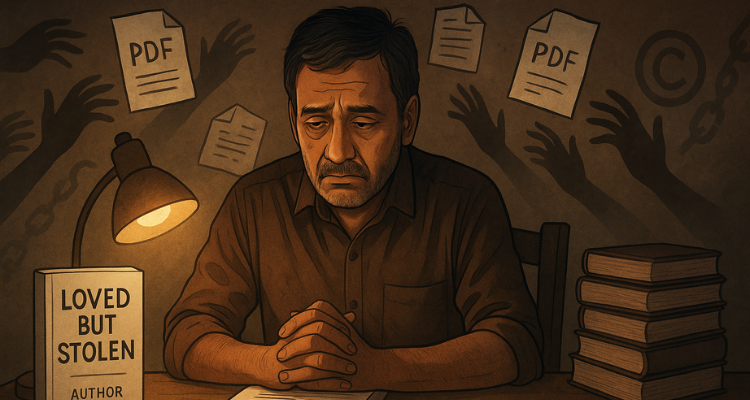
In our country, storytelling is woven into the cultural fabric, and the written word holds immense power.
Yet, beneath the rising interest in reading lies a silent crisis: piracy—particularly through unauthorised PDF sharing—is slowly eroding the very foundation of a writer’s livelihood.
The Numbers Tell a Troubling Story
Book piracy in India is not a fringe problem—it’s a mainstream challenge.
- According to the FICCI Publishing Report (2020), India’s book piracy rate stands between 25% to 30% of the total market.
- Digital piracy saw a 62% increase between 2020 and 2022, primarily due to unauthorized book-sharing via Telegram, WhatsApp, and Google Drive links (Statista, 2023).
- A Publishing Next report (2022) highlighted that 80% of Indian language authors face income loss due to piracy and a lack of proper royalty distribution.
In an age where PDFs of newly launched books go viral within hours, the ripple effects are far-reaching and devastating for creators.
So, What Does a Writer Lose?
Behind every book is a person who spent months—sometimes years—writing, editing, and reworking every page, networking, travelling and whatnot. Publishing isn’t just a passion; it’s a profession for Indian writers, especially those writing in regional languages, and every sale matters.
Let’s break it down:
- In traditional publishing, an author typically earns ₹10 to ₹25 per copy sold. (assuming book price is in the range of ₹299 to ₹399)
- In self-publishing, platforms like Kindle Direct Publishing or Rachnaye may offer slightly higher margins—₹50 to ₹70 per book, assuming a price point of ₹299 to ₹399 for the book.
- If 1,000 readers access a pirated version instead of buying it, a writer may lose between ₹25,000 and ₹70,000 in royalties.
This is not just numbers on paper—it’s rent, groceries, healthcare, or school fees. It’s demoralizing when your work spreads widely but earns nothing.
Where Did It All Begin?
India’s journey with free content-sharing was born out of good intentions. During the 1990s and 2000s, the scarcity of affordable academic books led to a culture of sharing PDFs among college students and in communities. Literature was shared in digital form, often to break the elitism of access.
However, the line blurred when mainstream fiction, poetry, and indie literature were included. In the name of "free access", thousands of contemporary Indian authors—especially those without the financial backing of big publishing houses—began losing their primary source of income.
The shift from revolution to exploitation was subtle, but it happened.
The Emotional Toll on Writers
Piracy isn’t just an economic wound. It’s emotional.
Imagine pouring your soul into a novel, only to find it circulating freely in PDF groups within a week of its launch. It feels like performing for a full auditorium where nobody paid for the ticket. There’s applause—but no acknowledgement.
Art is one of the few professions where people still believe the product should be free. But creativity is labour. Just like a doctor charges for consultations or a carpenter for their craft, a writer deserves to be paid.
The Reader’s Dilemma is Real
Of course, it’s important to acknowledge the reader’s side too. Many young readers, students, and early-career professionals genuinely cannot afford a ₹400 book every week. In a country where minimum wages are still low, access to quality reading material must remain a priority.
But there’s a difference between "can’t afford" and "don’t want to pay".
And here lies the hope: ethical alternatives exist.
A Better Ecosystem is Possible
It’s time we build a fairer system—one where both readers and writers thrive. Some encouraging shifts are already happening:
STOP asking for discounts on Books:
Publishers, if they want to survive in the long term, need to treat publishing as a business where they must maintain a margin, even if it is a small one or cover the costs. They have costs for editorial, royalties, illustrations, printing, binding, distribution, and others, so they will raise the book's price to account for the discount requested by the reader. A cultural shift, supported by other factors, is necessary to limit discounts, allowing book prices to be controlled and remain affordable for readers.
Library Movements:
Rachnaye’s initiative to deliver books to apartment complexes is bringing back the joy of community reading—offering legal and affordable access to physical books.
Micro-Donations & Direct Support:
Some platforms now allow “Pay What You Can” or donation-based models. Even leaving a review or buying a ₹99 eBook can help sustain a writer’s journey.
What Can Readers Do?
If you love books, supporting writers is one of the most powerful things you can do. Here’s how:
- Buy when you can. Even digital formats, like ebooks or audiobooks, help keep the cycle alive.
- Avoid pirated PDFs. It may seem harmless, but it has a direct impact on writers.
- Share legal links. Platforms like Rachnaye make discovery easy and affordable.
- Gift books. Give literature the same priority as gadgets or apparel during festivals, birthdays, and parting gifts.
- Leave reviews. Amazon, Goodreads, and Rachnaye reviews amplify visibility and credibility.
- Engage with the writer. Follow them, support their events, share their work ethically.
A Culture Shift is Needed
Yes, free PDFs once served a purpose—breaking class barriers and offering access. But that phase must evolve. In 2025, we have the tools to distribute content equitably. We need to stop hiding behind affordability and start recognizing the real cost of consuming unpaid work.
Writers don’t ask for sympathy. They ask for sustainability. Because if good writing isn’t valued, it won’t last.
Every time you share a free PDF, ask yourself: Am I supporting the writer, or suffocating them silently?
Let’s not kill the goose that lays the golden words. And I understand, Books are not luxury goods. But they’re not public property either*.
*Generally, copyright protection for a book lasts for a specific period (often 60 years after the author's death in India). After this period, the work enters the public domain, meaning it can be used freely by anyone. It can be used freely by anyone without requiring permission or payment of royalties. This includes republishing, translating, adapting, or creating derivative works.





Add a comment
Add a comment