
Not All Editing Is the Same
Not All Editing Is the Same. And That’s Where Most Writers Go Wrong.
Why manuscripts fail, relationships sour, and good books get misunderstood—because we use one word for five very different jobs.
There’s a moment every editor knows well.
A writer receives feedback and says, “But this is just your opinion.”
Or worse: “Why are you changing my voice?”
What usually follows isn’t an argument about craft.
It’s an argument about what kind of editing was supposed to happen in the first place.
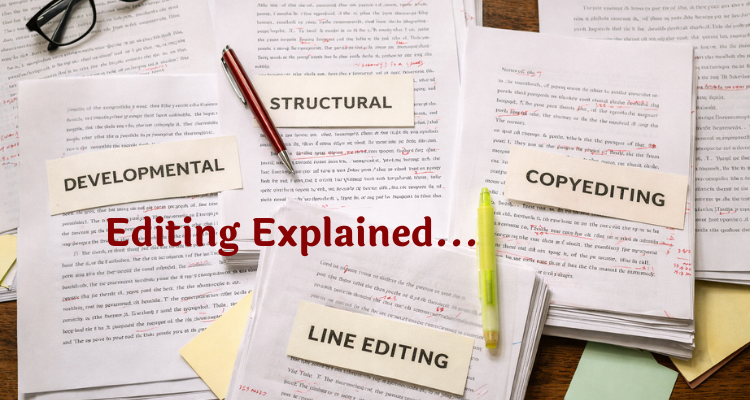
Indian publishing—across languages—uses the word editing as a catch-all. Writers use it to mean “fix my grammar.” Editors use it to mean “make the book work.” Publishers use it to mean “prepare this for market.”
That single word conceals at least five distinct forms of labour, each with different goals, powers, risks, and data pressures.
Most confusion, resentment, and disappointment between writers and editors begins right there.
So let’s name things correctly.
Developmental Editing: Editing the Book That Wants to Exist
This is the most misunderstood—and the most consequential—form of editing.
Developmental editing focuses on the book's architecture, not the surface of the sentences. It asks questions that feel invasive because they are.
- What is this book really about?
- Where does it lose momentum?
- Which characters matter, and which ones are emotional clutter?
- Does the ending earn its authority—or collapse into convenience?
This is the stage where editors suggest:
- Cutting entire chapters
- Reordering sections
- Removing beloved subplots
- Changing narrative distance or point of view
For writers, this can feel like a threat to authorship.
For editors, it’s an act of responsibility—to the reader, the publisher, and the book’s long-term life.
Where writers get confused
Many writers think developmental edits are stylistic preferences. They’re not. They’re structural interventions. When writers push back with “but that’s my style,” they’re answering the wrong question.
The editor isn’t asking how you write.
They’re asking why this book exists in this form at all.
Where data quietly enters
Developmental edits are increasingly shaped by:
- Reader drop-off patterns
- Past sales of similar narrative structures
- Feedback from distributors and libraries
- Attention-span realities in different formats (print vs digital vs audio)
That doesn’t mean data dictates content—but it frames risk. Editors know which structural weaknesses cost books their second printing.
Pros
- Makes the book coherent, purposeful, and durable
- Prevents shallow praise and profound reader fatigue
- Often, the difference between “interesting” and “important”
Cons
- Emotionally exhausting
- Time-consuming
- Can flatten originality if handled without care
This is where trust matters most—and where power imbalances hurt the most.
Structural Editing: When the Book Exists, But the Spine Is Crooked
Often confused with developmental editing, structural editing works within an agreed vision of the book.
The editor is no longer asking what the book is, but how well it holds together.
This includes:
- Chapter length and rhythm
- Repetition of themes
- Logical sequencing
- Narrative balance
If developmental editing asks, “Is this the right building?”
Structural editing asks, “Why are the stairs collapsing?”
Where writers get confused
Writers often think structural edits are nitpicking. They’re not. Structure is how readers experience authority. A structurally weak book may still be beautifully written—but it won’t be trusted.
The data factor
Structural editing increasingly responds to:
- Reader reviews mentioning “drag,” “confusing,” or “slow”
- Chapter-based consumption patterns (especially for digital readers)
- Audio performance data (where repetition is fatal)
Pros
- Improves readability without altering voice
- Helps books survive format shifts (ebook, audio)
Cons
- Can feel mechanical
- Often invisible when done well, leading writers to undervalue it
Line Editing: Where Style Meets Discipline
This is the stage most writers think editing is.
Line editing works at the level of:
- Sentence rhythm
- Word choice
- Redundancy
- Emotional precision
A line editor isn’t fixing grammar. They’re shaping how the voice breathes.
This is where editors remove:
- Overwriting
- Performative cleverness
- Unintentional melodrama
- Repetitive metaphors
Where writers get confused
Many writers see line edits as an attack on voice. In reality, line editing is about protecting voice from its own excesses.
The problem arises when:
- Editors impose their personal aesthetic.
- Writers equate ornamentation with originality.
The data factor
Line editing is now influenced by:
- Readability metrics
- Translation potential (especially across Indian languages)
- International distribution requirements
This is controversial, but real: sentences that travel poorly across formats often get tightened early.
Pros
- Sharper prose
- Stronger emotional impact
- Better reread value
Cons
- Risk of homogenisation
- Editors with heavy hands can erase regional texture
Copyediting: The Most Visible—and Least Transformative Stage
Copyediting is about correctness and consistency:
- Grammar
- Punctuation
- Spelling
- Style guides
- Timeline errors
It is essential. It is also where many writers wrongly expect miracles.
Where writers get confused
Writers often believe copyediting will “fix” a weak manuscript. It won’t. A cleanly copyedited bad book is still a bad book—just easier to criticise.
The data factor
Copyediting increasingly intersects with:
- Searchability (names, keywords, consistency)
- Digital discoverability
- Citation accuracy
Pros
- Professional finish
- Reader trust
- Reduces embarrassing errors
Cons
- Does not improve storytelling
- Often undervalued, underpaid labour
Proofreading: The Last Defence, Not the First Solution
Proofreading happens after everything else. It catches:
- Typos
- Formatting glitches
- Missing words
- Layout issues
It is quality control—not editing.
Where writers get confused
Writers sometimes skip earlier editorial stages and expect proofreading to compensate. This is like repainting a cracked wall and hoping no one notices.
Pros
- Essential for credibility
- Prevents costly reprints
Cons
- Too late to fix real problems
- Often rushed due to production deadlines
The Real Problem: We Don’t Name the Contractual Truth
Most Indian publishing contracts and conversations fail to specify:
- What type of editing is included
- How much negotiation is allowed
- Who has final say at each stage
This ambiguity benefits institutions, not writers.
When expectations aren’t named, power fills the gap.
What Writers Should Ask—Before Editing Begins
Not defensively. Professionally.
- What type of editing is this?
- What is negotiable, and what is not?
- What data or constraints are shaping these edits?
- What is the timeline—and can it be adjusted?
These questions don’t make you feel difficult.
They keep you informed.
A Final, Uncomfortable Truth
Editing is not neutral.
Market logic, reader data, institutional memory, personal taste, and cultural bias shape it.
But when each type of editing is named clearly, something shifts.
Conversations become collaborative.
Disagreements become productive.
And books become better—without becoming safer.
The problem was never editing.
The problem was that it was treated as a single issue.





Add a comment
Add a comment