
Swipe, Scroll, Read
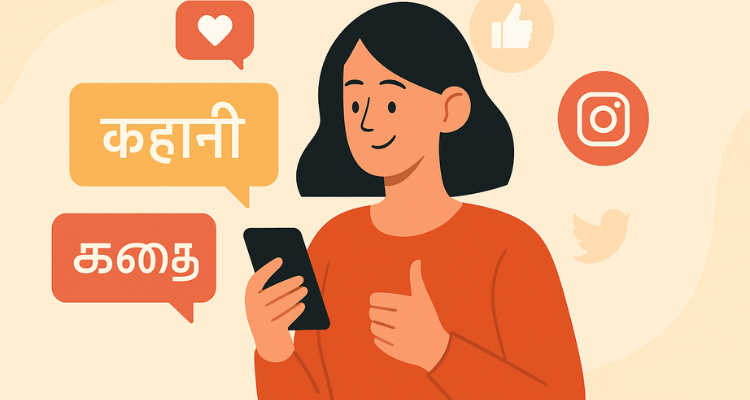
The first time I came across a beautifully narrated Santali folktale on Instagram Reels, I paused.
Not because it was "viral", but because it existed.
I’ve often oscillated between despair and hope.
Despair, when I see young Indians unable to string two sentences in their mother tongue;
Hope, when I stumble upon a Telugu poem going viral or a Chhattisgarhi storyteller gaining thousands of followers in a week.
So, I ask again: Can social media save Indian languages?
How Many Languages Are We Losing?
India, i.e. Bharat, is a linguistic goldmine. We have 424 living languages, and more than 1600 dialects.
But here’s the darker reality:
- UNESCO lists 197 Indian languages as endangered, including critically endangered ones like Majhi, Saimar, and Gorum.
- The People’s Linguistic Survey of India (PLSI) estimates that one language dies every 30–40 years in India. By the end of the 21st century, we could lose over 400 languages.
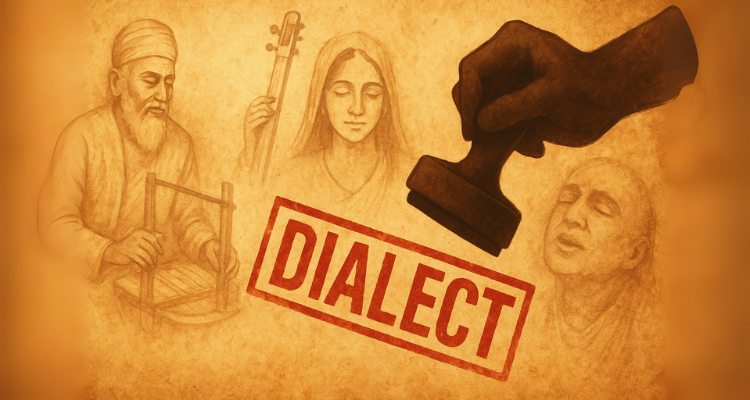
Why? Urbanisation, migration, English-medium education, and a social shift where speaking your native language is often seen as “uncool.”
Enter Social Media: The Surprise Saviour
When I began this research five years ago, I thought I’d end up writing a eulogy for Indian languages. Instead, I find myself writing a love letter to an unlikely ally: social media.
Here’s how platforms are becoming playgrounds for linguistic revival:
1. Visibility of Regional Voices
Take a quick look at trending YouTube Shorts, Reels, or even Twitter threads. Content in Bengali, Bhojpuri, Haryanvi, and Tamil routinely garners millions of views.
Platforms like Josh, ShareChat, Moj, and Takatak operate in multiple Indian languages and have user bases surpassing 300 million collectively.
2. Memes, Comedy, and Dialect Pride
The rise of meme pages like Tamil Padam Memes, Kerala Trolls, or Bihari Vines shows how humour in local languages creates cultural pride. One well-timed meme in Awadhi can reach more people than a traditional folk song performance.
3. Poetry and Micro-literature
Instagram poetry accounts like @hindipoetryworld or @banglapoetry have thousands of followers. I’ve seen Manipuri haikus, Kashmiri proverbs, and even Marathi couplets getting more engagement than some mainstream celebrity posts.
4. Voice-First Revival
Audio platforms like Kuku FM and Pocket FM are doing in audio what Doordarshan once did in broadcast, reviving regional stories. Their top-performing categories? Indian mythology, horror, and romance in the local language.
But Here’s the Catch: Platform Algorithms Don’t Care About Culture
Most algorithms are built to push content based on engagement, not preservation.
This is where curated platforms with a mission come in. And this is where Rachnaye deserves a spotlight.
Rachnaye: A New-Age Ecosystem for Indian Languages
As a researcher, I stumbled upon Rachnaye.com during a digital literature webinar. What caught my eye wasn’t just its library; it was its mission: To revive Indian languages through digital storytelling.
Let me explain how Rachnaye is going beyond the usual ‘scroll-and-forget’ engagement model:
1. Storytelling in Every Dialect
From Malayalam to Maithili, Rachnaye allows authors to write, translate, and earn in their native language. It’s like Wattpad, but for Indian linguistic diversity.
2. Digital Earning for Native Creators
Writers can monetise their content, whether it's a short story, a children’s picture book, or even a serialised novella.
3. Bridging Writers and Publishers
Through its AI-powered recommendation engine, Rachnaye connects new-age writers with regional publishers. A Bhojpuri poet from Gorakhpur can now reach a publisher in Patna without ever leaving their village.
4. Language-First Design
The UI is built to accommodate readers who are more comfortable in Hindi, Marathi, Tamil, or even tribal languages. Unlike platforms that treat local languages as an afterthought, Rachnaye begins with them.
What’s Working Well
- Low Barrier to Entry: Anyone with a smartphone and basic literacy can become a content creator.
- Instant Gratification: Likes, comments, and shares give creators emotional validation, something traditional publishers rarely offer.
The Challenges
- Standardisation vs Dialect Diversity: How do you create a Marathi language interface that respects both Pune Marathi and Khandeshi?
- Lack of Digital Literacy: Many native speakers of dying languages are not tech-savvy.
- Monetisation Confusion: Most creators struggle to understand how to license their content and protect their IP rights.
What Needs to Happen Next
- Government + Platform Collaborations: Like the Digital India Bhashini initiative, public-private efforts should focus on AI training models in regional languages.
- More Language Tech Grants: Fund startups like Rachnaye to build multilingual NLP, speech-to-text engines, and content recommendation models.
- Mentor Programs for Writers: Experienced authors can mentor new writers in dialect-rich formats, encouraging oral-to-digital transitions.
- Media Literacy Education: Include modules in schools on creating and understanding content in Indian languages.
A Researcher’s Hopeful Scroll
We may be losing languages, yes. But we are also, for the first time in modern history, seeing the possibility of preserving them not through ivory tower interventions but by 15-second videos, community storytelling, and yes, "memes" as well.
Rachnaye isn’t just a platform. It’s a movement. One that sees language as not just a means of communication but as a living, breathing heritage.
So next time you swipe through a reel or scroll past a short story in Konkani or Garhwali—pause. Read. Share. Celebrate.
Because the revival of Indian languages might just be in your next scroll.











Add a comment
Add a comment