
The Gita For Children
₹
299
₹ 245.18 (18% off)
Available
It's one of the oldest books in the world and India's biggest blockbuster bestseller! - But isn't it meant only for religious old people? - But isn't it very long... and, erm, super difficult to read? - But isn't the stuff it talks about way too complex for regular folks to understand? Prepare to be surprised. Roopa Pai's spirited, one-of-a-kind retelling of the epic conversation between Pandava prince Arjuna and his mentor and friend Krishna busts these and other such myths about the Bhagavad Gita. Lucid, thought-provoking and brimming with fun trivia, this book will stay with you long after you have turned the last page.
Read moreAbout the Book
It's one of the oldest books in the world and India's biggest blockbuster bestseller!
- But isn't it meant only for religious old people?
- But isn't it very long... and, erm, super difficult to read?
- But isn't the stuff it talks about way too complex for regular folks to understand?
Prepare to be surprised.
Roopa Pai's spirited, one-of-a-kind retelling of the epic conversation between Pandava prince Arjuna and his mentor and friend Krishna busts these and other such myths about the Bhagavad Gita. Lucid, thought-provoking and brimming with fun trivia, this book will stay with you long after you have turned the last page.
Book Details
The Yoga Sutras for Children
- Author Name:
Roopa Pai
- Book Type:

- Description:
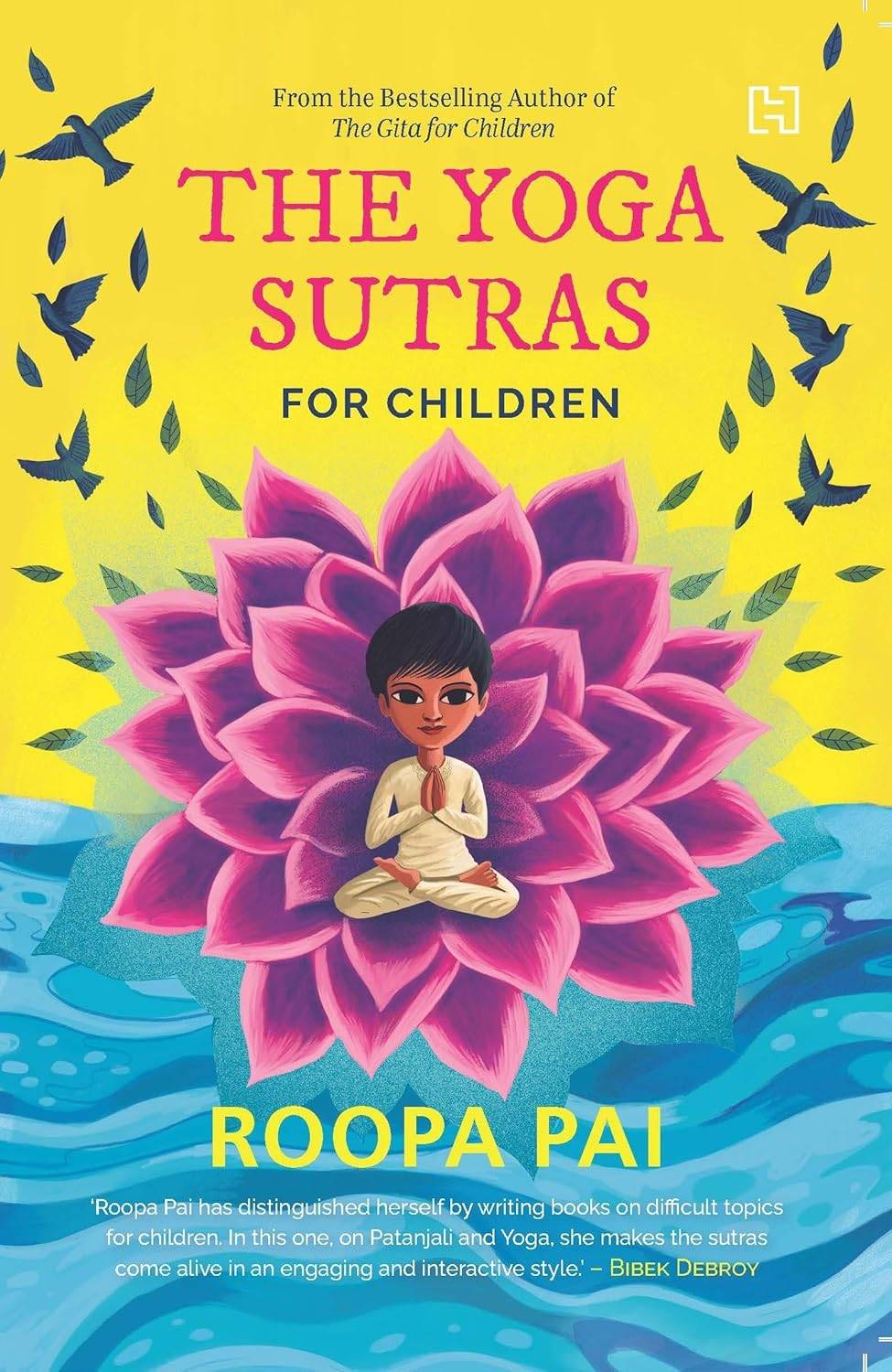
What are the Yoga Sutras? Instructions for bearded rishis who lived in the forests of ancient India? Or the complete manual of asanas? Neither! In fact, the text may well have been called ‘Maharishi P’s Ultimate Handbook of Mind Control’, for it is really a set of techniques to help us – all of us – awaken and harness the explosive power of our minds, through our actions, our attitudes and our awareness. And not our asanas? Those too, but not in the way you imagined it. In this surprising, sparkling book, Roopa Pai unravels the secrets of Patanjali's compact 2,000-year-old text in ways both fun and accessible. Walk down the well-marked paths into a dazzling world where a whole new version of yourself – self-assured, fearless and free – awaits you. Go on, then – what are you waiting for?
The Vedas and Upanishads for Children
- Author Name:
Roopa Pai
- Book Type:
- Description:
3,000 years ago, deep inside the forests of India, a great ‘thought- revolution’ was brewing. In those forest labs, the brightest scientist-philosophers contemplated the universe and reflected upon the already-ancient texts called the Vedas, gaining some startling insights into questions that we still have no watertight answers to, like: * What is the universe made of? * How do I know I’m looking at a tree when I see one? * Who am I? My body, my mind, my intelligence, my emotions, or NOTA? And where did they put those explosive findings? In a sprawling body of goose-bumpy, thought-provoking and fascinating oral literature called the Upanishads! Intimidated? Don’t be! For this joyful, fun guide to some of India’s most enduring and secular wisdoms, reinterpreted for first-time explorers by author Roopa Pai, is guaranteed to keep you turning the pages. Why haven’t you read it yet?

Becoming Bangalore
- Author Name:
Roopa Pai
- Book Type:
- Description:
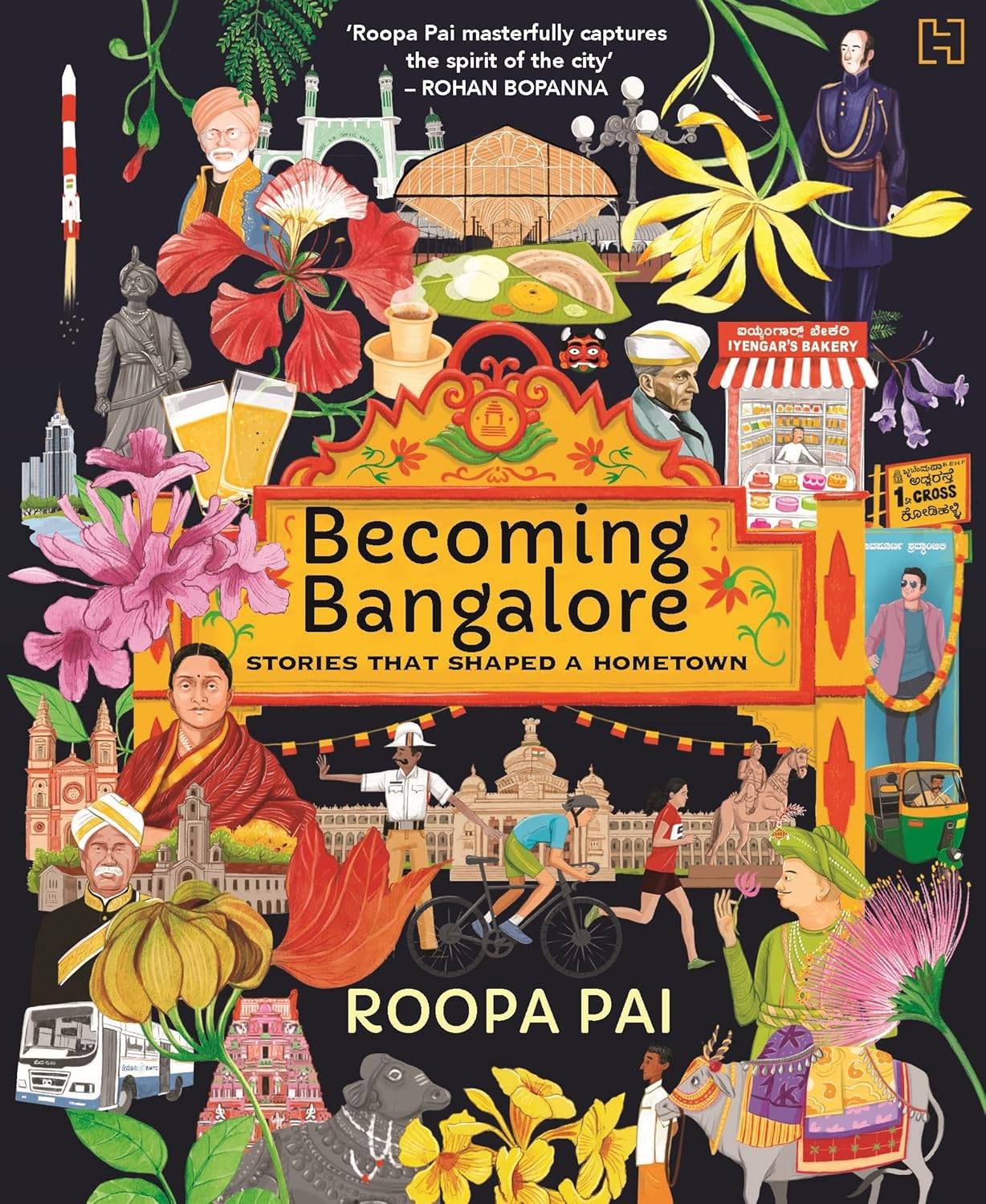
What makes a city uniquely itself? Is it its geography, history, location? Is it its leaders, aspirations, demographics? Or is it a palpable spirit, wrought of a combination of all these, that seeps into the soil over centuries, and charges the air, infecting residents and visitors alike? Two decades of exploring her hometown – and reading, writing and talking about it – has convinced Roopa Pai that the last is true: cities are neither born nor made, they become. In this collection of evocative essays, she trawls the city's history to tease out bits of the Bangalore jigsaw – a scientist's quest for excellence, a maharani's foresight, an entrepreneur's vision, a chief minister's ambition, a writer's pride in his language, and more – in an effort to trace the genesis of the liberal soul of the metropolis and its ability to offer inclusive, creative, laid-back spaces amid its frenetic growth. What emerges is a fascinating mosaic that reveals how a little sixteenth-century settlement on a hill became India's most charismatic city.
Kailas: Shiva's Abode
- Author Name:
Hemant Sharma +2
- Book Type:
- Description:
Wanderlust and the desire to know the land and society more had been fueling my wish to visit Kailas. There were many curiosities. All our major rivers have their source in the region. The largest reservoir of fresh water on earth is situated there. The celestial swans are found there. I recall that how in my childhood, my Grandmother used to describe Kailas as being akin to a dreamland. According to her, Shri Krishna has said in the Gita – Meruru shikhirinamaham – ‘Among mountains I am Kailas!’ It was Sage Mandhata who first set foot on this sacred soil. Adi Shankaracharya shed his mortal body here. Guru Nanak meditated here and Swaminarayana, the founder of the sect that bears his name, saw the vision of god here. The Ramayana and the Mahabharata mention Kailas. This is where Ravana had worshipped Lord Shiva. He wanted to take Kailas with him. Shiva guilefully dissuaded him from doing so. Arjuna performed penance here and received the Pashupata Astra from Shiva. Yudhishthir proceeded heavenwards via this route. One by one, all the family members fell by the roadside; only the faithful dog kept company. Bhasmasur, the Rakshas, a devotee of Shiva was reduced to cinders here. Today the dark shadow of civilisation has begun to fall even on Mansarovar. This lake is shrinking. The sacred water body, that once stretched across 410 square kilometres, is now shrunk to only 10 square kilometres. Consider this the rage of Nature. Had Kalidasa been alive, he would have been deeply saddened to see his beloved Himalaya in this state. Is it the same Himalaya that is described in Raghuvamsham and Kumar Sambhavam? Civilisation has reached a point where the divine dimensions of Himalaya are disturbed.

Death: An Inside Story
- Author Name:
Sadhguru
- Book Type:
- Description:
Death is a taboo in most societies in the world. But what if we have got this completely wrong? What if death was not the catastrophe it is made out to be but an essential aspect of life, rife with spiritual possibilities for transcendence? For the first time, someone is saying just that. In this unique treatise-like exposition, Sadhguru dwells extensively upon his inner experience as he expounds on the more profound aspects of death that are rarely spoken about. From a practical standpoint, he elaborates on what preparations one can make for one’s death, how best we can assist someone who is dying and how we can continue to support their journey even after death. Whether a believer or not, a devotee or an agnostic, an accomplished seeker or a simpleton, this is truly a book for all those who shall die!

Unposted Letter
- Author Name:
Mahatria Ra
- Book Type:
- Description:
A collection of short articles by Mahatria. Each letter contains deep and profound reflections on many topics related to life, work, situations, and attitudes. The book contains simple lessons and principles and practical ideas that, if implemented, can make life more fulfilling and adverse situations easier to face. An internal conflict, a little relationship hitch, a professional dilemma, a policy review, time management issues, whatever… find a solution there. “Open any page; an answer is seeking the seeker.” Many have found their answers in this book: Unposted Letter.

In Service Of Sai
- Author Name:
Dr. Suresh Haware
- Book Type:
- Description:
The opportunity of service of Sai Baba came into my life as a divine blessing. As a result, my life was completely transformed. Earlier, I rarely visited Shirdi. During this Period, I visited no other Place but Shirdi. I did not think about Sai Baba very often before. During this period, I thought about nothing other than sai. My feet would always yearn to go to Shirdi

Treasures of Lakshmi
- Author Name:
Namita Gokhale +1
- Book Type:
- Description:
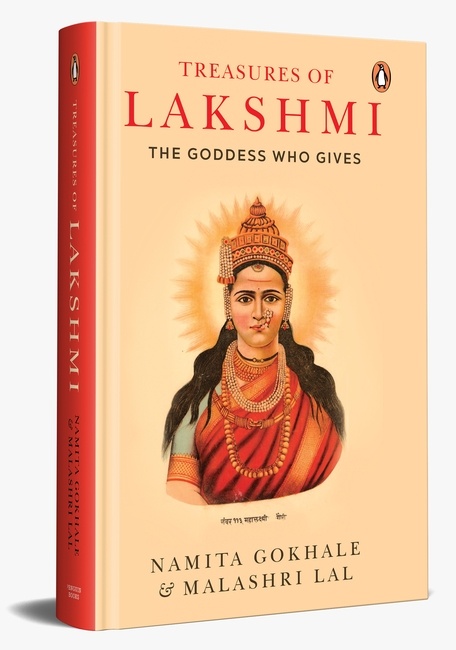
Treasures of Lakshmi is the culmination of the much-loved goddess series, brilliantly curated and edited by Namita Gokhale and Malashri Lal. This trilogy, which began with In Search of Sita and continued with Finding Radha, examines the mystical realms of Hindu thought and practice, celebrating the essence of the sacred feminine. Whether it is Lakshmi’s 108 names or a sahasranama of a thousand appellations, her blessings are multidimensional and eternal. as the third and final instalment of this remarkable trilogy, Treasures of Lakshmi takes readers on a unique journey of exploration, unravelling the compelling narrative of ‘the goddess who gives’.
Temple Management
- Author Name:
Dr. Suresh Haware
- Book Type:
- Description:
India has a rich and diverse culture, with its different rituals, practices and customs. The temples all across the country are testimony to such diverse rituals. India has around 30 lakh temples. It has a potential to bring socio-economic transformation in India. The book is a documentation to this effect on a very novel subject of temple management. The scientific approach, the service mind and the management skills have the potential to change the scenario of the temples in India. Dr. Suresh Haware being a senior nuclear scientist and a successful businessman besides serving as chairman of Sri Sai Baba temple located at Shirdi, has penned down his experiences and his prospective plans on managing the temples. The temples possess a huge potential for employment generation that has not yet been harnessed. Institutions could carve out professional courses in the subject to make suitable manpower available for managing the temples effectively. This book is of interest to and will attract the attention of professionals towards this necessity. It will provide a spark to many minds from the business, industry, religion and institutions so as to attract many souls to the innovative subject of temple management. Temple management will then make a difference.

The Prophet
- Author Name:
Khalil Gibran
- Book Type:
- Description:
The Prophet is one of the most beloved classics of our time. This is a collection of poetic essays that are philosophical, spiritual, and, above all, inspirational. Khalil Gibran was a Lebanese-American writer, poet, and visual artist. Gibran's simple and direct style was a revelation and an inspiration.

Oh Krishna, Come Again!
- Author Name:
Dinkar Joshi
- Book Type:
- Description:
Arriving running, he extended his hand to pull out the arrow from the leg. Krishna raised his hand in objection… Jaraa said, “Why? O Lord, Why?” “Let it be, brother..! Do not attempt to make Mother Gaandhaari’s words go in vain..!” Krishna replied in a very steady tone. “I have committed a great sin. Please forgive me, O Lord..! Thinking that you were a jungle animal….I…. shot an arrow at you. Jaraa started moaning in a piteous voice. “Get up, son..!” Krishna said. “What is your name?” “My…my..name is Jaraa..!” “Jaraa..! OK..!” Your name is also significant, son..! Jaraa means old age; it never ever leaves anyone! You are merely an instrument, son..!” There is no Indian language in which poetry, stories, novels, drama, reference books, and other genres of literature have not been created, with Krishna as the centre point. The novel “Shyam fir ek baar tum mil jaate” (original Gujarati) is an Upanishadic novel. During the prevailing Aryavart, Krishna was an imposing personage. When this personage dissolved in the deadly silence that had overcast, this is a written display of the shriek of ‘that-silence’. When Krishna was in front, it was a different matter. This novel takes the confused state of mind of the characters—beginning with Vasudev Devaki, Akroor, Uddhav, and Radha— to an unprecedented height, when Krishna dissolved.

Krishna Deities And Their Miracles
- Author Name:
Stephen Knapp
- Book Type:
- Description:
Lord Krishna’s deities in temples serve as a channel through which the Divine can be better understood and perceived. In fact, the deities themselves can exhibit what some would call miracles in the way they reveal how the Divine accepts the form of deity. This is one process through which Krishna reveals himself and the reality of his existence. Stories of such miracles extend across the ages to the present. This book relates a range of these events to show how the images in the temples have manifested their character in various ways in their pastimes with their devotees, whether by developing their devotion, instructing them, or simply giving them His kindness, mercy, and inspiration. This book will give deeper insight into the unlimited personality and causeless benevolence of the Supreme, especially to those who become devoted to Him. In addition to presenting accounts of reciprocity, this book offers a rational and systematic explanation of the antiquity of devotion to the deity, scriptural references to deity veneration, and information on historical sites associated with Krishna deities.

The Buddha and His Dhamma Book on Buddha's Life And Philosophy
- Author Name:
DR. B.R. Ambedkar
- Book Type:
- Description:
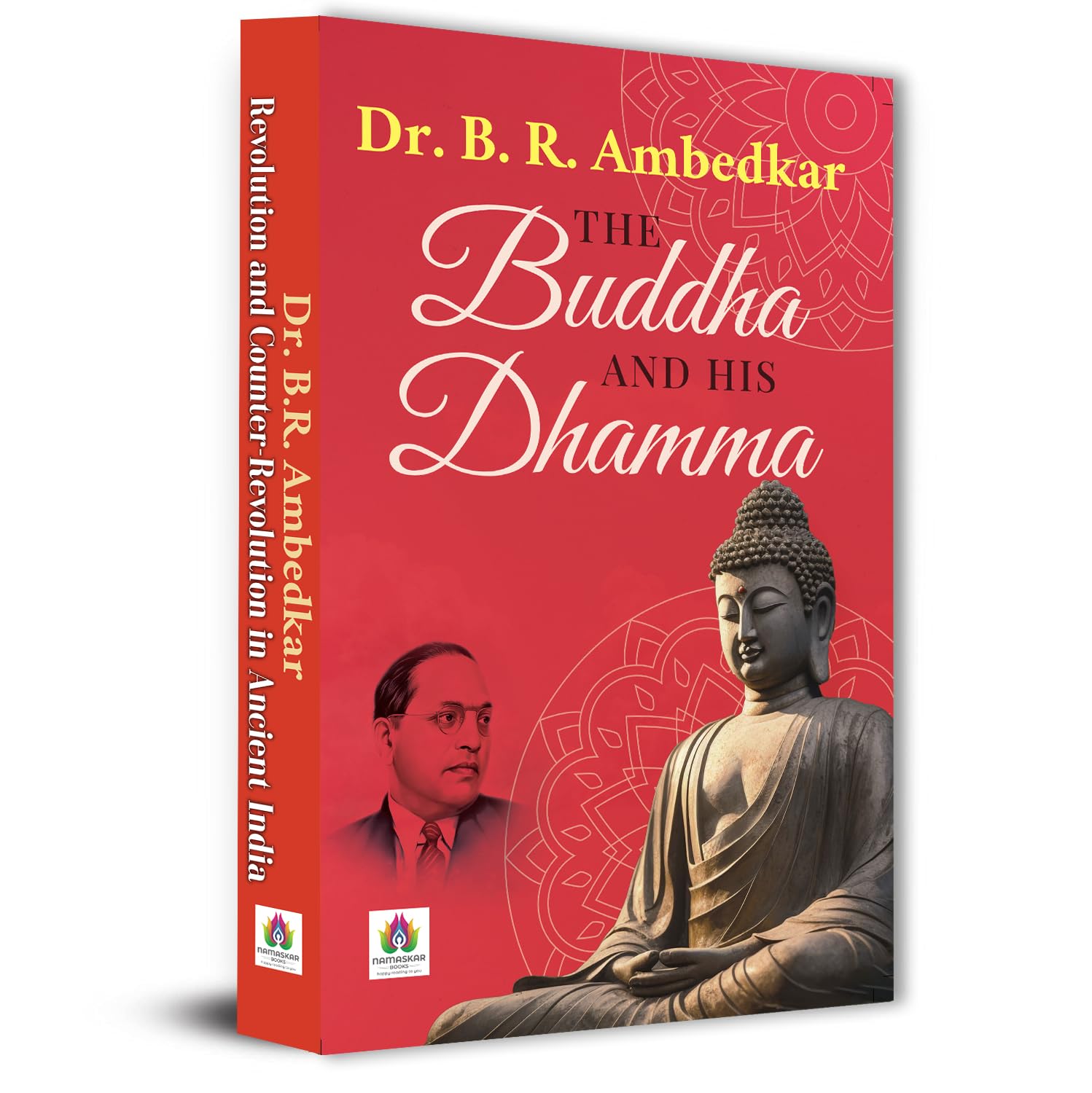
"The Buddha and His Dhamma is Dr. B.R. Ambedkar's final and perhaps most spiritually significant work, offering a detailed exploration of the life, teachings and philosophy of Gautama Buddha. First published in 1957, this book serves as a foundational text for the Navayana or Neo-Buddhist movement, which Ambedkar initiated to promote a version of Buddhism rooted in social justice, equality and compassion. In this work, Ambedkar reinterprets the teachings of the Buddha to emphasise principles of rationalism, ethical living, and human dignity, critiquing traditional religious practices that, in his view, perpetuate superstition and social inequality. He presents the Buddha as a revolutionary figure whose teachings directly oppose caste-based discrimination and advocate for a moral code that transcends ritualistic practices."
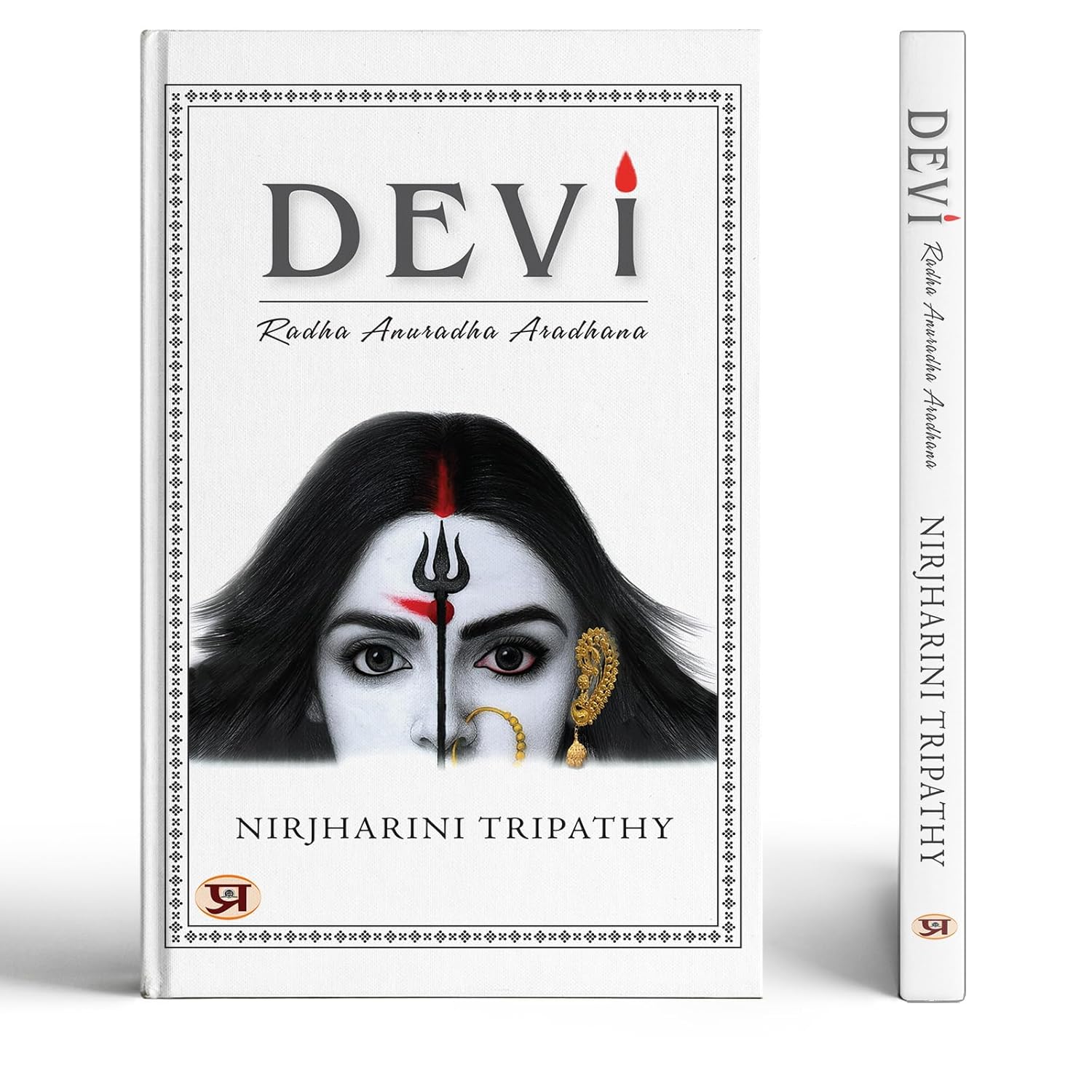
Devi | Unveiling The Mysteries Of The Divine Goddess: Exploring The Secrets Of Goddess
- Author Name:
Nirjharini Tripathy
- Book Type:
- Description:
Prepare to be captivated by a story that transcends time, evoking a tapestry of emotions-from the heart-wrenching struggles of the past to the empowering triumphs of the present. 'Devi' is a celebration of resilience-a reminder of the power of women to create, nurture, and transform the world around them; not just a tale of survival. 'Devi' beautifully explores the sacred symbolism of water, from the confluence at Prayagraj to the sacred Ghats of Kashi, Triveni Sangam to Manikarnika, with the Ganges taking centre-stage, reverberating through the ages as a mother, a goddess, and a spiritual archetype. 'Devi' delves deeply into the teachings of the revered texts-the Vedas, Upanishads, Bhagavad Gita, and Shastras that shape the moral fabric of society. In the heart of Odisha's remote Sambalpur, set against the backdrop of the pandemic-stricken year of 2020, a profound narrative unfolds a journey that weaves together the threads of history, and the indomitable spirit of five generations of mothers and daughters, rendering the Navadurga : Shailaputri, Brahmacharini, Chandraghanta, Kushmanda, Skandamata, Katyayani, Kalaratri, Mahagauri, and Siddhidatri.
SIDDHARTHA An Indian Tale
- Author Name:
Hermann Hesse
- Book Type:
- Description:
Siddhartha: An Indian Tale is a novel by Hermann Hesse. The theme of the novel is the search for self-realization by a young Brahman, Siddhartha. Realizing the contradictions between reality and what he has been taught, he abandons his comfortable life to wander. His goal is to find the serenity that will enable him to defeat fear and to experience with equanimity the contrasts of life, including joy and sorrow, life and death.

Philosophy of Hinduism & Waiting For A Visa
- Author Name:
DR. B.R. Ambedkar
- Book Type:
- Description:
"Philosophy of Hinduism is a profound and critical analysis by Dr. B.R. Ambedkar that examines the foundations and philosophical underpinnings of Hinduism. Written with an intent to investigate the principles of justice, equality and morality within Hindu religious and social doctrines, the book delves into key concepts of Hindu philosophy, such as the idea of karma, dharma and the caste system. Waiting for a Visa is a powerful and eye-opening work by Dr. B.R. Ambedkar, one of India's foremost social reformers and the chief architect of the Indian Constitution. Written in 1935-36, this autobiographical account is a collection of personal and real-life incidents that expose the harsh realities of caste discrimination faced by Ambedkar and other Dalits in the Pre-independent India."

Motivating Thoughts of Swami Vivekananda
- Author Name:
Swami Vivekanand
- Book Type:
- Description:
Swami Vivekananda was an Indian Hindu monk, a chief disciple of the 19th-century Indian mystic Ramakrishna. He was a key figure in the introduction of the Indian philosophies of Vedanta and Yoga to the Western world and is credited with raising interfaith awareness. Swamiji has been an awe-inspiring persona for many people and this book continues the legacy of his ideas and philosophies. This book is a one-of-a-kind condensed version of Swamiji’s life and principles, For every reader; this compilation would mean an enriching and learning experience. May his quotes inspire you to believe in yourself so that you may live your dream

Little Rama
- Author Name:
Kamini Gayakwad
- Book Type:
- Description:
The birth of Shri Ram, his childhood pastimes, the universe in his stomach. Such stories are told in this book with simple language and beautiful illustrations.

Ramayan For Kids
- Author Name:
Kamini Gayakwad
- Book Type:
- Description:
This book depicts Lord Rama's sacrifice, dedication as well as love and respect for everyone. Ramayana has been presented in a simple form keeping in mind the nature of children. Our little readers will be able to easily understand the meaning and spirit of the story.

Magh Mela
- Author Name:
Vincent Van Ross +2
- Book Type:
- Description:
This might come as a surprise to many readers. But, this is indeed the very first book on Magh Mela. As of now, the only book relevant to Magh Mela that is available in the market is a reproduction of the chapter on Magh Mahatmaya appearing in Padma Purana. But, that is purely mythological in content and does not deal with many aspects of the Magh Mela as it plays out in Allahabad. Everybody has heard of Kumbh Mela. But, how many of us have heard of Magh Mela? Does it surprise you to learn that Kumbh Mela is nothing but Magh Mela that is celebrated every twelfth year and Ardh Kumbh is nothing but the sixth Magh Mela celebrated between two Kumbh Melas? In other words, a mini version of the Kumbh Mela is celebrated in Allahabad year after year in the form of Magh Mela which goes almost unnoticed and unreported outside of Allahabad and Uttar Pradesh. Magh Mela is an incredible annual phenomenon in Allahabad (Prayag) from time immemorial. It is a monthlong Hindu festival that is celebrated in the month of Magh at Sangam or the confluence of rivers Ganga, Yamuna and the mythical river Saraswati. Magh Mela is marked by (snan) ritual bathing and taking up temporary residence near Sangam in the month Magh and leading an austere life devoted to prayers and rituals (kalpavas) according to their vows. The month of Magh begins with Paush Purnima and ends with Magh Purnima. But, the Magh Mela begins on Makkar Sankranti or Paush Purnima (whichever is earlier) and ends with Maha Shivaratri because of administrative reasons. Lord Vishnu is the presiding deity of Allahabad as well as the month of Magh which is considered to be the most auspicious month for Hindus. Allahabad is also known as Tirthraj Prayag. In other words, Allahabad is the king of pilgrimage sites for Hindus. Separate chapters are devoted to the most auspicious months of the Hindu calendar in the Puranas in the form of Vaishak Mahatmaya, Kartik Mahatmaya and Magh Mahatmaya explaining the significance of each month. The most important ritual for Vaishak is charity (daan). Similarly, the main ritual for Kartik is offerings in the form of earthen lamps (deep daan); and, the main ritual for Magh is ritual bathing (snan). Therefore, Magh Mela is essentially a bathing festival coupled with kalpavas. And, Tirthraj Prayag is the sacred land that has been designated for Magh Mela by Hindu scriptures. That is the secret of Magh Mela.

Customer Reviews
Be the first to write a review...
The Gita For Children is a national bestseller that won the 2016 Crossword Award for children's writing, though readers of all ages embrace Roopa Pai's lucid retelling of the epic conversation between Pandava prince Arjuna and Krishna on the Kurukshetra battlefield. Rather than a verse-by-verse translation, Pai renders each chapter of the Bhagavad Gita as an "overall translation," followed by commentary grounded in contemporary examples—using everyday scenarios to illuminate concepts such as dharma, selfless action, and the paths to inner clarity. Illustrated by Sayan Mukherjee, the book addresses head-on the myths that the Gita is too long, too difficult, or meant only for the devout, proving instead that this ancient text speaks directly to the dilemmas of modern life.
What kind of reading experience will The Gita for Children give me?
The Gita For Children offers an "overall translation" of each chapter followed by commentary, breaking down the Bhagavad Gita into simple, precise, easy-to-digest chunks. The tone is conversational and light-hearted, using contemporary examples from daily life to make Krishna's teachings on living honestly and authentically feel immediate and relevant. Pai explains the conversation simply, using illustrations, funny examples, and intriguing questions, creating a reading experience that feels more like a dialogue than a lecture. Readers consistently describe it as thought-provoking, accessible, and surprisingly applicable to their own lives.
Who is The Gita For Children best suited for, and what does it expect of its reader?
The Gita for Children is suited for people of all ages who want to listen to one of the greatest conversations in the world, despite the title. It's ideal for readers approaching the Bhagavad Gita for the first time who may feel intimidated by traditional translations, as well as those who've struggled with more scholarly versions. The book serves readers who want to read the Bhagavad Gita but couldn't, requiring only curiosity and openness rather than prior knowledge of Hindu philosophy or scripture. Teenagers grappling with questions about purpose and choice will find it especially resonant.
What is the cultural significance of "The Gita for Children" for Indian readers today?
The Bhagavad Gita remains central to India's moral imagination, yet few have read it even once despite its cultural ubiquity. In an era when young Indians navigate competing pressures—career ambitions, family expectations, social media distraction—Krishna's counsel to Arjuna about doing one's duty without attachment to outcomes resonates powerfully. For teens confused about what lies ahead, the book offers hints, nudges, and recommendations to help them think clearly and make better choices. By making this foundational text accessible, Pai reconnects contemporary readers to a philosophical inheritance often honoured more in name than practice.
What makes Roopa Pai's treatment of the Bhagavad Gita distinctive in The Gita For Children?
Pai has explained the content as simply as is humanly possible while somehow avoiding diluting or watering down its complexity through oversimplification. Her distinctive approach lies in framing the Gita not as a religious scripture requiring reverence, but as practical, time-tested advice applicable to everyday situations—studying for exams, caring for difficult relatives, working with teammates you dislike. She employs contemporary language and relatable examples, making Krishna's philosophy feel like a friend's guidance rather than an ancient commandment. This approach earned her the 2016 Crossword Award for children's writing.
What does The Gita For Children leave the reader with—emotionally, intellectually, or culturally—long after they finish it?
Readers report that the book answers questions they've been searching for, knowingly or unknowingly, for a long time, and helps them relate the Gita to their personal lives and challenges. Emotionally, it offers a framework for acting without being paralyzed by fear of failure or seduced by fantasies of success. Intellectually, it introduces the idea that dharma—one's true nature—rather than external expectations, should guide choices. Many readers describe it as a first experience of the Gita rather than a mere introduction, one that plants seeds for deeper exploration and equips them with a quiet confidence in facing uncertainty.