
Rajkahini-The Princely Tales of Rajasthan
₹
260
₹ 215.8 (17% off)
Unavailable
Rajkahini-The Princely Tales of Rajasthan is an English translation of Abanindranath Tagore's Bengali classic Rajkahini. It is a collection of nine stories that are replete with episodes and incidents involving the royalty of Rajasthan. Expectedly, therefore, bravery, nobility palace intrigues, wars, skirmishes, feuds betrayal, caste, religion, marriage, motherhood and progeny, all play a dynamic role as the fictionalized social and political history of early Rajasthan is unfurled. Authoring Rajkahini as a literary expression of the legends and tales of the Rajput kings can also be considered a part of the postcolonial action to etch out a narrative that could draw the far part of the nation closer to the Bengali readership.
Read moreFormat:
About the Book
Rajkahini-The Princely Tales of Rajasthan is an English translation of Abanindranath Tagore's Bengali classic Rajkahini. It is a collection of nine stories that are replete with episodes and incidents involving the royalty of Rajasthan. Expectedly, therefore, bravery, nobility palace intrigues, wars, skirmishes, feuds betrayal, caste, religion, marriage, motherhood and progeny, all play a dynamic role as the fictionalized social and political history of early Rajasthan is unfurled. Authoring Rajkahini as a literary expression of the legends and tales of the Rajput kings can also be considered a part of the postcolonial action to etch out a narrative that could draw the far part of the nation closer to the Bengali readership.
Book Details
Siddhartha
- Author Name:
Hermann Hesse
- Book Type:

- Description:
This Book Doesn’t have Description

Mathematics Wizard Srinivasa Ramanujan
- Author Name:
Narendra Govil +1
- Book Type:
- Description:
Mathematics Wizard Srinivasa Ramanujan The book depicts the interesting story of a mysterious Indian mathematician, Srinivasa Ramanujan, with no college education, whose mathematics in a series of letters to a Cambridge Mathematician, G.H. Hardy, shook the entire mathematics community. It is an exciting journey of a poor, self-taught and god-gifted mathematician who by the age of 31 became the youngest Fellow of Royal Society of London. Even after almost 100 years of his death at the age of 32, his results mysteriously find applications in modern world such as in the study of black holes, quantum gravity, cryptography and many others. Ramanujan’s life story and work has inspired numerous people and generations of mathematicians around the globe and continue to excite even today. We hope that the book will reach the current generation and generate interest in mathematics.

The Princess and the Goblin
- Author Name:
George MacDonald
- Book Type:
- Description:
FlyWings Classics brings you a World ClassicChildren's Fantasy Book Series - The Princess and the Goblin byGeorge MacDonaldWhen Princess Irene is sent away to live in a great old castle-house in the mountains, her life is dull until she happens upon a hidden stairway. But whatever—or whoever—she finds upstairs will lead her out of doors and into the mountains where only the miners are brave enough to go…

The Eternal Geets Of Bhagavad Gita
- Author Name:
Akhilesh Gumashta
- Book Type:
- Description:
One Should not fail to thoroughly understand the Bhagavad Gita as ancient Science of worldly life. These were the words of Lokmanya Tilak. Truly, this is a true scripture of the human race as a living creation rather than a book, with a new message for every civilization. As the days pass on, it's becoming more relevant for ages to come. Adi Shankaracharya brought it out from Epic Mahabharat as a clear knowledge to fulfil all the goals of human existence. From ancient to the modern brains it became source of inspiration. For Albert Einstein Bhagavad Gita was the main source of inspiration and guide for the purpose of scientific investigations and formation of his theories. With the hope that this book will be taken by the readers as a creation and not just a book, and will be a reference text to wide range of readers from students to philosophers, from spiritualists to scientists and writers. Purpose of bringing this book is not just to increase the readability and quotability of Bhagavad Gita through verses and haikus but also to increase spirituality among masses. -Publisher * Gandiva is the name of Arch (Dhanush) of Arjun

The Indian Ocean As A Memory Space
- Author Name:
Nilufer E. Bharucha
- Book Type:
- Description:
The Indian Ocean as a Memory Space-Reflections in Indian Diasporic Literature and Culture: The Indian Ocean is a Memory Space for India and her Diaspora. It is a space or site with which, not just the memories of the British colonial period are linked, but collective memories that go back much further in time. Maritime communities from India's Western and Eastern coasts have for over 4,000 years and more, engaged in trade and commerce with the lands in the Persian Gulf, the East and South African coasts, and South East Asia. During the colonial period, indentured Indian labour was taken first to Mauritius in 1834 and then to South Africa and East Africa. The indentured diaspora was followed quickly by the diaspora of traders and professionals. These memories are reflected in Indian Diasporic Literature and Cinema written or made by persons of Indian origins who still live in the littoral states along the African shores of the Indian Ocean, or those who have since immigrated to other spaces such as Canada, the U.S.A. and the U.K. Much research is being done around the world today on the Indian Ocean and its connection with the Indian Diaspora. This international, interdisciplinary collection of essays written by scholars of the Indian diaspora from India and different diasporic locations will value add to the existing scholarship.

Rumi - Ek Aaina Si Zindagi
- Author Name:
Rabisankar Bal
- Book Type:
- Description:
Rabishankar Bal’s novel “Rumi – Ek Aaina Si Zindagi” portrays the spiritual revolution that transformed Jalaluddin Balkhi into Maulana Rumi. The work offers a fresh interpretation of the centuries-spanning influence of the Masnavi and Rumi’s poetry. Exploring the turning points of love, separation, and creative passion in Rumi’s life, the book delves deep into the layers of his inner world. Narrated through the gaze of Ibn Battuta, this account conveys the soul’s yearning for a “Ghar Wapsi”. The book preserves within itself that pain and quest that call the human being back toward their true homeland. Rabishankar Bal (1962–2017) was among the renowned short-story writers of Bengali literature, whose creative work spanned more than three decades. He wrote more than fifteen novels, several collections of short stories and poetry, as well as non-fiction works. He also made significant contributions through the selection and translation of Saadat Hasan Manto’s chosen writings. His celebrated novel Dozakhnama was honoured with the Bankimchandra Smriti Award (2011). The English translations of his works, Dozakhnama and Aaina Jeevan, were also widely appreciated. This novel has been translated from Bengali by well-known translator Amrita Bera.

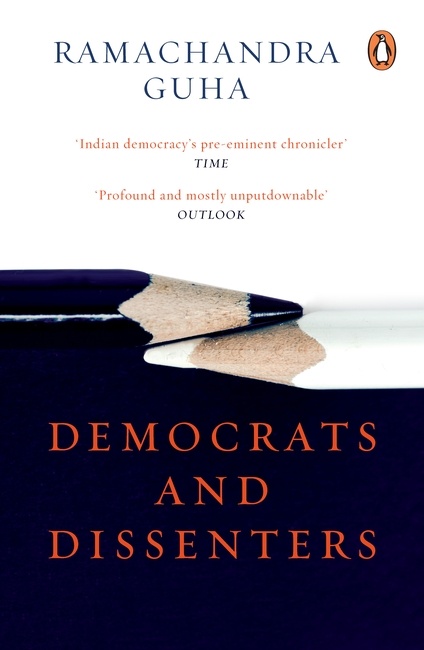
Democrats and Dissenters
- Author Name:
Ramchandra Guha
- Book Type:
- Description:
A major new collection of essays by Ramachandra Guha, Democrats and Dissenters is a work of rigorous scholarship on topics of compelling contemporary interest, written with elegance and wit. The book covers a wide range of themes: from the varying national projects of India’s neighbours to political debates within India itself, from the responsibilities of writers to the complex relationship between democracy and violence. It has essays critically assessing the work of Amartya Sen and Eric Hobsbawm, commentaries on the tragic predicament of tribals in India–who are, as Guha demonstrates, far worse off than Dalits or Muslims, yet get a fraction of the attention–and on the peculiar absence of a tradition of conservative intellectuals in India. Each essay takes up an important topic or an influential intellectual, as a window to explore major political and cultural debates in India and the world. Democrats and Dissenters is a book that is widely read, and even more widely discussed.
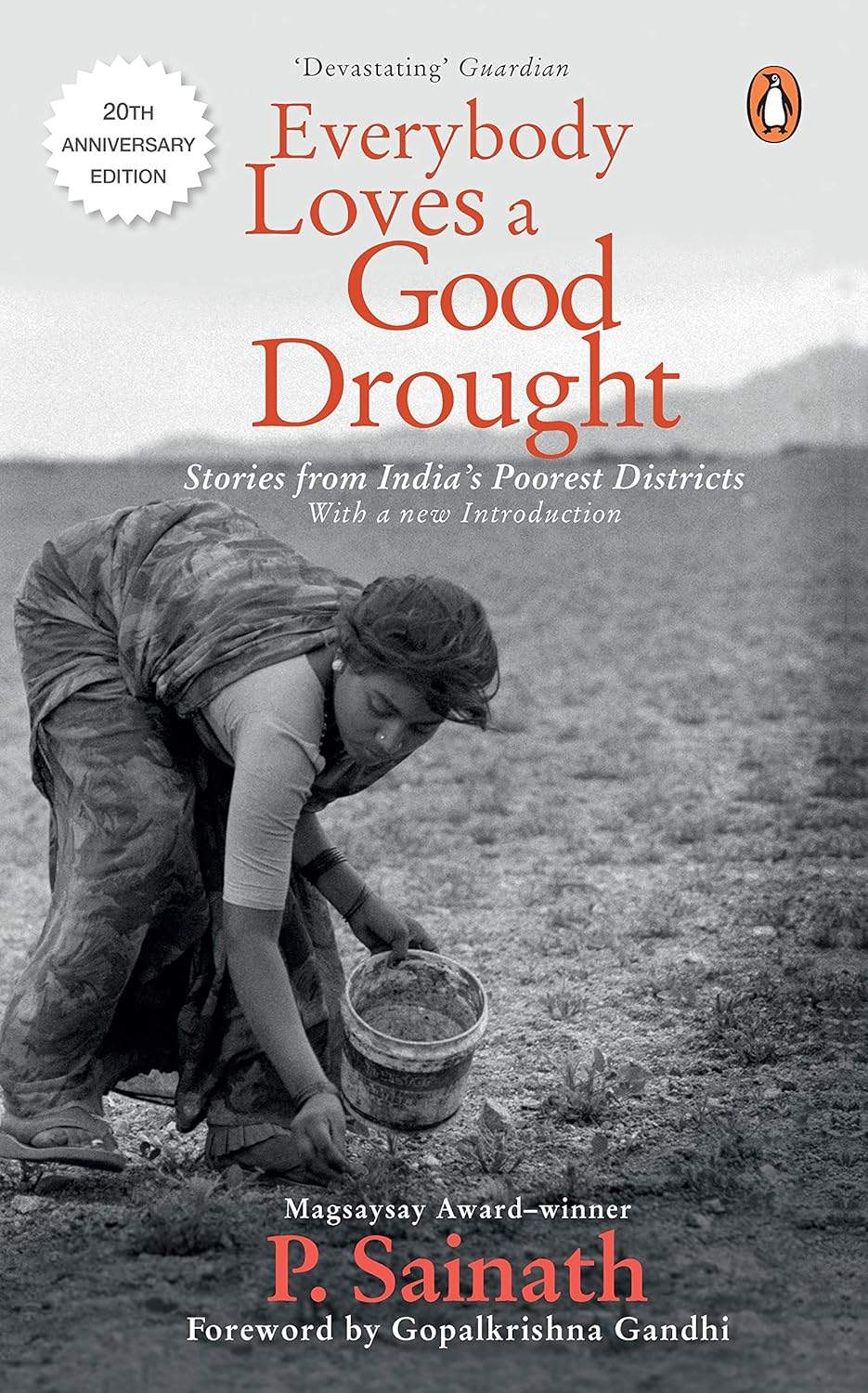
Everybody Loves A Good Drought
- Author Name:
P. Sainath
- Book Type:
- Description:
A CLASSIC OF REPORTAGE FROM RURAL INDIA BY AWARD-WINNING AUTHOR, WITH A FOREWORD BY GOPALKRISHNA GANDHI – Prescribed in over 100 universities – Reveals the human face of poverty – Key to understanding issues of globalization, human rights, development economics in India – One of the classics of journalism Acclaimed across the world, prescribed in over 100 universities and colleges, and included in part in The Century’s Greatest Reportage (Ordfront, 2000), alongside the works of Gabriel Garcia Marquez, Studs Terkel and John Reed, Everybody Loves a Good Drought is the established classic on rural poverty in India. Twenty years after publication, it remains unsurpassed in the scope and depth of reportage, providing an intimate view of the daily struggles of the poor and the efforts, often ludicrous, made to uplift them. An illuminating introduction accompanying this twentieth-anniversary edition reveals, alarmingly, how a large section of India continues to suffer in the name of development so that a small percentage may prosper. Besides exposing chronic misgovernance, it is also a devastating comment on the media’s failure to speak for the voiceless.
DELHI RIOTS: Conspiracy Unravelled
- Author Name:
Aditya Bhardwaj +1
- Book Type:
- Description:
The Truth of Delhi Riots is Unearthing Gradually “As per our plan, on February 24, we called several people and told them how stones, petrol bombs and acid bottles are to be thrown. I shifted my family to another place. At about 1.30 p.m. in the afternoon on February 24, we began pelting stones.” Only those who are not familiar with the real face of the Aam Aadmi Party will be surprised or shocked by the above statements made by the now expelled counsellor Tahir Hussain. The Aam Aadmi Party used its network of people associated with mosques and madarsas and relied on leaders such as Tahir Hussain and Amanat Ulla Khan to bag the Muslim votes in Delhi. In return for the votes, it seems the party granted a specific community a license to consign north-east Delhi to flames. Now that the chargesheet has been finalised by the Delhi Police about the riots that took place in East Delhi, it will be a fallacy to disassociate the riots that took place in places such as Jafrabad, Maujpur, Babarpur, Gokul Puri, Karawal Nagar, Bhajanpura, and Yamuna Vihar from the violence that took place during the anti-CAA protests. The violence that occurred during the anti-CAA protests in places such as Shaheen Bagh, Jamia Nagar, and Seelampur were actually the precursor to a big riot. The riot that took place in the north-east parts of Delhi during US President Donald Trump's visit from February 23-26, 2020. For the violence that was orchestrated during these riots, the work of collecting empty bottles, stones and storing these on the rooftops of houses had begun on February 4. Many people of the Muslim community had filled petrol in their vehicles so that this fuel could later be used for making petrol bombs. In many Muslim families, pamphlets about such riots were distributed with instructions on how to deal with Hindus. It is not rocket science to understand that the Muslim community was already prepared for the riots that broke out in north-east Delhi. Hindus did not get a chance to get their act together. Slowly, the conspiracy behind the riots is unravelling, and the lies perpetrated by the Communist ecosystem are falling flat.

Five Children and IT
- Author Name:
E. Nesbit
- Book Type:
- Description:
FlyWings Classics brings you a World Classic Children's Fantasy Book Series - Five Children and IT by E. Nesbit - - - "Be careful what you wish. You may get it!" A group of children move from their native London to the wild Kent countryside. While playing in an old gravel pit, they discover a strange creature known as a Psammead or sand fairy, who grants them one wish per day. The ensuing adventures--frequently hilarious, sometimes dangerous, and always exciting--teach the children that imagination alone has no limit. Review :- ''Nesbit is the children's writer with whom I most identify.'' - J. K. Rowling , in O, The Oprah Magazine

Dictionary of Confusable Words
- Author Name:
Harmik Vaishnav
- Book Type:
- Description:
Spellings and pronunciation are very important in the English language. One of the characteristics of this language is that there are many words with slight spelling changes and similar pronunciation but different meanings. Such terms are called homonyms or homophones. In this book, many groups of such words are given along with sentences for an explanation of the difference in meanings. This will help understand the language better and smooth the words' usage. It also shows that a spelling error can change the meaning of the word and hence the sentence to a great extent. This book will help us understand the proper use of the word. The usage is explained with a sentence for better understanding. It will benefit students, aspirants of competitive exams, professionals and lovers of the English language.

Know About RSS
- Author Name:
Arun Anand
- Book Type:
- Description:
The gradual and steady rise of the 90-year-old Rashtriya Swayamsevak Sangh has fueled many myths. ‘Know About RSS’ unravels the organisation's functioning by providing insight into hitherto unexplained aspects of the RSS – the daily Shakha, Saffron Flag, Prayer, Training Camps, Full-Time Workers, etc. This book provides authentic information about the organisational structure of the RSS, which is simple yet unique and baffling to those unfamiliar with it.

RSS-BJP Symbiosis
- Author Name:
Suchitra Kulkarni
- Book Type:
- Description:
The relationship between the Rashtriya Swayamsevak Sangh, a cultural organisation and the political parties Bharatiya Jana Sangh and the Bharatiya Janata Party is unique in the history of Indian polity. Because of the shared ideology and cadre, the inner workings and the interpersonal relationships have been a matter of surmise and conjecture. It has become even more so now that the BJP has an absolute majority and is the ruling party at the centre. With an unbroken relationship stretching from 1951 onwards, it is the informal weave of brotherhood that has made it a successful operation. This book depicts the history, foundation, and development of this relationship and how this symbiosis has unfolded over the years.

My Joys & Sorrows
- Author Name:
Dr. Krishna Saksena
- Book Type:
- Description:
No Description Available for this Book

Audio-Visual Aids to Educational Technology
- Author Name:
Prof. Harmesh Lal, Dr. Shailendra Bhushan, Dr. Meenu Kumar
- Book Type:
- Description:
The book ‘From Audio-Visual Aids to Educational Technology’ symbolises the evolution and development of Educational Technology and covers the journey from the traditional graphics and inexpensive teaching-learning aids. It depicts the establishment of the Audio-Visual Education Cell in the Ministry of Education, Govt. of India, in 1948, and the establishment of Audio-Visual Education Units in the State Departments of Education, with Audio-Visual Education officers as their heads. The book highlights the beginning of the telecast of Educational Television programs through satellite for the first time in 1975–76 in nearly 2,400 villages across 6 states, and the Indian Education Satellite, known as ‘Satellite for Education’ in 1981–82, was exclusively devoted to educational programs. —Prof. HARMESH LAL

Inspiration
- Author Name:
Rajesh Aggarwal
- Book Type:
- Description:
Only an awakened person can be a true leader. He will share his experiences rather than imposing them on others. A leader should have clarity and the capacity to explain any situation before others and give them freedom to choose according to their own understanding. That knowledge is true knowledge that can completely eradicate venomous diseases, such as unrealistic desires, anger, laziness, greed, pride, tension, and depression, at their root. When the source of the problem has been identified and salvaged, the solution comes automatically because alertness is the only key and the final solution to any problem. A person can truly love only when, from the core of his heart, he eradicates all negativities, jealousy, hatred, inferiority complex, false hopes and fills himself with immense love. If a person really desires to become strong, there should be a balance and synchronisation of all three qualities – traditions, thoughts and behaviour. —from this book These gems of thought will inspire you and transform your life, bringing contentment, satisfaction, happiness, and all the good virtues.

DAMN HISTORY
- Author Name:
Govind Mishra
- Book Type:
- Description:
What attracted me to Govind’s stories was a strange kind of innocence reflected there. The injured in the story – be it a person, a character or his/her feelings – about whom we don’t know much nor the author tells much, just the feeling of being injured... it comes out with such passion that is seldom seen in other story-writers.” So said Nirmal Verma about Govind Mishra’s short stories. Another prominent short story writer of Hindi, Shailesh Matiyani, opined – ‘Even though writing on both the worlds – the inner and the outer – Govind Mishra saved himself from the dangers of both realism and romanticism. That way, he comes to belong to the tradition of not so much Jainendra, Ajneya or Nirmal Verma but that of Premchand.’ Having created more than a thousand characters in his fiction, Govind Mishra’s portrayal extends from villages to towns, to cities, to metros, and even to foreign milieus. ‘Few writers have such a big range, ' said Srilal Shukla of Rag Darbari fame. ‘Damn History’ attempts to present in English for the first time, representative stories of the author, selected from more than fifteen collections of his short stories in Hindi, 1965 onwards.

Selected Stories of Rabindranath Tagore
- Author Name:
Purnima Mazumdar
- Book Type:
- Description:
Rabindranath Tagore was a very accomplished poet endowed with supernatural powers of language and expression. He not only wrote poems and songs but also gave music to them. Besides poems, he also wrote essays, memoirs, plays, novels and short stories which were, and still are, appreciated by the old and the young alike. His short stories, which range from innocent, childlike stories like Kabuliwala to detective and social ones, occupy a prominent place in Bangla literature even today. We have tried to present here some of his famous short stories to the best of our ability. Some of these, like Kabuliwala and Samapti (Uphaar in Hindi), have even been made into films. We have tried to maintain the quality and original flavour of these evergreen stories and hope the readers will appreciate and enjoy them.

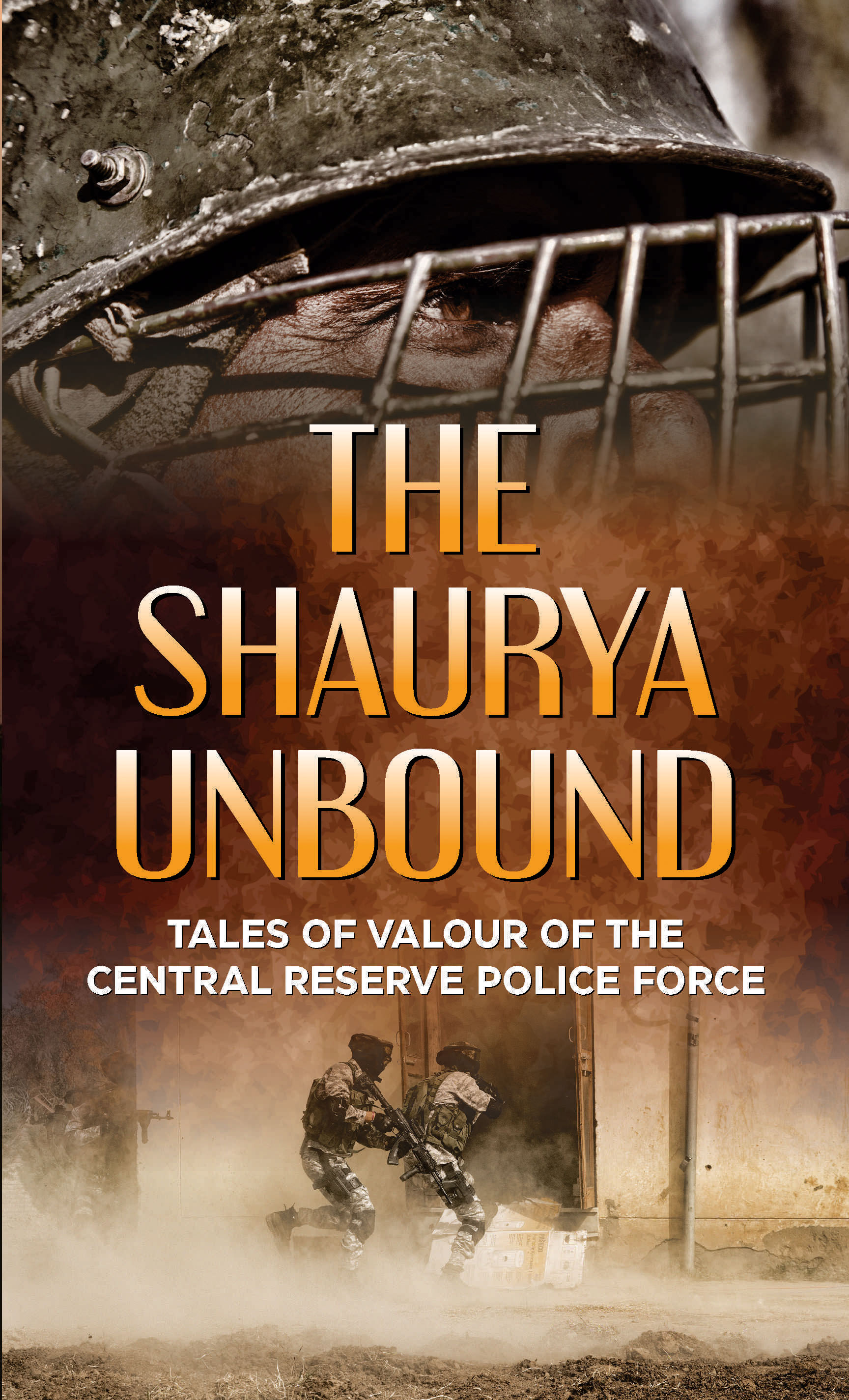
The Shaurya Unbound
- Author Name:
Nitu +1
- Book Type:
- Description:
The lead Internal Security Fore of the country, the central Reserve Police Force holds the proud distinction of being the highest decorated Central Armed Police Force of the country. 'The Shaurya, Unbeaten', Chronicles the stories of the C.R.P.F brave hearts with indomitable courage, grit and determination in the face of adversity.
Crystallized Memories
- Author Name:
Chekuri Rama Rao +1
- Book Type:
- Description:
English translation of Chekuri Rama Rao's Award winning Telugu Essays, Smruti Kinankam,

Customer Reviews
Be the first to write a review...
Rajkahini: The Princely Tales of Rajasthan brings Abanindranath Tagore's 1909 Bengali classic to English readers, rendering nine fictionalized chronicles of Rajput courts where honor, lineage, and betrayal collide. Unlike dry historical accounts, Tagore dramatizes the texture of life in early Rajasthan's princely states—marriage alliances as political currency, battlefield oaths that bind generations, and palace corridors thick with intrigue. Each story moves between war camps and zenanas, revealing how bravery and nobility coexist with feuds, caste tensions, and the relentless pressure to produce heirs. Published by Sahitya Akademi, this translation preserves Tagore's narrative voice—neither romantic nor condemnatory—offering instead a layered portrait of Rajput society where women's agency, religious identity, and motherhood shaped the fate of kingdoms as decisively as any sword.
What kind of reading experience does Rajkahini offer?
This is a reflective, character-centered experience rather than a fast-paced adventure. Abanindranath Tagore writes with restraint, allowing tension to accumulate through dialogue, ritual, and the weight of inherited loyalties. Each story unfolds episodically, revealing how personal decisions—a mother's curse, a betrayal in the ranks—ripple across generations. The prose rewards patience, immersing you in the social codes and emotional pressures of Rajput courts without melodrama. You finish each tale with a sharper sense of how honor and survival could rarely coexist in early Rajasthan.
Who should read this book and what does it expect from its reader?
- Readers interested in the intersection of history, legend, and literary craft—this is not a romance or a battlefield chronicle alone.
- Those curious about how Indian writers of the Bengal Renaissance engaged with regional histories beyond Bengal.
- Anyone willing to absorb period detail—caste hierarchies, marriage politics, royal succession—without contemporary moral framing.
- Readers who appreciate translated classics and want access to early 20th-century Bengali prose aesthetics in English.
Why does Rajasthan's princely past still resonate with Indian readers today?
Rajasthan's royal lineages occupy a contested space in contemporary India—celebrated as symbols of valor and heritage, yet scrutinized for caste privilege and feudal excess. Tagore's portraits, written during British rule, neither glorify nor indict; they humanize figures often reduced to statues and folklore. For today's readers navigating debates about historical memory, caste justice, and regional pride, these stories offer complexity: kings who were also anxious fathers, queens whose agency was real but constrained, and a social order built on both sacrifice and inequality.
What distinguishes Abanindranath Tagore's approach to Rajput history?
Tagore, a visual artist and nephew of Rabindranath, writes with a painter's eye for composition—each scene feels carefully framed, balancing action with stillness. Unlike ballads that idealize Rajput heroism, he foregrounds the human cost: mothers who lose sons to feuds, wives caught between loyalty and survival, rulers paralyzed by succession dilemmas. His prose is economical, almost understated, letting caste tensions and gender constraints speak through gesture and silence rather than authorial commentary. This restraint makes the violence and beauty of the era equally stark.
What does Rajkahini leave with the reader after the final story?
You are left with a doubled vision: admiration for the courage these stories celebrate, and discomfort at the rigid systems that demanded such courage. The book does not resolve this tension. Instead, it places you inside a world where personal honor could require terrible choices—exile, death, the sacrifice of children—and where women's intelligence and endurance were indispensable yet rarely commemorated. Long after finishing, you carry an awareness of how history is made by individuals trapped in inherited roles, and how the same culture can produce both extraordinary loyalty and profound injustice.