
Oral Epics Of Kalahandi
₹
420
₹ 348.6 (17% off)
Available
Kalahandi, a land steeped in ancestral lore, breathes through its oral epics-sung, not written; lived, not read. These heroic and sacred traditions echo through tribal hamlets, carried by bardic lineages like the Parghania (Gond), Maral and Bogua (Kondh), Ghogia (Gaud), and Bhat (Banjara). Each community sings its own identity into being through rhythmic chants and evocative performances. Among the Bhunjia and Paharia, elders become memory-keepers, while Debgunia singers invoke the divine feminine in praise of Goddess Lakshmi. These epics are cultural scriptures, recounting forest spirits, deities, and struggles for justice. They embody ecological wisdom, social harmony, and interethnic unity. These are not mere stories-they are the soul-song of Kalahandi. Let us listen, honour, and uplift them before the echoes fade forever.
Read moreAbout the Book
Kalahandi, a land steeped in ancestral lore, breathes through its oral epics-sung, not written; lived, not read. These heroic and sacred traditions echo through tribal hamlets, carried by bardic lineages like the Parghania (Gond), Maral and Bogua (Kondh), Ghogia (Gaud), and Bhat (Banjara). Each community sings its own identity into being through rhythmic chants and evocative performances. Among the Bhunjia and Paharia, elders become memory-keepers, while Debgunia singers invoke the divine feminine in praise of Goddess Lakshmi. These epics are cultural scriptures, recounting forest spirits, deities, and struggles for justice. They embody ecological wisdom, social harmony, and interethnic unity. These are not mere stories-they are the soul-song of Kalahandi. Let us listen, honour, and uplift them before the echoes fade forever.
Book Details
Kokadeuta aru Natilora
- Author Name:
L. N. Bezbaruah
- Book Type:

- Description:
L.N Bezbaruah’s wonderful collection of folk and fairytales have been part of most children growing up in the verdant valley of Assam. Full of exciting adventures and fantastic challenges, speckled with pots of gold and bits of wisdom, demon kings and magical things, Kokadeuta Aru Natilora is a treasure trove that can never run out of its riches. Now translated into English as fluid and sweet as its original by Harsita Hiya, the book is now ready to reach and enchant many more.

Tinni Pinni Chinni
- Author Name:
Santosh Shailja
- Book Type:
- Description:
Folk tales are expressions of the vibrant life of people – their feelings, aspirations and sense of humour. Their source is not a writer’s pen but the people themselves. They are the offspring of those wise villagers who live life in a very natural way, just like the nature around them. The same is true of these folk tales from Himachal Pradesh. These embody the simple villagers, where romance, humour, cleverness, and hero-worship reside and find expression in stories that bring smiles as well as tears to readers. In fact, their utmost contribution is towards humour in life, and their rustic touch is terrific—a must-read book for people of all age.

Once Upon the Queens
- Author Name:
Satabdi Das
- Book Type:
- Description:
In this captivating collection, Satabi Das masterfully reimagines timeless tales from Bengal, turning classic narratives on their heads to highlight the strength, resilience, and agency of female protagonists. From princesses who wield wisdom instead of weapons to queens who seek their destinies, each story sheds new light on Bengal’s rich cultural heritage while challenging traditional gender roles. Translated from the original Bangla into English by Nadia Imam, Once Upon the Queens offers readers a rare yet refreshing, glimpse into Bengali folklore. Journey through these upturned tales to step into a world where heroines claim their stories, save kingdoms, and rewrite history. Perfect for readers of all ages, this collection is a bold testament to the power of storytelling to inspire change.

Chandausi Junction
- Author Name:
Shankar Sahay
- Book Type:

- Description:
A collection of short-stories set in the 20th Century India for the 21st Century kids & a nostalgic walk, for their parents & grandparents. Although this book has been named after the city of Chandausi, it contains stories from various places like Rishikesh, Agra, Champaran, Tilhar, Sambhal, Kanpur, Banaras, Lucknow and many others. These are the short stories of a bygone era-a period when India had either not gained independence or had been independent for not more than 35 years. These are the tales of journeys-taken up from the early 20th century to the end of a millennium, from Shahjahanpur to Delhi, from Bijnor to Hyderabad, from Hathras to Sweden & Norway, from Lakshmi Talkies, Allahabad to Night Watchman, Bangalore, from Panki to USA, from Dehradun to Canada, from Chandausi to Australia and many others. We are sure in all these stories, you will be able to find at least one character, which reminds you of your own self-of what you are, were or always wanted to be. Let us know the character with whom you have been able to relate to the most. Happy reading. “Genius is one percent inspiration and 99 percent perspiration,”-Thomas A. Edison. -Here’s a collection of short stories to inspire the readers.

Child Health And Nutrition In India
- Author Name:
Sanjay Prasad +2
- Book Type:
- Description:
This book is an attempt to present, in a consolidated form of research articles that can provide a common platform for communication and discussion about healthcare and service providers, functionaries, scholars and social workers involved with child health and nutrition. The scope of this book is to present an overview of child health, maternal health and community issues in India and also attempt to highlight some of the important issues in this field.

Case Files of The Dead
- Author Name:
Various Authors
- Book Type:
- Description:
Welcome to a mysterious land where ghosts. Ghouls and spirits rule. Welcome to a place where haunted houses and evil souls will make a shiver run down your spine. A spooky tale in the scenic hills of Mussoorie awaits you while uncanny happenings in a literary competition are sure to intrigue you. The case of a mysterious white Maruti baffles everyone, even as the unsuspecting jogger experiences something he had never bargained for. A group of friends will encounter the worst terror of their lives while nightmares of his death rack the young man! Author's In and The Book Bakers present an eclectic mix of true stories, legends, and fables that have often been a part of India's folklore—armed with some of the best authors in India's paranormal literature history. CASE FILES OF THE DEAD; India's first pure horror public anthology will turn every host into (G)Host!!!

Where Love Was Sinful
- Author Name:
Chirasree Bose
- Book Type:

- Description:
A tangled love on the battlefield of sinners… Maya: I’ve arrived in Delhi to meet my husband’s family after six months of our wedding. But what should have been a celebration turns catastrophic and people begin to die. Has it got anything to do with my secret? Shaaman: I love my wife, Maya, and God knows I have tried to be what she likes. But as I step into this house, my maternal grandfather’s house, I can feel the demon in me waking. I need help. But…what if it’s too late? Aahil: Maya. She always called me a mystery. And so I am. The mystery that started it all. The mystery that will end it all. Sparing none, not even her. Witness the most gruesome game of love, greed, revenge, power, betrayal, and hate in a tale full of sinners, a tale where love was sinful.

The Road to Infinity
- Author Name:
Tanbir Dhingra
- Book Type:
- Description:
"A Self-Exploratory Odyssey to ‘Infinity’ and ‘Beyond’ with Infinite Thoughts encapsulating Infinite Emotions in Infinite Moments giving Infinite Chances to explore ‘Who You Are in the quest for ‘What Is life’. A magically crafted peregrination of quotations reveals a deep longing for a greater sense of meaning, happiness and contentment. It helps to create enchanting thoughts that incorporate the classic tools of transformation into a simple philosophy of living. This is not just another book that should find its way to the self-help shelf; rather it’s a coach to motivate you and a best friend to inspire you forever. The book teaches us wisdom to: Build a Life of Passion, Purpose and Peace Value Time as our most important commodity Stay Fit by creating healthy habits not restrictions Nourish our Relationships and value things we Love Cultivate innovation of Colors and creativity from Nature

KARMA YOGA
- Author Name:
Swami Vivekanand
- Book Type:
- Description:
This Book Doesn't have Description

Mathematics Wizard Srinivasa Ramanujan
- Author Name:
Narendra Govil +1
- Book Type:
- Description:
Mathematics Wizard Srinivasa Ramanujan The book depicts the interesting story of a mysterious Indian mathematician, Srinivasa Ramanujan, with no college education, whose mathematics in a series of letters to a Cambridge Mathematician, G.H. Hardy, shook the entire mathematics community. It is an exciting journey of a poor, self-taught and god-gifted mathematician who by the age of 31 became the youngest Fellow of Royal Society of London. Even after almost 100 years of his death at the age of 32, his results mysteriously find applications in modern world such as in the study of black holes, quantum gravity, cryptography and many others. Ramanujan’s life story and work has inspired numerous people and generations of mathematicians around the globe and continue to excite even today. We hope that the book will reach the current generation and generate interest in mathematics.

Worlds First Book On Haiku Poetry
- Author Name:
Carlos Luis
- Book Type:
- Description:
Haiku is a very short form of Japanese poetry consisting of 17 syllables arranged in three lines of 5, 7, and 5 syllables respectively. But against all odds, this is a collection of feelings written in three lines. An economical masterpiece that Trades you through realities of life; speaking of love, relationships, paradoxes in life, you name it you have it in here.

Unjudging Women
- Author Name:
Rachna Chaudhary
- Book Type:
- Description:
This book is based on a critical feminist reading of selected Delhi High Court judgements pronounced in the 1990s. It focuses on the phenomenon of female criminality and the pervasiveness of the disciplinary powers of law in our lives. Through an overview of existing studies on female crime in India and the interaction with the working) of the law and the legal system, This engagement pushes our understanding of law from an instrument of control and mode of social transformation to mere rhetoric. Not to argue for the futility of engaging with the law but emphasising the need to look at it closely and critically.

Kailas: Shiva's Abode
- Author Name:
Hemant Sharma +2
- Book Type:
- Description:
Wanderlust and the desire to know the land and society more had been fueling my wish to visit Kailas. There were many curiosities. All our major rivers have their source in the region. The largest reservoir of fresh water on earth is situated there. The celestial swans are found there. I recall that how in my childhood, my Grandmother used to describe Kailas as being akin to a dreamland. According to her, Shri Krishna has said in the Gita – Meruru shikhirinamaham – ‘Among mountains I am Kailas!’ It was Sage Mandhata who first set foot on this sacred soil. Adi Shankaracharya shed his mortal body here. Guru Nanak meditated here and Swaminarayana, the founder of the sect that bears his name, saw the vision of god here. The Ramayana and the Mahabharata mention Kailas. This is where Ravana had worshipped Lord Shiva. He wanted to take Kailas with him. Shiva guilefully dissuaded him from doing so. Arjuna performed penance here and received the Pashupata Astra from Shiva. Yudhishthir proceeded heavenwards via this route. One by one, all the family members fell by the roadside; only the faithful dog kept company. Bhasmasur, the Rakshas, a devotee of Shiva was reduced to cinders here. Today the dark shadow of civilisation has begun to fall even on Mansarovar. This lake is shrinking. The sacred water body, that once stretched across 410 square kilometres, is now shrunk to only 10 square kilometres. Consider this the rage of Nature. Had Kalidasa been alive, he would have been deeply saddened to see his beloved Himalaya in this state. Is it the same Himalaya that is described in Raghuvamsham and Kumar Sambhavam? Civilisation has reached a point where the divine dimensions of Himalaya are disturbed.

An Alternative Perspective On Education
- Author Name:
Atul Kothari
- Book Type:
- Description:
Education is the foundation of the development of any country. But in our country, the First Education Policy was framed in 1968, 21 years after independence; the second policy was formulated in 1986; 34 years later, India got the National Educational Policy-2020 on 25th July, 2020. Besides these, certain commissions were also constituted for reforms in education, which made some good recommendations, but these could not be implemented for sheer want of political will. For an instance, the Kothari Commission in 1968, recommended 6 per cent of Gross Domestic Product (GDP) for expenditure on education, which was also adopted by the Education Policy-1986, but this is yet to be translated into practice. If we ignore pre-colonial period, the Bharat of post-independence has not yet been able to determine the aim of education. Character building and moulding a human i.e. holistic development of personality should be the aim of education. Essays on related subjects are included in this book. To identify the issues and problems that plague the education, and their solution, we carried out basic but innovative experiments in schools, colleges and universities. The original experiences of these exercises have been penned down as articles and research papers. This book is an anthology of the related writings.

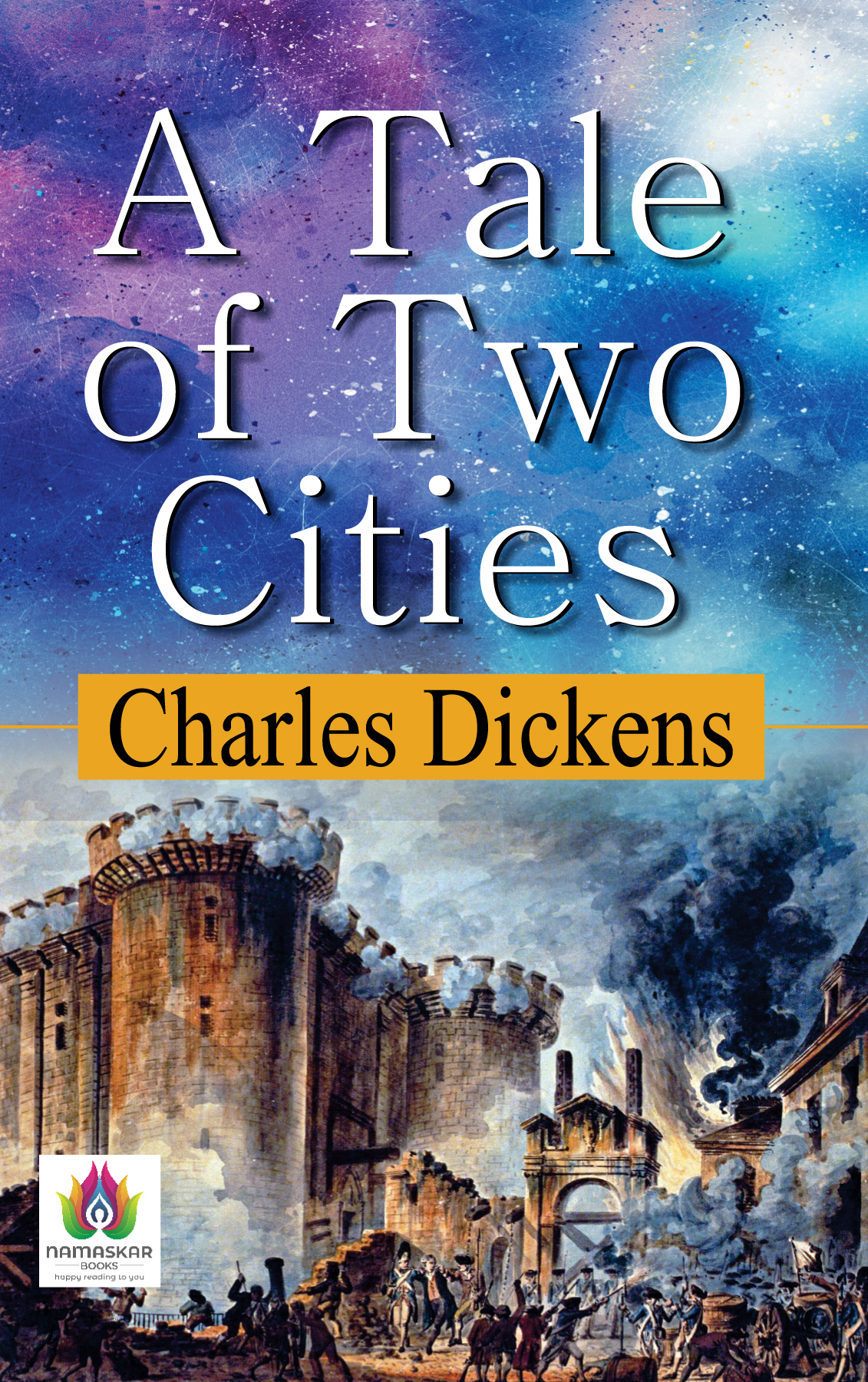
A TALE OF TWO CITIES
- Author Name:
Charles Dickens
- Book Type:
- Description:
This Book Doesnt have any Description.
The Scarecrow Chronicles
- Author Name:
Pathik Mitra
- Book Type:
- Description:
Look into the mirror of the sciety and all you see is a scarecrow!" An anthology that mirrors the society at large. Thirteen stories that take you to the streets of Kabul to the paddy fields in rural Bengal, from a chirstmas in Paris to a famine in Orissa, from the lavish life futility of a rockstar to the aspiring dreams of a prostitute from artistic nudity to meeting God. This anthology has it all. The roller coaster ride of emotions will justify life is nor black , nor white but mostly grey!! And the scarecrow in some paddy field will keep mocking the society and it's futile taboos!! Can we be the scarecrow? An anthology you may love or hate but can't ignore for sure!!

The Art of Public Speaking
- Author Name:
Dale Carnegie
- Book Type:
- Description:
"Public speaking is a vital skill which is important in all spheres of life. Generally, people who are good at public speaking go a long way in their professional careers. Hence, acquiring sound public speaking skills at an early age is critical. The book, 'The Art of Public Speaking’ helps the readers in learning the various techniques of 'speaking with confidence'. Written using several examples and powerful narration, this book is a wholesome learning material for public speaking. It is authored by Dale Carnegie and it was published by Prabhat Prakashan in 2013. The book begins with the most essential component of public speaking - confidence. The author explains the various ways in which readers can improve their confidence so that once they go on stage, they have no fear. Then, it deals with important factors of speaking like when to pause and the various pausing techniques. Then, it moves on to the topic of delivering the content. More than what you speak, what is crucial is how you speak and hence delivery is the most important factor in public speaking. It discusses the various techniques of delivery and force. Additionally, there are notes on preparation and body language."

Musings of A Psychologist
- Author Name:
Dr. Gauri Nadkarni Choudhary
- Book Type:
- Description:
The scope of psychology is beyond the clinic. It is in everything that we do and we don't do. The articles are just a different perspective of looking at everyday happenings and how they relate to how we deal with life.? Life doesn't come with an instruction manual. Often we shy away from talking about mental health or we confuse mental health with mental illness. These articles talk about simple day matters which have an impact on us. These are topics which we all face but don't realise that they have had an impact on us. It is a simpler way to look at things that bother us.

Things End But Memories Last Forever
- Author Name:
Kumar Milan
- Book Type:
- Description:
One often meets his destiny on the road he takes to avoid it� Have you ever: Been in true love? Not love at first sight but love at every sight? Met the love of your life after 4 years only to lose her again? Faced a psycho stalker? Messed with family of cops? Get caught boozing by none other than your mother on your own birthday? Well, if this excites you even a bit, this would be an enthralling read for you. Things End But Memories Last Forever. The book tells the real life bitter-sweet incidents and discloses a candid narration by a mad, love struck and bemused guy, Abhi, who confesses about every last details of his past life to his best friend after a near death escape in a car accident. The tale of his first love Nikita, and much more. As time goes on, you�ll understand. What lasts, lasts; what doesn�t, doesn�t. We are habituated to miss those people the most, who left us for no reason�

Sri Aurobindo and Shakespeare
- Author Name:
Dr. Meenu Sodhi Sharma
- Book Type:
- Description:
In this book an attempt has been made to compare the two legendary writers by comparing the eastern way of thinking with the western way. Shakespeare is amongst the writers Sri Aurobindo holds in high esteem. Sri Aurobindo’s admiration for the great dramatist resulted in obvious Shakespearean influences on him. He adopts for his plays Elizabethan model of drama perfected by Shakespeare’s genius. Shakespeare’s influence is traceable also in Sri Aurobindo’s sonnets. It is said that Sri Aurobindo had Shakespearean literature on his bed-side when he left his mortal remains. Both the great writers were not satisfied by merely holding mirror to the nature but due to their greater and deeper life power, they recreated the human life in its beauty and completeness. Therefore, there is an obvious need to compare and contrast Shakeapeare and Sri Aurobindo so as to bring out affinities that may be there between their creative ideal and vision as well as their poetic and dramatic art, along with the former’s influence on the later. In this book an attempt has been made to fulfill the need and to contribute, in some measure to the appreciation of Sri Aurobindo’s poetry and plays. It also briefly touches upon Indian response to Shakespeare. It focuses mainly on Sri Aurobindo’s numerous insights and critical observations on him. To sum up writings of the two such outstanding writers, who represent two very different ways of thinking. On one hand Shakespeare potrays lot of blood shed, gory tales and a wild kind of poetic justice in his writings, but on the other hand Sri Aurobindo truely follows Indian ethos of non violence or ‘Ahimsa’. The author underlines the stark similarities and differences in both the writer’s exploring their plays and sonnets. The structure of plays and sonnets may be same of both the greatest minds but ethos and personna ingrained in their writings is quite different.

Customer Reviews
Be the first to write a review...
Oral Epics of Kalahandi documents a living tradition that refuses the page. These epics are not literary artefacts but embodied performances sung by hereditary bards—Parghania among the Gond, Maral and Bogua among the Kondh, Ghogia among the Gaud, and Bhat among the Banjara. In Kalahandi's tribal hamlets, memory is rhythmic, heroic, and sacred, transmitted through voice and gesture across generations. Each community maintains its own bardic lineage, its own cosmology, its own way of singing identity into existence.
What distinguishes this collection is its ethnographic fidelity: these are not translations sanitised for literary consumption but testimonies to how communities actually narrate origin, valor, and divine presence. Bhunjia and Paharia elders become custodians of ancestral knowledge, while Debgunia singers invoke the divine feminine in ritual contexts. This is oral literature as it is performed today—urgent, participatory, alive.
What kind of reading experience does Oral Epics of Kalahandi offer?
This book offers an immersive encounter with performance traditions that are sung, chanted, and enacted rather than read silently. The language retains the rhythmic pulse and invocatory force of live performance. You are reading texts that were never meant to be fixed on a page—they shift with each telling, each bardic voice. The experience is ethnographic and immediate, asking you to imagine voices in tribal hamlets rather than narrators in novels. It rewards patience and curiosity about how communities use epic forms to sustain identity and memory.
Who should read this book and what background does it assume?
- Readers interested in oral literature, folklore studies, or performance traditions of India.
- Those curious about tribal cultures of Odisha and how identity is transmitted through song.
- Students and scholars of anthropology, ethnomusicology, or indigenous knowledge systems.
- Anyone seeking alternatives to written literary canons—epics that live in voice, not text.
- No specialist background is required, but openness to non-linear, ritualistic narrative forms is essential.
What is the cultural significance of Kalahandi's oral epics to Indian readers today?
At a time when tribal languages and traditions face erasure, Kalahandi's oral epics represent living repositories of indigenous cosmology, history, and resistance. These are not museum pieces but active cultural practices—sung at festivals, invoked in rituals, passed down through bardic lineages. They challenge the dominance of written Sanskrit and classical traditions by asserting that heroism, sacredness, and memory can exist entirely outside the archive. For contemporary India, they are a reminder that literary heritage is not confined to texts but thrives in voices, gestures, and communal performance.
What makes this documentation of oral epics distinctive from other folklore collections?
Unlike folklore anthologies that smooth oral narratives into literary prose, this collection preserves the performative texture of each epic—its invocations, repetitions, and bardic interjections. It names specific hereditary bardic communities: Parghania, Maral, Bogua, Ghogia, Bhat—acknowledging that these are not anonymous folk traditions but living professional lineages. The Sahitya Akademi presentation grounds each epic in its ritual and social context, making visible the cultural labour of memory-keeping. This is documentation that respects the oral as a distinct literary mode, not a precursor to writing.
What does this book leave the reader with after finishing it?
You finish with a transformed sense of what literature can be—not bound to the page but alive in voice, rhythm, and communal enactment. The epics linger as embodied knowledge: you remember not just stories but the bardic communities who carry them, the rituals that frame them, the generations who depend on them. Emotionally, there is reverence for traditions that persist despite marginalisation. Intellectually, you gain insight into how oral cultures construct continuity without writing. Culturally, you carry awareness that India's literary heritage is far vaster and more plural than any written canon can contain.