
The Last Wish
₹
200
₹ 170 (15% off)
Available
Tommy (Tom), an Indian breed dog, was adopted by Amit who lived in Delhi in a rented house. Tommy was deeply connected with his master and the people in the colony he lived. Amit once left the home and Tommy was left alone in the colony. Tommy was not used to live like usual street dogs. He waited for his master for days and months but he didn't return back. Slowly he started getting involved with the other street dogs in the colony and discovered his parents living there. He also realized that he had a special talent of reading which he probably learnt by chewing the newspaper rolls daily. He got enough of love and care from his parents but his love for his master was never replaced. One day he saw a letter from his master which he wrote to the landlord. Tommy read the address and decided to go to his master's place- Gujarat. Although, he didn't had an idea about the distance, he left his parents to meet his master. Here's where Tommy's journey begins. He crosses the colony of a notorious dog named sultan and loses his parents during the course. He then gets picked up by a municipality bus and gets dropped in an unknown market. He meets a dog named Julie and falls in love with her. He discusses his desire to meet his master and learns that the place his master lives is very far away from there.
Read moreAbout the Book
Tommy (Tom), an Indian breed dog, was adopted by Amit who lived in Delhi in a rented house. Tommy was deeply connected with his master and the people in the colony he lived. Amit once left the home and Tommy was left alone in the colony. Tommy was not used to live like usual street dogs. He waited for his master for days and months but he didn't return back. Slowly he started getting involved with the other street dogs in the colony and discovered his parents living there. He also realized that he had a special talent of reading which he probably learnt by chewing the newspaper rolls daily. He got enough of love and care from his parents but his love for his master was never replaced. One day he saw a letter from his master which he wrote to the landlord. Tommy read the address and decided to go to his master's place- Gujarat. Although, he didn't had an idea about the distance, he left his parents to meet his master. Here's where Tommy's journey begins. He crosses the colony of a notorious dog named sultan and loses his parents during the course. He then gets picked up by a municipality bus and gets dropped in an unknown market. He meets a dog named Julie and falls in love with her. He discusses his desire to meet his master and learns that the place his master lives is very far away from there.
Book Details
Elon Musk A Complete Biography
- Author Name:
Abhishek Kumar
- Book Type:

- Description:
Elon Musk is most widely recognized as a pioneering innovator of the 21st century. The man behind space travel, electric cars, mobile payments has many accomplishments to his name; Founder, CEO & CTO of SpaceX; CEO of Tesla, Founder of The Boring Company, cofounder of Neuralink and Open AI, Musk is a present day Tony Stark. This story captures Musk’s initial years in South Africa, his university education, his first forays into innovation, and setting up his first business to being the billionaire founder that he is now. It also captures Musk’s tumultuous personal life, which only seems to what the curiosity of people everywhere about the selfmade billionaire with a networth of nearly 200 billion.

Oprah Winfrey: A Complete Biography
- Author Name:
Abhishek Kumar
- Book Type:
- Description:
Awating description for this book

Bruce Lee: A Complete Biography
- Author Name:
Abhishek Kumar
- Book Type:
- Description:
Bruce Lee, son of Cantonese opera star Lee Hoi-Chuen, was one of the biggest names in Hollywood of his time. He is credited with introducing the East to the silver screens of the West. His greatest passion in life was Kung Fu—an ancient Chinese martial art unknown in the West until 1965, the year he made his first television appearance. A Kung Fu master, an actor, and a philosopher, Bruce Lee embodied the idea of a complete human one with a strong body and a critical mind. He studied a system of Chinese Kung Fu for nine years called Wing Chun. Apart from this, he was an ardent reader of Confucius. He tried to incorporate Confucian philosophy and teachings into his life. He taught Americans about Chinese philosophy and culture for six years. He detested mediocrity and always pushed his limits, both physically and mentally. He inspired generations of youngsters worldwide through his work and continues to do so even today. On July 20, 1973, the world lost this most influential martial artist of all time.

Kalpana Chawla: A Complete Biography
- Author Name:
Abhishek Kumar
- Book Type:
- Description:
"When you look at the stars and the galaxy, you feel that you are not just from any particular piece of land, but from the solar system." — these were the first words of the first Indian woman astronaut, Kalpana Chawla, when she landed on the earth. The story of Kalpana Chawla is the story of a dream becoming reality. It is the story that starts in the small city of Karnal and ends in space. Hers is a story that gives us the belief that the path from dreams to success does exist, all one needs is the vision, the perseverance, and the courage to follow it. This book is an attempt to relive the story of our forgotten hero - Kalpana Chawla. Through the pages of this book, the reader will become a part of her journey which travels from Karnal to Nasa and finally to space.

Martial Arts Champion Bruce Lee
- Author Name:
Abhishek Kumar
- Book Type:
- Description:
विश्वविख्यात मार्शल आर्ट एक्सपर्ट ब्रूस ली का जीवन संघर्षों की चादर में लिपटा हुआ था। बचपन में उन्हें बार-बार बीमारी से लड़ना पड़ा। शरीर दुर्बल था और राह दिखानेवाला भी कोई नहीं था। बाद के जीवन में उन्हें युद्ध-कला में एक अनिश्चित एवं अस्थिर जीविका से जूझना पड़ा। इसी अनिश्चितता के कारण उसके मन में एक पेशेवर नर्तक बनने का विचार आया। यहाँ तक कि उन्होंने हांगकांग की चा-चा चैंपियनशिप भी जीत ली। लेकिन उनका मन तो कुंगफू में ही रमता था। जीवन भर उन्होंने कुंगफू का ही अभ्यास किया था और जिस शांति की खोज में वह लगे हुए थे। वह शांति उन्हें इससे ही प्राप्त हुई। अपने काम से उन्होंने दुनिया भर में युवा पीढ़ी को प्रेरित किया था और आज भी करते हैं। वे एक उत्तम अभिनेता थे और आज भी उनकी फिल्में बहुत शौक से देखी जाती हैं। पूरे विश्व में किशोरों के कमरों की दीवारें ली के पोस्टरों से सजी रहती हैं, जो उन्हें एक योद्धा, एक शिक्षक और एक अनुकरणीय व्यक्तित्व के रूप में देखते हैं। उनके जीवन के हर पहलू से बहुत कुछ सीखा जा सकता है। उनमें शिक्षा है, बुद्धिमानी है और जीवन-दर्शन है। उनका जीवन कई मायनों में प्रेरणाप्रद और अनुकरणीय है।

Hyderabad Crime Files | Crime Stories From The City of Pearls
- Author Name:
Abhishek Kumar
- Book Type:
- Description:
In the heart of Hyderabad, where tradition and technology collide, Inspector Sarita Reddy hunts criminals lurking in the city's shadows. From high-profile murders to cyber warfare, each case she solves brings her closer to a chilling truth-some crimes aren't just about money or power, but about control. A missing heiress. A gruesome murder that shakes the elite. A faceless bomber terrorizing the city. And a digital spectre haunting the minds of Al researchers. As Sarita unravels each mystery, she finds herself drawn into a web of deception, betrayal, and secrets buried beneath the city's glittering skyline. When the hunter becomes the hunted, Sarita must confront not just criminals, but forces far beyond her control. Can she expose the truth before she too becomes another unsolved case? A gripping mix of police procedural, cybercrime thriller, and psychological suspense, this book is an electrifying journey into the city's darkest corners-where danger is always a step ahead.

THE CHARIOT
- Author Name:
Raghavendra Patil +1
- Book Type:
- Description:
Raghavendra Patil (b.1951) belongs to the postmodernist group of writers in Kannada. Like his predecessors, U.R. Anantamurthy, Yahvant Chittal, Tejasvi and Shantinath Desai, he arrived at the novel through the short story. The Chariot (Teru), which won him the Sahitya Akademi Award, is his second novel. Though Patil belongs to the postmodern era, he does not share the thematic concerns or techniques of Western postmodernism. He is closer to the nativistic movement, which has already produced major writers like Chandrasekhar Kambar and Kum. Veerabhadrappa. He has also inherited some of the qualities of his famous uncle Anandakanda, such as an interest in local history and closeness to rural life. The story that Patil tells in The Chariot spans more than a hundred and fifty years, beginning with the years when the Peshva extended his rule to North Karnataka and ending with the years after the Emergency, and it relates to the Belagavi region, with its epicentre in an imagined but fully realised village named Dharamanatti. The novel offers two images of Teru, which in Kannada means both the chariot and the festival associated with it. The first is centred on an atrocious human sacrifice made in the name of religion by an autocratic ruler, and the second, distanced in time by a century and a half, mirrors the change from the feudal order to a democratic one, where religious superstition and feudal practices have been replaced by scepticism and the politics of power. The novel is remarkable for its innovative technique, which handles myth and reality with equal success.

Anna
- Author Name:
C. N. Annadurai
- Book Type:
- Description:
Everyone regarded Anna as one of the most remarkable figures produced by Tamil Nadu. His greatness stems from the widespread acclaim he received from prominent leaders of his era. His various talents demonstrate his capabilities as an effective administrator, deep thinker, prolific writer, insightful journalist, and above all, a humanitarian that leaves us in awe of his literary contributions. He observed the living conditions of Tamils during his time and aimed to instigate change through his writing and speeches. Inspired by Periyar's thoughts and pride in Tamil heritage, he emerged as a towering advocate for humanism, dedicated to protecting the Tamil community and working toward their advancement. Anna once referenced influential figures like Shelley, Byron, Keats, Coleridge, Emerson, and Bacon, remarking that they are not foreigners in the truest sense. Is Tiruvalluvar simply a Tamil? They are all global citizens and educators, and Anna holds a similar esteemed position as a worldwide citizen. Anna is recognised as a pioneer in short stories that explore the tension between tradition and modernity. He is a relentless journalist and a guiding light as a dramatist. In addition to being a remarkable orator, his political acumen further defines him as the genius of his century. In summary, Anna is a true phenomenon.

Those Unsaid Words
- Author Name:
Anshuman Agrahri
- Book Type:

- Description:
Tanvi realises how the definition of love keeps changing and emotions were the last parameters she considered while deciding her life. As the destiny could play, her best friend dies on the very day of her marriage, and she starts inculpating herself for the misfortune, which leads to a fractured married life. She defies everyone and goes on a road trip to Leh. In the land of lamas she tries to understand life from the lens of spirituality and starts discerning threads of coincidences. The journey helps her to understand ‘Those Unsaid Words’ which cannot be said, cannot be written, cannot be gesticulated; can only be felt.

Baduku
- Author Name:
Geeta Nagbhushan +1
- Book Type:
- Description:
Dr. Geetha Nagabhushana's work primarily focuses on the struggles of the distressed, exploited, and naïve individuals from slums or the lowest strata of the Hindu caste system. Her unique storytelling provides a glimpse into real-life experiences that resonate deeply with us, rather than simply presenting fictional characters. The Kannada dialect used in "Baduku" deserves special recognition for its authenticity and cultural richness. Throughout the novel, the hardships faced by those in the lowest tiers of the Varna system are depicted without any apologies. The portrayal of women's struggles in "Baduku" serves as a critique of patriarchal society. The novel offers a comprehensive view of society, addressing various forms of atrocity and oppression, including issues related to class, caste, and gender, as well as the challenges faced by both urban and rural downtrodden communities. There is no fair treatment found in any of these intersections.

The Tale of a Place
- Author Name:
S.K. Pottekkat +1
- Book Type:
- Description:
Prema Jayakumar provides the English translation of S.K. Pottekkar's acclaimed Malayalam novel, ' Oru Deshanthinte Katha, ' published by Sahitya Akademi in 2015. The narrative centres on Sreedharan, a boy from Athiranippadam, portraying villagers' lives through the perspectives of the narrator and other characters. Set during British India, the story begins with Sreedharan's return to his hometown after more than 40 years. He is dropped near a petrol overhead tank on the site of his teenage love's house. He recounts the lives of the residents of Athiranippadam. The novel is segmented into five parts: childhood, early youth, teenage years, and a final section called "marmarangal." It features a story told by Velu Mooper, who witnesses events after Sreedharan's father's death, following his extensive travels to North India, Africa, and Europe. Throughout the story, he encounters individuals who leave lasting impressions from different stages of life, including Emma from Switzerland, a Bengali Babu, his half-brothers Kunhappu and Gopalettan (who caused him suffering by contracting syphilis), the mother goddess psyche of a Tamil Brahmin woman, with whom he longs, a girl who loved him unrequitedly before dying of tuberculosis, pranks with the " Supper Circuit Set, " lost loves, profound loneliness, his father's legendary life, and his journeys across continents. He started by dropping off his widowed mother at her family's home, initially at Elanhippoyil, then heading to Bombay- a solitary voyage into the vast, bewildering world, as SKP describes. This haunting autobiographical novel spans about 60 years of history, reflecting on themes of memory, nostalgia, hardship, dreams, and numbness. It concludes with a monologue: "Forgive me, the representative of the new generation of Athiranippadam, forgive me for trespassing into your land, and consider me merely an antique collector, a non-native!"

Imprints of Time
- Author Name:
Dr. Ampasayya Naveen
- Book Type:
- Description:
Imprints of Time (Kaalarekhalu) depicts a pivotal period in Telangana history through a compelling fictional narrative. It portrays the region under the oppressive Nizam, ruthless Zamindars, and the violence-causing “Rajakars.” The story emphasises the rise of “Andhramahasabha,” the emergence of communism, and Hyderabad’s integration into India, drawing from memoirs and eyewitness accounts. The narrative traces the lives and struggles of people during the decades following Andhra Pradesh’s formation, highlighting Telangana’s hopes, frustrations, and political awakening. Key Themes - Social-Political Struggle: The novel showcases Telangana’s fight against oppression. - Cultural History: It details Telangana’s socio-cultural development. - Individual vs. Society: Like Naveen’s other works, it examines characters’ psychology amid social transformation. Strengths - Authenticity: As an autobiographical novel, it provides a raw perspective on the struggles of the oppressed. - Unique Style: Naveen’s distinctive, experimental storytelling immerses readers in the era. - Historical Significance: It is an important addition to modern Telugu literature, recording a crucial historical period.

Daatu
- Author Name:
S.L. Bhyrappa +2
- Book Type:
- Description:
Daatu is a powerful novel that explores the rigid boundaries of caste and community in rural India, and what it takes to cross them. Set in Karnataka, the story unfolds around deeply entrenched social structures where identity is dictated by birth, and every step outside those boundaries comes at a cost. At its core, Daatu is about transgression — the act of “crossing over.” Whether it is caste, relationships, or social norms, the novel examines what happens when individuals challenge the invisible lines that define their lives. The narrative is layered with realism, capturing village life with honesty and nuance. It reflects how traditions, power, and fear shape human behaviour, while also revealing moments of resistance, dignity, and change. Recognised as a significant work in Indian literature, Daatu offers readers not just a story, but a lens into the complexities of caste, morality, and social transformation.

Jatara
- Author Name:
Boya Jangaiah +1
- Book Type:
- Description:
Jatara is a novella (1988) that deals with the predicament of women in the countryside. It graphically captures the realities of the village society in Telangana as major and minor characters come alive. The writer presents the theme of corruption in all its stark dimensions-physical and moral degradation, psychological and emotional blackmail, and surrender to superstitions and deceit from the point of view of the protagonist. The author remains objective, a bystander, in focusing on the bright and dark sides of the rural society, on interpersonal relations, and their belief systems, while subtly suggesting what was needed. For its humanist vision and gripping narrative, the novella remains a classic in Telugu fiction.

Carvalho
- Author Name:
K.P. Purnachandra Tejaswi +1
- Book Type:
- Description:
Carvalho is one of the most widely read and admired novels of Tejaswi. It is a novek which can be read at varioud levels as it presents many worlds. The dream if science and mystery and the everyday world of ordinary but amazing men and women. The novel explored the various facets of our complex civilisation like agriculture law and politics. It is a novel which will apppeal to readers of all ages. To Children it will appeal as a story of adventure, mystery and thrill; grown-ups can enjoy it as a work which offers stimulating insights into the world of men and women and Nature, and connoisseurs of art can see in it a baffling and inviting vision of art and metaphysics and wisdom.

Joys and Woes are Woven Fine
- Author Name:
Arkaprava De
- Book Type:
- Description:
She was born in Kolkata. She was an unwelcomed guest, a product of lust. She had to pay the price. She was abducted and trafficked to Hyderabad. She spent nine years begging on the roadside. Destiny brought her back to Kolkata, where she was sold off to a procuress in Sonargachi. She married Raghu and started leading a healthy life. However, she attempted suicide. She was Ketaki. Why was Ketaki abducted and trafficked? Where were her father and mother? Was Ketaki ever able to meet her birth parents? Why did she attempt suicide? Was it all destiny that brought her back to Kolkata, or did The Almighty have something else in His holy mind? After all, Joys and Woes are always woven fine!!

ONCE UPON A TIME
- Author Name:
A Sethumadhavan +1
- Book Type:
- Description:
Once Upon a time by A. Sethumadhavan, is a novel which surrounds priyamvada, who is an HR professional, and a single parent at the centre of its narrative. The strong undercurrent of this award-winning title is the way woman asserts her independence and deft strokes in the book suggest how a professional woman scores. The novel very beautifully depicts the personal journey of a single parent, where are dilemmas which priyamvada faces, doing a tightrope walk between the labor force and the managements, trying to fill the vacuum in her daughter’s life and consciously attempting to steady her own emotional moorings.

Two Letters
- Author Name:
Upendra Nath Jha 'Vyas'
- Book Type:
- Description:
Two Letters is the English translation of the Sahitya Akademi Award-winning Maithili novel, Du Patra. The novel is structured as two letters, written by two women to two men, not to one another. The narrative centres on four characters, with the two men being the recipients of the letters. The two women, placed at opposite ends of the cultural spectrum and value systems, grapple with the fundamentals of the cultural dichotomy between the West and India, under the shadow of their personal tragedies. The novel delves deeply into the women's inner selves and psyches. The first letter is written by Indu to her husband, Surendra, who has been in the USA for about a decade. When Ramesh, a cousin of Indu, goes to the USA for about a year and meets Surendra, he is introduced to a young American woman, Jessica, with whom he develops a friendship. On coming back home, Ramesh sends a copy of Indu's letter (written to her husband) to Jessica. The second letter is written by Jessica to Ramesh. Experimental in form, the novel is pacy in prose and intense in narrative.

Parva
- Author Name:
S.L. Bhyrappa
- Book Type:
- Description:
The novel narrates the story of the Hindu epic Mahabharata, primarily using monologue as a literary technique. Several principal characters from the original Mahabharata reminisce about their entire lives. Both the setting and the context for the reminiscence are the onset of the Kurukshetra War. Parva is acknowledged as S.L. Bhyrappa's greatest work. Non-Kannadigas who have read it in its Hindi and Marathi translations consider it one of the masterpieces of modern Indian literature. It transforms an ancient legend into a modern novel. In this process, it has gained rational credibility and a human perspective. The main incident, the Bharata war, symbolic of the birth pangs of a new world order, depicts a heroic but vain effort to arrest the disintegration and continue the prevailing order. It is viewed from the standpoints of the partisan participants and judged with reference to the objective understanding of Krishna. Narration, dialogue, monologue, and commentary are all employed for its presentation. Shot through with irony, pity, and objective understanding, the novel ends with the true tragic vision of faith in life and hope for mankind. Parva has been translated into several major Indian languages: Bengali, Hindi, Marathi, Tamil, and Telugu, apart from English. The novel narrates the story of the Hindu epic Mahabharata, primarily using monologue as a literary technique. Several principal characters from the original Mahabharata reminisce about their entire lives. Both the setting and the context for the reminiscence are the onset of the Kurukshetra War.

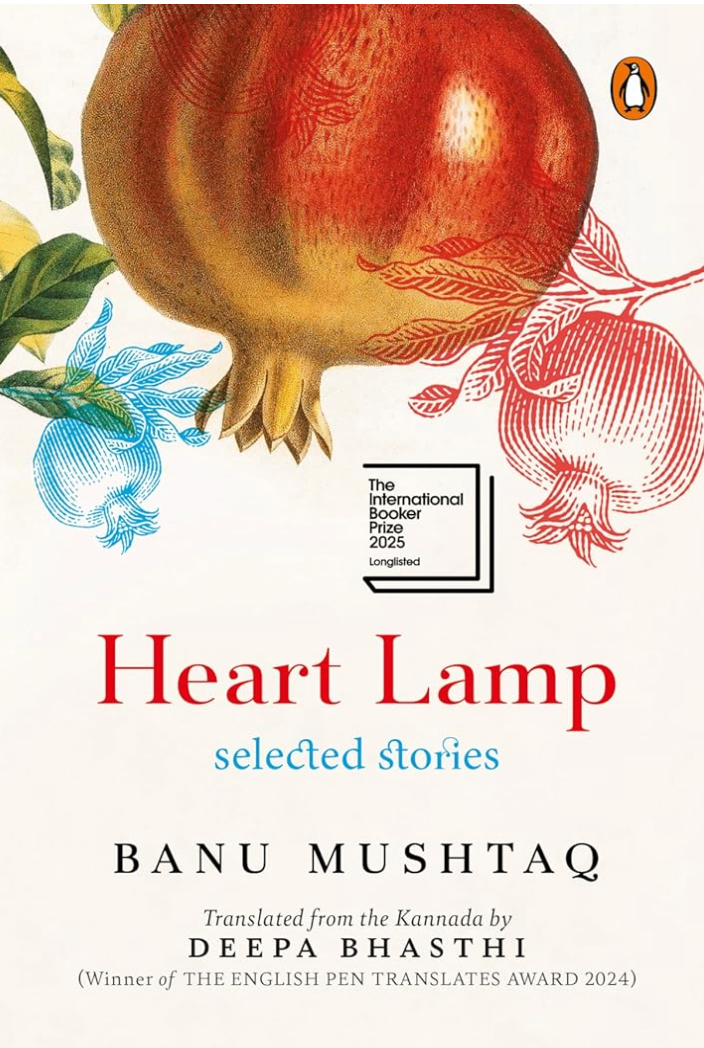
Heart Lamp
- Author Name:
Banu Mushtaq
- Book Type:
- Description:
In Heart Lamp, Banu Mushtaq exquisitely captures the everyday lives of women and girls in Muslim communities in southern India. Published originally in the Kannada, these portraits of family and community tensions testify to Mushtaq’s years as a journalist and lawyer, in which she tirelessly championed women’s rights and protested all forms of caste and religious oppression. Written in a style at once witty, vivid, colloquial, moving and excoriating, it’s in her characters – the sparky children, the audacious grandmothers, the buffoonish maulvis and thug brothers, the oft-hapless husbands, and the mothers above all, surviving their feelings at great cost – that Mushtaq emerges as an astonishing writer and observer of human nature, building disconcerting emotional heights out of a rich spoken style. Her opus has garnered both censure from conservative quarters as well India’s most prestigious literary awards; this is a collection sure to be read for years to come.
Customer Reviews
Be the first to write a review...
The Last Wish follows Tommy, an Indian breed dog adopted by Amit in a Delhi rented colony, through the disorienting transformation from beloved pet to abandoned stray. When Amit leaves and never returns, Tommy faces a crisis of identity—he cannot survive as street dogs do, yet he has no home to return to. His days of waiting stretch into months, marked by hunger, confusion, and the slow erosion of hope. What distinguishes this narrative is its focus on an Indian breed dog navigating Delhi's urban colony landscape, where the boundary between pet and stray is porous and painful. As Tommy integrates with the street dog community, he discovers his biological parents living among them—a revelation that reframes his abandonment within a larger question of belonging. The book examines domestication not as rescue but as a kind of exile from one's own kind, and asks what a dog loses and gains when humans decide his fate.
What kind of reading experience does The Last Wish offer?
This book offers a quiet, melancholic reading experience told from a dog's perspective as he processes abandonment and identity. The pace mirrors Tommy's waiting—slow, patient, punctuated by small discoveries about survival and kinship. It rewards readers who are comfortable with emotional restraint rather than dramatic plot turns, and who find meaning in the interior life of a non-human narrator. The tone is reflective and tinged with loss, but not sentimental. You finish the book with a lingering sense of what it means to be left behind and what it takes to find new ground beneath your feet.
Who will connect most deeply with this book?
- Readers who have adopted Indian breed dogs or rescued strays, and understand the fragility of that bond
- Those interested in animal perspectives and interspecies relationships beyond anthropomorphic fantasy
- People drawn to stories set in Indian urban colonies, where human and animal lives are tightly interwoven
- Anyone who has experienced displacement or the slow work of rebuilding identity after loss
- Readers seeking quiet, emotionally honest contemporary fiction rather than high-stakes drama
Why does a story about street dogs and adoption resonate with Indian readers today?
India's urban colonies are ecosystems where street dogs, pets, and humans negotiate shared space daily—a relationship both intimate and precarious. As middle-class pet adoption rises, so does the abandonment of dogs when owners relocate or lose interest. Tommy's story reflects a contemporary urban anxiety: the ethics of domesticating animals we may not keep, and the street dog communities we disrupt. Indian breed dogs, often overlooked for foreign breeds, carry additional cultural weight—symbols of what is local, resilient, and frequently undervalued. This book asks readers to consider the consequences of choices made on an animal's behalf.
What makes this author's approach to the abandoned dog narrative distinctive?
Rather than resolving Tommy's abandonment with rescue or reunion, the narrative follows his integration into street dog society and the discovery of his biological parents within that world. This shifts the story from a tale of loss to one of unexpected kinship and identity reconstruction. The choice to center an Indian breed dog in a Delhi colony grounds the story in a specific urban Indian reality, moving beyond universal pet narratives. The book does not sentimentalize street dogs or demonize Amit—it simply observes the gap between human intentions and animal consequences, and the resilience required to cross it.
What does this book leave with the reader after the final page?
- A deepened awareness of the emotional lives of street dogs in Indian cities, and the communities they form
- Questions about what we owe the animals we bring into our homes and then leave behind
- An appreciation for the resilience required to reconstruct identity when the world you knew disappears
- A lingering image of waiting—how hope persists, then shifts, then finds new objects
- A recognition that belonging is not fixed, but something remade through encounter and adaptation