
From Hampi to Harappa
₹
665
₹ 551.95 (17% off)
Available
"From Hampi to Harappa" is considered among the top ten Telugu autobiographies of the twentieth century. Ramachandra's honesty, self-reflection, and the conflict between his traditional Vaishnava beliefs and modern education make this book remarkable. During the nationalist struggle, he was attracted to extremist ideas but found his own path again through personal struggles. It's astonishing that someone who was a great scholar in Sanskrit, Telugu, Kannada, and Prakrit, had to experience hunger and travel across India to find work to feed himself in the 1930s and 40s. The book is filled with unbelievable incidents, such as his mentor Veturi Prabhakara Sastry experiencing extreme hunger while the author survived on very little food. Similarly, he survived on Ganga water for almost a month while waiting in Kanpur for a conman who had promised a business partnership. He did a variety of jobs, including working as a cataloguer in manuscript libraries, a hotel worker, and a Havaldar clerk in the military, before finally settling in a newspaper. Through his experiences, Ramachandra provides us with glimpses of the civilizations around Hampi and Harappa and insights into modern India during the Independence Movement.
Read moreAbout the Book
"From Hampi to Harappa" is considered among the top ten Telugu autobiographies of the twentieth century. Ramachandra's honesty, self-reflection, and the conflict between his traditional Vaishnava beliefs and modern education make this book remarkable. During the nationalist struggle, he was attracted to extremist ideas but found his own path again through personal struggles. It's astonishing that someone who was a great scholar in Sanskrit, Telugu, Kannada, and Prakrit, had to experience hunger and travel across India to find work to feed himself in the 1930s and 40s. The book is filled with unbelievable incidents, such as his mentor Veturi Prabhakara Sastry experiencing extreme hunger while the author survived on very little food. Similarly, he survived on Ganga water for almost a month while waiting in Kanpur for a conman who had promised a business partnership. He did a variety of jobs, including working as a cataloguer in manuscript libraries, a hotel worker, and a Havaldar clerk in the military, before finally settling in a newspaper. Through his experiences, Ramachandra provides us with glimpses of the civilizations around Hampi and Harappa and insights into modern India during the Independence Movement.
Book Details
Beyond The Backyard
- Author Name:
P.Sathyavathi +2
- Book Type:

- Description:
Women’s voices no longer solely portray confinement to kitchens and backyards or victimhood. Instead, they emphasise unseen restrictions faced by individuals and significant barriers within global contexts. This collection of twenty-nine short stories covers diverse themes, complex narratives, unique characters, inventive metaphors, and alternative viewpoints. All stories aim for a just and equitable world. Key topics include Dalit, minority, and tribal issues, farmers’ struggles, new forms of exploitation in high-tech sectors under Globalisation, and existential questions, which are central to these women's writings. Over a dozen passionate translators helped bring these stories to English-speaking readers. The shift of women from victims to survivors to saviours would be even more impactful if men and women worked together to build a casteless, classless, environmentally mindful society- an aspiration our writers share.

Sri Aurobindo and Shakespeare
- Author Name:
Dr. Meenu Sodhi Sharma
- Book Type:
- Description:
In this book an attempt has been made to compare the two legendary writers by comparing the eastern way of thinking with the western way. Shakespeare is amongst the writers Sri Aurobindo holds in high esteem. Sri Aurobindo’s admiration for the great dramatist resulted in obvious Shakespearean influences on him. He adopts for his plays Elizabethan model of drama perfected by Shakespeare’s genius. Shakespeare’s influence is traceable also in Sri Aurobindo’s sonnets. It is said that Sri Aurobindo had Shakespearean literature on his bed-side when he left his mortal remains. Both the great writers were not satisfied by merely holding mirror to the nature but due to their greater and deeper life power, they recreated the human life in its beauty and completeness. Therefore, there is an obvious need to compare and contrast Shakeapeare and Sri Aurobindo so as to bring out affinities that may be there between their creative ideal and vision as well as their poetic and dramatic art, along with the former’s influence on the later. In this book an attempt has been made to fulfill the need and to contribute, in some measure to the appreciation of Sri Aurobindo’s poetry and plays. It also briefly touches upon Indian response to Shakespeare. It focuses mainly on Sri Aurobindo’s numerous insights and critical observations on him. To sum up writings of the two such outstanding writers, who represent two very different ways of thinking. On one hand Shakespeare potrays lot of blood shed, gory tales and a wild kind of poetic justice in his writings, but on the other hand Sri Aurobindo truely follows Indian ethos of non violence or ‘Ahimsa’. The author underlines the stark similarities and differences in both the writer’s exploring their plays and sonnets. The structure of plays and sonnets may be same of both the greatest minds but ethos and personna ingrained in their writings is quite different.

Selected Readings of Sri Ramanuja
- Author Name:
S Ranganath
- Book Type:
- Description:
Selected Readings of Sri Ramanuja: Sri Ramanujacharya is one of the three great acharyas whose Sahasramanotsava was recently celebrated with joy and grandeur. His efforts to uplift the poor and oppressed are remarkable. Over his 120-year life, he authored numerous works to inspire devotion in the masses by emphasising the concept of Saranagati or Prapatti (self-surrender to God). Scholars from both Eastern and Western traditions, including Swami Vivekananda and Dr. S. Radhakrishnan, as well as Goethe and Ninian Smart, have honoured Ramanuja with high praise. His altruistic service, compassion, and love for the uneducated and impoverished remain relevant today. This book, in 25 chapters, explores the influence of the Vishishtadvaita philosophy within Indian tradition, organised into three sections: Predecessors of Ramanuja, Ramanuja himself, and his Successors. The final chapter discusses Ramanuja's enduring significance for the 21st century, offering a comprehensive overview of his contributions to Indian thought.

One Immigrant, A Hundred Stories
- Author Name:
Debajyoti Chatterji
- Book Type:
- Description:
One Immigrant, A Hundred Stories is Debajyoti Chatterji’s intimate reflection on a life shaped by family, culture, and the immigrant experience. It is a story told not for the public eye but for his children and their descendants. Through vivid recollections, he explores his upbringing in India, the challenges of building a new life in America, and the insights gained along the way. With a blend of personal memories and reflections on his research, Chatterji offers a view of his journey that is deeply personal and universally relatable to anyone who has faced the complexities of navigating two cultures. This memoir is a thoughtful collection of moments that reveal the essence of his life as a Bengali immigrant—one who, with unwavering commitment, continues to hold fast to his language, culture, and identity. Written for his family, it is a legacy of love, understanding, and heritage passed from generation to generation.

Autobiography of Dr. B.R. Ambedkar
- Author Name:
DR. B.R. Ambedkar
- Book Type:
- Description:
My Autobiography | Autobiography of Dr. B.R. Ambedkar | Ambedkar's Challenges, Ambitions, and Accomplishments

Greatest Speeches Of Vivekananda
- Author Name:
Swami Vivekanand
- Book Type:
- Description:
"This book is a collection of Swami Vivekananda’s speeches and intends to inspire the readers with his words. It is the voice of Vivekananda that has been captured here, a voice that calls us from our slumber of ignorance and leads to the path of enlightenment and awakening. His speeches can help us become a better version of ourselves. A core concept that he believed in was that of ‘family’ and how it can form the basis of harmony and brotherhood on a macro scale. His speeches do indicate towards accepting catch other, like we do in a family. According to him, the whole world can form a family if we live wich harmony and right tolerance. His speeches also portray the secularism of India, the love for the country to which he belonged to and was proud of the diversity and empathy. His speeches should be read by everyone across the borders and one must understand the true depth of his words. The speeches in Chicago represent what Vivekananda truly believed in and what he stood for. His philosophies — shall constantly inspire us and help move forward cowards a bright and fruitful future.

M.K. Gandhi An Autobiography
- Author Name:
M.K. Gandhi
- Book Type:
- Description:
Mohandas Karamchand Gandhi 2 October 1869 – 30 January 1948) was an Indian lawyer, anti-colonial nationalist, and political ethicist, who employed nonviolent resistance to lead the successful campaign for India's independence from British Rule, and in turn inspired movements for civil rights and freedom across the world. The honorific Mahātmā (Sanskrit: "great-souled", "venerable"), first applied to him in 1914 in South Africa, is now used throughout the world. Born and raised in a Hindu family in coastal Gujarat, western India, Gandhi trained in law at the Inner Temple, London, and was called to the bar at age 22 in June 1891. After two uncertain years in India, where he was unable to start a successful law practice, he moved to South Africa in 1893 to represent an Indian merchant in a lawsuit. He went on to stay for 21 years. It was in South Africa that Gandhi raised a family, and first employed nonviolent resistance in a campaign for civil rights. In 1915, aged 45, he returned to India. He set about organising peasants, farmers, and urban labourers to protest against excessive land-tax and discrimination. Assuming leadership of the Indian National Congress in 1921, Gandhi led nationwide campaigns for easing poverty, expanding women's rights, building religious and ethnic amity, ending untouchability, and above all for achieving Swaraj or self-rule. Gandhi's vision of an independent India based on religious pluralism was challenged in the early 1940s by a new Muslim nationalism which was demanding a separate Muslim homeland carved out of India. In August 1947, Britain granted independence, but the British Indian Empire was partitioned into two dominions, a Hindu-majority India and Muslim-majority Pakistan

UP FROM SLAVERY
- Author Name:
Booker T. Washington
- Book Type:
- Description:
"Up from Slavery is the 1901 autobiography of American educator Booker T. Washington (1856-1915). The book describes his experience of working to rise up from being enslaved as a child during the Civil War, the obstacles he overcame to get an education at the new Hampton Institute, and his work establishing vocational schools like the Tuskegee Institute in Alabama to help black people and other persecuted people of colour learn useful, marketable skills and work to pull themselves, as a race, up by the bootstraps. He reflects on the generosity of teachers and philanthropists who helped educate black and Native Americans. He describes his efforts to instill manners, breeding, health, and dignity in students."

Getting Dressed And Parking Cars
- Author Name:
Alok Kejriwal
- Book Type:
- Description:
Getting Dressed and Parking Cars captures the minute-to-minute, event-by-event, nail-biting business adventure of Alok Kejriwal’s fourth entrepreneurial venture—Games2win. The Walt Disney Company acquired Alok’s previous company. Games2win has been creating car parking and dress-up games online with the aim of becoming India’s most successful casual gaming start-up in the global market. Each chapter in this book captures Alok’s real-life experience of building, scaling and routinely failing in his venture. The book throbs with adrenaline as Alok thrills readers with stories of his website traffic vanishing in thin air, his games getting stolen, his arrest and his partner’s amazing creation of ‘invisible’ ads. Getting Dressed and Parking Cars is not a book glorifying a successful start-up but a journey of business adventures that celebrates the spirit of ‘starting something’. Think of it as a playbook for professionals and entrepreneurs to create something new . . .

Dr. Syama Prasad Mookerjee The Great Educationist
- Author Name:
Namarta Sharma +1
- Book Type:
- Description:
Whatever has been written about Dr Syama Prasad Mookerjee so far doesn't do justice to his tremendous and multi-faceted personality. This leading sentiment is behind the motivation for writing the present book. A lot has been written about Dr Mookerjee's political endeavours. However, his persona is immeasurably significant beyond his political life. The simplest explanation of his life proclaims him master of social, educational and economic thought. This book attempts to know how Dr Mookerjee became a powerful personality, an educationist, a thinker, and an administrator. The focal point is to explore the new experiments and innovations he brought into the world of education. He always saw the role of education as of utmost importance in the process of national regeneration. Throughout his life, he spoke in favour of teaching, teachers and students. He was an educationist par excellence. It was under his tenure that Gurudev Rabindranath Tagore delivered the convocation address in Bengali, which was no less than a revolution in British India. This book will help the readers see the profound blending of tolerance, humanity, and tradition, together with the scientific outlook in the personality of Dr Syama Prasad Mookerjee.

The Diary of a Young Girl
- Author Name:
Anne Frank
- Book Type:
- Description:
Discovered in the attic in which she spent the last years of her life, Anne Frank's remarkable diary has since become a world classic—a powerful reminder of the horrors of war and an eloquent testament to the human spirit. The Diary is a lot of things all at once. It is an amusing, enlightening, and often moving account of the process of adolescence, as Anne describes her thoughts and feelings about herself and the people around her, the world at large, and life in general. It is an accurate record of the way a young girl grows up and matures, in the very special circumstances in which Anne found herself throughout the two years during which she was in hiding. And it is also a vividly terrifying description of what it was like to be a Jew — and in hiding— at a time when the Nazis sought to kill all the Jews of Europe.

The Untouchables
- Author Name:
DR. B.R. Ambedkar
- Book Type:
- Description:
Who are the Untouchables, and what is the origin of Untouchability? These are the main topics which it is sought to be investigated, and the results of which are contained in the following pages. Before launching upon the investigation, It Is necessary to deal with certain preliminary questions. The first such question is: Are the Hindus the only people in the world who observe Untouchability? The second is: If Untouchability is observed by Non-Hindus also, how does untouchability among Hindus compare with the Untouchability study that has so far been attempted?

THE AUTOBIOGRAPHY OF THE TAJ
- Author Name:
Vandita Sharma
- Book Type:
- Description:
Acknowledgement —Pgs. 7 Introduction —Pgs. 9 1. The Autobiography of The Taj —Pgs. 11 2. Taj’s Introduction to The Seven Wonders —Pgs. 13 3. Chichen Itza —Pgs. 21 4. The Great Wall of China —Pgs. 28 5. Christ, The Redeemer —Pgs. 38 6. The Roman Colosseum —Pgs. 46 7. Petra —Pgs. 52 8. Machu Picchu —Pgs. 60 9. Taj Mahal —Pgs. 68 10. Photo Gallery —Pgs. 91 References —Pgs. 95

Kalam's Family Tree: Ancestral Legacy of Dr. A.P.J. Abdul Kalam
- Author Name:
Dr. A. P. J. M. Nazema Maraikayar +1
- Book Type:
- Description:
"This book is an intimate memoir written by A.P.J. Abdul Kalam’s niece, who is closely connected to him and the family. The book offers a rare glimpse into the family life and ancestral roots of India’s beloved “Missile Man.’ The book was originally written in Tamil and later translated in English and Hindi. It takes you to Dr. Kalam’s humble beginnings in Rameshwaram, Tamil Nadu, where the young Kalam’s curiosity and thirst of knowledge were nurtured within the embrace of a close-knit Muslim family. From the sacrifices of his parents to the wisdom imparted by his grandparents, the book celebrates the indelible impact of family on his journey to becoming the President of India. It emphasises on the cultural and religious roots that he inherited from different generations. It mainly reflects how historical events, wars, societal changes, economic conditions, etc., had an effect on his personality. The book is a tribute to the power of heritage, perseverance and the pursuit of knowledge values that resonated deeply within the Kalam lineage."

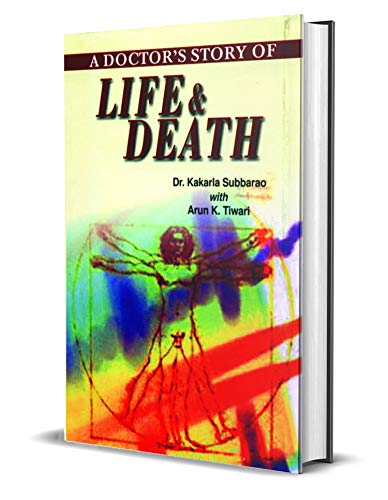
A Doctors Story of Life & Death
- Author Name:
Dr. Kakarla Subbarao +1
- Book Type:
- Description:
Kakarla Subbarao FRCR, FACR, FICP, FSASMA, FCCP, FICR, FCGP, is an eminent bone radiologist. He left for the USA in 1951 and had a long medical career there, retiring as a professor of radiology at the Albert Einstein College of Medicine in New York. He was also the founder president of Telugu Association of North America (TANA). An umbrella organisation for Telugu-speaking people in America. He returned to India in 1986 at the call of Chief Minister N.T. Rama Rao founded the Nizam's Institute of Medical Sciences in Hyderabad. The Indian Radiological and Imaging Association conferred upon him the 'Radiologist of the Millennium' award in the year 2000. He and converted his ancestral property into an international school for children and established KREST, a non-profit foundation to encourage research in Radiology in India.
The World As I See It
- Author Name:
Albert Einstein
- Book Type:
- Description:
The World as I See It is a book by Albert Einstein, translated from the German by A. Harris. The Bodley Head (London). The original German book is “Mein Weltbild” by Albert Einstein. Composed of assorted articles, addresses, letters, interviews, and pronouncements, it includes Einstein’s opinions on the meaning of life, ethics, science, society, religion, and politics. Albert Einstein believed in humanity, in a peaceful world of mutual helpfulness, and in the high mission of science. This book is intended as a plea for this belief at a time that compels every one of us to overhaul his mental attitude and his ideas.

Aamir Khan A Social Spark
- Author Name:
Kirti Sisodia
- Book Type:
- Description:
Aamir Khan is a multifaceted individual—an actor, filmmaker, social activist, and fundamentally, a good human. While he has achieved fame, glamour, and success, he also feels a moral obligation to give back to society. His films, including Jo Jeeta Vo Sikandar, Lagaan, 3 Idiots, Tare Zameen Par, Rang De Basanti, PK, and Dangal, along with the widely known TV series Satyamev Jayate, address sensitive issues often overlooked or unexplored by mainstream cinema. Through Satyamev Jayate, he brought awareness to social problems already present in our homes and society, helping viewers understand the realities faced by many. His journey reflects growth through struggles and experiences, shaping him into both a successful actor and a socially conscious individual. His films raise awareness and influence society, highlighting his commitment to mindful storytelling. This book is not about Aamir as a person but about his mindset—the drive to serve society and take bold, sometimes risky, steps as an artist.

THE DIARY OF A YOUNG GIRL (CLASS X)
- Author Name:
Anne Frank
- Book Type:
- Description:
Annelies Marie "Anne" Frank 12 June 1929 – February or March 1945) was a German-Dutch diarist of Jewish origin. One of the most discussed Jewish victims of the Holocaust, she gained fame posthumously with the publication of The Diary of a Young Girl. Born in Frankfurt, Germany, she lived most of her life in or near Amsterdam, Netherlands, having moved there with her family at the age of four and a half. Born a German national, she lost her citizenship in 1941 and thus became stateless. By May 1940, the Franks were trapped in Amsterdam by the German occupation of the Netherlands. As persecutions of the Jewish population increased in July 1942, the Franks went into hiding in some concealed rooms behind a bookcase in the building where Anne's father, Otto Frank, worked. From then until the family's arrest by the Gestapo in August 1944, she kept a diary she had received as a birthday present, and wrote in it regularly. Following their arrest, the Franks were transported to concentration camps. In October or November 1944, Anne and her sister, Margot, were transferred from Auschwitz to Bergen-Belsen concentration camp, where they died (probably of typhus) a few months later. They were originally estimated by the Red Cross to have died in March, with Dutch authorities setting 31 March as their official date of death, but research by the Anne Frank House in 2015 suggests it is more likely that they died in February. Discovered in the attic in which she spent the last years of her life, Anne Frank's remarkable diary has since become a world classic—a powerful reminder of the horrors of war and an eloquent testament to the human spirit. The Diary is many things at once. It is an amusing, enlightening, and often moving account of adolescence, as Anne describes her thoughts and feelings about herself, the people around her, the world at large, and life in general. It is an accurate record of how a young girl grows up and matures, under the very special circumstances in which Anne found herself throughout the two years she spent in hiding.

The Life and Times of Chandrashekhar Azad
- Author Name:
Bharat Bhushan
- Book Type:
- Description:
Chandrashekhar Azad’s short and chequered life as a revolutionary is remembered in the annals of India’s freedom struggle not merely for his indomitability in the face of odds, but also for the human values he cherished. In today’s world, with the edifice of every conceivable value crumbling all around us, Azad’s life offers a paradigm for the redemption of a generation resigned to shallow ideals. Adversity came a dime a dozen to this village youth born to poor parents rich in morality and humaneness. It’s the roots that determine a person's actions and destiny. At a time when we seem to be taking our freedom for granted, Azad’s biography is a reminder of the blood and toil that went into securing it. The road to preservation of freedom must be hemmed with respect for what we have, for being fortunate to be able to breathe in free air. The crucial caveat embedded in Azad’s biography is that we face a far greater threat from the enemies within than from enemies without.

Charlie Chaplin: A Complete Biography
- Author Name:
Nandini Saraf
- Book Type:
- Description:
Charlie Chaplin, the universal comic icon, who with his lovable portrayal of a ‘tramp’ made and still makes the world laugh. The Hitler’s toothbrush moustache, the bowler or derby hat, the coat a size or two too small, the baggy trousers, the floppy shoes and the cane made him the most unforgettable character. The mere mention of his name conjures a picture of him as the tramp. One of the most pivotal stars of the early silent era of Hollywood, Charlie Chaplin’s films made everyone laugh and cry at the same time. The world cinema is indebted to him for films like ‘The Kid’, ‘The Gold Rush’, “The Circus,” ‘City Lights’, ‘Modern Times’ and ‘The Great Dictator’. An enigma to the world, people have vast curiosity about his life and his body of work. This book is an attempt to unravel the various aspects of his life and his struggles. The happiness and the despair, the controversies and the acclaims are all revealed in this authentic biography of this great legend. Though he is no more between us but he continues to live in our memories.

Customer Reviews
Be the first to write a review...
From Hampi to Harappa is remarkable not because it chronicles triumph, but because it lays bare the contradictions that shaped an intellectual life in twentieth-century India. Ramachandra was a scholar of extraordinary range — fluent in Sanskrit, Telugu, Kannada, and Prakrit — yet the autobiography reveals someone who knew hunger intimately, a man whose erudition could not insulate him from material want. The tension at the heart of this work is between his Vaishnava upbringing and the questions raised by modern education, between his early attraction to extremist nationalist ideas during the freedom struggle and the personal path he carved through doubt and crisis. This is not a narrative of seamless self-realisation; it is a record of fracture and remaking.
Recognised as one of the top ten Telugu autobiographies of the twentieth century, the book offers a portrait of intellectual life that refuses romantic simplification. Ramachandra's honesty about his own failings, his spiritual restlessness, and the gap between scholarly achievement and lived reality make this a singular document of an era.
What kind of reading experience will this book give me?
This book offers a reading experience marked by discomfort and introspection rather than triumph. It moves through a scholar's life with unflinching honesty, exposing the inner conflict between faith and reason, tradition and modernity. The pace is reflective, demanding patience and a willingness to sit with ambiguity. It rewards readers who seek to understand how intellectual and spiritual crises unfold over time, rather than those looking for resolution or inspiration. The feeling it leaves behind is one of sobering recognition — the realisation that learning does not always lead to certainty or comfort.
Who is this book best suited for, and what does it expect of its reader?
- Readers interested in the inner lives of Indian intellectuals during the nationalist period, particularly those caught between tradition and modernity.
- Those who appreciate autobiographies that refuse to idealise the writer or sanitise personal failure.
- People curious about the tension between Vaishnava devotion and secular education in twentieth-century South India.
- Readers willing to engage with a narrative that values self-reflection over dramatic incident.
- Anyone seeking a counter-narrative to the typical success story of Indian scholarship.
What is the cultural significance of this book's themes to Indian readers today?
The collision between inherited religious identity and modern education remains urgent in contemporary India, where questions of tradition, reform, and intellectual freedom are fiercely contested. Ramachandra's struggle with extremist nationalist ideas and his eventual withdrawal into personal doubt mirrors debates today about ideology, commitment, and disillusionment. His experience of poverty despite erudition speaks to the persistent gap between intellectual capital and material security. The book reminds us that modernity does not erase religious sensibility — it complicates it, often painfully. In an era of polarised certainties, his honesty about ambivalence feels both rare and necessary.
What makes Ramachandra's treatment of his own life distinctive?
Ramachandra refuses the temptation to redeem his struggles with hindsight or frame his life as a coherent journey. Where many autobiographers impose narrative order on chaos, he preserves the texture of confusion, hunger, and doubt. His command of multiple classical languages — Sanskrit, Telugu, Kannada, Prakrit — positions him as an insider to tradition, yet he writes about that tradition with the distance of someone who has been changed, not confirmed, by it. He does not romanticise poverty or scholarship, and he does not simplify his political disillusionment into a tidy moral lesson. The result is a portrait of intellectual life that feels uncomfortably real.
What does this book leave the reader with long after finishing it?
It leaves behind a quiet unsettlement — the recognition that a life of learning can be a life of hunger, that mastery of tradition does not resolve doubt, and that intellectual honesty often demands abandoning the certainties that once gave shape to the self. Readers carry away a more textured understanding of what it meant to be educated in twentieth-century India, where colonial modernity and indigenous tradition were not neatly opposed but entangled in daily life. The book resists closure, asking the reader to accept that some conflicts are not resolved but lived with. It offers no comfort, only the dignity of truthfulness.