
It's All About Mahi
₹
97
₹ 82.45 (15% off)
Available
He is a die hard fan of the most successful Captain of the Indian cricket team. She doesn't like cricket itself. What shall the destiny unfold? Read this heart-warming tale of a fan.
Read moreAbout the Book
He is a die hard fan of the most successful Captain of the Indian cricket team. She doesn't like cricket itself. What shall the destiny unfold? Read this heart-warming tale of a fan.
Book Details
Worlds First Book On Haiku Poetry
- Author Name:
Carlos Luis
- Book Type:

- Description:
Haiku is a very short form of Japanese poetry consisting of 17 syllables arranged in three lines of 5, 7, and 5 syllables respectively. But against all odds, this is a collection of feelings written in three lines. An economical masterpiece that Trades you through realities of life; speaking of love, relationships, paradoxes in life, you name it you have it in here.

In Love With Shah Rukh Khan
- Author Name:
Ajitabha Bose
- Book Type:
- Description:
Everyone has a dream. It’s just that some dreams get fulfilled, and others remain confined in hearts. In love with Shah Rukh Khan by Ajitabha Bose.

Dear Moon
- Author Name:
Soumi Dutta
- Book Type:
- Description:
The story, written in an epistolary style, talks about attempts the narrator makes in order to erase the memories of her one true love, from her heart. But can such love be unremembered? Read on to find out.

Our Love That Fell Apart
- Author Name:
Nupur Luthra
- Book Type:
- Description:
Brian serves grey with divorce papers, announces he’s gay and is in love with someone else. Her whole world falls apart, filled with rage, she has no one to turn too. Brian feels bad and is miserable for causing her a lot of pain, but the heart wants what it wants. Brian and his lover get married, which causes grey further pain. What happens next? How does grey deal with the pain and agony? Does it all end well or does someone die in the end? Find out in our love falls apart.

The Gift
- Author Name:
Ruchi Prabhu
- Book Type:
- Description:
Don’t read this book. Do NOT read this book Go watch YouTube videos Go watch series on Netflix Go listen to some songs on Ganna.com But, Just put the book down quietly and walk away… WARNING! In this book I have had my share of experiencing romance, hatred, longing and drops the most. An individual observes a bunch to pick up nuisance of personalities and relationship dynamics of those around him/her. This book contains my way of expressing through haiku or Epigrams which evoke my personal feelings dealing with a good ending and sometimes with the ray of no hope in a scalding weather.

My Senior Girlfriend
- Author Name:
Yash Sharma
- Book Type:
- Description:
Yash Sharma is author of the book fl.A.M.E.S. His book talks about romance and issues is that are relatable to the youth of this generation. It told the story of a girl who attempts to move on from her lover who had left her. His book get a decent response from young readers and the one of the biggest newspaper groups of Rajasthan with millions of readers reviewed favourably, giving it 5 out of 5 stars. Ash is a 21-year year-old from a small town in Rajasthan, rajgarh.He is pursuing his B.Tech. In Civil Engineering from Alwar district. He started writing at the early age of 13. His hobbies include reviewing books and movies, and writing scripts, screenplay and music. He has written more than a thousand quotes and poems. He is a bookworm and has quite an interest in politics and Hollywood. He is also a storyteller and an actor too. His passion for to be an actor lead him to theatre at a very young age. He has also wrote numerous plays for his school and college festivals.

Love In Jamshedpur
- Author Name:
Ajitabha Bose
- Book Type:
- Description:
Do you remember who was your first crush? Did you too dream of marrying her? Everyone does somehow, isn't it? So did Arnab! When he saw simpi for the very first time, he fell in for a forever-love. Yet, the dream took a different turn when she rejected him time and again. What lies ahead? Will Arnab be able to impress his first love? Or will he fail, again? Bestselling author, ajitabha Bose brings to you a true tale of love based in the small town of Jamshedpur.

Eyes I Have Been Searching For
- Author Name:
Haseena T
- Book Type:
- Description:
For avyukta falling in love was everything. She is vibrant that way, but she never knew where to find love until she met those eyes.

The Bestseller
- Author Name:
Ajitabha Bose
- Book Type:
- Description:
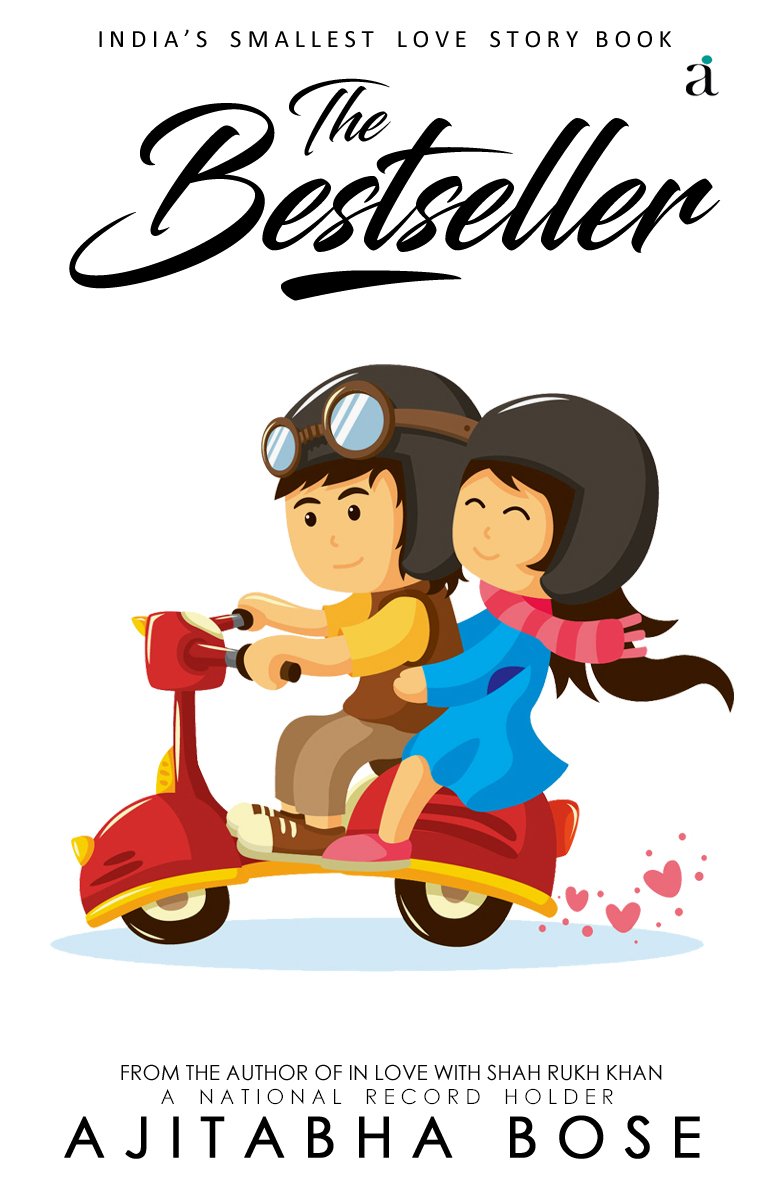
Every author wants to become a bestseller one day. Do you know over 1 lac books are published in India every year! Only a few become a bestseller. Have you ever wondered how it is to live a life of a Bestselling author? Come, join me and read a Story of life, love and dreams. It's a story of priyanshi and her dream to become a bestseller. || Book Teaser by Rajeev Khandelwal || "size doesn't matter when it's love." - Shah Rukh Khan || "ajitabha wants to bring a new trend in Books for the busy generation." - The Telegraph || "big love stories in small packages." - Hindustan times || "love stories runs in his veins." - India today || "it's not easy to sum Up a story in a few pages and keep the emotions intact! Ajitabha's attempt to that is worth appreciating." - Sudeep Nagarkar.
Who Clicked That Pic
- Author Name:
Nandita da Cunha +1
- Book Type:
- Description:
नंदिता की कहानी भारत के सबसे प्रसिद्ध फोटोग्राफर, होमाई व्यारवाला के जीवन का जश्न मनाती है। होमाई का साहस और शिल्प कौशल पुस्तक में खूबसूरती से सामने आता है। प्रिया कुरियन के चित्रण होमाई की कार्यशैली को इतनी सटीकता से बनाए रखते हैं कि कभी-कभी ऐसा लगता है मानो होमाई ने ही पुस्तक का चित्रण किया हो। शिल्प और जीवन के बीच निरंतर बदलाव पाठकों को रंगमंच की जीवंतता की याद दिलाता है। किताब हिंदी और अंग्रेजी दोनों भाषाओं में उपलब्ध है।

History of Marathi Literature
- Author Name:
Kusumawati Deshpande +1
- Book Type:
- Description:
Marathi has an unbroken literary tradition of over eight centuries, divided conveniently into two distinct periods, classical and modern. The Classical period spans six centuries, remarkable for poetry, devotional and heroic. Jnandev, Namdev, Eknath, Tukaram and Ramdas have become household names throughout India. While Virasaiva, Jain, and Muslim poets have enriched the secular and spiritual content, wandering minstrels have sung heroic ballads. New forms of literature have flowered from the nineteenth century under the impact of English education and western thought. The Chiplunkar, Apte, Anil Despande, Phadke, Khandekar, Mardhekar, Rege and Gadgil. Tracing the earliest reference to Maharashtra in a rock inscription of the fourth century, the history concludes with the formation of the state in 1960.

Bombay Ducks, Bombay Docks
- Author Name:
Fleur D’Souza +1
- Book Type:
- Description:
It is raining and there is not much one can do outdoors. Come and listen to Aajis story about the Kolis, the original inhabitants of Bombay, their favourite fish Bombay Duck and the citys magnificent docks.Written by Fleur D’Souza and Illustrated by Kripa.

The Fourth Friend
- Author Name:
Manoj Das
- Book Type:
- Description:
It was evening. The three village lads had just witnessed the miracle of their life, a movie courtesy of a touring enterprise, when, on their homeward journey, another strange experience engulfed them in the form of a flash flood, pushing them up to two entangled trees. Dawn breaks and the three friends are joined by an unusual, awful, gentle companion who becomes their new friend. Amazing and amusing, The Fourth Friend is a beautiful gift from one of India's best-loved storytellers.

A Journey
- Author Name:
Jagdish joshi
- Book Type:
- Description:
A book by Jagdish Joshi and translated by Kanchan Wanchoo Sharma.

In the Land Where Beetles Rule
- Author Name:
Suniti Namjoshi +1
- Book Type:
- Description:
What would happen if the beetles were in charge?Or if fish ruled the world? This fantastical poem offers a powerful glimpse into world where nature comes first.A beauty story written by Suniti Namjoshi and illustrated by krishna bala shenoi

Muffin:My Companion
- Author Name:
Yathesht Pratiraj +1
- Book Type:
- Description:
A friend, a companion and also a hero who saves banks from being robbed, Muffin, the dog, has done it all. This is a story of an enthusiastic Labrador Retriever and its not-so-enthusiastic owner, as they embark on a journey of bonding and adventures. This novella takes the readers along on Muffin's journey as he captures the hearts of everyone around, makes new friends and experiences his firsts. The story comes as a light entertainer for young readers and also provides information for people planning to adopt a puppy into their homes and lives for the first time.

Heroes Do Not Grow On Trees
- Author Name:
Sudha Puri
- Book Type:
- Description:
Heroes Do Not Grow On Trees written by Sudha Puri and illustration done by Amitava Sengupta.Age group 6 TO 10 YEARS.

Mizo Songs and Folk Tales
- Author Name:
Laltluangliana Khiangte
- Book Type:
- Description:
The dialects and languages spoken by tribals in India are very large in number. The literary compositions in most of them have survived in oral form though some tribal languages have taken to writing as means of recording literary compositions. Conventionally, they have been perceived as mere anthropological curiosity, or at best a source for oral history. They have rarely been translated into English or an Indian language as a representation of tribal imagination. In order to meet the long felt need for brining out a systematic series of India's tribal literature, sahitya Akademi has established a project of Indian Literature in Tribal Languages and Oral Traditions.

The Prince and the Coral Sea
- Author Name:
Daisaku Ikeda
- Book Type:
- Description:
On Okinawa island, a boy named Ray determines to use a magical gift from a mermaid to protect the island’s nature and people no matter what he has to give.

Mad Mango
- Author Name:
A.N. Pednekar
- Book Type:
- Description:
A humorous story about a mango tree who is bored standing rooted in one place and wants to see the world and seek adventure. Illustrations by Manjula Padmanabhan.

Customer Reviews
Be the first to write a review...
It's All About Mahi explores what happens when identity becomes inseparable from devotion—when one person's reverence for India's most celebrated cricket captain collides with another's complete indifference to the game. This is not a story about cricket statistics or match victories; it is about how fandom shapes self-worth, how cultural obsessions create distance, and whether two people can find common ground when their passions occupy opposite ends of the spectrum. The novel asks: can love survive when the thing that defines you means nothing to the person you care about? Set against the backdrop of India's cricket-worshipping culture, where celebrity athletes become near-religious figures, this literary fiction work examines the vulnerability behind fandom and the courage required to bridge incompatible worlds. What unfolds is a quiet, heartwarming meditation on identity, compromise, and the unexpected ways connection finds us.
What kind of reading experience does It's All About Mahi offer?
This novel offers a quietly introspective reading experience centered on emotional realism rather than high drama. The pacing is contemplative, allowing you to inhabit the protagonist's inner conflict as he navigates a relationship shadowed by his consuming devotion to a cricket icon. It rewards readers who appreciate character-driven narratives where small gestures and everyday conversations carry weight. The tone is tender and occasionally bittersweet, leaving you with a reflective mood rather than adrenaline. Expect to feel the protagonist's vulnerability as fandom and romance pull him in opposing directions, and to recognize the universal struggle of reconciling personal identity with the demands of connection.
Who is this book best suited for and what does it expect of its reader?
This book is ideal for readers who enjoy contemporary Indian romance with psychological depth, particularly those interested in how cultural obsessions—like cricket fandom—shape personal relationships. It expects an appreciation for character interiority over plot momentum, and patience with protagonists whose passions may seem irrational but feel deeply human. If you've ever been consumed by an admiration for a public figure, or struggled to explain your devotion to someone who doesn't share it, you'll recognize yourself here. The novel also appeals to those curious about the emotional landscape of modern India, where sports heroes occupy sacred spaces in daily life and identity formation.
What is the cultural significance of cricket fandom as explored in this book for Indian readers today?
Cricket fandom in India functions as a quasi-religious devotion, and this novel examines how such fervor becomes entangled with personal identity, especially among young men for whom sporting heroes offer aspirational models. The book reflects a generation navigating the tension between inherited cultural rituals—watching matches becomes family liturgy—and individual romantic or professional ambitions. In contemporary India, where cricketers wield influence beyond sport and into politics, advertising, and moral discourse, the protagonist's obsession mirrors a broader cultural phenomenon: the conflation of national pride with individual self-worth. This exploration resonates with readers questioning how collective passions can both unite and isolate us in intimate relationships.
What makes this author's treatment of sports romance distinctive from typical cricket novels?
Rather than glorifying cricket or centering the narrative on match drama, this author treats the sport as a psychological lens—a mirror revealing the protagonist's need for certainty, belonging, and heroic archetypes in an uncertain world. The romance isn't a subplot to cricket heroics; instead, cricket becomes the obstacle, the thing that must be interrogated and potentially relinquished. This inverted structure distinguishes the book from conventional sports fiction, positioning fandom itself as the antagonist. The author resists easy resolution, exploring whether love can coexist with devotion or whether growth demands sacrifice. This approach offers emotional complexity often absent from books that treat sports fandom as uncomplicated passion rather than identity crutch.
What does this book leave the reader with long after finishing it?
This book leaves you contemplating the boundaries of healthy devotion and the courage required to see yourself apart from the figures or passions that have defined you. Emotionally, it lingers as a reminder that intimacy demands vulnerability—the willingness to let someone else's indifference challenge what you hold sacred. Intellectually, it provokes questions about how cultural narratives of heroism and fandom shape our capacity for genuine connection. Culturally, it offers a portrait of contemporary India where private lives unfold in the shadow of public obsessions, and where the most personal struggles involve reconciling inherited passions with chosen futures. You'll carry an awareness of how the things we worship can both anchor and confine us.