
Languages Need to Die?
Hi there. I would like to begin with a confession.
I’m a PhD scholar (yes, willingly doing more studies after a master's), working on the sociolinguistic evolution of Indian languages. I spend my days swimming in research papers, my nights dreaming of syntax trees, and my weekends attending language conferences where people debate passionately about whether a semi-vowel deserves more respect. Glamorous, isn’t it?
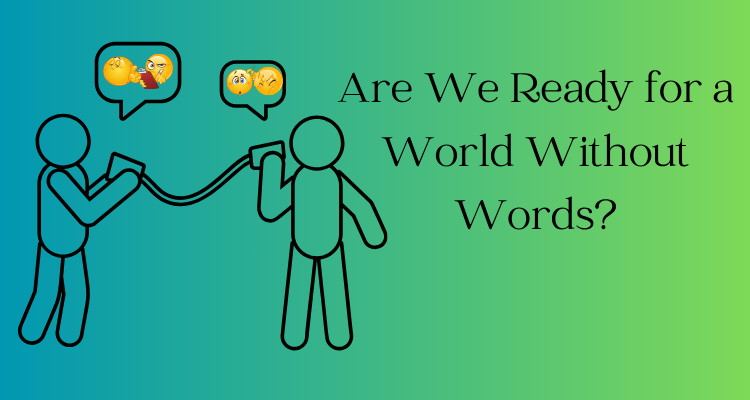
But one day, in the middle of a heated discussion on noun declensions, a classmate muttered under their breath, "Languages need to die." At first, I laughed it off, thinking it was just academic frustration. But the thought lingered. What if it wasn’t a joke? What if, in the age of emojis, memes, and voice notes, languages are slowly becoming... obsolete?
Let me take you on a journey through India’s vibrant (and slightly chaotic) linguistic landscape, peppered with some facts, questions, and a few jokes about semi-dead dialects. I promise to make it enjoyable, and who knows—by the end, we might even agree or agree to disagree.
Why Did We Fall in Love with Languages in the First Place?
India is home to 22 official languages, over 121 major languages, and more than 19,500 dialects (according to the Census of India, 2011). That's not a linguistic landscape; that’s a linguistic galaxy. And in this galaxy, every village, community, and sometimes even household has its own unique way of saying "pass me the salt."
Language was never just about communication here—it was about identity, caste, religion, region, folklore, music, dreams, and rebellion. Languages shape who we are. Tamil gave us Sangam poetry; Urdu gave us Ghalib; Bengali gave us Rabindranath Thakur; Marathi gave us Tukaram; Hindi gave us Premchand; and Bhojpuri gave us a million WhatsApp forwards and two dance steps.
But things are changing. Fast.
Enter: The Emoji Era
We’re living in times where a 😂 can replace an entire paragraph. Who needs grammar when you have GIFs? Why write "I’m feeling emotionally conflicted and slightly betrayed" when you can just drop a 😕?
Urban millennials (hello, fellow confused soul) and Gen Z have adopted communication habits that often make grammar purists sob into their Oxford dictionaries. There’s a growing shift from structured language to image-based, brief, and emotionally charged expressions. Think of it as communicating with bumper stickers and memes.
So, Are Languages Really Dying?
Yes. And No. It depends on which side of the dictionary you’re looking at.
According to UNESCO, 197 Indian languages are endangered, and many are at risk of extinction in the next 50 years. Some have fewer than 500 speakers left. So yes, traditional languages are vanishing, especially in tribal and rural communities.
But here’s the twist: while some languages die, others are evolving. Hindi isn’t dying, but it’s wearing a lot of Hinglish makeup these days. Tamil isn’t going anywhere, but it's getting a tech-savvy, slang-infused makeover from Instagram reels.
It’s like the languages aren’t dying as much as they’re reinventing themselves—like Bollywood heroes in the second half of the movie.
Blame Urbanisation (It’s Always the Cities!)
Urbanisation has led to a mixing of people from different linguistic backgrounds. In metros like Mumbai, Delhi, and Bangalore, people speak in a delightful cocktail of Hindi, English, regional language, and panic.
This linguistic mash-up is practical, but it dilutes dialects and local languages. For example, many urban kids from Tamil families grow up speaking English at school, watching Hindi cartoons, and answering in Hinglish. Ask them to read classical Tamil, and they'll blink like you’ve asked them to decode the Voynich manuscript.
The tragedy? It’s not their fault. It’s just... life. School curricula, job markets, and popular media all reward proficiency in English and a few dominant languages.
Parents, Don't Feel Guilty (But Maybe a Little)
A lot of parents, especially in urban middle-class India, have grown up with the burden of knowing that their native language did not help them crack the IIT-JEE or get that marketing job in Gurgaon. So now, they’re raising children who say "banana" instead of "केला (kela)," "car" instead of "गाड़ी (gaadi)," and worst of all, pronounce "चाय (chai)" as "tea."
Their logic? English opens doors. Regional languages keep you in the courtyard. It’s not entirely wrong. But it comes at a cost.
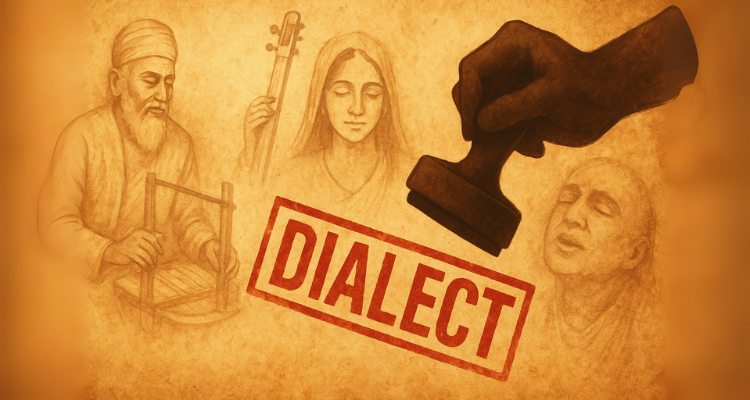
Dialects: The First to Vanish
Languages are robust. Dialects are fragile. Dialects are the linguistic wildflowers of India—beautiful, rooted, and delicate. And like wildflowers, they’re the first to vanish when the city expands.
Languages like Ahirani, Gondi, Lambadi, and Pahari dialects are dying because there are no schoolbooks in them, no exams, no jobs, no Bollywood songs. In the harsh light of economic survival, they wither.
I once met a fellow researcher who’d documented a dialect in Jharkhand that had less than 100 speakers. The kicker? All speakers were over 60. The youth had moved to Ranchi and were fluent in Hindi, English, and Instagram.
The Irony of Technology
Now here’s a delicious twist. While technology has contributed to the decline of some languages, it's also helping revive others.
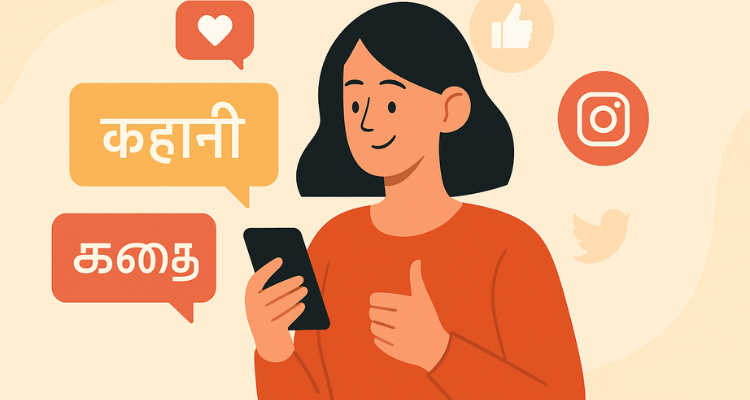
Platforms like YouTube, Instagram, and even WhatsApp have become unexpected heroes of linguistic revival. You’ll find Bhojpuri cooking channels, Chhattisgarhi folk song pages, Tamil stand-up comedy, and Marathi Instagram poets.
So while schools may not teach these languages, reels might.
Is It Bad That Languages Are Changing?
Not necessarily. Languages have always evolved. Sanskrit gave birth to Prakrits, which evolved into modern Indo-Aryan languages. English itself is an ever-evolving blend of Latin, Germanic, French, and a hint of colonial guilt.
The problem is not change. The problem is loss without documentation, displacement without dignity, and evolution without inclusion.
Languages can evolve and coexist. The idea isn’t to freeze them in time but to let them grow without being steamrolled by power and policy.
So, Do Languages Need to Die?
Here’s my very academic, deeply nuanced conclusion: No. But some will.
Languages die when they stop being useful. When no one uses them to love, protest, joke, or order biryani. But that doesn't mean they have to.
We need policy interventions, educational inclusion, and pop culture that makes room for more than just English or Hindi. We need digital platforms to support regional scripts. We need memes in Gondi. We need rap in Dogri. We need kids to learn that "cool" and "Maithili" can exist in the same sentence.
One Last Thing (Before You Scroll to Another Tab)
If you speak a dialect, don’t be ashamed of it. If you understand your grandma’s version of Telugu, write it down. If you know a lullaby in Bhili, record it. Share it. Use it.
Language is not just about grammar or scripts. It’s about stories, memories, and a sense of belonging.
And trust me, the next time someone says, "Languages need to die," hand them a poem in your mother tongue.
And then maybe a gentle slap. Or a 🙄 emoji.
Written by a sleep-deprived PhD researcher who still writes grocery lists in her mother tongue and secretly judges people who say 'चाय tea'.


Add a comment
Add a comment